

Keeping a Household Inventory and Protecting Valuable Records
Introduction
A disaster strikes. Your home and possessions are destroyed. Will you be able to pick up the pieces? You will, if you do both of the following:
- Keep an up-to-date household inventory
- Keep the inventory and other valuable documents in a secure location
This publication provides details about these two tasks.
Keeping a Household Inventory
An up-to-date household inventory is a valuable resource. Before a disaster, the inventory will help you determine whether you have enough insurance to cover the contents of your home. After the disaster, the inventory will help prove the value of the damaged or destroyed possessions for insurance or tax deduction purposes.
An inventory consists of the following:
- A description of each item (include brand name, model, and serial number)
- When you bought the item (if you cannot remember, give an approximate date)
- Where you bought the item
- How much the item costs (include how much you paid for it, how much it is currently worth, and how much it would cost to replace it)
It is highly recommended to have photos and/or a video to accompany your inventory.
Do not forget less expensive items, such as clothes and linens. It will be costly to replace these items entirely. Be thorough—inventory your home room-by-room and do not forget to include items in closets, lawn furniture, and tools in the garage. Keep the inventory up-to-date.
There are computer software programs to assist you in this task.
The University of Illinois, College of Agricultural, Consumer, and Environmental Sciences provides an excellent guide and relevant forms for conducting a household inventory. Access the guide online at http://www.aces.uiuc.edu/vista/abstracts/ahouseinv.html.
The Florida Office of Insurance Regulation is a good source for household inventory forms. Access the forms online at http://www.floir.com/siteDocuments/InvestoryChecklist_6-26-08.pdf.
Protecting Valuable Records
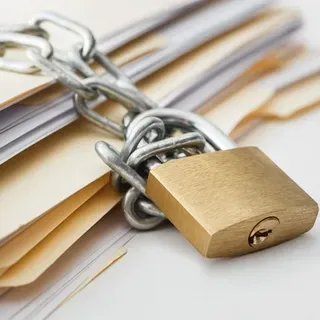
The key to a smooth recovery is documentation. Secure your valuable papers in a waterproof, fireproof container.
Table 1 is a list of the valuable papers that need to be in a safe deposit box at a secured location outside of the home, such as a bank, especially in preparation for a disaster such as a hurricane. Table 2 is a list of valuable papers that you need to always keep in your possession at home in a waterproof, fireproof, locked box.
Additional copies of valuable records should be in the care of a lawyer, the future administrator of your will, a business associate, and/or a trusted family member residing outside of your home.
Sources for This Publication
Before Disaster Strikes: How to make sure you're financially prepared to deal with a natural disaster (FEMA Publication 291E). American Red Cross, Federal Emergency Management Agency, and National Endowment for Financial Education.
Household and Personal Property Inventory Book (Circular 1346). University of Illinois, College of Agricultural, Consumer and Environmental Sciences.
Home Inventory Checklist. Florida Office of Insurance Regulation. Access online at http://www.floir.com/siteDocuments/InventoryChecklist_6-26-08.pdf
Flood Damage Checklist: https://www.ag.ndsu.edu/pubs/ageng/structu/de1519.pdf
Flood Damage Checklist (Red Cross): http://www.redcross.org/images/MEDIA_CustomProductCatalog/m4340128_Flood.pdf
Key Facts about Flood Readiness: http://www.cdc.gov/disasters/floods/readiness.html
Key Facts about Flood Recovery: https://stacks.cdc.gov/view/cdc/11948/
Flooding: http://www.ready.gov/floods
Hurricanes: http://www.ready.gov/hurricanes
Tropical Cyclones: a Preparedness Guide (NOAA/PA ; 201152). National Weather Service. Access online at https://repository.library.noaa.gov/view/noaa/16125
This publication is designed to provide accurate, current, and authoritative information on the subject. However, since the laws, regulations, administrative rulings, and court decisions on which it is based are subject to constant revision, portions of this publication could become outdated at any time. This publication is distributed with the understanding that the authors are not engaged in rendering legal advice or opinions, and the information contained herein should not be regarded, or relied upon, as a substitute for legal advice or opinion. For these reasons, the utilization of these materials by any person constitutes an agreement to hold harmless the authors, the Institute of Food and Agricultural Sciences, and the University of Florida for any liability claims, damages, or expenses that may be incurred by any person as a result of reference to or reliance on the information contained in this fact sheet.