
Individual Assistance Programs from FEMA
Introduction
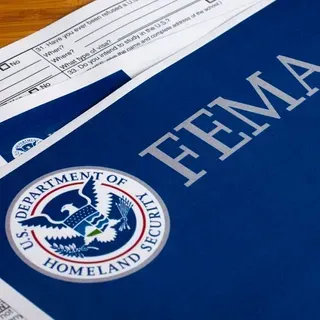
Individuals, families, and businesses may be eligible for federal assistance from the Federal Emergency Management Agency (FEMA). You are eligible if you live, own a business, or work in a county declared a Major Disaster Area; incur sufficient property damage or loss; and do not have the insurance or other resources to meet your needs.
FEMA and other federal, state, local, and volunteer agencies offer disaster assistance in several forms:
- Low-interest loans
- Individual and Family Grant (IFG) program
- Veterans benefits
- Temporary housing assistance
- Tax refunds
- Excise tax relief
- Free legal counseling
- Crisis counseling
- Getting in touch with family members
- Your rights
- Florida emergency information line
You can learn more about FEMA's programs online at https://www.fema.gov/individual-disaster-assistance.
Low-Interest Loans
Most, but not all, federal assistance is in the form of low interest loans to cover expenses not covered by state programs, local programs, or private insurance. People who do not qualify for loans may be able to apply for cash grants.
These agencies offer low-interest loans to eligible farmers, business owners, and other individuals to repair or replace damaged property and personal belongings not covered by insurance.
- Farm Service Agency (FSA). Access online at https://www.fsa.usda.gov/programs-and-services/farm-loan-programs/index
- Small Business Administration (SBA). Access online at https://disasterloanassistance.sba.gov/ela/s/article/Apply-For-A-Disaster-Loan
Individuals and Households (IHP) Program
IHP provides cash grants up to a limit, which is adjusted annually for inflation. More information is available at the FEMA website. Access online at https://www.fema.gov/assistance/individual/program.
Individuals may be eligible for grants to help recover necessary expenses and serious needs that cannot be met through insurance or other forms of disaster assistance. Examples are housing, personal property, medical, dental, funeral, transportation, and required flood insurance premiums incurred as a result of the disaster.
Veterans Benefits
The Department of Veterans Affairs (VA) provides veterans with death benefits, pensions, insurance settlements, and adjustments to home mortgages. More information is available at the VA website. Access online at http://www.va.gov
Temporary Housing Assistance
This program ensures that people whose homes are damaged by disaster have a safe place to live until repairs can be completed. The program is designed to provide funds for expenses that are not covered by insurance. Displaced homeowners and renters must be legal residents of the United States to be eligible. Program services include
- Home repair assistance
- Rental assistance
- Mortgage and rental assistance (MRA)
- If necessary, referral to other government housing programs
More information is available at the FEMA website. Access online at https://www.fema.gov/sites/default/files/2020-08/fema_help-after-disaster_english_trifold.pdf and https://www.disasterassistance.gov/
Tax Refunds
The Internal Revenue Service (IRS) allows certain casualty losses to be deducted on federal income tax returns for the year of the loss or through an immediate amendment to the previous year's return.
- Internal Revenue Service (IRS) Publication 584. Casualty, Disaster, and Theft Loss Workbook (Personal-Use Property). http://www.irs.gov/pub/irs-pdf/p584.pdf
Excise Tax Relief
Under various circumstances, businesses may file claims with the Bureau of Alcohol, Tobacco, and Firearms (ATF) for federal excise taxes paid on alcoholic beverages and tobacco products lost, rendered unmarketable, or condemned by a duly authorized official. One such circumstance is when the President has declared a major disaster. More information is available at the FEMA website. Access online at http://www.fema.gov/pdf/emergency/nrf/nrf-esf-06.pdf
Unemployment Benefits
Disaster unemployment assistance and unemployment insurance benefits may be available through the state unemployment office and supported by the United States Department of Labor (DOL). More information about Disaster Unemployment Assistance (DUA) is available at the DOL website. Access online at https://oui.doleta.gov/unemploy/disaster.asp
Residents of Florida: If you work or reside in an officially declared disaster county and are now unemployed as a result of the disaster, you may be eligible for Unemployment Compensation Benefits or Disaster Unemployment Assistance. More information is available at the Florida Jobs website. Access online at https://www.floridajobs.org/Reemployment-Assistance-Service-Center/reemployment-assistance/claimants/disaster-unemployment-assistance
Free Legal Counseling
The Young Lawyers Division of the American Bar Association, through an agreement with FEMA, provides free legal advice for low-income individuals regarding cases that will not produce a fee (i.e., those cases where attorneys are only paid part of the settlement, which is awarded by the court). Cases that may generate a fee are turned over to the local lawyer referral service.
Crisis Counseling
The purpose of the crisis counseling program is to help disaster survivors cope with grieving, stress, or other mental health problems caused or aggravated by a disaster or its aftermath. These short-term services, provided by FEMA as supplemental funds granted to state and local mental health agencies, are available only to eligible survivors of presidentially-declared major disasters. Those who may require this confidential service should inquire about it while registering for disaster assistance.
Crisis counseling services are also offered by the American Red Cross (https://www.redcross.org/get-help/disaster-relief-and-recovery-services/recovering-emotionally.html) churches, synagogues, and other service agencies. Mental health information may be found at the website for the United States Department of Health and Human Services, Substance Abuse and Mental Health Services Administration. Access online at http://www.samhsa.gov/find-help/disaster-distress-helpline
Contacting Family Members
The American Red Cross maintains a database to help you find family. Contact your local American Red Cross chapter. Do not contact the chapter in the disaster area. More information is available at the Red Cross website. Access online at https://www.redcross.org/get-help/disaster-relief-and-recovery-services/contact-and-locate-loved-ones.html.
Florida Emergency Information Line
The Florida Emergency Information Line (FEIL) is a toll-free hotline providing accurate and up-to-date information regarding an emergency or disaster situation impacting Florida. The FEIL hotline is 1-800-342-3557 (toll-free). More information is available at the Florida Division of Emergency Management website. Access online at https://www.floridadisaster.org/.
Your Rights
Each federal agency that provides federal financial assistance is responsible for investigating complaints of discrimination in the use of its funds. If you believe your civil rights have been violated in receiving disaster assistance, you may contact one of FEMA's Equal Rights Officers (ERO), who has the job of ensuring equal access to all FEMA disaster programs. The ERO will attempt to resolve your issues.
In addition to these services, FEMA and other federal, state, and local agencies provide assistance with the following:
- Aging Services
- Agricultural Aid
- Business Loan Program
- Consumer Services
- Disaster Unemployment Assistance
- Emergency Assistance
- Federal Tax Assistance
- Financial Counseling
- Hazard Mitigation
- Home and Personal Property Loan Program
- Insurance Information
- Social Security
More information on these services is available at the FEMA website. Access online at https://www.fema.gov/about/offices/equal-rights/civil-rights.
Sources for This Publication
A Guide to the Disaster Declaration Process and Federal Disaster Assistance. Federal Emergency Management Agency (FEMA). Access online at https://www.fema.gov/disaster/how-declared
Help after a Disaster: Applicant's Guide to the Individuals and Households Program, Federal Emergency Management Agency (FEMA). Access online at https://www.fema.gov/pdf/about/process/help_after_disaster_english.pdf. More information can be found at https://www.fema.gov/assistance/individual/brochure
Florida Department of Community Affairs/Division of Emergency Management. Access online at https://www.floridadisaster.org/
American Red Cross Disaster Services. Access online at http://www.redcross.org/
This publication is designed to provide accurate, current, and authoritative information on the subject. However, since the laws, regulations, administrative rulings, and court decisions on which it is based are subject to constant revision, portions of this publication could become outdated at any time. This publication is distributed with the understanding that the authors are not engaged in rendering legal advice or opinions, and the information contained herein should not be regarded, or relied upon, as a substitute for legal advice or opinion. For these reasons, the utilization of these materials by any person constitutes an agreement to hold harmless the authors, the Institute of Food and Agricultural Sciences, and the University of Florida for any liability claims, damages, or expenses that may be incurred by any person as a result of reference to or reliance on the information contained in this fact sheet.