
Seed Production of Goldenmane Coreopsis
Species Description
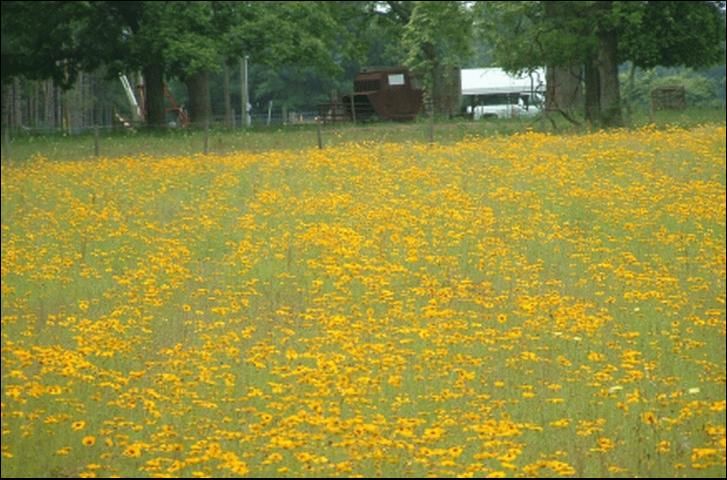
The genus Coreopsis is Florida's State Wildflower. Coreopsis basalis, commonly known as Goldenmane Tickseed or Dye Flower, brightens roadsides and fields of Central Florida and North Florida from as early as April to as late as mid-June (Figure 1). During dry years, however, flowering is mainly in May. This drought-tolerant annual usually is found from North Carolina to Texas although it has been observed as far north as Connecticut and Illinois.
In Florida, Goldenmane Tickseed prefers sunny, disturbed sites that have dry, sandy soil. This wildflower is often found coexisting with bahiagrass. In dry, sandy soils, bahiagrass sod or stands are open enough to allow Goldenmane Tickseed to grow competitively with the grass. Since Goldenmane Tickseed is a spring annual, most of this wildflower's growth and flowering occur before bahiagrass grows large enough to out-compete it.
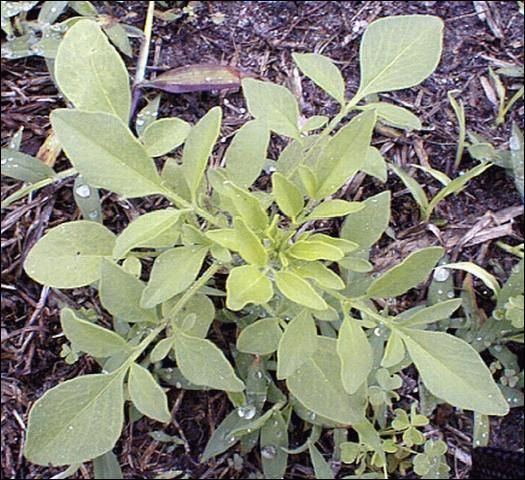
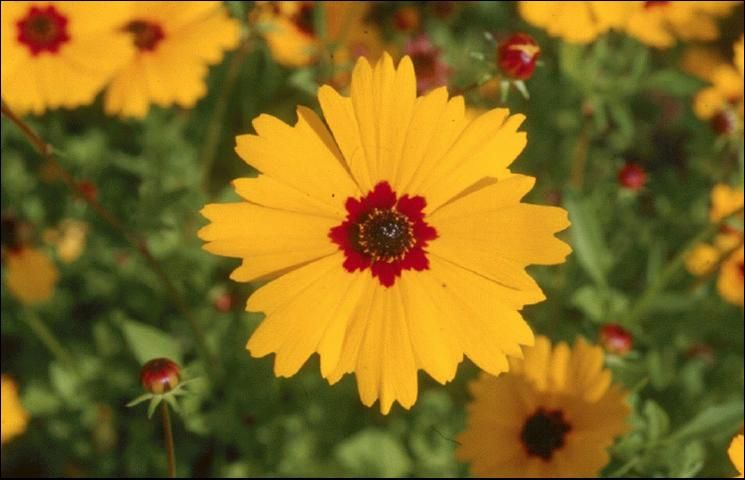
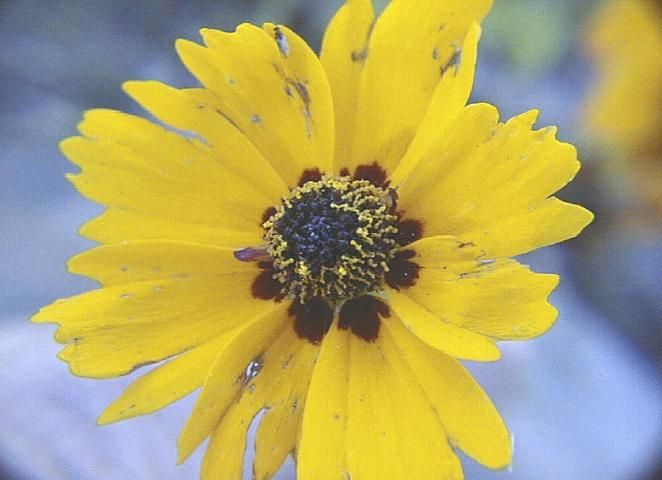
Goldenmane Tickseed is an upright plant with elonagated leaves that are dissected or divided (Figure 2). Goldenmane Tickseed is usually 1 to 11/2 feet tall, but can grow much taller. Height is strongly dependent on soil moisture and nutrient levels, as well as light level. In shaded areas, this wildflower can be very "leggy" and grow as tall as 5 feet. The dark-purple disk flowers are ¾ to 11/2 inch in diameter and have showy yellow ray flowers ("petals"). A spot colored dark red to maroonish is located at the base of each ray flower (Figure 3). The size of this spot is variable and at times barely noticeable.
Establishment and Maintenance
Naturally Occurring Populations
Naturally occurring fields of Goldenmane Tickseed are especially prevalent in Madison County, Fl and south through Alachua County, Fl. These fields occasionally occur in Leon and Gadsden counties, too. If managed properly, these Goldenmane Tickseed populations will thrive, thereby reducing or eliminating costs associated with site preparation and planting.
Site Preparation
Goldenmane Tickseed should be grown on well drained soil. Using the tilling and soil-solarization methods described in this section, preparing the seed bed in such a manner so that
-
there will be good seed-to-soil contact;
-
sown seed will be in the top layer of soil, no more than about 1/8 inch deep; and
-
weed competition is minimized.
Once the soil is prepared, consider installing an irrigation system (See "Irrigation").
Minimum Till
About four weeks before sowing seed, kill existing vegetation with a nonselective, translocated herbicide that contains either glyphosate or glufosinate as the only active ingredient. More than one application will probably be needed to kill the weeds; the second application should be about two weeks after the first application. About two weeks after the second application, mow the dead vegetation close to the soil and bag the clippings, or, if permitted, burn off the dead vegetation. Then lightly scarify the field with a disk or harrow so that the soil surface is barely scratched. Disking or harrowing at least one time in a perpendicular direction will increase the amount of soil surface that is scarified. Lightly scarifying the soil facilitates good seed-to-soil contact while minimizing soil disturbance, which creates weed problems.
Disking or harrowing will not be necessary if a no-till drill will be used to sow the seed. Disking or harrowing will probably not be necessary if the soil is sandy. However, if the seed-bed soil is loose, it will have to be made firmer so the seeds do not sink too far into the soil. A turf roller or cultipacker can be used to firm up the seed bed.
Deep Till
While the method above avoids weed competition by minimizing soil disturbance, the goal of the deep-till method is to substantially deplete the weed-seed bank in the soil. This method will result in a well tilled soil and minimal weed competition, but this method can take up to two years to complete.
Existing vegetation is killed with a nonselective, translocated herbicide containing either glyphosate or glufosinate as the only active ingredient. The field is then deep tilled, and a new crop of weeds is allowed to emerge. When weed seedlings are 1–3 inches tall, kill them as before. Repeat this herbicide/tilling cycle for up to two years. Since the soil is deep tilled, the seed bed will have to be made firmer before Goldenmane Tickseed seed is sown. Emerging weeds must not be allowed to flower, and the area surrounding the field should be mowed often enough to prevent weeds from flowering.
Soil Solarization
This is a cultural method of pest control in which clear polyethylene is laid over moist, tilled soil for six to 12 weeks to trap incoming solar radiation, thereby heating the soil to temperatures lethal to many weed species and soilborne pests. Following below are several points to keep in mind when using this method:
-
Use soil solarization only in summer or early fall
-
This method will only control/suppress soil pests 6-8 inches down in soil
-
Soil must be kept moist
-
Some crabgrass species may not be controlled by soil solarization.
Additional information on this technique is available in EDIS Publication ENY625, under the heading, Soil Solarization, (on Page 30) at the following URL: https://edis.ifas.ufl.edu/pdffiles/CV/CV11200.pdf.
Planting
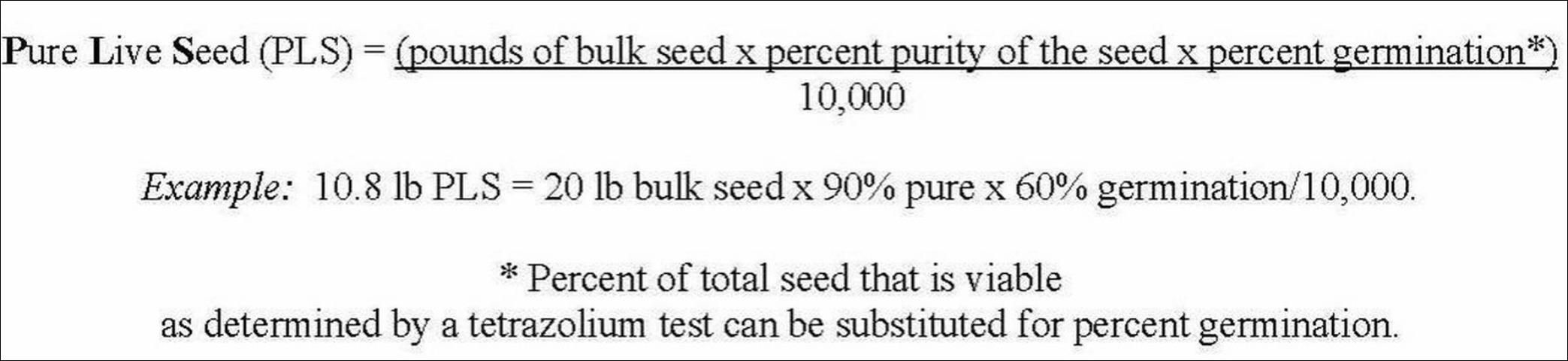
Plant Goldenmane Tickseed in late summer or early fall on a firm seed bed. If the soil is loose, seed could get buried too deep and inhibit seedling emergence. Sow at least 2 pounds of Pure Live Seed (PLS) per acre or at least 4 pounds of bulk seed if PLS is not known. This rate should yield a stand canopy dense enough to reduce weed competition. (To determine PLS, see the calculations immediately below in Figure 4.)
Production fields can be established as solid stands or in rows. To uniformly distribute seed by hand over an entire small plot (less than 1 acre), mix half the seed with slightly moistened sand or a similar inert material. The ratio of sand to seed (by volume) should be 9:1 or greater. Spread this half of the seed over the entire plot; repeat this process with the other half of the seed. When planting in rows mechanically or by hand, dilute the seed with sand as described above. Space rows far enough apart so that you can use a cultivator to control weeds.
A no-till seed drill, if available, can be used to plant large, solid stands. To obtain spaced rows, cover the drop tube holes in the seed drill hopper so to obtain the desired row spacing.
If seed was not planted with a no-till seed drill, cultipack or roll the seed bed or simply scratch the seed into the soil with a rake. Good seed-to-soil contact is critical for optimal germination. However, make sure that seed is not buried more than about 1/8 inch deep or emergence could be inhibited.
Seed planted in the summer will germinate by October. To facilitate good stand establishment for seeds sown in the fall, irrigate by applying at least 1/4 inch water per day for the first two to three weeks after planting. Use supplemental irrigation to compensate for the lack of rain. Seedlings will form rosettes and remain at this stage until the weather warms in the spring.
Fertilization
Some evidence indicates that supplemental fertilization can improve yield and quality of Tickseed species (5, 6; and personal communication of Terry Zinn, registered agent for Wildflowers of Florida, Inc.). First have a soil test conducted to determine soil levels of nitrogen (N), phosphorus (P), and potassium (K). If warranted, apply a fertilizer with a low N, low to no P, and high K ratio (for example, 5-0-20 or 5-5-20) at 32 lb N per acre in late February or early March. Keep in mind that excess nitrogen will promote vegetative growth over flower and seed production.
Irrigation
Even though Goldenmane Tickseed is drought tolerant, consider supplemental irrigation. Flowering season of natural stands is extended when rain occurs regularly during the spring. Use supplemental irrigation to ensure that plants receive at least 1 inch water per week. When irrigating the crop apply at least 3/4 inch each time to encourage a deeper root system.
Pest Control
Weeds
Weeds are a major pest problem for Goldenmane Tickseed. Weeds can reduce seed yield by competing with the wildflower for water and nutrients. However, even if weed competition seems minimal and the wildflower crop is thriving, use cultural practices that will reduce the amount of weed seed that could be harvested with the crop seed. Preventing weed seed from getting into the wildflower seed harvest is usually easier than cleaning out the weed seeds after the harvest. In addition, marketing Goldenmane Tickseed seed will be difficult or impossible if too many weed seeds are mixed with the wildflower seed.
Eliminate weeds that grow into the canopy of the crop to prevent weed seed from being harvested along with the wildflower seed. Be especially diligent about eradicating noxious weed species (1) from the Goldenmane Tickseed planting. The Florida Department of Agriculture and Consumer Services (FDACS) prohibits the inclusion of noxious weed seed in any seed sold in Florida.
If chemical weed control is to be part of the weed-management program, use a preemergence herbicide. Preventing weed growth is usually less expensive than killing existing weeds. The only preemergence herbicides currently labelled for use on all Coreopsis species are Pennant® Magnum and several products that contain trifluralin as the only active ingredient. However, check the trifluralin product label to make sure the particular product is labelled for use in field plantings of Coreopsis; not all trifluralin products are labelled for use in such plantings.
While these herbicides should be safe to use on Goldenmane Tickseed, herbicide tolerance can vary depending on seed source and growing conditions. It would be prudent to test these herbicides on a small portion of the planting prior to widespread application. Check for injury for one to two months after application.
Existing annual and perennial weeds can be controlled by hand-weeding or with directed applications of a nonselective herbicide that contains glyphosate or glufosinate as the only active ingredient. Small or immature weeds can be killed with a directed application of a contact herbicide that contains diquat or an herbicidal soap as the only active ingredient. Whenever applying nonselective or contact herbicides, use a shielded spray nozzle to reduce the likelihood of spray drift damaging the crop.
For row crops, control weeds in aisles with a cultivator or with directed applications of a nonselective or contact herbicide as mentioned above. If cultivating, do so before weeds begin flowering.
Grasses that are growing in or around crop plants can usually be controlled with postemergence application(s) of Acclaim® Extra. Like the preemergence herbicides mentioned above, this herbicide is labelled for all Coreopsis species, but should be tested on a small portion of the crop prior to widespread application.
Whenever using any herbicide, read and follow all label directions, including those for protective safety equipment and re-entry intervals.
Other Pests
No significant insect or disease pests have been observed on Goldenmane Tickseed crops in Florida. Composite thrips (Microcephalothrips abdominalis) and Western Flower Thrips (Frankliniella occidentalis) have been detected (3), but whether seed production is affected by these thrips is not known. Cosmetic damage on the flower petals appears to be the only effect of these thrips on Goldenmane Tickseed. (See Figure 5).
Stand Longevity
Goldenmane Tickseed is a good seed producer. Since all seed cannot possibly be harvested, replanting should not be necessary.
Harvesting, Drying, Cleaning, Storing, and Certification of Seeds
Harvesting Seed
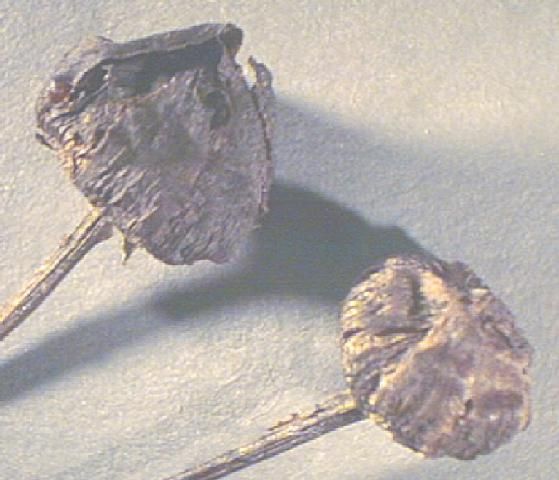
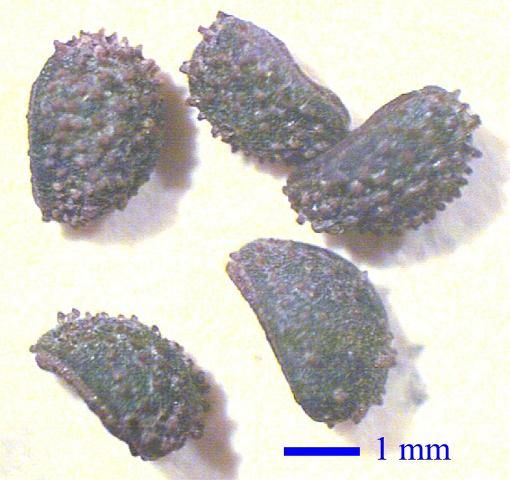
Seed is ripe when the seed head turns dark brown and has a "dried" appearance (Figure 6 shows the seed head from Leavenworth's coreopsis). Seed can be harvested at this stage because the seed head opens soon after it turns brown. (See Figure 7)
When the seed head opens, seed will fall to the ground with the slightest disturbance. Typical yields of clean seed range from 20–50 lb per acre.
Manual. Harvesting with pruning shears is a very selective method as only ripe seed heads are harvested. Because plants will continuously flower throughout the spring, seed yields are maximized with this harvesting method. However, because this method is labor intensive, use in small plots intended especially for seed production.
Handheld Seed Stripper. This piece of equipment is a modified landscape string trimmer (7). Beater bar strips mature and immature seed heads off wildflowers (4). Seed heads are deposited in a removable bag that partially surrounds the beater bar. The seed stripper is less selective, but more efficient than using pruning shears (4). Use this method to harvest small areas of the crop that have ripe seed.
Modified Leaf Vacuum. A leaf vacuum attached to a small garden tractor can be modified so that the vacuum intake passes over the top of the crop. This method is more selective than the seed stripper. The harvest will be mainly ripe seed along with a low percentage of immature seed and flower parts. Vacuum harvesting should be done regularly during the flowering season as seed ripens continuously over several weeks. This is a good method for harvesting row crops.
Combine. A combine is most effectively used for crops of 1 acre or more. Since all mature and immature seed will be harvested, monitor seed ripeness of the crop to maximize harvesting of mature seed.
Postharvest Drying
Harvested seed, especially seed harvested by a combine or seed stripper, will contain some leaves, stems, and immature seed. Dry seed relatively quickly, before it is cleaned. If the plant material remains moist too long, the seed mixture will start to heat up, and the heat could kill some seed or reduce seed quality.
Spread harvested seed on a clean, smooth, hard surface inside a shed or barn, and allow the seed to dry for a few days before cleaning. A floor fan will facilitate drying if the harvest is large. If the floor is not clean, spread a thin layer of seed on brown packing paper or newspaper. (Visit your local newspaper and ask for the ends of newsprint rolls.) If drying seeds outdoors, wind may blow seed away, and dew and rain may slow the drying process.
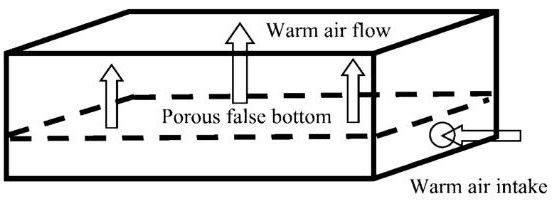
An alternative method is to dry the seed in a drying bin (Figure 8). A simple seed-drying bin consists of four plywood walls, a porous false bottom, and a source of warm, dry air (less than 100°F). Openings in the false bottom need to be small enough that seed do not fall through. Spread the seed thinly and evenly over the entire floor of the bin. If part of the floor is not covered with seed, the air will preferentially flow through that gap and increase the time it takes to dry the seed.
Cleaning Seed
A two-screen (or more) air-screen cleaner can be used to clean seed. If further cleaning is necessary, try replacing screens in the air-screen cleaner with screens of different pore sizes or shapes. Additional cleaning of the seed can be done with an air density seed separator or gravity table. Clean seed so that purity is greater than 90 percent pure (by weight) and contains less than 1 percent weed seed (by weight), but no noxious weed seed.
Small quantities of seed can be cleaned by hand with screens used in an air-screen cleaner. Screens can be purchased for about $35 each.
Seed Storage
After the seed has been cleaned, store it in a cool, dry environment—such as a large refrigerator or walk-in cooler—for maximum shelf life. The current rule of thumb is that temperature (°F) + relative humidity (% RH) in the storage facility should total 100 or less, and the RH should be 50 percent or less. For example, storing seed at 35°°F and 40% RH (35+40=75) would be adequate.
If storing seed in a shed or barn, be careful to protect the seed against insects and rodents.
Label each bag with the specie's scientific name, date of harvest, date of storage, percent purity, percent weed seed, and germination rate.
Seed Testing and Certification
Seed must be tested for germination rate, purity, and presence of weed seeds. A pregermination tetrazolium test is strongly recommended to determine the total percentage of viable seed. Seed testing should be conducted by a seed testing facility approved by the Association of Official Seed Analysts (AOSA).
To have seed certified as Florida ecotype, contact the Southern Seed Certification Association, Inc., P.O. Box 2619, Auburn, AL 36831 (334-844-4995; 334-821-7400). The SSCA is a joint Florida/Alabama agency.
References
Burks, K.C. 2000. Non-native plant species restricted by federal, state, or local law in Florida. Bureau of Invasive Plant Management, Florida Department of Environmental Protection, Tallahassee, FL. http://www.fwc.state.fl.us/docs/WildlifeHabitats/InvasivePlants_List.pdf.
Noling, J.W. 1999. Nematodes and their management. Fla. Coop. Ext. Serv. Publ. ENY 625. https://edis.ifas.ufl.edu/CV112.
Norcini, J. 2002. Goldenmane tickseed minimally damaged by thrips. NFREC Newsletter 4(13):4. http://nfrec.ifas.ufl.edu/files/pdf/newsletters/2002/NFREC_newsletter_0413_070102.pdf.
Norcini, J.G., J.H. Aldrich, and F.G. Martin. 2002. Effect of harvest method on seed yield of Coreopsis lanceolata L. and Gaillardia pulchella Foug. J. Environ. Hort. 20:20-23.
Norcini, J.G., J.H. Aldrich, and F.G. Martin. 2004. Harvest season influences fertilizer effects on seed production of lanceleaf coreopsis. J. Environ. Hort. 22:229-233.
Norcini, J.G., J.H. Aldrich, and F.G. Martin. 2006. Harvest season and fertilizer effects on seed production of Leavenworth's coreopsis. J. Environ. Hort. 24:63-67.
Norcini, J.G., D.J. Zimet, C. Maura, S. Pfaff, and M.A. Gonter. 1999. Seed production of a Florida ecotype of black-eyed susan. EDIS Circular 1226. Environmental Horticulture Department. Institute of Food and Agricultural Sciences, University of Florida: Gainesville, FL.