
Mexican Fruit Fly, Anastrepha ludens (Loew) (Insecta: Diptera: Tephritidae)
The Featured Creatures collection provides in-depth profiles of insects, nematodes, arachnids and other organisms relevant to Florida. These profiles are intended for the use of interested laypersons with some knowledge of biology as well as academic audiences.
Introduction
The Mexican fruit fly, Anastrepha ludens (Loew), is a very serious pest of various fruits, particularly citrus and mango, in Mexico and Central America. Its natural distribution includes the Rio Grande Valley of Texas, where populations routinely attain pest status if control measures are not practiced. It is a frequent invader in southern California and Arizona. Mexican fruit fly represents a particular threat to Florida because of its special affinity for grapefruit, of which Florida is one of the world's leading producers. Mexican fruit fly larvae are transported widely in infested fruits.
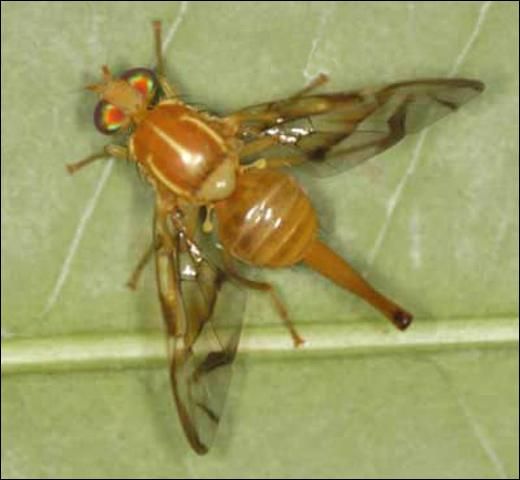
Credit: Jeffrey Lotz, Division of Plant Industry
Synonymy
Acrotoxa ludens Loew
Trypeta ludens (Loew 1973)
Anastrepha lathana Stone 1942
Distribution
The Mexican fruit fly is indigenous to Mexico and much of Central America as far south as Costa Rica. It has also spread into the cultivated citrus sections of the west coast of Mexico and northward toward Texas, Arizona, and California, resulting in continual detection, survey, and eradication campaigns in these areas. In January 2012, the USDA-APHIS announced that the Mexican fruit fly was eradicated from the last county in Texas in which it had been present. Unless introduced again from overseas or Mexico, this means the United States is now free of Mexican fruit flies (Nappo 2012).
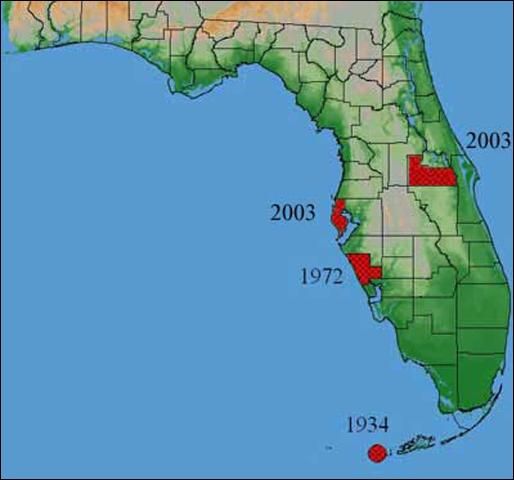
Credit: G. J. Steck and B. D. Sutton, Division of Plant Industry
In 2003, live larvae were found in Pinellas County, in manzano peppers that originated from Mexico. However, the discovery of adults in Florida has been surprisingly rare. A single specimen was detected in a multi-lure trap in Orlando in 2003, and an extensive survey program yielded no further specimens. Previously, a single fly was captured in a McPhail trap in Sarasota in 1972 (Clark et al. 1996). Two specimens (one male and one female), labeled "Key West, 22-IX-34, at Spondias mombin Jacq., O.D. Link Coll., S.P.B. Acc. No. 52582," are present in the Florida State Collection of Arthropods.
Description
The genus Anastrepha comprises about 200 species distributed throughout the Americas. Most species are characterized by their yellow to brown body and wing coloration, distinctive wing pattern of costal-, S-, and inverted V-bands (C, S, and V), and females with relatively long, tubular ovipositor sheaths. The medial vein (M1) curves forward at the wing tip. Anastrepha ludens is a well-defined and clearly distinct species, although there is a possibility of a separate but nearly indistinguishable form in the extreme southern part of its distribution in Costa Rica (Jiron et al. 1988). The first comprehensive treatment of Anastrepha taxonomy, which remains fundamental and useful, is that of Stone (1942).
Adult
The adult Mexican fruit fly is 7–11 mm long, or slightly larger than a house fly (6–7 mm), and is mostly yellowish-brown in color. The Mexican fruit fly, A. ludens, is typical in appearance to other members of the genus Anastrepha, but notable for the female's long ovipositor and sheath relative to its body size. The ovipositor is 3.35–4.7 mm long. The Mexican fruit fly is readily distinguished from the Caribbean fruit fly, Anastrepha suspensa (Loew), by its much longer ovipositor (only 1.45–1.6 mm long in suspensa), wing band color (pale yellow in ludens vs. dark brown in suspensa), width of S-band (narrow apically, not extending to medial vein in ludens vs. wide and extending to medial vein in suspensa), and color of thoracic setae (uniformly pale in ludens vs. dark in suspensa).
Adults may be very long-lived, up to 11 months, and highly fecund, laying 1,500 eggs or more. Extensive further details on the biology and ecology of the Mexican fruit fly are given by Baker et al. (1944); see also extensive references in Aluja (1994).

Credit: Jeffrey Lotz, Division of Plant Industry
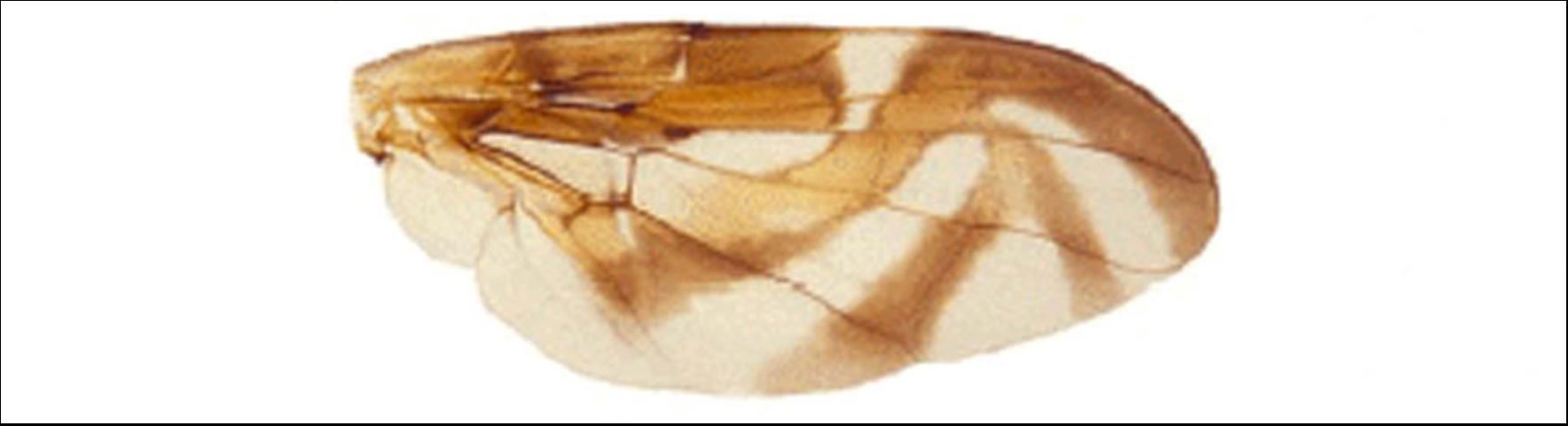
Credit: Jeffrey Lotz, Division of Plant Industry
Larva
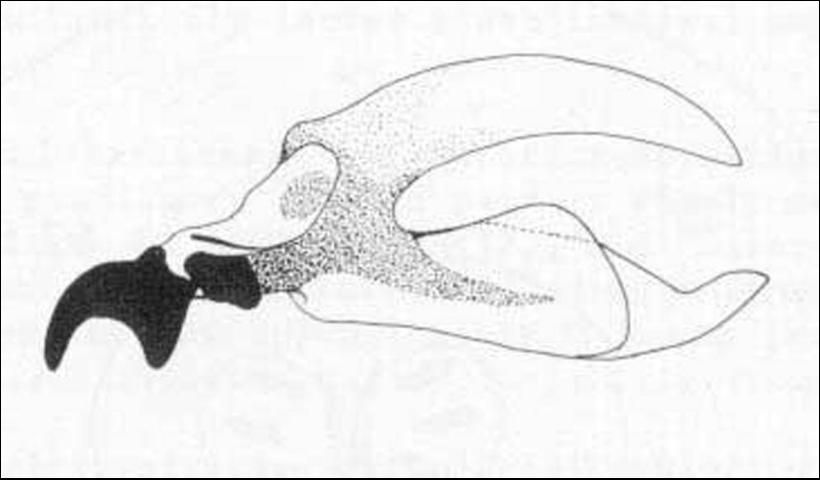
The larval descriptions were made from reared and verified specimens acquired from the U.S. National Museum of Natural History (USNM), Washington, and from other identified lots of larval specimens at the Florida State Collection of Arthropods (FSCA). Nonetheless, these specimens did not result in a configuration of the cephalo-pharyngeal skeleton exactly as published in illustrations of Phillips (1946) and Pruitt (1953). Various populations of each fruit fly species evidently exhibit variations in this and other characters that need to be taken into account. However, the main characteristics of each species appear to be constant and allow relatively easy identification. The cephalo-pharyngeal skeleton is not usually examined in routine identifications because the larval specimen must be dissected before this character can be examined.
The Mexican fruit fly larva is white with the typical fruit fly larval shape: cylindrical, elongated, anterior end usually somewhat recurved ventrally and with mouth hooks, flattened caudal end, eight ventral fusiform areas (one indistinct—between the thorax and abdomen), 11 segments to the body). The last instars are usually 9–12 mm in length. There are 12 to 14 anterior buccal carinae. The cephalo-pharyngeal skeleton has a relatively large convex mouth hook (length 2 X width), with hypostome of nearly equal width and the dorsal bridge is enlarged. The pharyngeal plate is longer than the dorsal wing plate and has a long pharyngeal support.
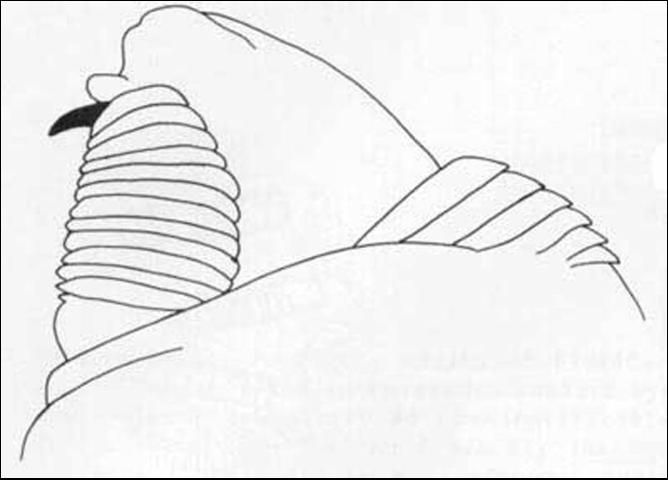
Credit: Division of Plant Industry
Credit: Division of Plant Industry
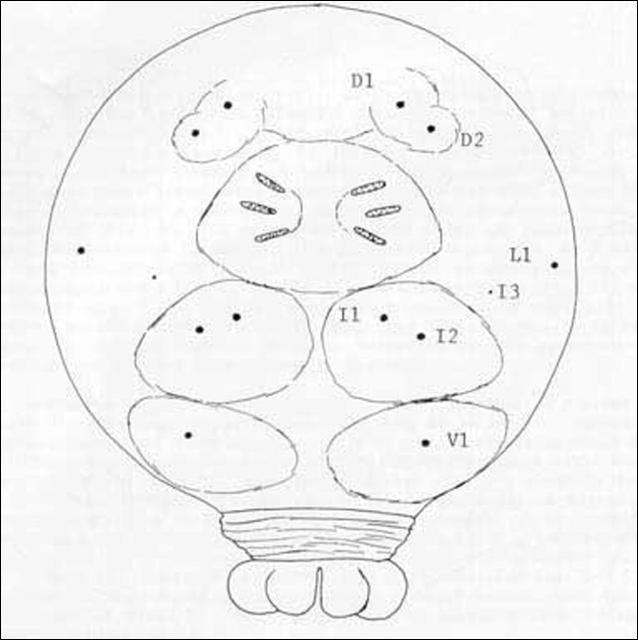
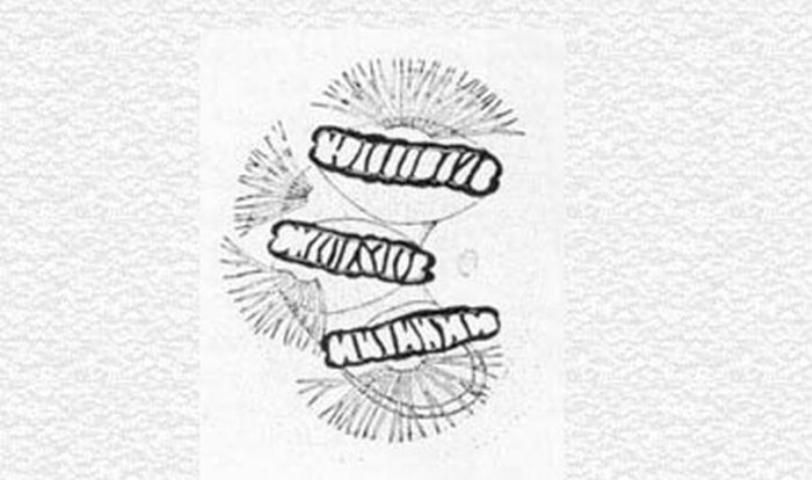
The anterior spiracles are slightly asymmetrical, with a median depression, with 18 tubules usually present (rarely 12 to 18). The caudal end has paired dorsal (D1 & D2) and intermediate (11 & 12) papillules, plus an indistinct I3; prominent L1 and V1; D1 & D2 acutely angled (ca. 45°) and as widely separated as I1 & I2; I1 & I2 less acutely angled (ca. 30°); I1, I3, and L1 are approximately in a straight line (at ca. 30°) and I3 is almost equidistant from L1 and I2.

Credit: Jack Dykinga, USDA
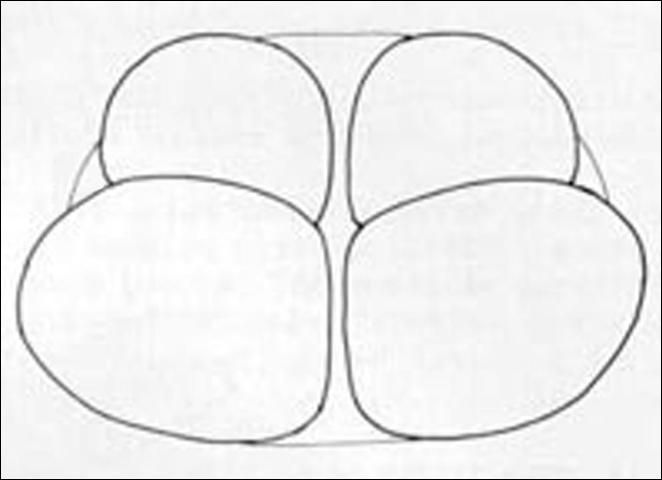
The posterior spiracles are elongated (ca. 5 X width), with dorsal two angled upward and ventral one angled downward on each side of median. The interspiracular processes (hairs) are mostly branched distally. The anal lobe is usually bifid (each lobe split), but sometimes entire (the anal lobe variation requires further study to determine if this represents one or two species, or a hybrid). [Described from USNM lot from Chihuahua, Mexico.] See Carrol & Wharton (1989) for a very detailed and well-illustrated description of all immature stages of Mexican fruit fly.
Accurate larval identification of A. ludens and other species of Anastrepha is difficult. Mexican fruit fly and Caribbean fruit fly, Anastrepha suspensa (Loew), larvae (last instars) may be separated as follows:
- Anal lobes usually bifid (each lobe split); buccal carinae 12 to 14; anterior spiracles usually with 18 tubules (rarely 12 to 18); caudal end with dorsal papillules in each pair as widely separated as in each pair of intermediate papillules (distance between D1 & D2 = I1 & I2), and "lateral" papillules apparently only "single" (papillule I3 not prominent); ventral papillules prominent; posterior spiracles elongated (ca. 1 X 5) and separated medially by approximately 3 X the length of 1 spiracle. . . . . A. ludens
- Anal lobes always entire; buccal carinae 8; anterior spiracles with 12 to 13 tubules; caudal end with dorsal papillules in each pair distinctly closer together than those of each pair of intermediate papillules (distance between D1 & D2 half that of 11 & 12), and "lateral" papillules with a distinct "pair" of papillules on each side of the posterior spiracles (13 prominent); ventral papillules usually indistinct; posterior spiracles of average length (ca. 1 X 3) and separated medially by approximately 2 X the length of 1 spiracle. . . . . A. suspensa
Additional key characters to separate A. ludens from A. suspensa and 11 other Anastrepha species are in Steck et al. (1990).
Life Cycle
Adults may survive for many months, occasionally almost a full year, and males appear to be able to survive much longer than females, even as much as 16 months. The adult female typically oviposits in citrus and other fruit at the time when the fruit begins to show color. Eggs are usually laid in groups of about ten and hatch in six to 12 days. The newly hatched larvae eat and burrow into the pulp of the fruit, taking on the color of their food so that when small they are overlooked easily. Many maggots may be found in a single fruit. When fully grown, the larvae emerge through conspicuous exit holes, usually after the fruit has fallen to the ground, and pupate in the soil. Larval development requires approximately three to four weeks, depending largely upon temperature conditions during these periods of development. The development is more rapid where comparatively higher temperatures prevail, and as a general rule, the shorter the period for fruit maturation the more rapid is the development of the larva.
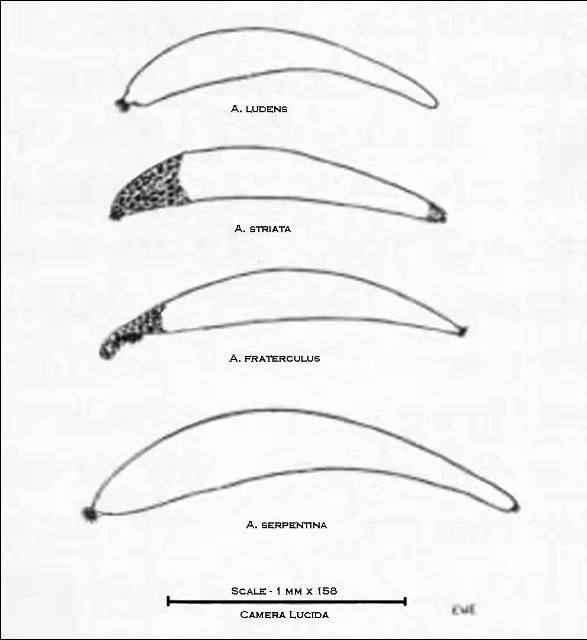
Credit: Division of Plant Industry
Hosts
All varieties of citrus except lemons and sour limes are attacked. Grapefruit is the preferred host, with oranges second. Pear, peach, and apple are preferred among the deciduous hosts, and white sapote and mango are preferred among the subtropical fruits.
While not a preferred host, avocado also is attacked. Other hosts include cherimoya, custard apple, mamey, pomegranate, quince, roseapple, and yellow chapote. Still other fruits and vegetables have been infested under laboratory conditions (Baker et al. 1944), including cacti, figs, bananas, tomatoes, peppers, squash, and beans.
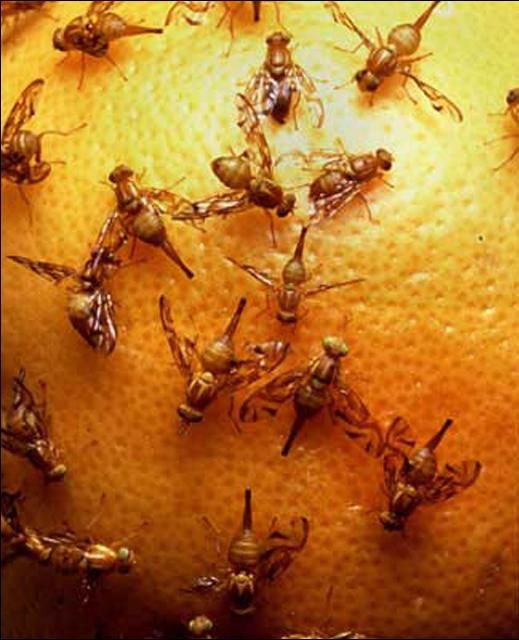
Credit: Jack Dykinga, USDA
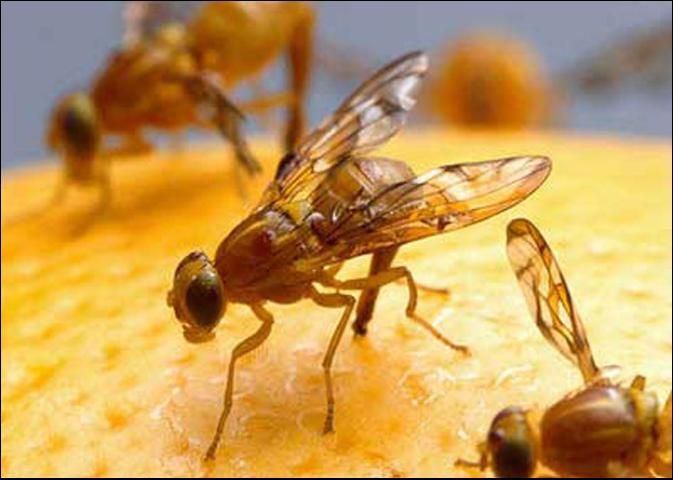
Credit: Jack Dykinga, USDA
Recorded Host
Please see the table on the last page.
Management
A Mexican fruit fly infestation is not readily controlled on a small scale, such as by homeowners. Egg and larval stages inside the fruit are safe from insecticidal treatments. The adult stage is susceptible to control, usually by a short-lived bait comprised of a contact insecticide mixed with protein and carbohydrate. This is applied as fine droplets to host plant foliage where adults feed. However, adults are highly mobile and move easily from any nearby untreated trees back to treated trees after a few days. On a larger commercial scale, such as a citrus grove, host trees may be treated with bait spray as described above, and immigration of new adults can be minimized by removal of other host plants in a surrounding buffer area. Area-wide control is also possible using mass release of laboratory-reared and sterilized males to compete with wild fertile males and reduce the number of fertilized eggs laid.
Like other Anastrepha species, A. ludens does not respond to any known sex attractant that can be usefully employed in a detection trapping system. This is in sharp contrast to some other serious fruit fly pests, such as Mediterranean fruit fly, Ceratitis capitata (Wiedemann), and oriental fruit fly, Bactrocera dorsalis Hendel, for which powerful male sex attractants are available and used in traps to detect populations early in the invasion process. Instead, detection systems for pest Anastrepha species rely on the use of non-specific, wet, protein-baited McPhail traps, which act as general food attractants, especially for young females searching for protein to produce eggs.
The Sterile Insect Technique is used in maintaining a fly-free zone in Mexico, Texas, and California. Technology for the eradication programs used to maintain these zones is supported by research by the USDA-ARS laboratory in Weslaco, Texas, and Sanidad Vegetal laboratories in Mexico. Both research groups cooperate with USAD-APHIS Plant Protection and Quarantine and International Services departments in establishing protocols and executing sterile insect release programs.
Trapping is not a good method to estimate populations of this fruit fly. However, cutting fruit after harvest or late season is a good method of estimating populations. If a fly is trapped in an orchard, then all fruit from that orchard is quarantined for two weeks. More sterile flies are released in the area. If a second wild fly is found then the quarantine is extended for a year (Robacher 1993).
Quarantine
Continual detection, survey and eradication campaigns are being conducted in the cultivated citrus sections of northwestern Mexico adjacent to California, and occasionally in the southern part of California when new invasions are detected. Sterilization of fruit before shipment from quarantined areas is required. Orange, sweet limes, grapefruit, mangos, sapotes, peaches, guavas, and plums are denied entry from Mexico into the United States by Federal Quarantine No. 5. Federal Quarantine No. 64 was enacted to prevent the shipment of certain fruits (mangos, sapotes, peaches, guavas, apples, pears, plums, quinces, apricots, mameys, ciruelas, and citrus fruits, except lemons and sour limes) from several counties in Texas to other parts of the country except under certification by the U.S. Department of Agriculture. However, with the eradication of the Mexican fruit fly in the United States in 2012, this quarantine is no longer in effect (NAPPO 2012).
Selected References
Aluja M. 1994. Bionomics and management of Anastrepha. Annual Review of Entomology 39: 155-178.
Berg GH. 1979. Pictorial key to fruit fly larvae of the family Tephritidae. San Salvador: Organ. Internac. Regional Sanidad. Agropec. 36 pp.
Carroll LE, Wharton RA. 1989. Morphology of the immature stages of Anastrepha ludens (Diptera: Tephritidae). Annuals of the Entomological Society of America 82: 201-214.
Clark RA, Steck GJ, Weems Jr HW. 1996. Detection, quarantine, and eradication of exotic fruit flies in Florida, pp. 29-54. In D.L. Rosen (editor), Pest Management in the subtropics: Integrated pest management - a Florida perspective. Intercept Ltd. Andover UK.
Dickens JC, Solis E, Hart WG. 1982. Sexual development and mating behavior of the Mexican fruit fly, Anastrepha ludens (Loew). The Southwestern Entomologist 7: 9-15.
Ebeling W. 1959. Subtropical Fruit Pests. University of California, Division of Agricultural Science 436 pp.
Hernandez-Ortiz V. 1992. El genero Anastrepha Schiner en Mexico (Diptera: Tephritidae), Taxonomia, distribucion y sus plantas huespedes. Instituto de Ecologia, Xalapa Mexico. 162 pp.
Greene CT. 1929. Characters of the larvae and pupae of certain fruit flies. Journal of Agricultural Research 38: 489-504.
Ibrahim RB. 1980. Fruit Flies of Florida (Diptera: Tephritidae). Gainesville: University of Florida. 355 pp. Doctoral dissertation.
Jiron LF, Soto-Manitiu J, Norrbom AL. 1988. A preliminary list of the fruit flies of the genus Anastrepha (Diptera: Tephritidae) in Costa Rica. Florida Entomologist 71: 130-137.
NAPPO. (January 2012). Anastrepha ludens (Mexican fruit fly) eradicated in the United States. Phytosanitary Alert System. http://www.pestalert.org/oprDetail.cfm?oprID=511 (18 January 2012).
Phillips VT. 1946. The biology and identification of trypetid larvae (Diptera: Trypetidae). Memoirs of the American Entomological Society 12: 161.
Pruitt JH. 1953. Identification of Fruit Fly Larvae Frequently Intercepted at Ports of Entry of the United States. Masters thesis. University of Florida, Gainesville. 69 pp.
Robacher D, Magan RL. 1993. ARS Program on Anastrepha species to meet APHIS Plant Quarantine requirements. University of Florida seminar.
Steck GJ, Carroll LE, Celedonio-H H, Guillen-A J. 1990. Methods for identification of Anastrepha larvae (Diptera: Tephritidae), and key to 13 species. Proceedings of the Entomological Society of Washington 92: 356-369.
Stone A. 1942. The Fruitflies of the Genus Anastrepha. USDA Miscellaneous Publications No. 439, Washington, DC. 112 pp.
White IM, Elson-Harris MM. 1994. Fruit Flies of Economic Significance: Their Identification and Bionomics. CAB International. Oxon, UK. 601 pp.