


Predatory Stink Bug, Stiretrus anchorago (Fabricius) (Insecta: Hemiptera: Pentatomidae)
The Featured Creatures collection provides in-depth profiles of insects, nematodes, arachnids and other organisms relevant to Florida. These profiles are intended for the use of interested laypersons with some knowledge of biology as well as academic audiences.
Introduction
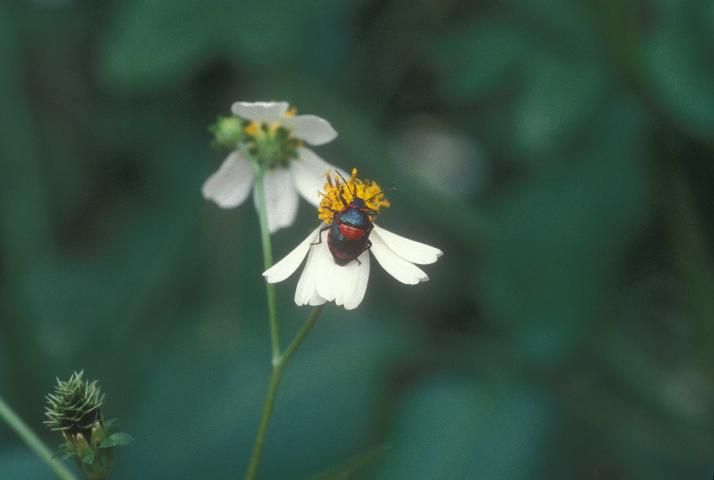
Stiretrus anchorago (Fabricius) is a medium-sized predatory stink bug which preys on both coleopterous and lepidopterous larvae and has been taken on soybeans, peanuts, alfalfa, and corn. It is predatory on the larvae of the Mexican bean beetle, Epilachna varivestis Mulsant (Howard and Landis 1936; Waddill and Shepard 1974, 1975; Deitz et al. 1976) the alfalfa weevil, Hypera postica (Gyllenhal) (Richman 1977), and at least one lepidopterous species, Eurema nicippe (Cramer) (Richman and Whitcomb 1978). In the laboratory, it has been successfully reared on larvae of the Mexican bean beetle (Waddill and Shepard 1974, 1975), the cabbage looper, Trichoplusia ni (Hubner), and the soybean looper, Pseudoplusia includens (Walker) (Richman and Whitcomb 1978).
Credit: Lyle J. Buss, University of Florida
Life Cycle
At 26° to 27°C and a light to dark photoperiod of 14:10, the time from egg to adult was 25 to 35 days. The egg stage lasted six to seven days (Waddill and Shepard 1974; Richman and Whitcomb, 1978).
Identification
The genus is recognized easily by the enlarged long and broadly oval scutellum, approaching that of scutellerids; subapical spine on the front femora; and ventral pubescent patches on the males. Hayslip et al. (1953) illustrated color variations of the adults. DeCoursey and Allen (1968) provided a generic key that is useful in separating 5th instar nymphs, but several Florida genera were not included. Only one highly variable species of Stiretrus occurs in the United States. Under the name of Stiretrus fimbriatus (Say), Oetting and Yonke (1971) provided illustrations, detailed descriptions, life history, and biological notes. Most authors consider S. fimbriatus as no more than a subspecies or color variant of S. anchorage. R.I. Sailer (personal communication, 1979) also believes S. fimbriatus to be a color variant of S. anchorago collected most frequently in the northern range of the species.
Eggs
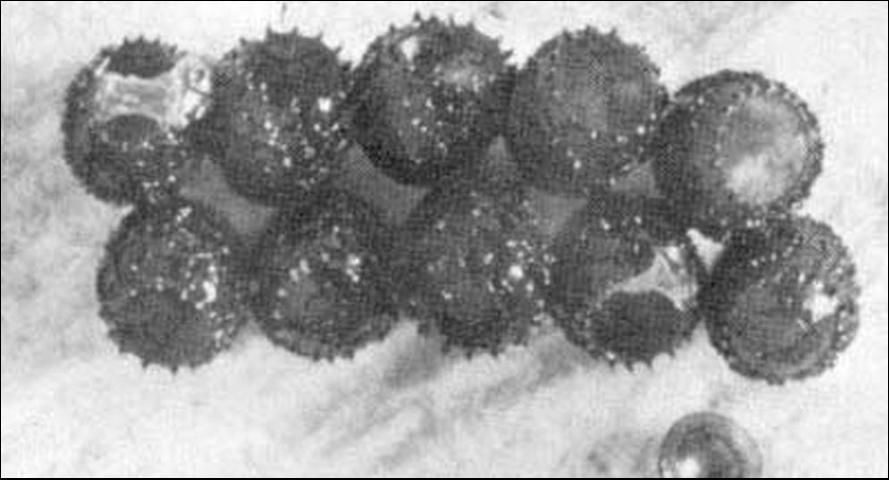
The ellipsoidal, blackish eggs of S. anchorago are approximately 1 mm in diameter with short projections around the operculum. These are laid in two rows containing a few eggs to nearly 30.
Credit: Division of Plant Industry
Larvae
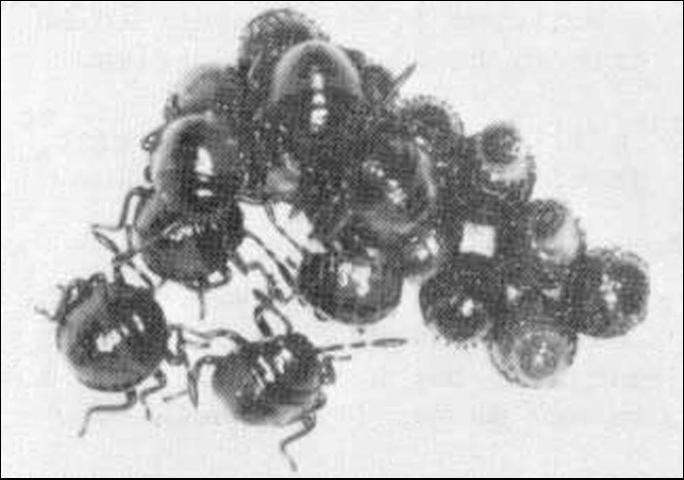
1st instar: Length approximately 1.5 mm; head width, including eyes, 0.7 mm; humeral width 1.0 mm. The 1st instar nymphs of S. anchorago are more globose than the 1st instar nymphs of most other species. At hatching the nymphs are red, but they soon turn black. They resemble tiny black beetles at this time and do not feed though they do require water in some form.
Credit: Division of Plant Industry
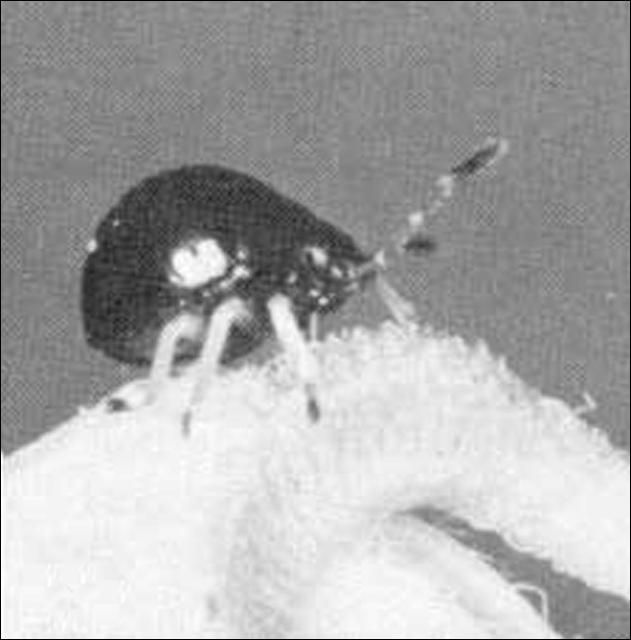
2nd instar: Length 2.0 to 2.5 mm; head width 0.9 mm; humeral width 1.4 mm. As in other asopine stink bugs, S. anchorago begins to take prey as a 2nd instar nymph. The color of the nymph is blackish blue. The nymph is very globose and assumes the predatory habit, though they may on occasion feed on plant tissue.
Credit: Division of Plant Industry
3rd instar: Length 3.0 to 3.5 mm; head width 1.2 mm; humeral width 2.1 mm. The 3rd instar does not differ much from the 2nd instar nymph, except in size.
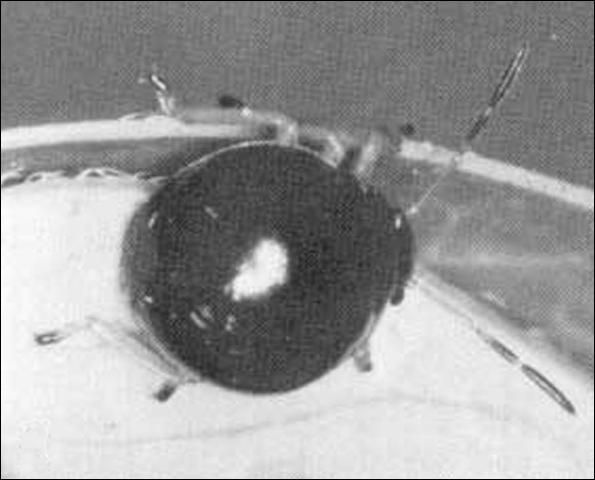
Credit: Division of Plant Industry
4th instar: Length approximately 4.5 mm; head width 1.6 mm; humeral width 3.0 mm. Again the 4th instar nymph resembles the 3rd instar, except in size.
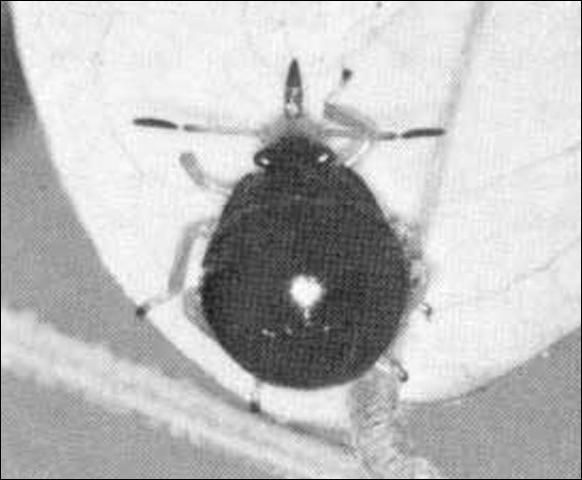
Credit: Division of Plant Industry
5th instar: Length 7.0 to 8.0 mm; head width 2.1 mm; humeral width 4.4 mm. The 5th instar nymph may be either all blackish blue or may have varying degrees of red markings on the pronotum. The red markings are, however, not related to the adult pattern, and red-marked nymphs may become solid-colored adults.
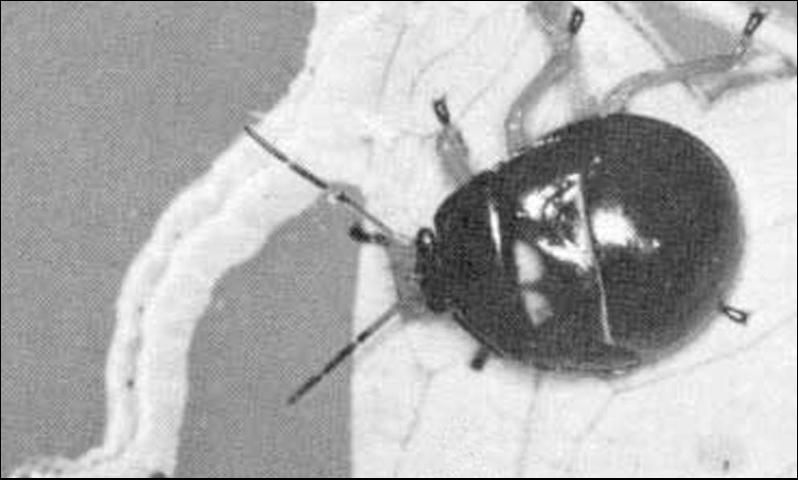
Credit: Division of Plant Industry
Adult
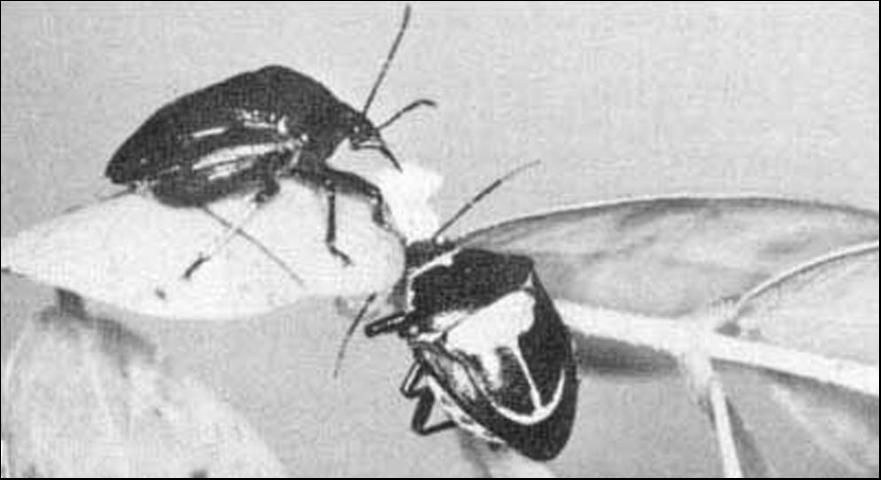
Male length 7 to 8 mm; head width 2.2 mm; humeral width 5.6 mm. Female length 8-9 mm; head width 2.3 mm; humeral width 6.2 mm. Adults of S. anchorago are quite variable in appearance. Some specimens are solid iridescent blue, green or purple, while others are patterned with orange or red and in the fimbriatus form with cream color. The coloration is not related to sex.
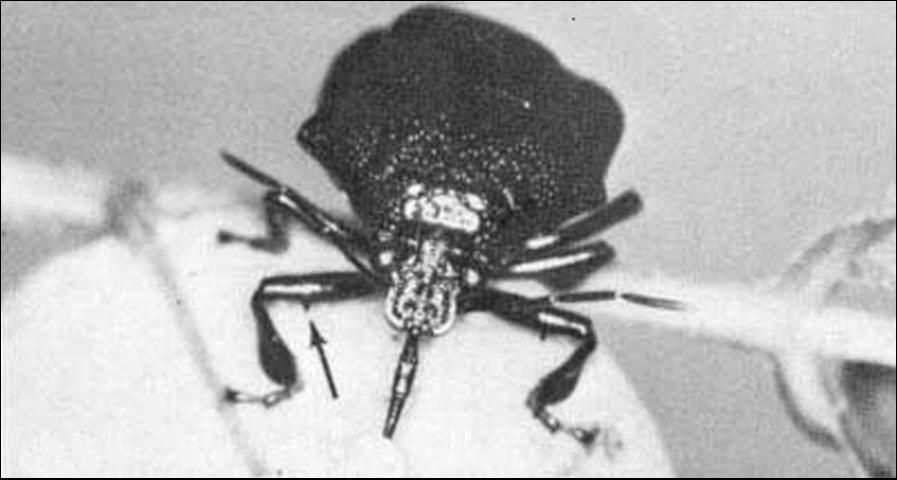
Credit: Division of Plant Industry
Credit: Division of Plant Industry
Survey and Detection
- It has been collected throughout the year in Florida, but is more common in the warmer months.
- It is most apt to be found on soybeans, pole beans, potatoes, and other truck and row crops where its prey of beetle larvae and caterpillars abound.
- Specimens can be collected by hand or net and submitted for identification in alcohol-filled vials or dry in pill boxes.
Selected References
DeCoursey RM, Allen RC. 1968. A generic key to the nymphs of the Pentatomidae of the Eastern United States (Hemiptera: Heteroptera). Univ. Connecticut Occas. Papers (Biol. Sci. Ser.) 1: 141–151.
Deitz LL, van Duyn JW, Bradley JR, Jr., Rabb RL, Brooks WM, Stinner RE. 1976. A guide to the identification and biology of soybean arthropods in North Carolina. North Carolina Agric. Exp. Sta. Tech. Bull. 238: 1–264.
Hayslip NC, Genung WC, Kelsheimer EG, Wilson JW. 1953. Insects attacking cabbage and other crucifers in Florida. Univ. Florida Agric. Exp. Sta. Bull. 534: 1–57.
Howard NF, Landis BJ. 1936. Parasites and predators of the Mexican bean beetle in the United States. United States Dept. Agric. Circ. 418: 1–12.
Oetting RD, Yonke TR. 1971. Immature stages and biology of Podisus placidus and Stiretrus fimbriatus (Hemiptera: Pentatomidae). Canadian Ent. 103: 1505–1516.
Richman DB. 1977. Predation on the alfalfa weevil, Hypera postica (Gyllenhal), by Stiretrus anchorago (F.) (Hemiptera: Pentatomidae). Florida Ent. 60: 192.
Richman DB, Whitcomb WH. 1978. Comparative life cycles of four species of predatory stink bugs. Florida Ent. 61: 113–119.
Waddill V, Shepard M. 1974. Biology of a predaceous stink bug, Stiretrus anchorago, (Hemiptera: Pentatomidae). Florida Ent. 57: 249–253.
Waddill V. 1975. A comparison of predation by the pentatomids, Podisus maculiventris (Say) and Stiretrus anchorago (F.), on the Mexican bean beetle, Epilachna varivestis Mulsant. Ann. Ent. Soc. America 68: 1023–27.