


Robber Flies, Asilidae (Insecta: Diptera: Asilidae)
The Featured Creatures collection provides in-depth profiles of insects, nematodes, arachnids and other organisms relevant to Florida. These profiles are intended for the use of interested laypersons with some knowledge of biology as well as academic audiences.
Introduction
The robber flies are an abundant and diverse family (Asilidae) known for their predatory behavior. Asilidae diversity can be attributed to their broad distribution, as most species tend to occupy a selective niche. As their common name implies, robber flies have voracious appetites and feed on a vast array of other arthropods, which may help maintain a healthy balance between insect populations in various habitats (Joern and Rudd 1982, Shurovnekov 1962). Asilidae adults attack wasps, bees, dragonflies, grasshoppers, other flies, and some spiders. Robber flies are particularly abundant in arid and sunny habitats, which are optimal conditions for observing their many morphs and behaviors.
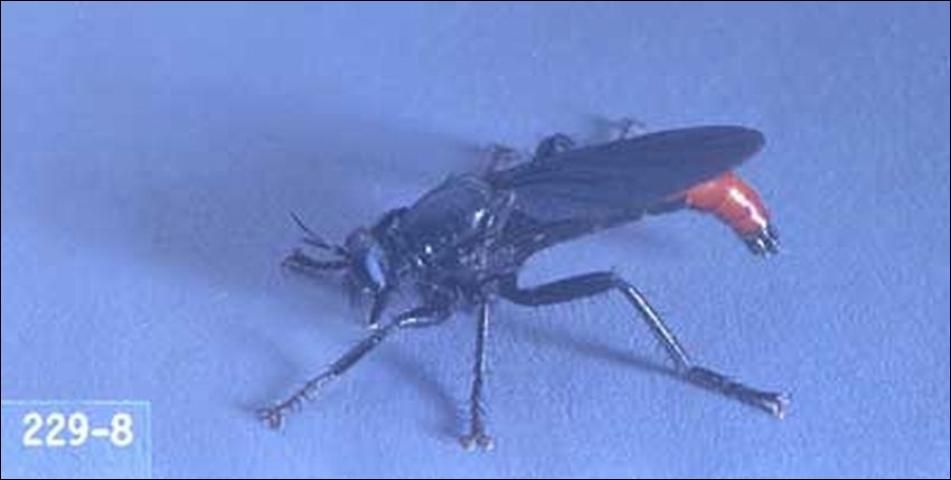
Credit: Ken Gray, Oregon State University
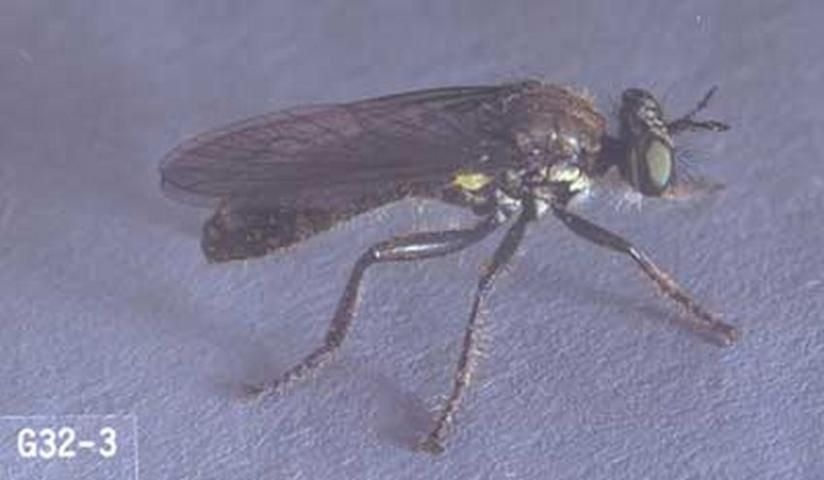
Credit: Ken Gray, Oregon State University
Distribution
The Asilidae enjoy a worldwide distribution, with some groups limited to certain regions (Hull 1962). For instance, the Megapodinae spp. are unique to the Neotropical region. Large island chains tend to encompass abundant Asilid faunas, particularly those south of Asia. By contrast, smaller islands such as the Hawaiian chain have no indigenous or introduced species (Hull 1962). The majority of robber fly species are found in dry, sandy conditions, as confirmed by the diversity of species found in such locales. Some species are well adapted to desert climates, where they are known to thermoregulate in response to temperature variations throughout the day (O'Neill et al. 1988, Morgan and Shelly 1988, O'Neill and Kemp 1990). Few species occur in woodland areas, and those that do tend to aggregate along the edges, near grasslands. In Florida, all four subfamilies of Asilidae (Asilinae, Dasypogoninae, Laphriinae, and Leptogastrinae) are present. Within these subfamilies, the following genera are known to exist in Florida (see Table 1).
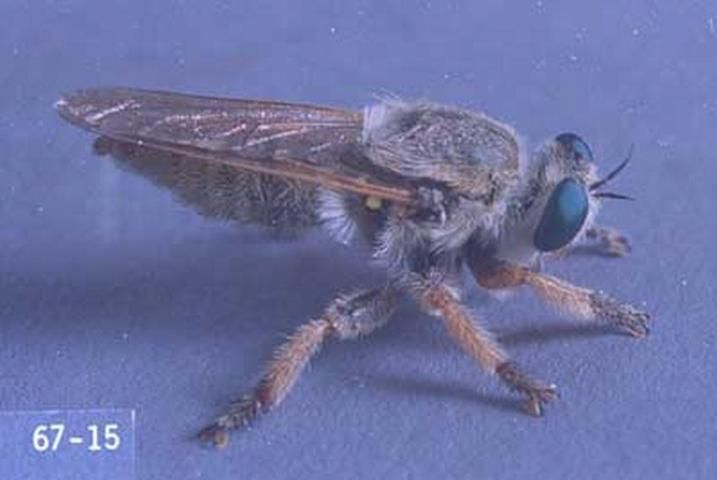
Credit: Ken Gray, Oregon State University
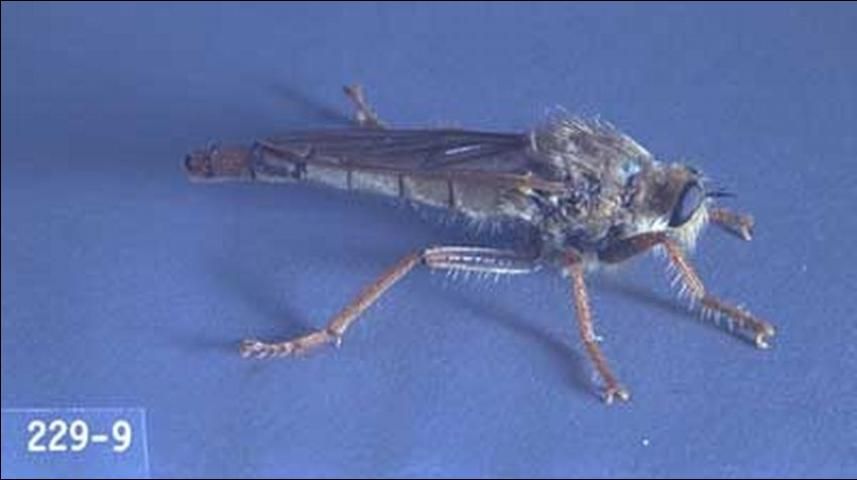
Credit: Ken Gray, Oregon State University
Description
Asilidae are a family of true flies, belonging to the superfamily Asiloidea within the suborder Brachycera. To date, there are approximately 7,003 described species of Asilidae distributed worldwide (Geller-Grimm 2008). There are nearly 1,000 North American species of robber flies, with more than 100 species occurring in Florida. Loew was perhaps the most influential dipterist to contribute information to the study of robber flies, describing several species and more than 80 genera. Other mid-nineteenth century contributors include Macquart, Walker, Rondani, and Bigot. Later, dipterists in the 1900s became specialists of robber flies in particular locales, most notably Curran and Bromley in North America.
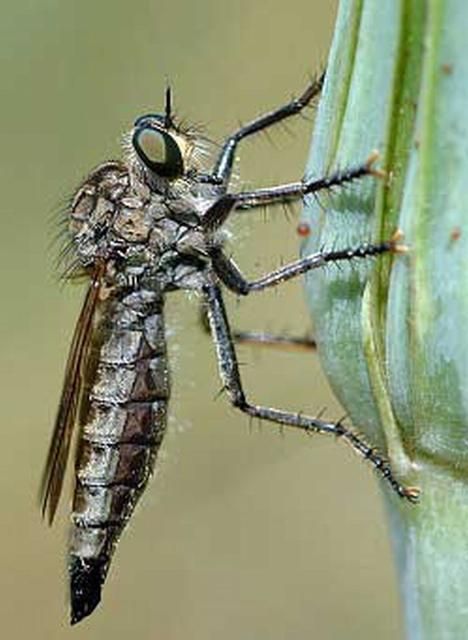
Credit: Fritz Geller-Grimm
All robber flies have a characteristic divot on top of the head, which is located between their especially prominent compound eyes. In general, adult Asilidae have an elongate body with a tapered abdomen. However, some species are stout and hairy, mimicking bumble bees, and still others may be slender and have a damselfly appearance. Adults range in size from small (3 mm) to very large (over 50 mm), averaging 9 to 15 mm in length (Wood 1981). Robber flies have long, strong legs that are bristled to aid in prey capture. Sexual dimorphisms are not extreme, although females tend to have slightly broader abdomens than males. Most robber flies have brown, gray, or black coloration.
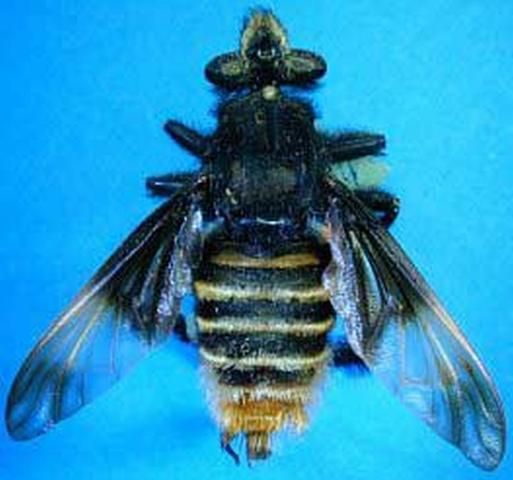
Credit: Fritz Geller-Grimm
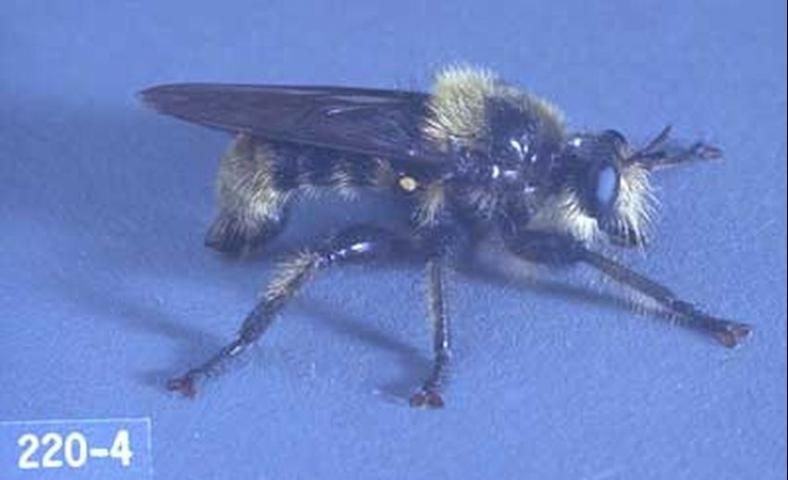
Credit: Ken Gray, Oregon State University
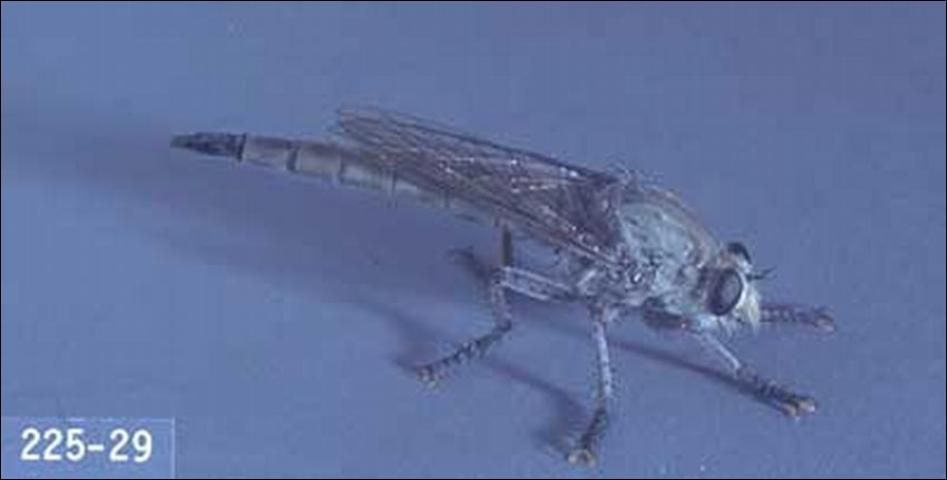
Credit: Ken Gray, Oregon State University
Biology
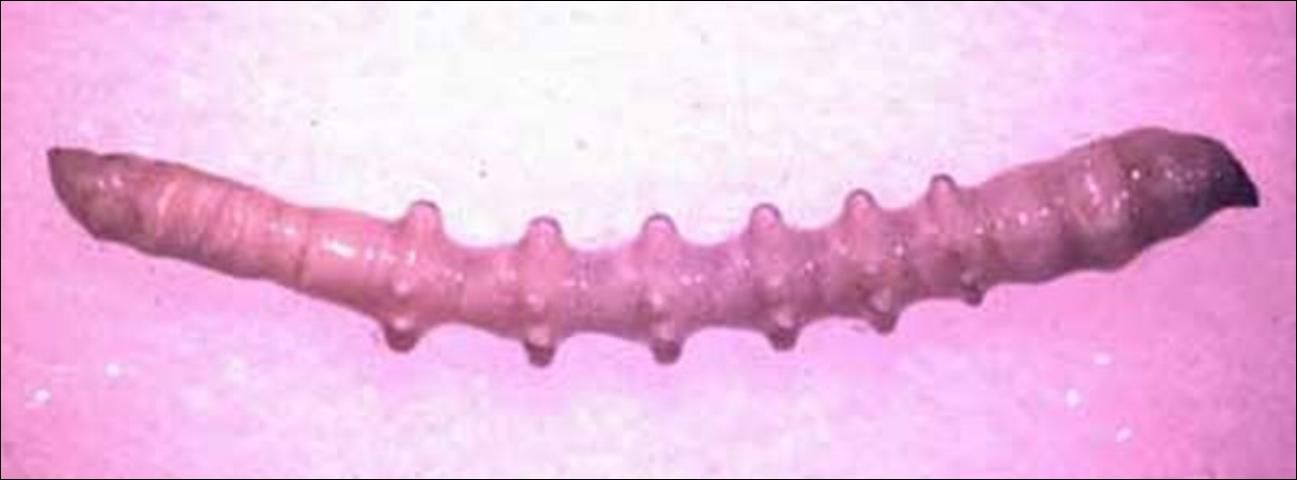
Female Asilidae deposit whitish-colored eggs on low-lying plants and grasses or in crevices within soil, bark, or wood. Egg-laying habits depend on the species and their specific habitat; most species lay their eggs in masses, which are then covered with a chalky protective coating. Robber fly larvae (Figure 9) live in the soil or in various other decaying organic materials that occur in their environment.
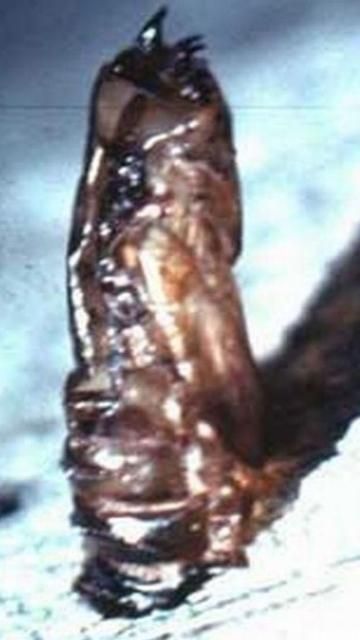
Larvae are also predatory, feeding on eggs, larvae, or other soft-bodied insects. Robber flies overwinter as larvae and pupate in the soil. Pupae migrate to the soil surface and emerge as adults, often leaving behind their pupal casing (Figure 10). Complete development ranges from one to three years, depending on species and environmental conditions. Theodor (1980) proposed that larval growth is accelerated in warmer regions and that many Asilidae species live no longer than one year.
Credit: Stephen W. Bullington
Credit: Stephen W. Bullington
Behavior
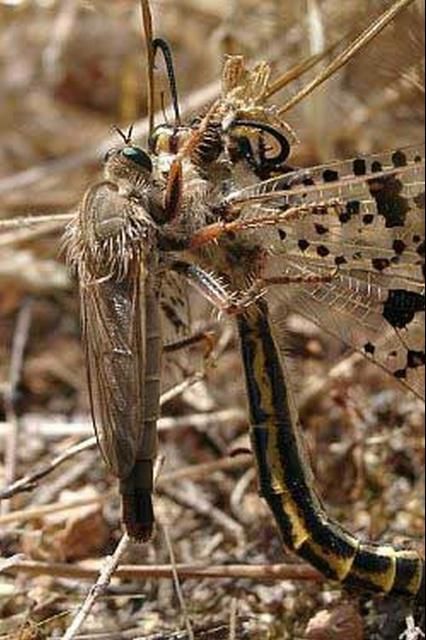
Robber flies are opportunistic predators, their diets often reflecting prey availability in a particular habitat. Shelly (1986) reported that of the nine Neotropical Asilidae species he studied, diet constituents were more than 85% composed of insects from the orders Diptera, Coleoptera, Hymenoptera, Hemiptera, and Lepidoptera. Furthermore, larger species tended to consume a greater diversity of prey taxa. Robber flies generally establish a perching zone in which to locate potential prey. Perching height varies by species, but generally occurs in open, sunny locations. Asilidae seize their prey in flight and inject their victims with saliva containing neurotoxic and proteolytic enzymes (Figure 11). This injection, inflicted by their modified mouthparts (hypotharynx), rapidly immobilizes prey and allows digestion of bodily contents. The robber fly soon has access to a liquid meal, which is generally consumed upon returning to a perched position.
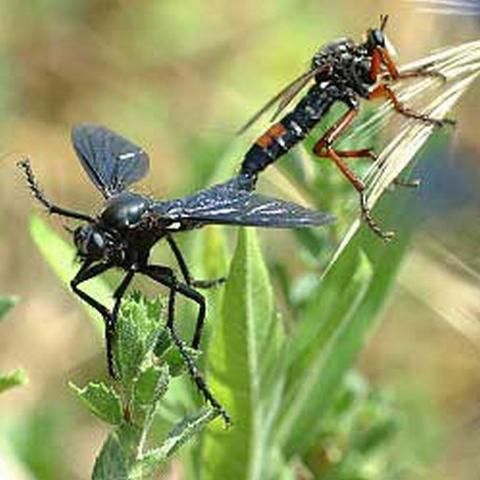
Robber flies exhibit minimal courtship behavior. Instead, the male pounces on the female, much like an act of prey acquisition. Copulation is accomplished in a tail-to-tail fashion (Figure 12) with the male and female genitalia interlocked. Flight is not completely inhibited during mating.
Credit: Mike Taylor
Credit: Fritz Geller-Grimm
Key to the Subfamilies of Florida Asilidae
1. Marginal cell open . . . . . 2
1'. Marginal cell closed . . . . . 3
2. Palpi one-jointed; small, slender species; antennae with slender terminal arista . . . . . Leptogastrinae
2'. Palpi two-jointed; antennae with or without a thickened terminal style . . . . . Dasypogoninae
3. Antennae with or without a terminal style, never a terminal arista; palpi two-jointed . . . . . Laphriinae
3'. Antennae with slender terminal arista; palpi one-jointed . . . . . Asilinae
Selected References
Barnes JK. (August 2003). Robber flies. University of Arkansas Arthropod Museum https://wordpressua.uark.edu/arthmuse/robber-flies/ (October 2018).
Bromley SW. 1950. Florida Asilidae (Diptera) with descriptions of one new species. Annals of the Entomological Society of America 43: 227–239.
Bullington SW. (July 2008). The Laphriini pages. http://www.laphriini.com/ (10 August 2009).
Geller-Grimm F. (January 2008). Robber flies (Asilidae). http://www.geller-grimm.de/asilidae.htm (10 August 2009).
Hull FM. 1962. Robber flies of the world. Bulletin of the United States National Museum 224: 1–907.
Joern A, Rudd NT. 1982. Impact of predation by the robber fly Proctacanthus milbertii (Diptera: Asilidae) on grasshopper (Orthoptera: Acrididae) populations. Oecologia 55: 42–46.
Mahr S. 1999. Know your friends: robber flies. Midwest Biological Control News 6: 1–2.
O'Neill KM, Kemp WP, Johnson KA. 1988. Behavioral thermoregulation in three species of robber flies (Diptera: Asilidae: Efferia). Animal Behavior 39: 181–191.
O'Neill KM, Kemp WP. 1990. Behavioral responses of the robber fly Stenopogon inquinatus (Diptera: Asilidae) to variation in the thermal environment. Environmental Entomology 19: 459–464.
Morgan KR, Shelly TE. 1988. Body temperature regulation in desert robber flies (Diptera: Asilidae). Ecological Entomology 13: 419–428.
Shelly TE. 1986. Rates of prey consumption by Neotropical robber flies (Diptera: Asilidae). Biotropica 18: 166–170.
Shurovnekov BG. 1962. Field entomophagous predators (Coleoptera, Carabidae, and Diptera, Asilidae) and factors determining their efficiency. Entomological Review 41: 476–485.
Theodor O. 1980. Diptera: Asilidae. Fauna Palestina: Insecta II. The Israel Academy of Sciences and Humanities, Jerusalem. 446 pp.
Wood GC. 1981. Asilidae. In McAlpine JF, Peterson BV, Shewell GE, Teskey HJ, Vockeroth JR, Wood DM. (eds.): Manual of Nearctic Diptera. Vol. 1 - Research Branch, Agriculture Canada, Monographs 27: 549–573; Ottawa, Canada.