


Comfrey—Symphytum peregrinum L.1
Cultivated comfrey is also called Russian comfrey, healing herb, blackwort, bruisewort, wallwort, and gum plant. It is a hardy, herbaceous, perennial that grows from 3 to 4 feet high. Leaves are 5-inches wide by 12-inches long, and are covered on the top surface by many short hairy bristles (mustard-like).
The leaves appear to be stacked one upon the other, being larger at the base of the plant than near the top to form a sort of large clump. Comfrey has an oblong, fleshy, perennial root, black on the outside and whitish within, containing a clammy, tasteless juice. Drooping bellflowers are white, purple, or pale yellow.
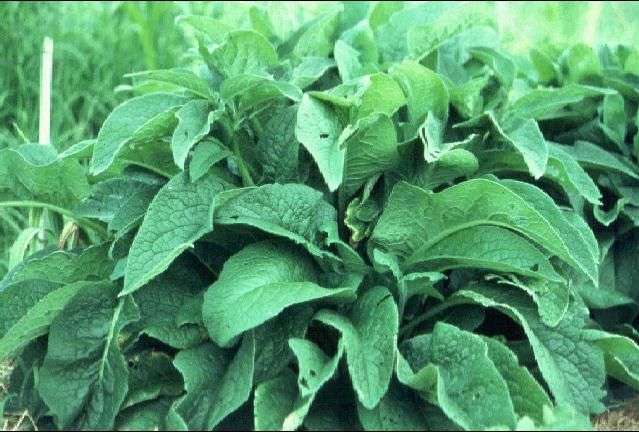
Credit: James M. Stephens
Culture
Comfrey does well in Florida gardens, where it grows year round and tolerates cold weather. Since it is a perennial, cut it back yearly in January or February to reduce the thatch and encourage new succulent leaf growth. Start comfrey any time of the year, although spring is best, using root or crown cuttings that are 2 to 6 inches long. Place them 2 to 4 inches deep in furrows spaced 3 feet apart.
Use
Comfrey may be eaten as a cooking green, used as an herb, or planted as an ornamental. Many medical remedies have been proclaimed for this plant, and its advocates associate an assortment of health benefits with it.
Caution:
More recently, comfrey eaters have been warned by some health food advocates of undesirable health risks associated with its use as a vegetable. These concerns are not well substantiated, but may have merit.