
Ginseng—Panax quinquefolius L.1
Ginseng, a fleshy-rooted herb, is also called sang, ninsin, five fingers, and seng. Ginseng plants are about 12 to 18 inches tall. Each leaf stem has three or more compound leaves, with each leaf composed of five oblong-pointed leaflets. The fruit is a bright crimson berry. The mature root, which is the part used, is 3 to 4 inches long, up to 1-inch thick, and usually forked with circular wrinkles. It somewhat resembles a young parsnip or parsley root that is branched three or more times.
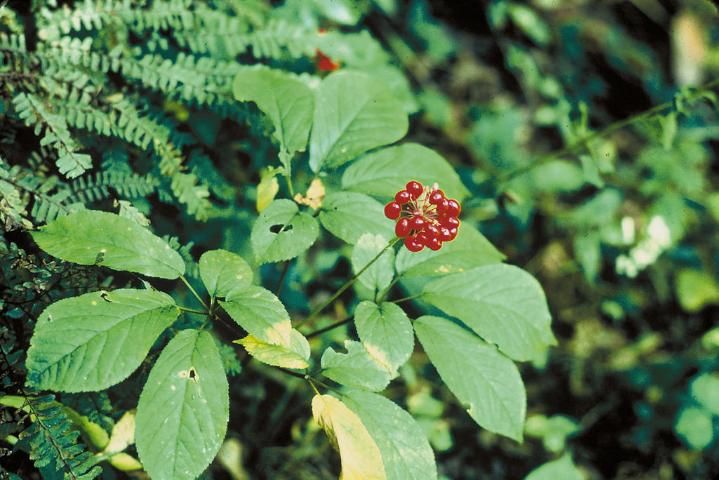
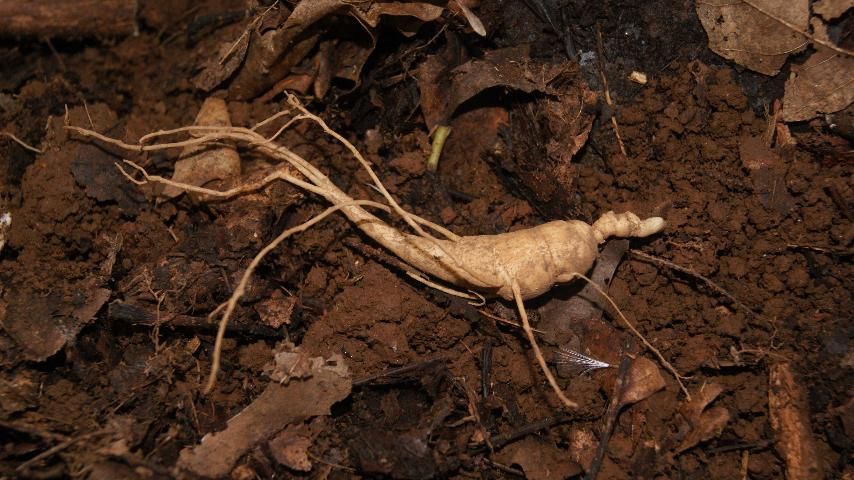
Credit: Katie Trozzo, CC BY-ND 2.0
Culture
Ginseng is native to cool and shady woodlands from Canada to northern Florida. Native ginseng seems to be much preferred by oriental users who are able to distinguish wild from cultivated types. Reports indicate ginseng roots often decay in the soil when attempts are made to grow them under warm humid Florida summer conditions.
Ginseng requires 5 to 7 years to mature its roots. It needs shade and may be grown in shady wooded areas or in lath houses. Seeds may be planted, but require a longer period from planting to harvest than seedlings. Set seedlings 8 inches apart. These will produce seed the first year, which then also can be planted. Another way to start ginseng is to plant roots.
Use
Chief users of ginseng are Asians who use the dried roots for their stimulative properties. Beverages such as tea are often flavored with ground ginseng root. Very high prices per pound of dried root have caused many to consider growing it in their woody areas. Woodlands of the eastern United States mountains are often scoured by "sang" hunters.
Potential for Production
For those who wish to try growing ginseng in Florida, it is a risky endeavor. Some of the reasons are:
it is mostly an export market;
ginseng takes so long to mature;
wild roots are preferred;
our warm climate make poor quality roots;
the planting material is expensive (seeds, plants, or roots); and
production problems exist.