

Rampion -- Campanula rapunculus L.
Click here to view a PDF version of this document.
Home Search What's New Products Survey Help
Rampion -- Campanula rapunculus L.


Rampion -- Campanula rapunculus L.1

James M. Stephens2

Rampion is a biennial plant grown as an annual vegetable for its leaves and roots. Rampion, a native of Britain, was once used much more widely than it appears to be today. It is occasionally grown in Florida gardens. Elsewhere, rampion is grown in Europe, Asia, and Africa in addition to some areas in the United States.
DESCRIPTION AND USE

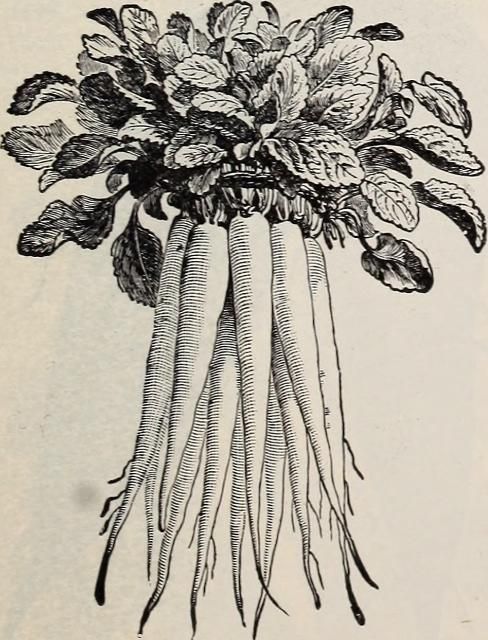
Rampion leaves are entire and long-oval in shape, 6 inches or more in length. They form a rosette at the root crown. The roots are up to 1 foot long, slender, and white. Roots may be cooked or eaten raw, as are some forms of radish, and the tops may be eaten raw in salads or as a cooked green. An old recipe suggests the roots should be boiled and stewed with butter and oil and sprinkled with black pepper. The flavor is more sweet and nutty than radishes. The roots often are scraped before using and stored in the refrigerator for later use.

CULTURE

Culture is similar to the ordinary radish. Although a biennial, the rampion plant will sometimes go to seed in a hot summer. Therefore, for best results, it should be sown from seeds September through March in Florida. However, in trials at Gainesville, rampion performed poorly when planted in early fall. Rows should be spaced 9 inches apart, with 3-4 inches between plants. Seeds are available in herb seed catalogs.

Footnotes

1. This document is HS655, one of a series of the Horticultural Sciences Department, Florida Cooperative Extension Service, Institute of Food and Agricultural Sciences, University of Florida. Original publication date May 1994. Reviewed May 2003. Visit the EDIS Web Site at http://edis.ifas.ufl.edu.

2. James M. Stephens, Professor, Horticultural Sciences Department, Cooperative Extension Service, Institute of Food and Agricultural Sciences, University of Florida, Gainesville FL 32611.


The Institute of Food and Agricultural Sciences (IFAS) is an Equal Opportunity Institution authorized to provide research, educational information and other services only to individuals and institutions that function with non-discrimination with respect to race, creed, color, religion, age, disability, sex, sexual orientation, marital status, national origin, political opinions or affiliations. For more information on obtaining other extension publications, contact your county Cooperative Extension service.

U.S. Department of Agriculture, Cooperative Extension Service, University of Florida, IFAS, Florida A. & M. University Cooperative Extension Program, and Boards of County Commissioners Cooperating. Larry Arrington, Dean.


Copyright Information

This document is copyrighted by the University of Florida, Institute of Food and Agricultural Sciences (UF/IFAS) for the people of the State of Florida. UF/IFAS retains all rights under all conventions, but permits free reproduction by all agents and offices of the Cooperative Extension Service and the people of the State of Florida. Permission is granted to others to use these materials in part or in full for educational purposes, provided that full credit is given to the UF/IFAS, citing the publication, its source, and date of publication.
