


Romaine—Lactuca sativa L.1
Romaine is the most upright growing of the four major types of lettuce. This cylindrically-hearted lettuce known to the Romans as Cappadocian lettuce is now called Roman lettuce or more commonly, romaine. According to vegetable history, this dates from the time when the Popes moved from Rome to Avignon in the 14th century, bringing this type with them and growing it in the palace gardens. It was, therefore, known as Avignon lettuce.
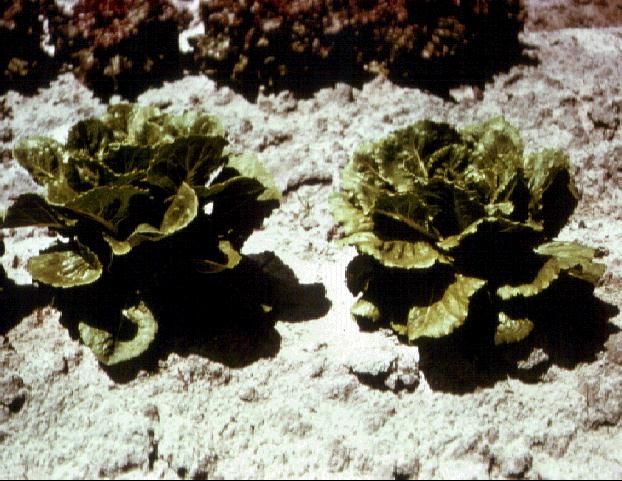
Credit: James M. Stephens, UF/IFAS
In England, however, it is called cos lettuce after the Greek island that was the birthplace of Hippocrates. It was also grown and eaten raw or cooked in China in early history. Paintings in Egyptian tombs dating from about 4500 BC reveal a type of lettuce with long pointed leaves, not much different from romaine lettuce.
Description
Romaine has long, upright, crisp leaves with a distinctive midrib almost to the tip. The tip of the leaf is blunt. Leaves are somewhat folded (cupped) and grouped into loose heads. The interior leaves are more delicate and blanched than those toward the outside.
Culture
In Florida, romaine is both a commercial crop of importance and a popular garden vegetable. Like all lettuce types, it is a cool season vegetable and grows best in this state when planted from September through March. On occasion, romaine is grown in well-mulched gardens even in the summer in North Florida.
Three varieties of romaine that do well here are 'Parris Island Cos,' 'Valmaine,' and 'Dark Green Cos.' There are many other varieties of cos lettuce, some white-seeded and others black-seeded. 'Floricos 83' is a line recently released by Florida IFAS.
Romaine may be started directly in the garden by using seeds or transplants. Seeds are small so should be sown shallowly and lightly covered with a sprinkling of soil. A burlap bag and other materials are often used over the planted seeds as moisture-holding devices until the seeds germinate.
After sowing seeds in the row or within a given space, thin out the seedlings when they are about 3 inches tall to prevent crowding. Allow enough space between plants for the size of plant desired. Small plants will develop at 4-inch spacings, while 8 to 12 inches are required for larger romaine plants. When transplanting into the garden, keep these same spacing guidelines in mind. Rows should be 12 inches apart.
Soil preparation, liming, fertilization, and most other cultural practices are about the same as for other types of lettuce. The soil should be well prepared, fertilized lightly but adequately, and kept moistened. Mulching for weed control and many other benefits works particularly well for romaine.
Romaine is susceptible to the pest problems that affect lettuce. However, most gardeners are able to grow romaine successfully with little or no spraying required. Harvest romaine from the garden as needed. Pick only a few leaves from a plant, leaving the remainder for another time, or cut the entire plant just above the soil line.
Tender crisp leaves are used fresh in tossed salads and many other salad dishes. Store romaine in the crisper, keeping it moist and cool. Long storage for more than a few days is not satisfactory because of the very fragile nature of this lettuce.