Pesticide Labeling: Unique Product Labeling
This document explains unique approaches taken by the EPA for how pesticide label information is conveyed for pesticide products that are contained in non-traditional packages. Several examples are provided.
Introduction
A special package deal offered by a pesticide manufacturer has attracted an agricultural establishment owner to visit his local dealer. The advertisement read by the owner stated that the new product for the upcoming season would be sold as two pesticides packaged together. The two pesticides are in separate containers but sold as one unit designed to be tank mixed prior to the application. The new marketing strategy by the manufacturer plans to save applicators both time and money.
Such prepacks are not the only marketing techniques used by manufacturers in providing their pesticide products to end users. There are other unique packages that carry special label considerations. How do these products effectively convey their information to users?
Multi-Packs/Co-Packs
-
A registered pesticide packaged with a non-pesticide. A registered pesticide product, in one container, may be packaged with a non-pesticide component, such as an adjuvant, in a separate container. The adjuvant is to be added to the pesticide during mixing. These two containers, combined in one package, may be sold as a single unit only if the adjuvant is referred to in the "Directions for Use" on the pesticides label. Because these two components are sold as a single unit, EPA considers that together they comprise the pesticide product. With this type of product, when bound together with a shrink-wrap sleeve or in a box, the full panel of the pesticidal component must be visible through the wrapping, or the label must be duplicated and attached to, or printed on, the outermost container. Another unique feature of this kind of product is that EPA must also accept or reject the labeling of the non-pesticide component that is packaged with the pesticide. If the non-pesticide component has any labeling information that is in conflict with the pesticide components labeling, then it will not be approved for use.
-
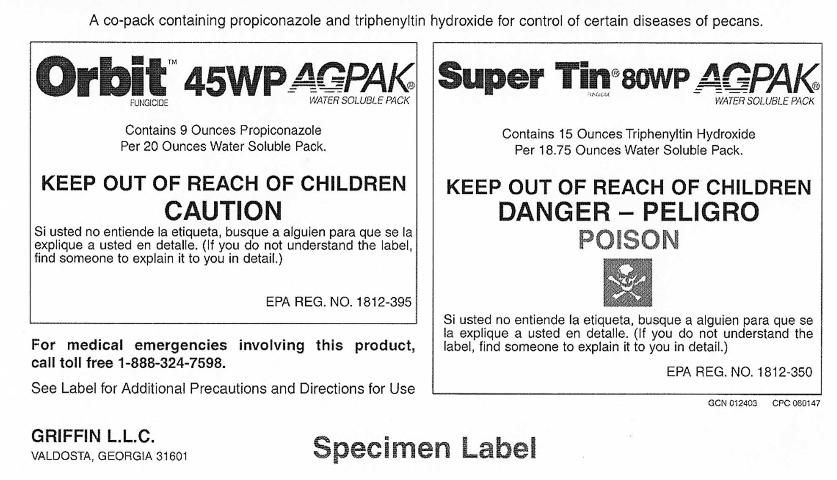
Two or more pesticides packaged together. Two or more pesticide products may be packaged in separate containers but sold together as a single unit and intended to be tank mixed just before application (Figure 1). When this occurs, each container must bear, or be accompanied by, full labeling, and the full labels of both containers must be visible.
Small Containers
Some containers are too small to contain all required label text. With these types of products, information will be located on accompanying pamphlets which are considered labeling. When this is the case, there will be a reference statement addressing such pamphlets. Other ways that this information can be conveyed from these small containers is by fitting them with accordion-pleated attached labels, such as appear on many home gardener products. Some small containers may also provide labeling information on outer boxing, bubble packs, and plastic self-sealing envelopes containing the content. All of the labeling information will be provided to the user at the time of the products sale.
Soluble Packets
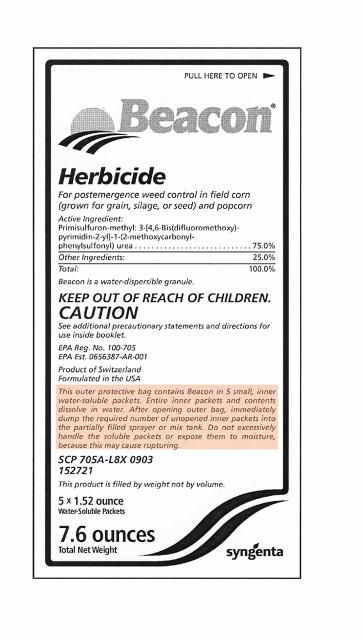
Soluble packets are an effective way to reduce pesticide exposure to mixers (Figure 2). Although there are clear benefits to this type of product, it does present a problem in labeling. The most widely-used packaging is a tear-open foil envelope containing each soluble packet; the foil envelope bears the required labeling. The foil envelope provides for an added benefit—it protects the soluble packet from moisture which would cause shelf-life problems. Another type of labeling for soluble packets is found on "muffin-pan" types of packages where each packet is enclosed in a depression with a sealed top that can be torn off. The tear-off top bears the labeling.
Bulk Containers
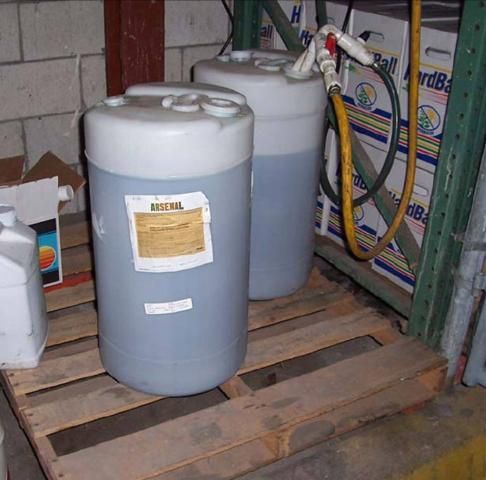
Agricultural pesticides are often sold by dealers out of bulk tanks and pumped directly into spray rigs or truck-mounted tanks brought to the dealer by the farmer or applicator. There are several advantages to these types of containers. They reduce the number of empty containers and the associated disposal problems (Figure 3). With bulk containers, dealers deliver the full label to the purchaser at the time of sale, which were supplied to the dealer by the manufacturer. Smaller bulk containers, known as "refillable containers," are filled from larger bulk containers.
Foreign Language Labeling
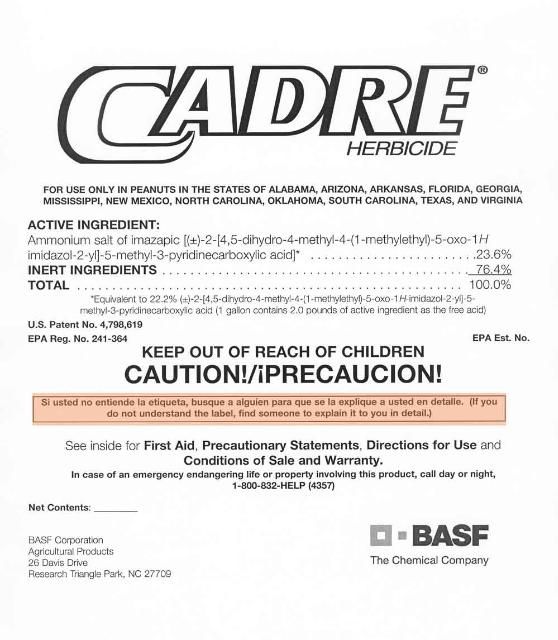
Products marketed in Puerto Rico can be labeled in English only or in English and Spanish. In some areas of the United States, including Florida, where manufacturers know product users are not fluent in English, products may be marketed with just the signal word and the statement used on the labels of products falling under the Worker Protection Standard (WPS) translated into Spanish. In cases where they are translated into Spanish, the Spanish signal word for toxicity category I products is "PELIGRO" and for toxicity category II products is "AVISO." The statement that appears on toxicity category I and II WPS products is as follows: "Si usted no entiende la etiqueta, busque a alguien para que se la explique a usted in detalle (If you do not understand the label, find someone to explain it to you in detail)" (Figure 4).
Seed Treatment Pesticides
There are special statements regarding seed treatments for crops that will be used for food, feed, or oil.
-
Commercial seed treatment products. Treated seed are not allowed to be used for or mixed with food or animal feed, or processed for oil. Seed that are treated commercially with a pesticide will bear the following label statement: "Treated Seed. Do not use for food, feed or oil."
-
Hopper-box seed treatments. This refers to products that are directly placed on seed at planting time. These products will bear: "Do not use treated seed for food or feed purposes or process for oil. Treat only those seeds needed for immediate use, minimizing the interval between treatment and planting. Do not store excess treated seeds beyond planting time." Some seed treatments will be under the scope of the WPS. If so, their labels will state: "Seed treatment on agricultural establishment in hopper-box, planted box, or other seed treatment application at or immediately before planting is within the scope of WPS, while commercial treatment of seeds is not within the scope."
The use of trade names in this publication is solely for the purpose of providing specific information. It is not a guarantee or warranty of the products mentioned and does not imply that they are the only products available for use.
Additional Information
Fishel, F.M. 2005. Interpreting Pesticide Label Wording. PI-34. Gainesville: University of Florida Institute of Food and Agricultural Sciences. https://edis.ifas.ufl.edu/PI071