
Exposing Pesticide Exposure Using Fluorescent Tracer Dyes
Introduction
Pesticide exposure can occur in one of four ways—dermal (through the skin), ocular (through the eyes), by oral ingestion, and/or from inhalation. Of these, dermal exposure is the most common, accounting for 97% of all reported exposures. Dermal exposure can be reduced through safety measures, such as using closed systems and enclosed cabs, wearing appropriate personal protective equipment (PPE), washing exposed areas immediately following accidents, and keeping PPE in good operating condition. Dermal exposures are often caused by:
- Failing to wash hands after handling pesticides or their containers.
- Splashing or spraying pesticides on unprotected skin or eyes.
- Wearing pesticide-contaminated clothing (including boots and gloves).
- Applying pesticides in windy conditions.
- Wearing inadequate PPE while handling pesticides.
- Touching pesticide-treated surfaces.
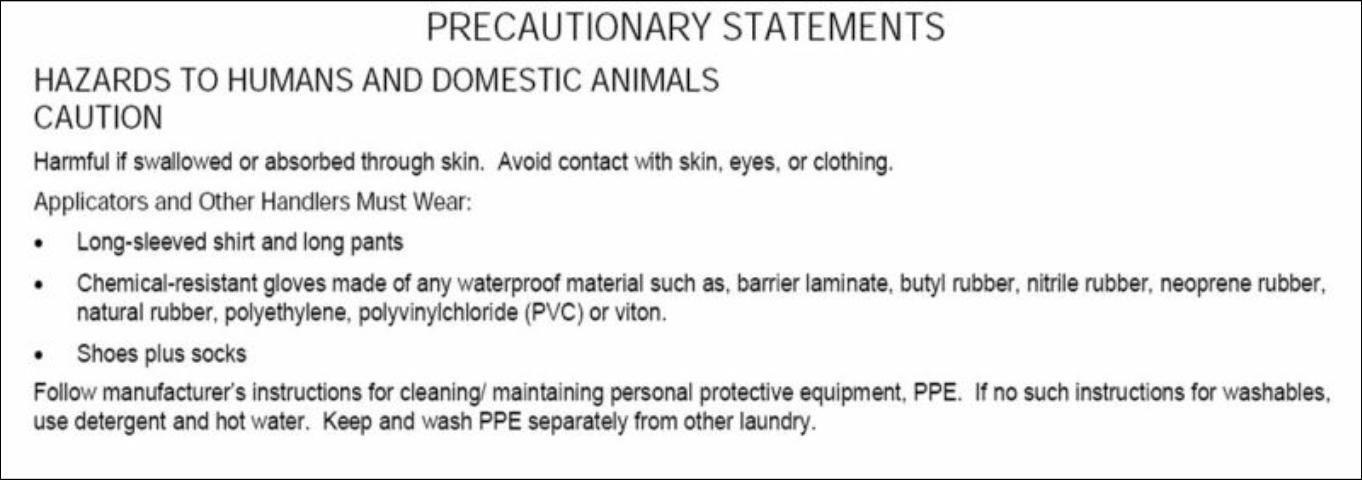
To protect themselves from exposure, pesticide handlers are legally required to wear the PPE listed on the individual product label directions (Figure 1).
Seeing is Believing
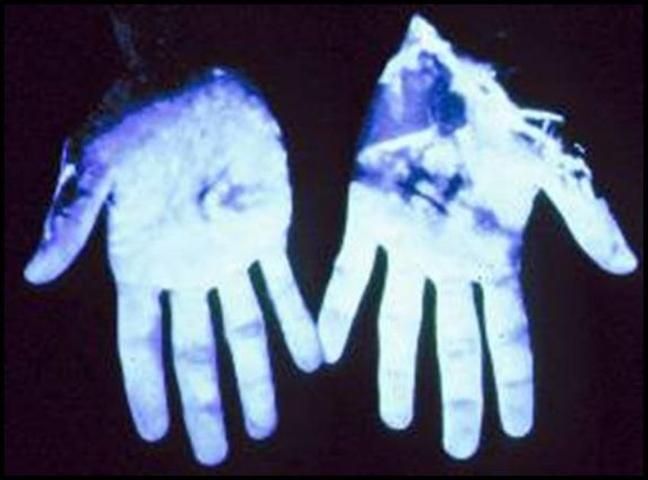
Fluorescent tracer that was mixed with clean water into a sprayer and applied like a pesticide has been used to demonstrate the extent to which dermal exposure can occur under inadequate protective conditions. Although the tracer is invisible under normal conditions, black light causes it to fluoresce (Figure 2).
Credit: Rutgers Coop. Ext.
This person was making an application while wearing a respirator. The tractor used for the application did not have an enclosed cab. Notice the tracer on facial areas that were not covered by the respirator (Figure 3).

Credit: Rutgers Coop. Ext.
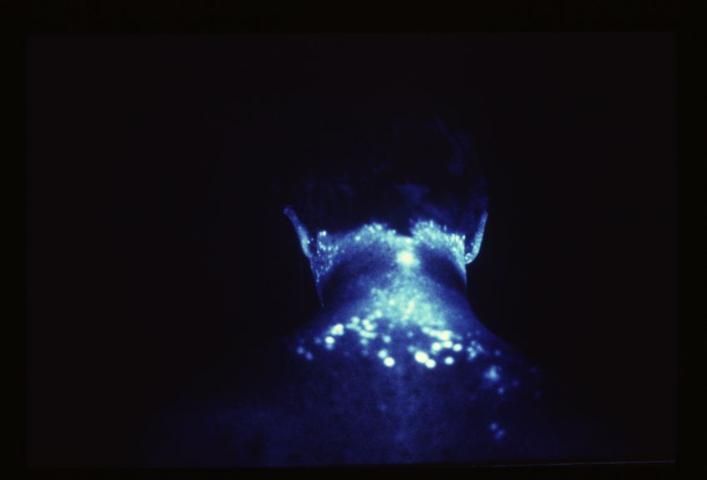
Although this applicator was wearing coveralls, tracer sprayed down his back. The neck and ears were also exposed (Figure 4).
Credit: Rutgers Coop. Ext.
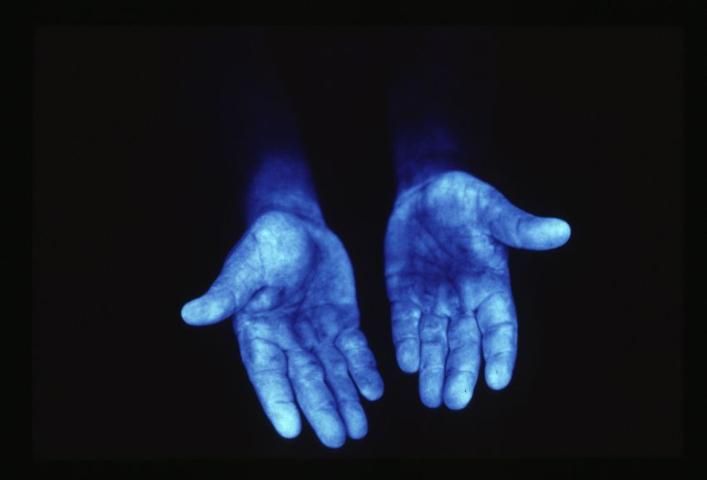
No gloves were worn for this application (Figures 5 and 6).
Credit: Rutgers Coop. Ext.
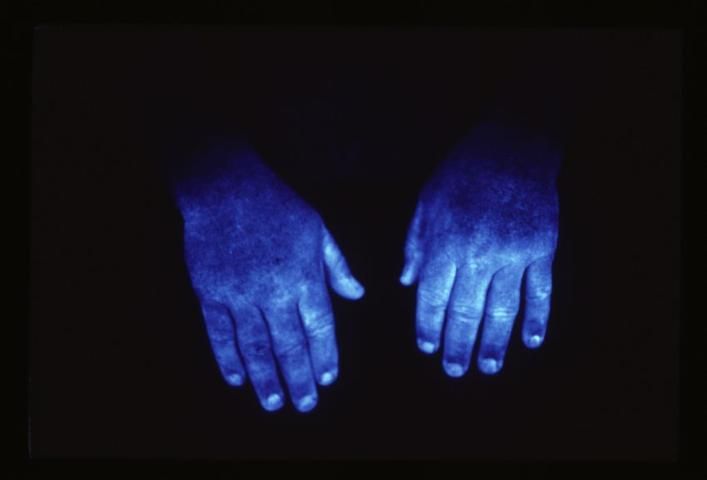
Credit: Rutgers Coop. Ext.
During a greenhouse application, the applicator wore an open chemical-resistant jacket with the sleeves pulled up to the elbows. Following the application and exposure under black light, the arm and hand of the applicator demonstrated spray contact (Figure 7).
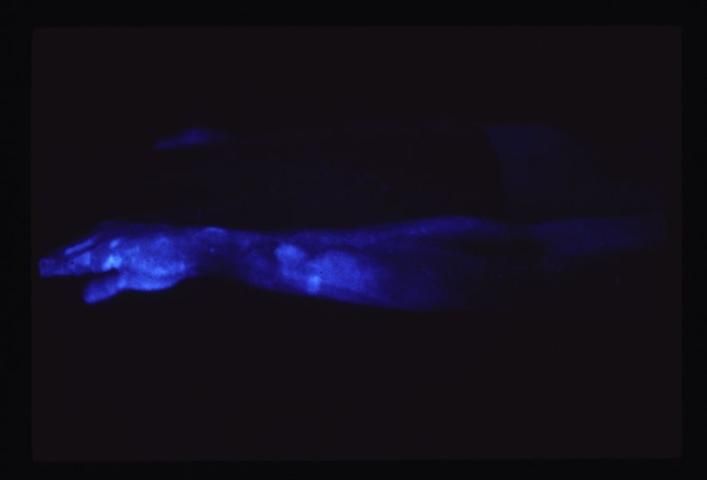
Credit: Rutgers Coop. Ext.
Not maintaining reusable PPE can also increase the risk of exposure. Worn out PPE that is torn should be discarded. Although fluorescent dye can be seen on the legs, the knees of this coverall were worn out and fluoresce to a greater extent as evidenced by this photograph (Figure 8)
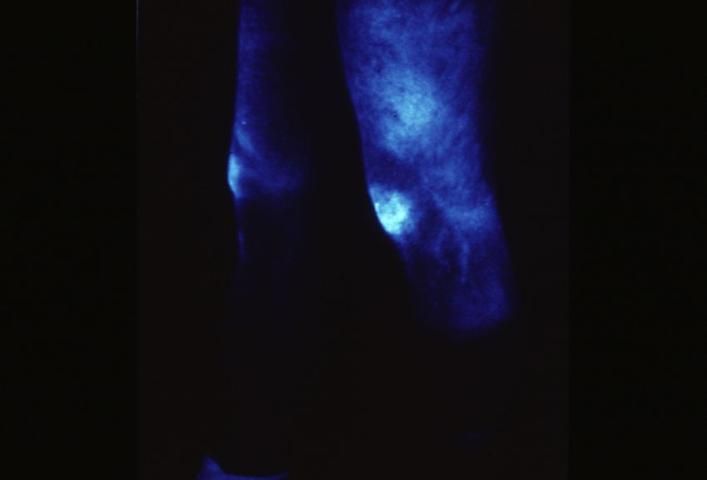
Credit: Rutgers Coop. Ext.
Some pesticide labels will call for the use of chemical-resistant footwear during a handling activity. Tennis shoes offer little, if any, protection from exposure, as shown here (Figure 9).
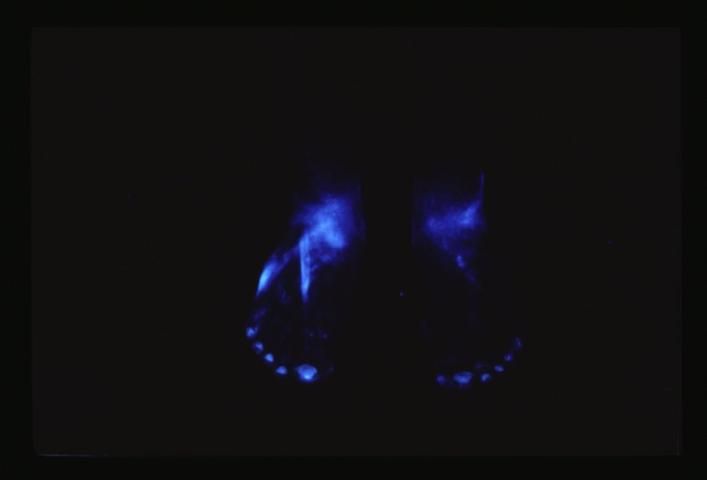
Credit: Rutgers Coop. Ext.
Summary
Black light and fluorescent tracers dramatically demonstrate the extent to which pesticide exposure may occur, even with the use of PPE. To minimize exposure, follow the specified PPE for each product. Simply wearing gloves and long sleeves will significantly reduce dermal exposure. Incorrect PPE may be just as ineffective as wearing no PPE at all. Many PPE items are not designed to be used repeatedly because they become worn out and can tear.
Additional Information and References
Archibald, B.A., et al. 1994. "Fluorescent Tracer and Pesticide Penetration Through Selected Protective Clothing." Bull. Environ. Contam. Toxicol, 53(4): 479–485.
Fenske, R.A. 1988. "Comparative Assessment of Protective Clothing Performance by Measurement of Dermal Exposure During Pesticide Applications." Applied Industrial Hygiene, 3: 207–213.
Fenske, R.A., et al. 1986. "A Video Imaging Technique for Assessing Dermal Exposure. I: Instrument Design and Desting." Am. Ind. Hyg. Assoc. Journal, 47(12): 764–770.
Fenske, R.A., et al. 1986. "A Video Imaging Technique for Assessing Dermal Exposure. II: Fluorescent Tracer Testing." Am. Ind. Hyg. Assoc. Journal, 47(12): 771–775.
Fenske, R.A. and G.C. Hamilton. n.d. Pesticide Exposure Evaluation With Fluorescent Tracers (slide presentation and script). Rutgers Cooperative Extension.
Fishel, F.M. 2006. Glove Selection for Working With Pesticides. Gainesville: University of Florida Institute of Food and Agricultural Sciences. https://edis.ifas.ufl.edu/publication/pi157
Foss, C.R., E.H. Allen, R.A. Fenske, and C.A. Ramsay. 2002. "Comparison of Live Skit and Video Delivery Styles Using Presentations With and Without Fluorescent Tracer Dyes at Pesticide Applicator Training for Promotion of Self-Protection from Dermal Exposure." Journal of Pesticide Safety Education, 4: 1–9. https://scholar.lib.vt.edu/ejournals/JPSE/v4/foss.pdf