


Fall Panicum: Biology and Control in Sugarcane
Biology and Identification
Fall panicum (Panicum dichotomiflorum) is the most prevalent and problematic annual grass weed in Florida sugarcane (Figure 1). It is a native grass that primarily emerges in spring and summer, but seed germination can occur almost year-round in Florida. It tends to be sensitive to shading and is typically not found in sugarcane once canopy closure occurs. Fall panicum typically reaches a height of 1.5 to 4 feet, but has been reported to reach over 6 feet in height. Its growth habit can range from erect to sprawling or kneeling, and it can form large, loose tufts. Seedlings and mature plants have different identifying characteristics. This publication describes the biology and control options for fall panicum in sugarcane to assist growers, county Extension faculty, and crop consultants in making correct identification and effective management decisions to help mitigate its impact on sugarcane.
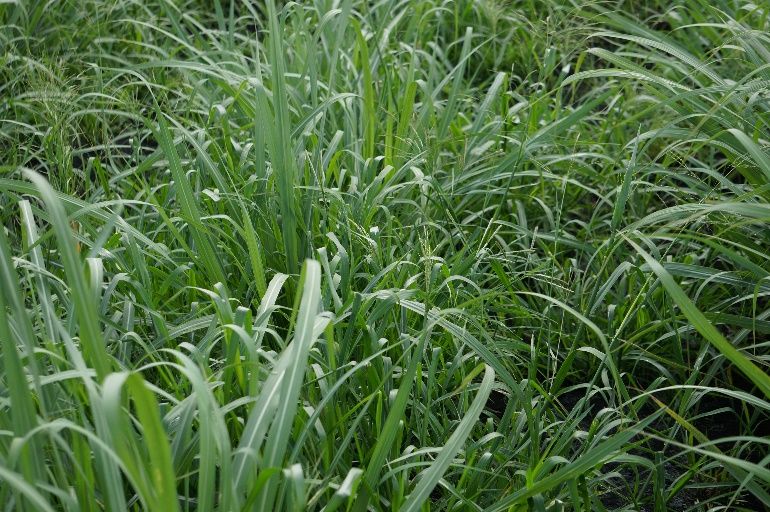
Credit: Calvin Odero, UF/IFAS
Seedlings
The first seedling leaf blade is linear, nearly 5 times longer than its width, and parallel to the ground. The first few leaves of seedlings have many hairs on the underside. The sheaths and collars of the first few leaves also tend to be densely hairy (Figure 2). However, they gradually become less hairy as the seedling grows and new leaves emerge. Leaves are rolled in the bud, and auricles are absent. Leaf blades are ¾ to 1½ inches long and about 1/5 inch wide. Ligules are 1/24 to 1/12 inch long, fringed, hairy, and often fused at the base.
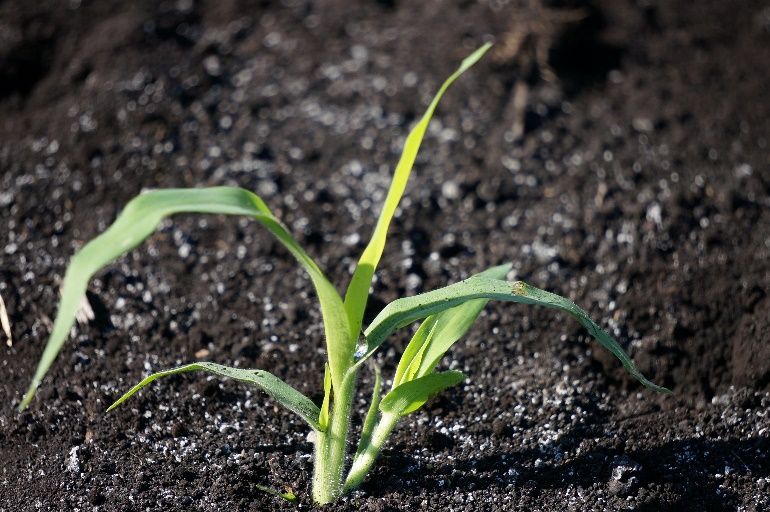
Credit: Calvin Odero, UF/IFAS
Mature Plants
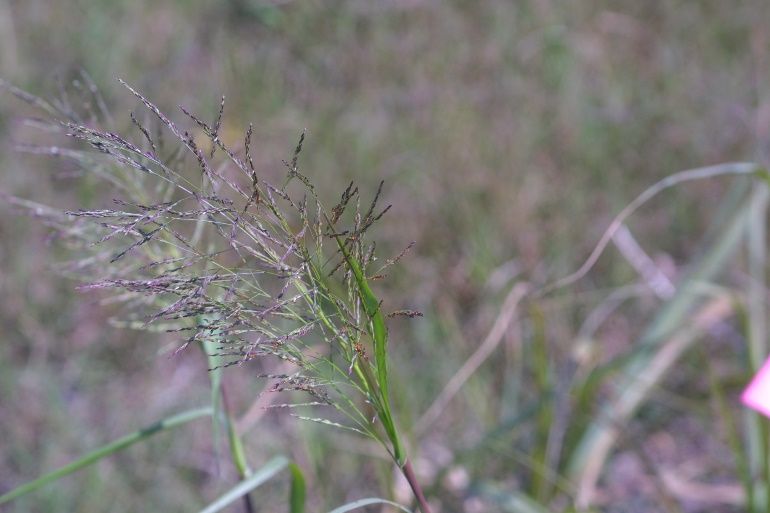
The leaf blades of mature plants are 4 to 20 inches long by 1/5 to 4/5 inch wide and have a conspicuous white midvein (Figure 3). The undersides of leaves on mature plants are without hairs (glabrous) and glossy. The ligule is a fringe of hairs (Figure 3). Stems are glabrous, round, and sometimes glossy. Nodes along the stem are usually swollen and bent in different directions (Figure 4), which contributes to the rather unusual zigzag growth habit of this weed. Roots are fibrous and stems are capable of rooting at the lower nodes only. The seed head is a wide, spreading panicle 4 to 16 inches long (Figure 5). Individual spikelets are yellow and approximately 1/8 inch long by 1/12 inch wide. Each spikelet produces 1 smooth, dull-yellow to brown seed that shatters soon after ripening. Propagation is by seeds. Seedling emergence primarily occurs from soil depths of 0 to 2 inches with most emerging at 1/2- to 1-inch soil depths.
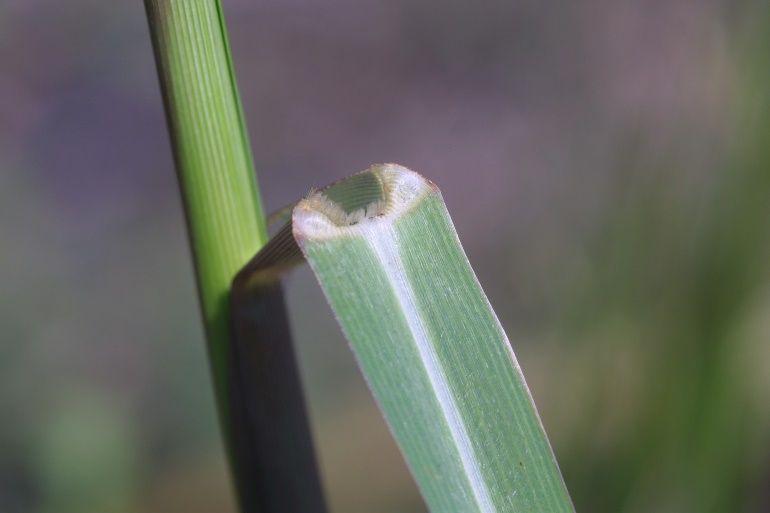
Credit: Calvin Odero, UF/IFAS
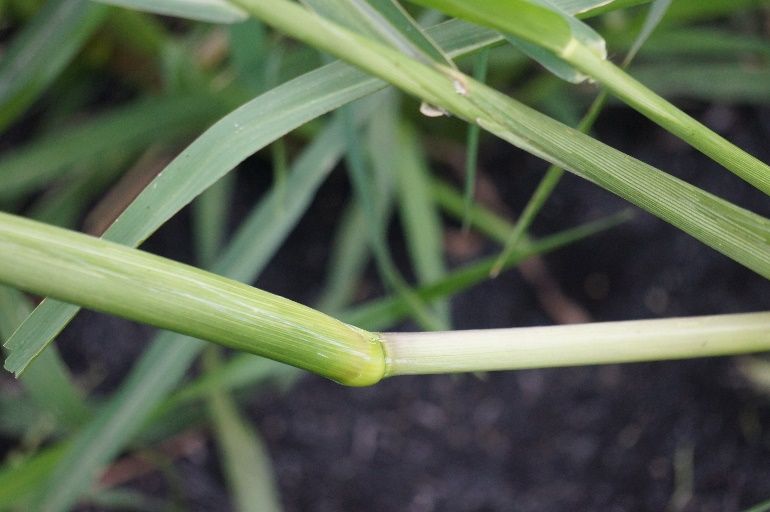
Credit: Calvin Odero, UF/IFAS
Credit: Calvin Odero, UF/IFAS
Control in Sugarcane
Several herbicides applied at different timings will provide fall panicum control in sugarcane (Table 1). Therefore, proper timing of herbicide application with respect to the growth stage of fall panicum is very important for effective control. Always read the label for the proper time of application of each herbicide. These herbicides must be used in conjunction with other weed management tools such as crop rotation and mechanical cultivation to obtain maximum control benefit. In Florida, sugarcane is rotated with rice and winter vegetables including sweet corn, leafy greens, radish, and green bean during the crop’s fallow renovation period. Sugarcane rotation with non-grass crops allows the use of graminicides (grass herbicides) such as sethoxydim (Poast 1.53 EC) to reduce populations of fall panicum in subsequent sugarcane crops. However, successive sugarcane planting (i.e., replanting several weeks after the final ratoon harvest) or rotating sugarcane with sweet corn or rice has caused fall panicum to increase in subsequent sugarcane crops (Odero, personal observation). Fall panicum seedlings are readily controlled by mechanical cultivation early postemergence in plant cane using scratcher cultivators, or between rows for ratoon sugarcane. However, herbicides have to be banded over the rows to provide fall panicum control within the rows, which are not cultivated. Because fall panicum is not shade tolerant, healthy competitive sugarcane stands with the ability to close canopy and shade it will enhance control.
Table 1. Preemergence (PRE), very early postemergence (VEPOST), and postemergence (POST) fall panicum control in sugarcane. Contact: Extension weed specialist (dcodero@ufl.edu). This table lists registered pesticides that should be integrated with other pest management methods. Contact your local UF/IFAS Extension office for additional information (https://ifas.ufl.edu/, UF/IFAS locations at the bottom of the webpage).