


Caesalpinia pulcherrima: Dwarf Poinciana1
Introduction
Brilliant scarlet and yellow flowers, feathery foliage, and quick growth make dwarf poinciana a popular evergreen shrub. It is hard to find a more attractive flower. Also known as Barbados flower fence, this open-branched, fine-textured shrub will tolerate hot, dry areas, and forms an effective thorny barrier. It flowers year-round with peak displays in spring and fall.
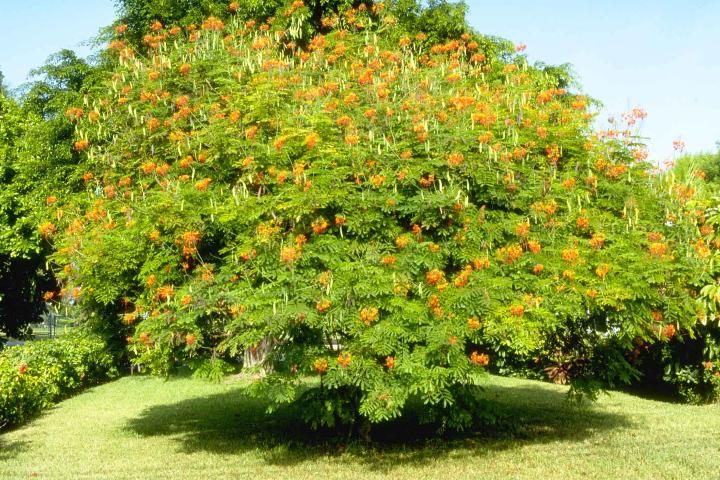
Credit: Ed Gilman
General Information
Scientific name: Caesalpinia pulcherrima
Pronunciation: sez-al-PIN-ee-uh pul-KAIR-ih-muh
Common name(s): Dwarf poinciana, Barbados flower fence
Family: Leguminosae
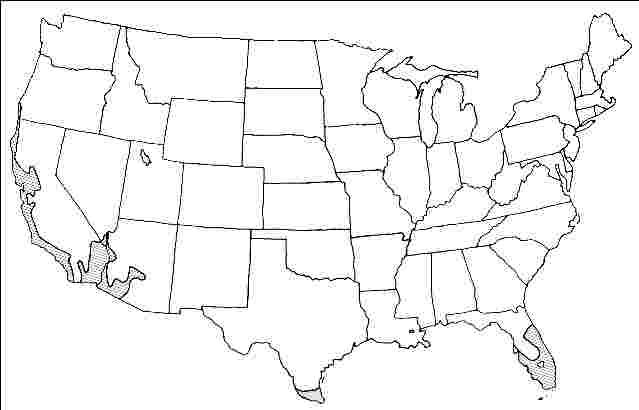
USDA hardiness zones: 9B through 11 (Fig. 2)
Origin: not native to North America
Uses: reclamation; specimen
Availability: somewhat available, may have to go out of the region to find the tree
Description
Height: 8 to 12 feet
Spread: 10 to 12 feet
Crown uniformity: irregular
Crown shape: round
Crown density: moderate
Growth rate: fast
Texture: fine
Foliage
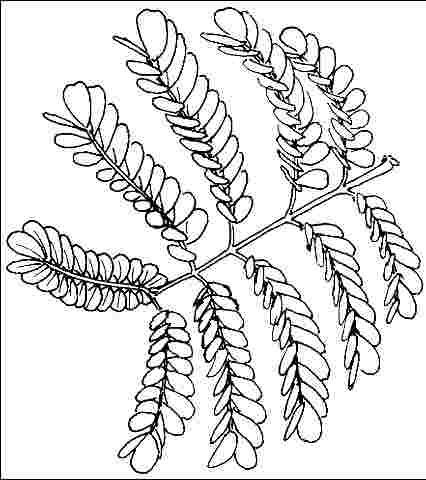
Leaf arrangement: opposite/subopposite (Fig. 3)
Leaf type: bipinnately compound, even-pinnately compound
Leaf margin: entire
Leaf shape: oblong, elliptic (oval)
Leaf venation: reticulate, pinnate
Leaf type and persistence: evergreen
Leaf blade length: less than 2 inches
Leaf color: green
Fall color: no color change
Fall characteristic: not showy
Flower
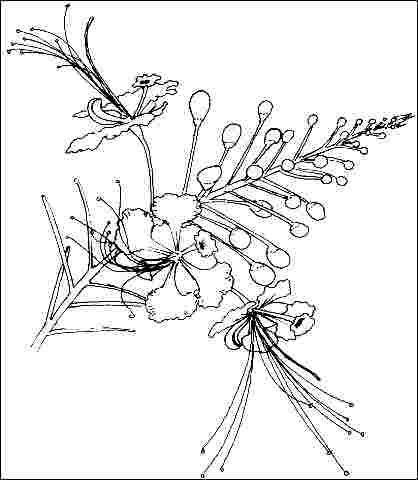
Flower color: red, yellow, orange
Flower characteristics: very showy
Fruit
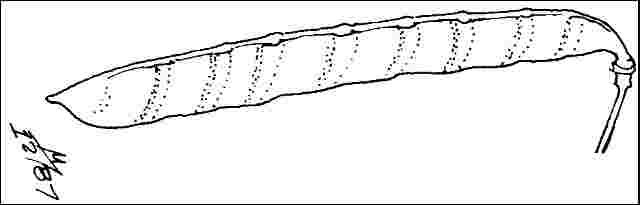
Fruit shape: pod or pod-like
Fruit length: 3 to 6 inches
Fruit covering: dry or hard
Fruit color: brown
Fruit characteristics: does not attract wildlife; not showy; fruit/leaves not a litter problem
Trunk and Branches
Trunk/bark/branches: branches droop; not showy; typically multi-trunked; no thorns
Pruning requirement: needed for strong structure
Breakage: susceptible to breakage
Current year twig color: green, brown
Current year twig thickness: thick
Wood specific gravity: unknown
Culture
Light requirement: full sun, partial sun or partial shade
Soil tolerances: clay; sand; loam; acidic; alkaline; well-drained
Drought tolerance: high
Aerosol salt tolerance: moderate
Other
Roots: not a problem
Winter interest: yes
Outstanding tree: no
Invasive potential: little invasive potential
Ozone sensitivity: unknown
Verticillium wilt susceptibility: unknown
Pest resistance: resistant to pests/diseases
Use and Management
Full sun is preferred for best flowering, but some shade is tolerated. Any soil is suitable as long as it is well drained. Dwarf poinciana is perfectly suited to informal plantings. This is a beautiful, refreshing addition to any garden or yard as a specimen or as an accent toward the middle or back of a shrub border. Tipping the branches during the growing season creates a fuller shrub and more flowers. With some training and pruning, you can create a small, 12- to 15-foot tall multi-stemmed tree, but the natural form is a low-branched, full, wide-spreading shrub about 10-feet tall and wide. Allow plenty of room for this plant to develop as a shrub.
Propagation is by seed, which germinate faster if scarified or soaked in hot water.
Pests
Scale will present an occasional problem.
Diseases
Dwarf Poinciana is susceptible to mushroom root rot, especially in poorly drained soil.

