


Citrus spp.: Citrus1
Introduction
The dense, rounded crown of dark green, evergreen foliage and the pure white, extremely fragrant blossoms make citrus a popular garden choice for frost-free locations. Ranging from 12 to 30 feet in height and 8 to 25 feet in width, depending upon species and cultivar, citrus can be used for shade, to screen unwanted views, or smaller varieties can be used in containers. The juicy, fragrant fruits vary from yellow, orange, or red, and are most noticeable in winter.
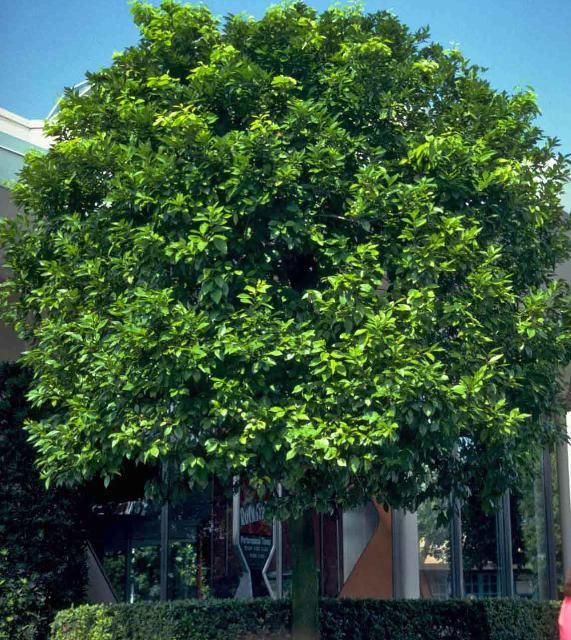
Credit: Ed Gilman, UF/IFAS
General Information
Scientific name: Citrus spp .
Pronunciation: SIH-trus species
Common name(s): Citrus
Family: Rutaceae
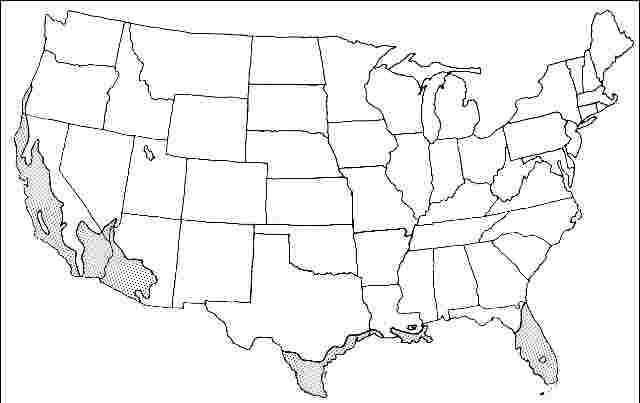
USDA hardiness zones: 9A through 11 (Fig. 2)
Origin: not native to North America
Invasive potential: has been evaluated using the UF/IFAS Assessment of the Status of Non-Native Plants in Florida's Natural Areas (UF/IFAS 2019). This species is not documented in any undisturbed natural areas in Florida. Thus, it is not considered a problem species and may be used in Florida.
Uses: hedge; urban tolerant; deck or patio; screen; fruit; specimen; espalier; highway median; trained as a standard
Availability: not native to North America
Description
Height: 12 to 30 feet
Spread: 15 to 25 feet
Crown uniformity: symmetrical
Crown shape: round
Crown density: dense
Growth rate: moderate
Texture: medium
Foliage
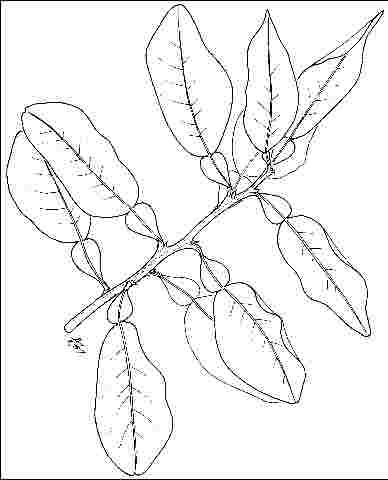
Leaf arrangement: alternate (Fig. 3)
Leaf type: trifoliate, simple
Leaf margin: serrulate, crenate
Leaf shape: ovate, obovate
Leaf venation: pinnate
Leaf type and persistence: evergreen, broadleaf evergreen
Leaf blade length: 2 to 4 inches
Leaf color: green
Fall color: no color change
Fall characteristic: not showy
Flower
Flower color: white/cream/gray
Flower characteristics: showy
Fruit
Fruit shape: round
Fruit length: 1 to 3 inches, 3 to 6 inches
Fruit covering: fleshy
Fruit color: orange, yellow, green
Fruit characteristics: attracts squirrels/mammals; showy; fruit/leaves a litter problem
Trunk and Branches
Trunk/bark/branches: branches droop; not showy; typically multi-trunked; no thorns
Pruning requirement: needed for strong structure
Breakage: resistant
Current year twig color: green
Current year twig thickness: medium
Wood specific gravity: unknown
Culture
Light requirement: full sun
Soil tolerances: clay; sand; loam; slightly alkaline; acidic; well-drained
Drought tolerance: moderate
Aerosol salt tolerance: low
Other
Roots: not a problem
Winter interest: yes
Outstanding tree: no
Ozone sensitivity: unknown
Verticillium wilt susceptibility: resistant
Pest resistance: sensitive to pests/diseases
Use and Management
The green, thorny branches will rarely need pruning after a strong branch structure is developed. Prune so there is no bark embedded or pinched together in the branch crotches. This condition could cause the branch to break from the trunk when fruit loads it down. Prune out enough of the foliage on lateral branches so they remain less than half the diameter of the trunk.
Citrus should be grown in full sun on well-drained, slightly acid soil, and watered faithfully. Do not mulch the soil beneath citrus. It is very heat-tolerant and can be effectively used in a tough urban site such as a parking lot if dropping fruits will not pose a problem.
Many species of citrus are available. Citrus limon gives us lemons; Citrus reticulata, tangerines or Mandarin oranges; Citrus sinensis, sweet orange; Citrus aurantifolia, key limes; and Citrus paradisi, grapefruit.
Propagation is by grafting or layering.
Pests
Nematodes, scales, whiteflies, mites, caterpillars, fruitfly.
Diseases
Virus and fungus diseases. Twig galls sometimes form in response to a fungus infection.
Literature Cited
University of Florida, Institute of Food and Agricultural Sciences. 2018. "Assessment of Non-native Plants in Florida's Natural Areas" (https://assessment.ifas.ufl.edu, 4/29/2019) Gainesville, FL, 32611-4000, USA.

