


Tabebuia caraiba: Trumpet Tree1
Introduction
An ideal patio, specimen, or lawn tree, the Tabebuias are small, 15- to 25-foot tall, evergreen trees with silvery foliage and deeply furrowed, silvery bark on picturesque, contorted branches and trunk. The crown is usually asymmetrical with two or three major trunks or branches dominating the crown. During late winter and sporadically throughout the year, they put on a brilliant display composed of a multitude of two to three-inch-long, golden yellow, trumpet-shaped blooms borne in terminal flower clusters. The leaves often drop just before the flowers appear.
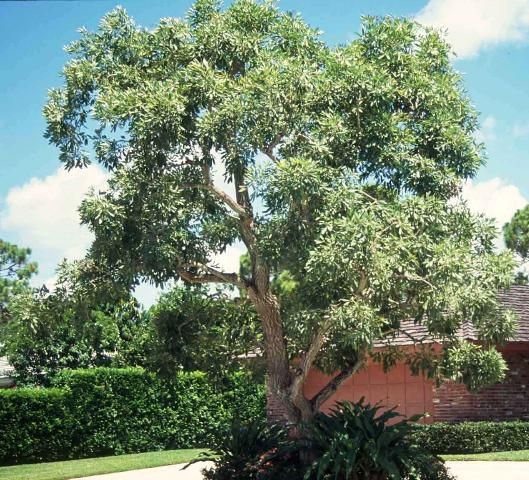
Credit: Ed Gilman, UF/IFAS
General Information
Scientific name: Tabebuia caraiba
Pronunciation: tab-eh-BOO-yuh kuh-RYE-buh
Common name(s): Trumpet tree
Family: Bignoniaceae
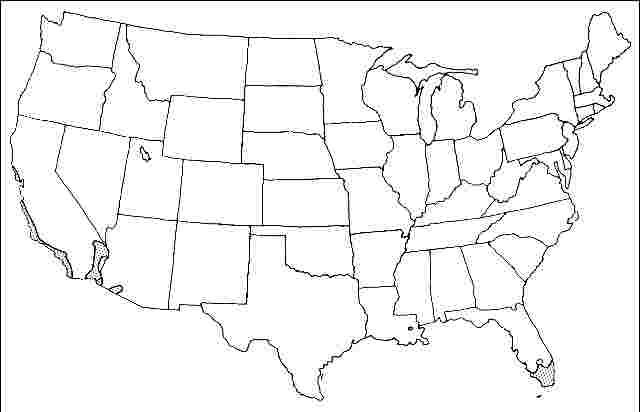
USDA hardiness zones: 10A through 11 (Fig. 2)
Origin: not native to North America
Invasive potential: little invasive potential
Uses: street without sidewalk; deck or patio; specimen; parking lot island < 100 sq ft; parking lot island 100-200 sq ft; parking lot island > 200 sq ft; tree lawn 3-4 feet wide; tree lawn 4-6 feet wide; tree lawn > 6 ft wide; highway median; container or planter
Availability: not native to North America
Description
Height: 15 to 25 feet
Spread: 10 to 15 feet
Crown uniformity: irregular
Crown shape: oval
Crown density: dense
Growth rate: moderate
Texture: medium
Foliage
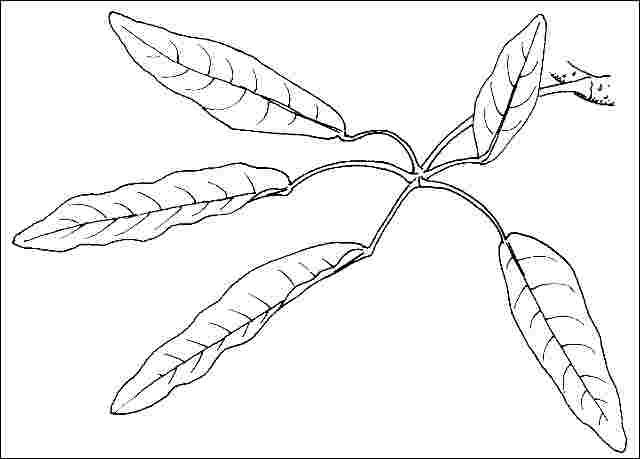
Leaf arrangement: opposite/subopposite (Fig. 3)
Leaf type: palmately compound
Leaf margin: entire, undulate
Leaf shape: oblong, elliptic (oval)
Leaf venation: pinnate
Leaf type and persistence: semi-evergreen
Leaf blade length: 2 to 4 inches
Leaf color: silver
Fall color: no color change
Fall characteristic: not showy
Flower
Flower color: yellow
Flower characteristics: very showy
Fruit
Fruit shape: pod or pod-like, elongated
Fruit length: 3 to 6 inches, 6 to 12 inches
Fruit covering: dry or hard
Fruit color: brown
Fruit characteristics: does not attract wildlife; not showy; fruit/leaves not a litter problem
Trunk and Branches
Trunk/bark/branches: branches droop; showy; typically one trunk; thorns
Pruning requirement: needed for strong structure
Breakage: susceptible to breakage
Current year twig color: brown
Current year twig thickness: medium
Wood specific gravity: unknown
Culture
Light requirement: full sun, partial sun, or partial shade
Soil tolerances: clay; sand; loam; acidic; alkaline; well-drained
Drought tolerance: high
Aerosol salt tolerance: moderate
Other
Roots: not a problem
Winter interest: yes
Outstanding tree: yes
Ozone sensitivity: unknown
Verticillium wilt susceptibility: unknown
Pest resistance: free of serious pests and diseases
Use and Management
A native of tropical America, trumpet tree can be grown in full sun or partial shade on any reasonably fertile soil with moderate moisture. Trees should be protected from frost. Although some will leaf out following a freeze, the tree is often weakened and grows poorly. The wood becomes brittle with age and can break easily in strong winds but this is not usually a problem since trees are small with an open canopy and should not be cause to eliminate this beautiful tree from your tree palette. To the contrary, it is one of the most beautiful trees in flower which has a place in most landscapes.
The pink trumpet tree (Tabebuia heterophylla) is the one most suited for street tree planting since it is reportedly more sturdy and durable than Tabebuia caraiba. Tabebuia impetigenosa and Tabebuia umbellata are hardy to zone 9b with pink flowers borne on bare branches.
Propagation is by seed or layering.
Pests and Diseases
No pests or diseases are of major concern.

