


Tabebuia impetiginosa: Purple Tabebuia1
Introduction
This briefly deciduous tree reaches 15 to 20 feet in height and has a fairly open canopy. Branching is often sparse allowing turf and other sun loving plants to grow beneath the canopy. The dark green, palmately compound, five-inch-long leaves are joined in late winter or early spring by the showy, trumpet-shaped blooms, appearing in dense, rose-pink to purple, terminal panicles. Trees will have a better form if trained to a single trunk and staked until they are six to eight feet tall, at which time they can be allowed to grow naturally.
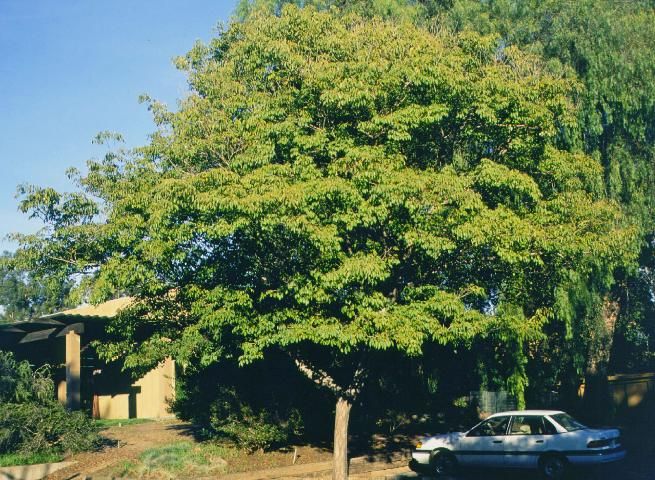
Credit: Ed Gilman, UF/IFAS
General Information
Scientific name: Tabebuia impetiginosa
Pronunciation: tab-eh-BOO-yuh im-pet-ih-jih-NO-suh
Common name(s): Purple tabebuia
Family: Bignoniaceae
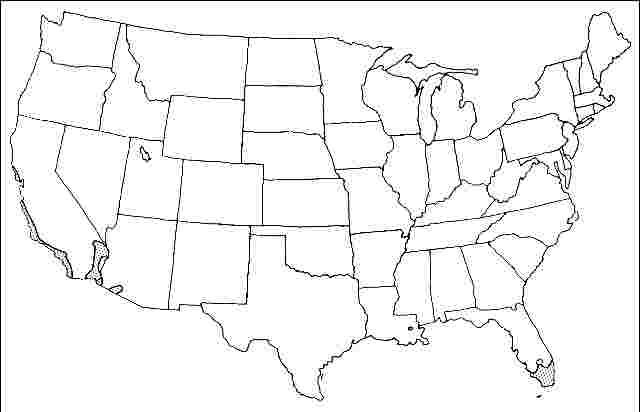
USDA hardiness zones: 9B through 11 (Fig. 2)
Origin: not native to North America
Invasive potential: has been evaluated using the UF/IFAS Assessment of the Status of Non-Native Plants in Florida's Natural Areas (UF/IFAS 2018). This species is not documented in any undisturbed natural areas in Florida. Thus, it is not considered a problem species and may be used in Florida.
Uses: specimen; street without sidewalk; tree lawn 3-4 feet wide; tree lawn 4-6 feet wide; tree lawn > 6 ft wide; highway median; parking lot island < 100 sq ft; parking lot island 100-200 sq ft; parking lot island > 200 sq ft; deck or patio; container or planter
Availability: somewhat available, may have to go out of the region to find the tree
Description
Height: 12 to 18 feet
Spread: 10 to 15 feet
Crown uniformity: irregular
Crown shape: round
Crown density: open
Growth rate: slow
Texture: medium
Foliage
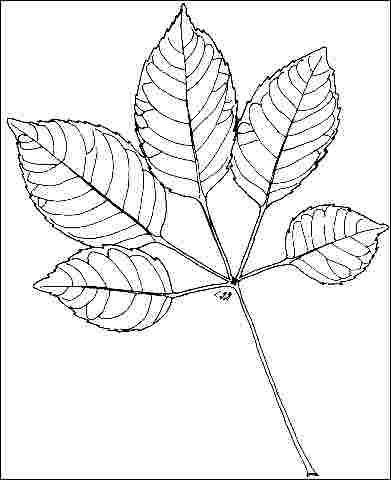
Leaf arrangement: opposite/subopposite (Fig. 3)
Leaf type: palmately compound
Leaf margin: serrate
Leaf shape: oblong, elliptic (oval)
Leaf venation: pinnate, brachidodrome
Leaf type and persistence: deciduous
Leaf blade length: 2 to 4 inches
Leaf color: green
Fall color: no color change
Fall characteristic: not showy
Flower
Flower color: purple
Flower characteristics: very showy
Fruit
Fruit shape: pod or pod-like, elongated
Fruit length: 3 to 6 inches, 6 to 12 inches
Fruit covering: dry or hard
Fruit color: unknown
Fruit characteristics: does not attract wildlife; not showy; fruit/leaves not a litter problem
Trunk and Branches
Trunk/bark/branches: branches droop; not showy; typically one trunk; thorns
Pruning requirement: needed for strong structure
Breakage: susceptible to breakage
Current year twig color: brown
Current year twig thickness: medium
Wood specific gravity: unknown
Culture
Light requirement: full sun
Soil tolerances: clay; sand; loam; alkaline; acidic; well-drained
Drought tolerance: high
Aerosol salt tolerance: moderate
Other
Roots: not a problem
Winter interest: no
Outstanding tree: yes
Ozone sensitivity: unknown
Verticillium wilt susceptibility: unknown
Pest resistance: free of serious pests and diseases
Use and Management
Use this small tree in an area where any small tree can be used. It might be best to locate it in a shrub border or other out-of-the-way place since the canopy is quite thin, even in full sun. It is probably not as well suited for specimen planting as the other tabebuias.
Purple tabebuia should be grown in full sun on almost any well-drained soil but trees respond especially well to rich soil. Established trees are highly drought-tolerant.
Propagation is by seed, cuttings, or layering. Plants flower at an early age.
Pest and Diseases
No pests or diseases are of major concern.
Literature Cited
University of Florida, Institute of Food and Agricultural Sciences. 2018. "Assessment of Non-native Plants in Florida's Natural Areas" (https://assessment.ifas.ufl.edu, 4/29/2019) Gainesville, FL, 32611-4000, USA.

