


How Wind Affects Homes1
This publication is part 6 of 6 of the Education + Action = Wind Damage Mitigation series. For the rest of the series, visit https://edis.ifas.ufl.edu/topic_series_wind_damage_mitigation.
Wind forces are complex. The effect of wind on a building depends on the interaction of many variables. Natural variables include wind speed, wind height, ground surface features, and the properties of the air. Building variables include the shape, location, and physical properties of structures. Together, these variables create differences in pressure that push and pull on the exterior surfaces of buildings.
How Wind Forces Affect Homes
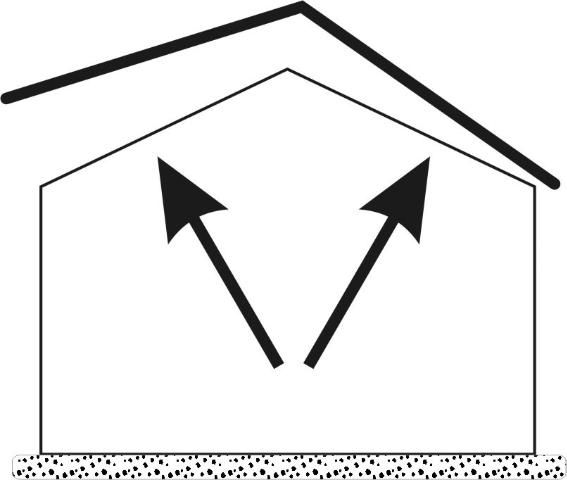
Uplift occurs as wind flows over a roof. Similar to the effect on airplane wings, wind flow under a roof pushes upward while wind flow over a roof pulls upward (Figure 1).
Credit: Barbara Haldeman, PREC
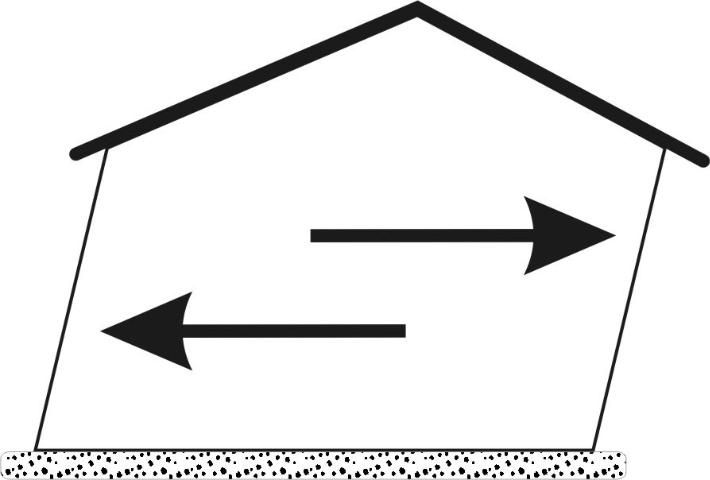
Tilting or sliding occurs when horizontal wind pressures create a shearing action along the foundation (Figure 2).
Credit: Barbara Haldeman, PREC
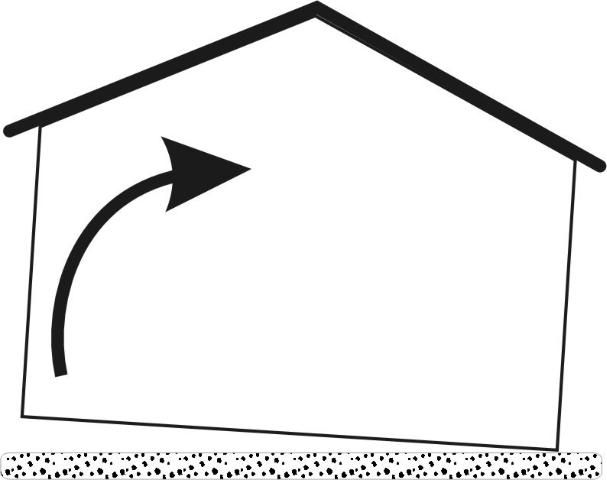
Overturning, or rotating off the foundation, can also result from shearing action when a structure is unable to tilt or slide off the foundation (Figure 3).
Credit: Barbara Haldeman, PREC
Only as Strong as the Weakest Link
A safe home is designed to resist these three effects of wind. The exterior surfaces of a home interact to function as the building envelope. Think of this envelope as a protective shield from the outdoor elements such as heat, humidity, and stormy weather. A stronger shield makes for a safer home and more comfortable occupants.
The structural components of a building envelope are the foundation, walls, and roof. A safe envelope has a continuous load path. This path connects all the structural parts of a building envelope similar to the way the skeleton supports and connects parts of the body.
The non-structural components of a building envelope include windows, doors, garage doors, and other openings in the structural components. These parts protect the inside of a building similar to the way the skin protects internal organs.
The weakest link in the building envelope is the point most likely to fail in a windstorm. When a hurricane or tornado strikes, a home is only as strong as the weakest link.
For more detailed information about wind-resistant building envelopes, please read the other fact sheets in the Education + Action = Wind Damage Mitigation series: https://edis.ifas.ufl.edu/topic_series_wind_damage_mitigation.
How Wind Forces Cause Damage
Wind forces can break the building's load path or punch a hole in the building envelope. Sometimes the actual force of high winds can cause a door or window to break open.
Other times nearby debris can be picked up in the wind and projected against the building envelope. Roof shingles from a neighbor's home, branches from fallen trees, or unsecured yard furniture are examples of potentially dangerous wind-borne debris.
Once wind forces create an opening in the building envelope, the dangers of structural failure greatly increase. Water intrusion is another damaging effect of wind-driven rain.
If your house is in an unobstructed location or within 1,500 feet of open water, you are more susceptible to damages caused by high winds. Proper landscaping may help to shield your home and divert winds around the building.
Hurricane and Tornado Resistance
Check with your local building official to determine the wind speed and wind-borne debris region of your location. Use the protections that will help your home resist the wind speed of your region. It is a good investment to build or renovate beyond minimum code requirements. This may provide additional damage resistance, peace of mind, increased market value, and help you qualify for current or future incentives such as property wind insurance discounts.
Fortified...for safer living is a home certification program of the Institute for Business and Home Safety (IBHS), a research and educational organization of property insurance companies. The "Fortified...for safer living" designation means that a qualified inspector has confirmed the house is designed and built to withstand the perils commonly experienced in the area. Some insurance companies offer premium discounts on wind coverage for certified homes. For more information, visit https://fortifiedhome.org/.
Federal Alliance for Safe Homes (FLASH), is a non-profit educational organization dedicated to promoting home safety. It offers guidelines and information about disaster-safety building techniques and features to protect against floods, wildfires, and windstorms. For more information, visit www.flash.org.
Other Resources
Federal Emergency Management Agency National Preparedness Resource Library: https://www.fema.gov/national-preparedness-resource-library
FloridaDisaster.org: Florida Division of Emergency Management: http://www.floridadisaster.org/
Texas Tech University National Wind Institute: http://www.depts.ttu.edu/nwi/
University of Florida: UF/IFAS Extension Disaster Handbook: https://branding.ifas.ufl.edu/disaster-handbook/