


Carissa grandiflora Natal Plum, Common Carissa
Introduction
Carissa is one of Florida's and California's very best seaside shrubs. This moderately fast-growing, evergreen shrub has lustrous, leathery, rich green, oval leaves and spines along its branches. It is hard to find a plant with darker green leaves. Flowers are somewhat fragrant, white, and star-shaped. The bright red, edible, plum-shaped fruit tastes like cranberries and can be used to make jam. Flowers and fruit are quite showy and are often borne on the plant simultaneously.
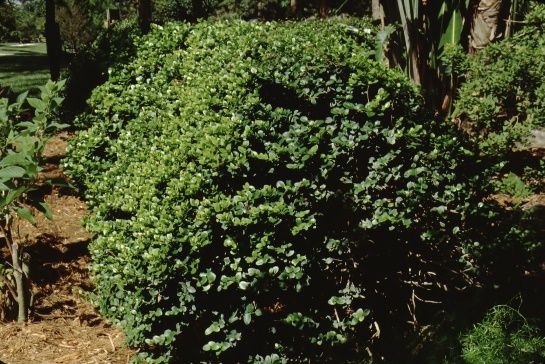
Credit: Edward F. Gilman, UF/IFAS
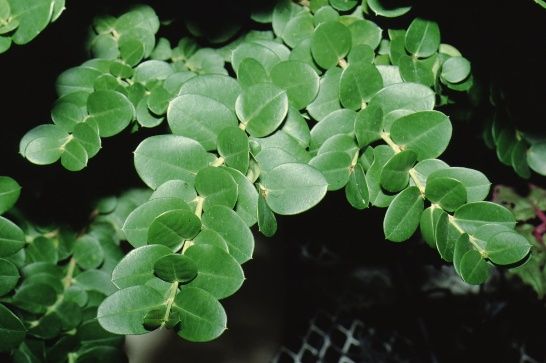
Credit: Edward F. Gilman, UF/IFAS
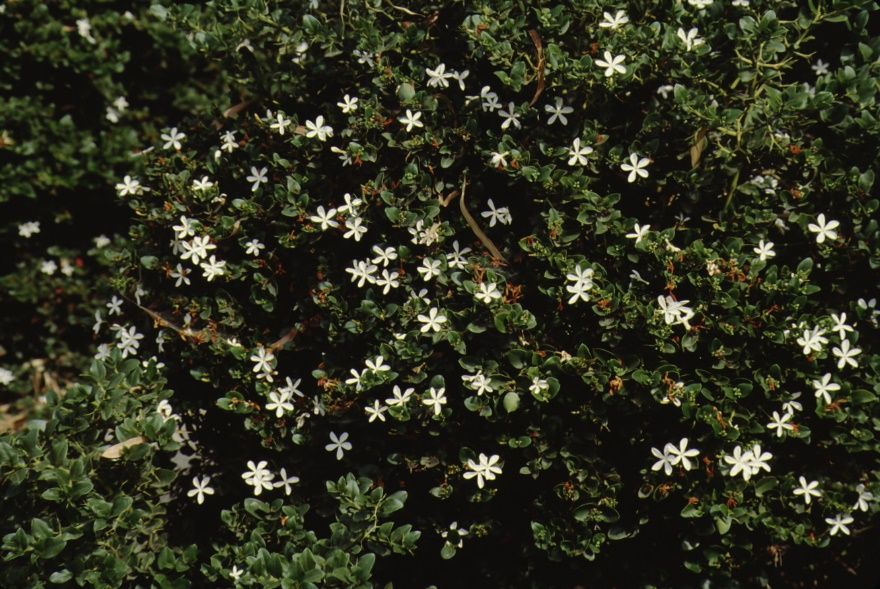
Credit: Edward F. Gilman, UF/IFAS
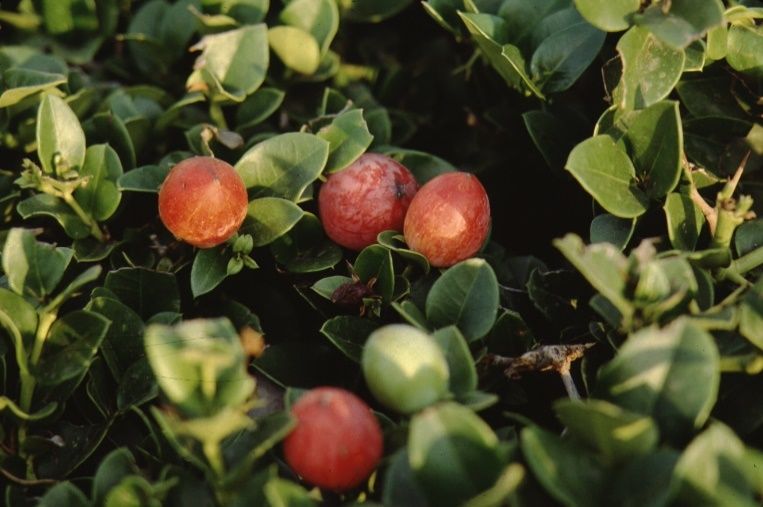
Credit: Edward F. Gilman, UF/IFAS
General Information
Scientific name: Carissa grandiflora
Pronunciation: kuh-RISS-uh gran-dif-FLOR-uh
Common name(s): natal plum, common carissa
Family: Apocynaceae
Plant type: ground cover
USDA hardiness zones: 9B through 11 (Figure 5)
Planting month for zone 9: year round
Planting month for zone 10 and 11: year round
Origin: not native to North America
Invasive potential: not known to be invasive
Uses: bonsai; foundation; screen; border; mass planting; container or above-ground planter; fruit; espalier; ground cover; superior hedge; small parking lot islands (< 100 square feet in size); medium-sized parking lot islands (100–200 square feet in size); large parking lot islands (> 200 square feet in size)
Availability: generally available in many areas within its hardiness range
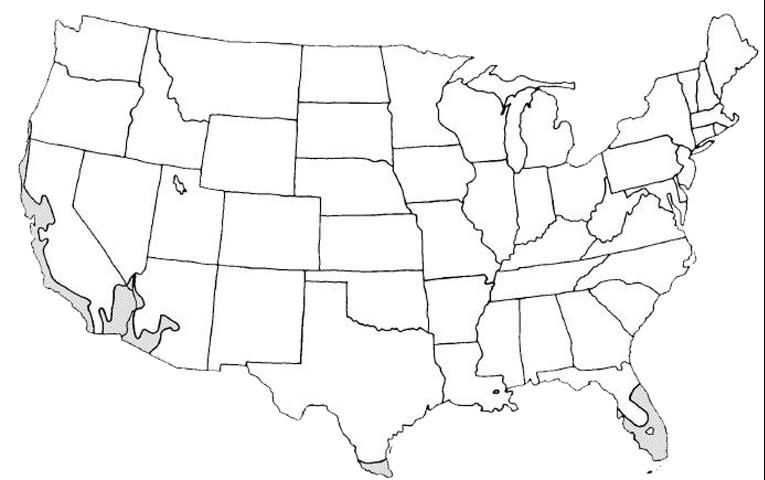
Credit: undefined
Description
Height: 6 to 10 feet
Spread: 4 to 10 feet
Plant habit: spreading; upright
Plant density: dense
Growth rate: moderate
Texture: fine
Foliage
Leaf arrangement: opposite/subopposite
Leaf type: simple
Leaf margin: terminal spine
Leaf shape: ovate
Leaf venation: pinnate
Leaf type and persistence: evergreen
Leaf blade length: 2 to 4 inches
Leaf color: green
Fall color: no fall color change
Fall characteristic: not showy
Flower
Flower color: white
Flower characteristic: summer flowering; pleasant fragrance
Fruit
Fruit shape: oval
Fruit length: 1 to 3 inches
Fruit cover: fleshy
Fruit color: red
Fruit characteristic: suited for human consumption; persists on the plant
Trunk and Branches
Trunk/bark/branches: not particularly showy; typically multi trunked or clumping stems
Current year stem/twig color: green
Current year stem/twig thickness: medium
Culture
Light requirement: plant grows in part shade/part sun
Soil tolerances: clay; sand; acidic; alkaline; loam
Drought tolerance: high
Soil salt tolerances: good
Plant spacing: 36 to 60 inches
Other
Roots: usually not a problem
Winter interest: no special winter interest
Outstanding plant: not particularly outstanding
Pest resistance: long-term health usually not affected by pests
Use and Management
Natal plum will tolerate a variety of soils and exposures and only needs light pruning. Useful as a screen or hedge, it should not be planted too closely to walkways where its large, forked thorns can injure passersby. It makes a nice, full foundation shrub. While it thrives in full sun, natal plum can adapt to fairly heavy shade and requires only moderate watering and fertilization. Plant on three to six-foot centers for a hedge or mass planting, closer for the compact cultivars. Dwarf cultivars such as 'Green Carpet', 'Horizontalis', and 'Prostrata' make excellent groundcovers.
Propagation is by seed or cuttings.
Pests and Diseases
Natal plum is relatively pest-free.
Natal plum is susceptible to root rot when plants are overwatered.

