

Helictrotrichon sempervirens Blue Oat Grass
Introduction
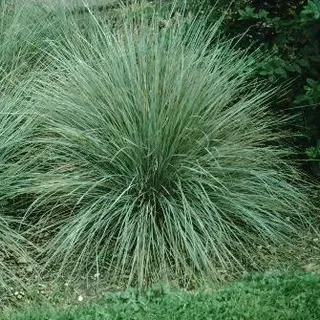
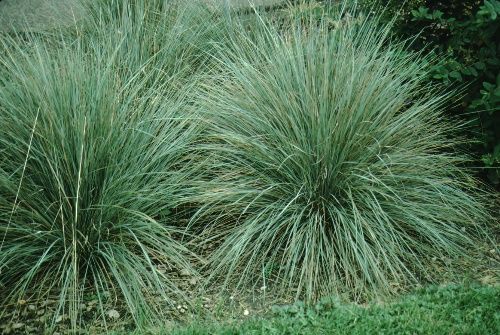
Also known as Avena sempervirens, blue oat grass is a perennial, ornamental grass that has attractive thin gray-green, or blue leaves. Leaf blades grow to about 12 inches long and are 0.5 inch wide and taper to a fine point. Plants grow 18 to 30 inches tall. The glaucous foliage provides a welcomed contrast to a green border. Beige terminal panicles are produced in June through August, maturing to a light brown by the fall when they break apart and fall from the plant. Attractive, light brown fall foliage color persists throughout the winter.
Credit: Edward F. Gilman, UF/IFAS
General Information
Scientific name: Helictotrichon sempervirens
Pronunciation: hel-lick-toe-TRICK-awn sem-pur-VYE-renz
Common name(s): blue oat grass
Family: Gramineae
Plant type: perennial; herbaceous; ornamental grass
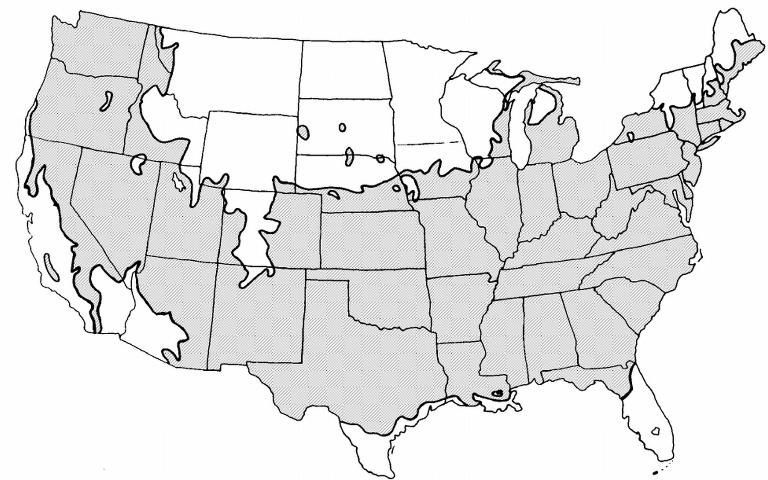
USDA hardiness zones: 5 through 8 (Figure 2)
Planting month for zone 7: year-round
Planting month for zone 8: year-round
Origin: not native to North America
Invasive potential: not known to be invasive
Uses: edging; ground cover; border
Availability: generally available in many areas within its hardiness range
Credit:
Description
Height: 1/2 to 1 feet
Spread: 1 to 2 feet
Plant habit: round
Plant density: dense
Growth rate: slow
Texture: fine
Foliage
Leaf arrangement: most emerge from the soil, usually without a stem
Leaf type: simple
Leaf margin: entire
Leaf shape: linear
Leaf venation: parallel
Leaf type and persistence: deciduous
Leaf blade length: 12 to 18 inches
Leaf color: blue or blue-green
Fall color: brown or tan
Fall characteristic: showy
Flower
Flower color: brown
Flower characteristic: summer flowering
Fruit
Fruit shape: oval
Fruit length: less than 1/2 inch
Fruit cover: dry or hard
Fruit color: brown
Fruit characteristic: showy
Trunk and Branches
Trunk/bark/branches: not applicable
Current year stem/twig color: not applicable
Current year stem/twig thickness: not applicable
Culture
Light requirement: plant grows in full sun
Soil tolerances: acidic; slightly alkaline; sand; loam; clay
Drought tolerance: moderate
Soil salt tolerances: unknown
Plant spacing: 12 to 18 inches
Other
Roots: not applicable
Winter interest: no special winter interest
Outstanding plant: not particularly outstanding
Pest resistance: no serious pests are normally seen on the plant
Use and Management
Blue oat grass is attractive as a single accent plant in a very small garden, or it can be massed in groups for a beautiful, fine-textured drift. Blue oat grass prefers a full sun exposure but will tolerate light shade. It prefers a moist soil that is well drained, however it will tolerate sandy as well as heavy clay soils. No more than yearly fertilization is needed to keep plants healthy. Propagate by division.
They are often planted about 2 feet apart, so they form a solid mass of fine-textured foliage. Blue oat grass looks nice in a rock garden planted by itself, or more commonly in groups in front of a shrub border or in a row along a walk. They should last for many years with little care.
Pests and Diseases
Blue oat grass may be prone to foliar diseases when grown in shade.