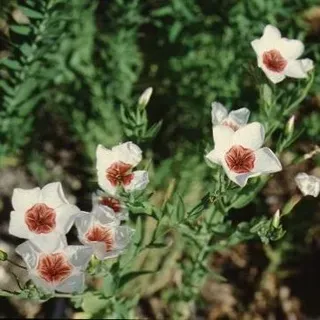
Linum perenne 'Bright Eyes' Bright Eyes Perennial Flax
Introduction
Perennial flax produces blue flowers during June and July and grows 12 to 18 inches tall.
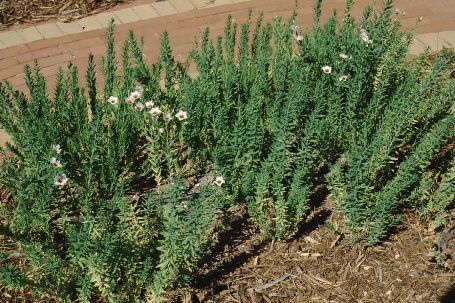
Credit: Edward F. Gilman, UF/IFAS
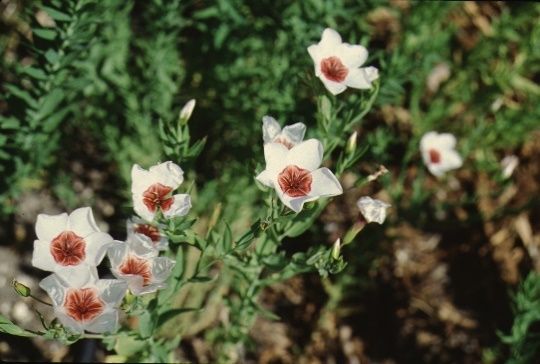
Credit: Edward F. Gilman, UF/IFAS
General Information
Scientific name: Linum perenne 'Bright Eyes'
Pronunciation: LYE-num per-REN-nuh
Common name(s): 'Bright Eyes' perennial flax
Family: Linaceae
Plant type: herbaceous
USDA hardiness zones: 5 through 8 (Figure 3)
Planting month for zone 7: year round
Planting month for zone 8: year round
Origin: not native to North America
Invasive potential: may self-seed each year
Uses: edging; mass planting
Availability: somewhat available, may have to go out of the region to find the plant
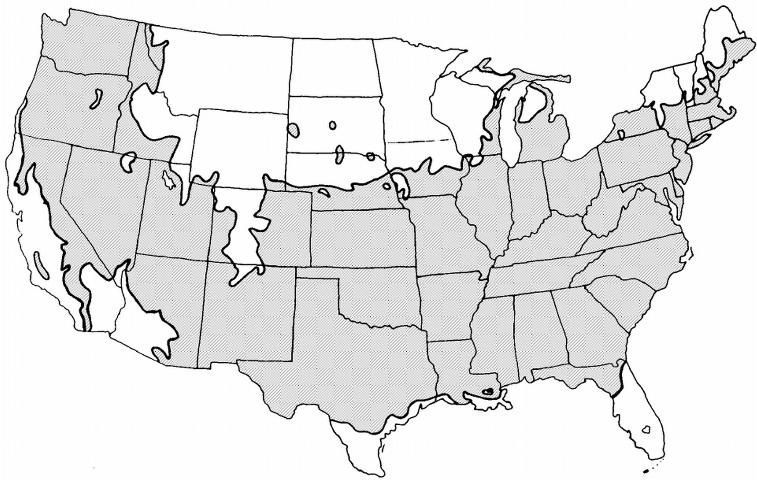
Credit:
Description
Height: 1 to 2 feet
Spread: 1 to 2 feet
Plant habit: upright
Plant density: open
Growth rate: moderate
Texture: fine
Foliage
Leaf arrangement: alternate
Leaf type: simple
Leaf margin: entire
Leaf shape: linear
Leaf venation: none, or difficult to see
Leaf type and persistence: deciduous
Leaf blade length: less than 2 inches
Leaf color: green
Fall color: no fall color change
Fall characteristic: not showy
Flower
Flower color: blue
Flower characteristic: summer flowering
Fruit
Fruit shape: unknown
Fruit length: unknown
Fruit cover: unknown
Fruit color: unknown
Fruit characteristic: inconspicuous and not showy
Trunk and Branches
Trunk/bark/branches: not applicable
Current year stem/twig color: green
Current year stem/twig thickness: thin
Culture
Light requirement: plant grows in part shade/part sun; plant grows in the shade
Soil tolerances: slightly alkaline; occasionally wet; acidic; sand; loam; clay
Drought tolerance: unknown
Soil salt tolerances: unknown
Plant spacing: 12 to 18 inches
Other
Roots: not applicable
Winter interest: no special winter interest
Outstanding plant: not particularly outstanding
Pest resistance: long-term health usually not affected by pests
Use and Management
Pests and Diseases
Stem rot causes stem rotting. Infected plants have a cottony mold growing on the stem. The disease is caused by Sclerotinia sclerotianum.