
Chives—Allium schoenoprasum L.1
Chives are perennials belonging to the onion family. The small, bulbous onion-like plants grow in clumps; leaves are slender, tubular, and hollow, about 6 inches long. They produce very attractive violet-colored flowers. Chives are a native of northern Europe and parts of North America. While not an important commercial crop in Florida, they are a good garden item. They can be grown on most of the soil types found in Florida.
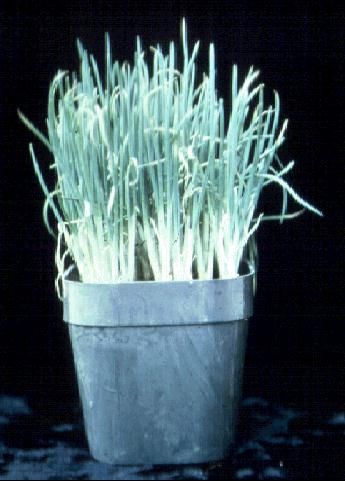
Credit: Blue Goose Inc.
Use
The tender leaves can be harvested at any time during the season and used fresh. The fresh, young, tender leaves possess a delicate onion flavor. The bulbs or dried leaves are seldom used as they do not have a pleasant flavor. While chopped leaves can be used with many foods and in many herb mixtures, they are excellent in salads, omelets, stews, and soups.
Culture
Throughout Florida, chives may be planted August through March, using either seeds or sets. Most gardeners use sets. It is a perennial, but the clumps should be divided and reset every 2–3 years to prevent overcrowding. The bulbs can be set in about the same manner as onion sets and require about the same care. Place the sets at a depth of about ½ inch and about 3 inches apart.
In northern areas, the clumps are sometimes dug up and potted and then grown indoors for winter use. Chives are often retailed potted in this manner.