


Salsify—Tragopogon porrifolius L.1
Salsify is also known as the oyster plant or vegetable oyster. It is grown for the edible root which has a flavor like that of oysters. Salsify is grown only occasionally in Florida home gardens, but does fairly well here.
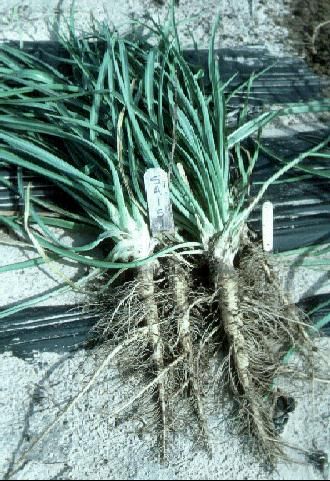
Credit: James M. Stephens, UF/IFAS
Description
The plant is a biennial belonging to the same family of plants as chicory and dandelion. It is grown as an annual with culture similar to that for parsnips or carrots. The long, slender, pointed, smooth, flat leaves are about 1-inch in diameter at the crown and are 10–12 inches long. Roots are 8–12 inches long, cylindrical, 1-inch or less in diameter, and salmon or brown in color. Older roots possess a white, milky white sap.
Culture
Salsify requires a long growing season of 120 to 150 days from seeding to harvest. In the northern states, it is planted in the spring and harvested in the fall. In Florida, the best production period is from October through March, as salsify will withstand frost.
The seedlings should be thinned to 3–4 inches apart in rows 18–24 inches apart. Cover the seed ½ inch deep. The variety 'Mammoth Sandwich Island' is most commonly grown.
Use
Salsify is used in soups and stews; it can be boiled, cut into small pieces, and creamed like asparagus. It can be cut into long strips, boiled, and then fried in butter or mashed.