


Alnus glutinosa 'Pyramidalis': 'Pyramidalis' Common Alder1
Introduction
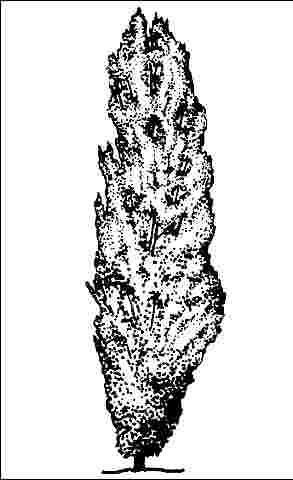
A popular tree of moist to wet soils, common alder is a moderate- to fast-growing (two feet per year) deciduous tree. This upright, columnar cultivar to 20-foot spread and a 12- to 18-inch trunk but is capable of growing taller. The species is not native but has escaped from cultivation and will form pure stands or thickets in disturbed wet sites. The two- to four-inch-wide, dark green, roundish leaves with toothed edges and pale undersides are joined in spring by rather insignificant male and female flowers. Foliage remains green well into the fall. It is the fruits that are most interesting—small, nutlike, one-inch "cones" that persist throughout the fall and winter, long after the darkening leaves have fallen. These fruits, along with the attractive, dark brown, furrowed bark, make alder an attractive landscape specimen throughout the winter. The fruits are food for a variety of wildlife.
General Information
Scientific name: Alnus glutinosa
Pronunciation: AL-nus gloo-tih-N0-suh
Common name(s): 'Pyramidalis' common alder, `Pyramidalis' black alder, `Pyramidalis' european alder
Family: Betulaceae
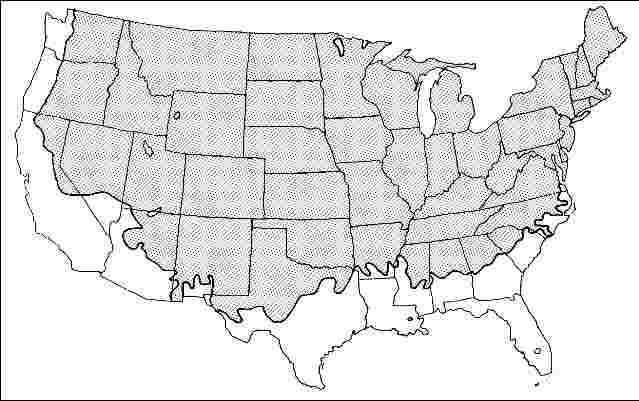
USDA hardiness zones: 3A through 7B (Fig. 2)
Origin: not native to North America
Invasive potential: invasive non-native
Uses: screen; specimen; reclamation; shade
Availability: not native to North America
Description
Height: 40 to 50 feet
Spread: 15 to 20 feet
Crown uniformity: symmetrical
Crown shape: pyramidal, oval
Crown density: dense
Growth rate: moderate
Texture: coarse
Foliage
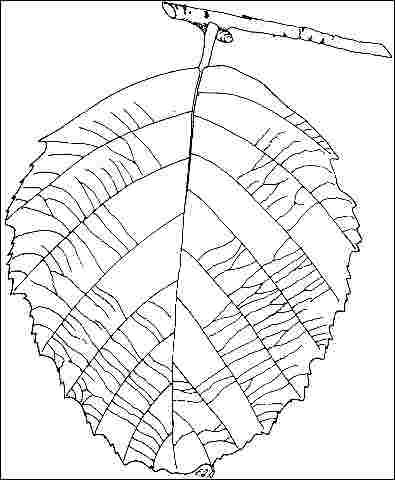
Leaf arrangement: alternate (Fig. 3)
Leaf type: simple
Leaf margin: double serrate, serrate
Leaf shape: orbiculate
Leaf venation: pinnate
Leaf type and persistence: deciduous
Leaf blade length: 2 to 4 inches
Leaf color: green
Fall color: no color change
Fall characteristic: not showy
Flower
Flower color: red, purple
Flower characteristics: not showy
Fruit
Fruit shape: oval, elongated
Fruit length: less than .5 inch
Fruit covering: dry or hard
Fruit color: brown
Fruit characteristics: does not attract wildlife; showy; fruit/leaves not a litter problem
Trunk and Branches
Trunk/bark/branches: branches don't droop; showy; typically one trunk; thorns
Pruning requirement: little required
Breakage: resistant
Current year twig color: gray, brown
Current year twig thickness: thin, medium
Wood specific gravity: unknown
Culture
Light requirement: full sun, partial sun or partial shade
Soil tolerances: clay; sand; loam; acidic; alkaline; well-drained; extended flooding
Drought tolerance: moderate
Aerosol salt tolerance: moderate
Other
Roots: not a problem
Winter interest: yes
Outstanding tree: yes
Ozone sensitivity: unknown
Verticillium wilt susceptibility: resistant
Pest resistance: resistant to pests/diseases
Use and Management
A good plant for establishing along stream banks to stabilize soil and add interest, alder can also be used as a specimen in a more formal landscape where wet soil challenges most other plants. The columnar growth habit makes it suited for a screen planted on 10-foot centers, and for areas with narrow overhead space. Some horticulturists believe that it could be used as a substitute for Lombardy poplar. It requires little pruning to develop into a well-formed tree. Unfortunately, it is usually not grown in nurseries, but nursery operators should be encouraged to grow this adaptable tree.
Common alder will grow easily in full sun or partial shade in almost any landscape setting since the trees are able to "fix" nitrogen, or take it out of the soil atmosphere, enabling these trees to grow in the poorest and wettest soils where other trees might fail. Alder will grow best in wet or moist soils, acid or alkaline, and have even been observed growing with roots submerged in water, but it is also tolerant of moderate drought, compaction, and urban stress. Common alder transplants easily and will seed itself into an area, creating a thicket if it is planted and left alone in an area that is not maintained. It remains to be seen whether this cultivar will do the same.
Other cultivars include 'Aurea'—golden yellow leaves; 'Laciniata'—leaves not as deeply lobed, vigorous growth.
Propagation is by seed. Cultivars are grafted onto seedling root stock.
Pests
Leaf miners, tent caterpillars. Tent caterpillars can cause significant defoliation, but trees normally recover.
Diseases
Powdery mildew and cankers, but these are usually not serious.

