Cedrus atlantica 'Argentea': Silver Atlas Cedar
Introduction
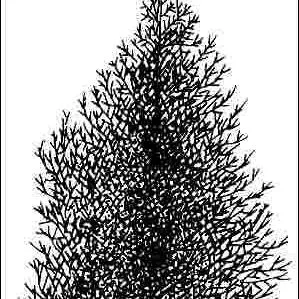
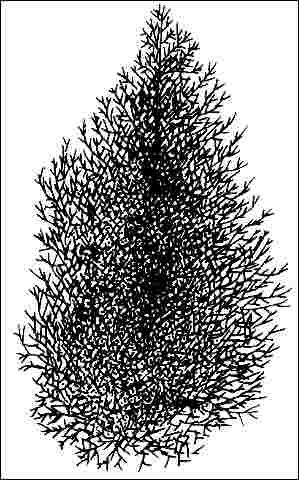
This silver-blue foliaged cultivar is a handsome evergreen for specimen planting. It reaches 40 to 60 or more feet tall and 30 to 40 feet wide. The trunk stays fairly straight with lateral branches nearly horizontal. Allow plenty of room for these to spread. They are best located as a lawn specimen away from walks, streets, and sidewalks so branches will not have to be pruned and are left on the tree to the ground. This shows off the wonderful pyramidal form with lower branches spreading about half the height. It looks odd if lower branches are removed. The trees are much too large for most residential properties. Older trees become flat-topped and are a beautiful sight to behold.
General Information
Scientific name: Cedrus atlantica
Pronunciation: SEE-drus at-LAN-tih-kuh
Common name(s): Silver atlas cedar
Family: Pinaceae
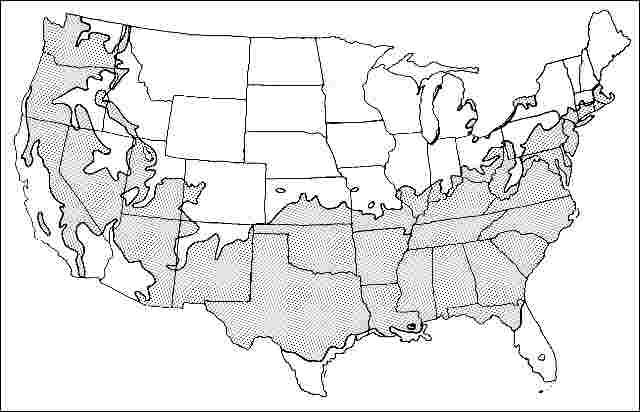
USDA hardiness zones: 6A through 8B (Figure 2)
Origin: not native to North America
Invasive potential: not assessed/incomplete assessment
Uses: specimen; bonsai
Description
Height: 40 to 60 feet
Spread: 35 to 50 feet
Crown uniformity: irregular
Crown shape: pyramidal
Crown density: moderate
Growth rate: moderate
Texture: fine
Foliage
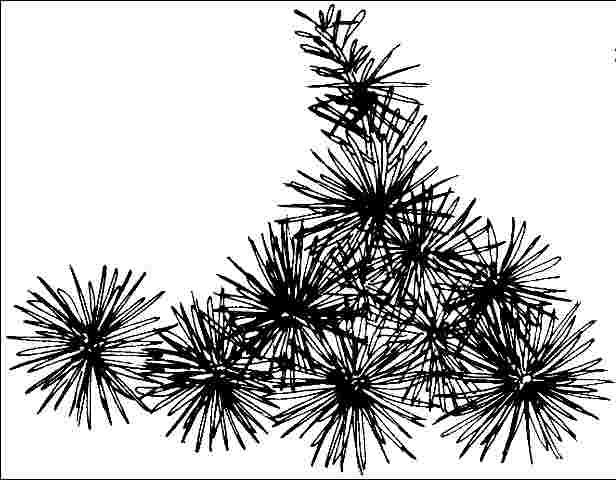
Leaf arrangement: spiral (Figure 3)
Leaf type: simple
Leaf margin: entire
Leaf shape: needle-like (filiform)
Leaf venation: parallel
Leaf type and persistence: needled evergreen, evergreen
Leaf blade length: less than 2 inches
Leaf color: silver
Fall color: no color change
Fall characteristic: not showy
Flower
Flower color: unknown
Flower characteristics: not showy
Fruit
Fruit shape: oval, cone
Fruit length: 3 to 6 inches
Fruit covering: dry or hard
Fruit color: brown
Fruit characteristics: does not attract wildlife; showy; fruit/leaves not a litter problem
Trunk and Branches
Trunk/bark/branches: branches droop; not showy; typically one trunk; thorns
Pruning requirement: little required
Breakage: resistant
Current year twig color: green, brown
Current year twig thickness: medium
Wood specific gravity: unknown
Culture
Light requirement: full sun, partial sun, or partial shade
Soil tolerances: clay; sand; loam; slightly alkaline; acidic; well-drained
Drought tolerance: high
Aerosol salt tolerance: moderate
Other
Roots: not a problem
Winter interest: no
Outstanding tree: yes
Ozone sensitivity: unknown
Verticillium wilt susceptibility: resistant
Pest resistance: free of serious pests and diseases
Use and Management
Difficult to transplant, it should be moved as a container plant or root-pruned balled-in-burlap. It does best in well-drained deep loam, on the acidic side, but it can tolerate sandy or clay soils, if they are well-drained. The tree looks its best when it is sheltered from strong winds, but it tolerates open conditions and will grow in full sun or partial shade. Allow for plenty of soil space around the tree since growth will be poor in restricted soil space. It tolerates extensive drought only when grown in an area where roots can explore a large soil area. It performs well in all areas within its hardiness range. It is suitable in zone 9 in California and perhaps in Florida.
Cultivars
Two other especially desirable cultivars are Cedrus atlantica 'Pendula', a weeping form, and Cedrus atlantica 'Glauca', having beautiful bluish-white foliage.
Pests
Generally free of insect pests and resistant to diseases, they may occasionally fall prey to tip blight, root rots or black scale and the Deodar weevil. Usually, no pest protection or control is necessary.
Sap-suckers are attracted to the trunk and often riddle it with small holes. This usually does little lasting harm to the tree.