Edward F. Gilman, Dennis G. Watson, Ryan W. Klein, Andrew K. Koeser, Deborah R. Hilbert, and Drew C. McLean
Introduction
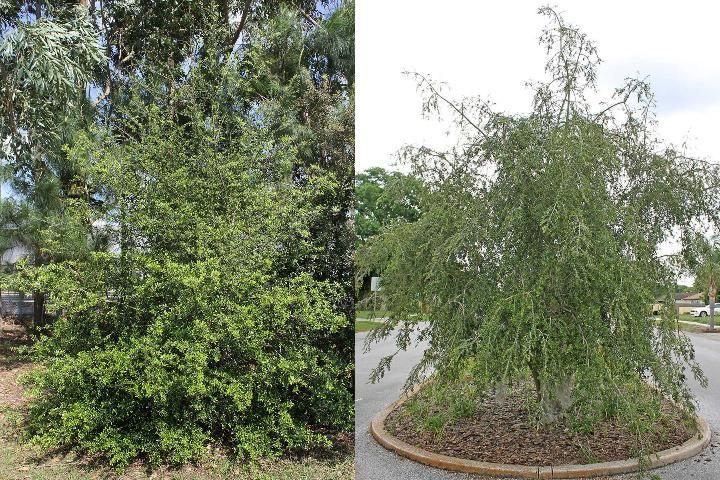
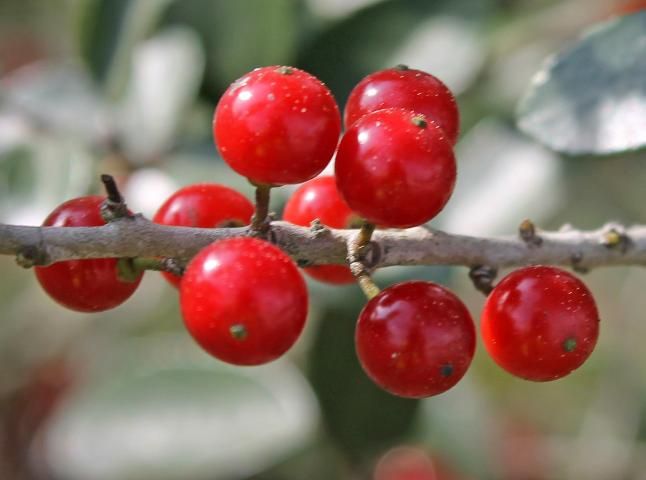
This upright, spreading small evergreen tree or large shrub, capable of reaching 15 to 25 feet in height with a similar spread, has small, dark green, leathery leaves densely arranged along smooth, stiff, light grey branches. Plants in the landscape require about 10-years to develop a distinct vase-shape. Sometimes clipped into a tight hedge, yaupon holly is ideal for training into a small tree with lower branches removed to reveal the interestingly-contorted multiple trunks. It can also be used for topiaries, espaliers, specimens, screens, or barriers. The non-showy male and female flowers appear on separate plants and are followed on the female plants by the production of brilliant red berries (yellow on some cultivars) which are quite attractive to wildlife. The flowers attract bees for several weeks. Purchase plants with berries on them (females) if you want a berry-producing plant, or buy trees which were propagated from cuttings of female plants.
Figure 1. Full Form—Ilex vomitoria: Yaupon holly (left is standard form; right is weeping)
General Information
Scientific name: Ilex vomitoria
Pronunciation: EYE-lecks vom-ih-TOR-ee-uh
Common name(s): Yaupon holly
Family: Aquifoliaceae
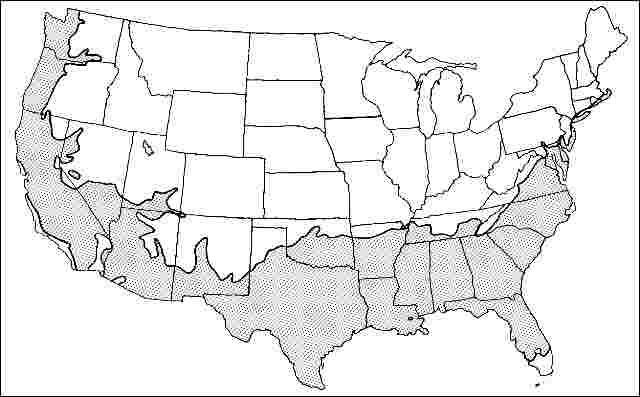
USDA hardiness zones: 7A through 9B (Figure 2)
Origin: native to the eastern half of the United States
UF/IFAS Invasive Assessment Status: native
Uses: parking lot island < 100 sq ft; parking lot island 100–200 sq ft; parking lot island > 200 sq ft; tree lawn 3–4 feet wide; tree lawn 4–6 feet wide; tree lawn > 6 ft wide; street without sidewalk; espalier; hedge; deck or patio; screen; specimen; container or planter; sidewalk cutout (tree pit); urban tolerant; highway median; Bonsai
Figure 2. Range
Description
Height: 15 to 25 feet
Spread: 15 to 20 feet
Crown uniformity: symmetrical
Crown shape: vase, round
Crown density: open
Growth rate: moderate
Texture: fine
Foliage
Leaf arrangement: alternate
Leaf type: simple
Leaf margin: serrulate, crenate
Leaf shape: ovate
Leaf venation: brachidodrome, pinnate, reticulate
Leaf type and persistence: evergreen
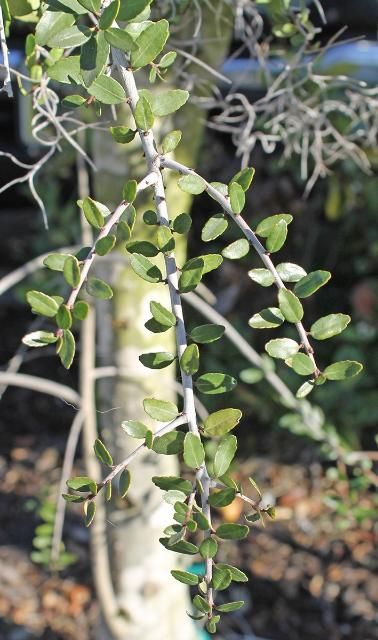
Leaf blade length: ½ to 1 ½ inches
Leaf color: dark green on top, lighter green underneath
Fall color: no color change
Fall characteristic: not showy
Figure 3. Leaf—Ilex vomitoria: Yaupon holly
Flower
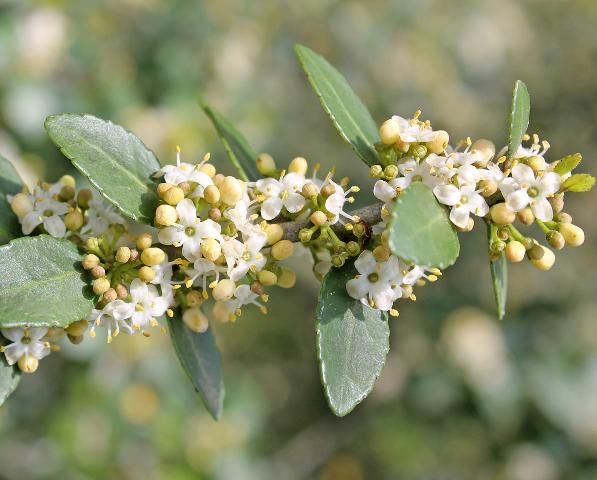
Flower color: greenish white
Flower characteristics: not showy; male—emerges in clusters; female—emerges solitary or in clusters
Flowering: spring
Figure 4. Flower—Ilex vomitoria: Yaupon holly
Fruit
Fruit shape: round
Fruit length: ¼ inch
Fruit covering: fleshy drupe
Fruit color: red
Fruit characteristics: attracts birds; showy; fruit/leaves not a litter problem
Fruiting: summer
Figure 5. Fruit—Ilex vomitoria: Yaupon holly
Trunk and Branches
Trunk/branches: branches droop; not showy; typically multi-trunked; no thorns
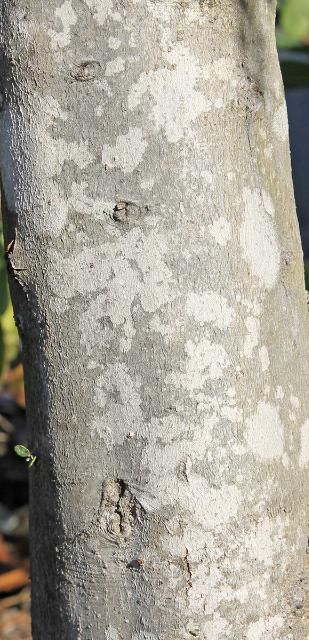
Bark: white to gray, smooth, thin, and may become scaly with age
Soil tolerances: clay; sand; loam; alkaline; acidic; wet to well-drained
Drought tolerance: high
Aerosol salt tolerance: high
Other
Roots: not a problem
Winter interest: yes
Outstanding tree: no
Ozone sensitivity: unknown
Verticillium wilt susceptibility: resistant
Pest resistance: resistant to pests/diseases
Use and Management
A tough native of the southern United States, yaupon holly grows quickly in a variety of locations, from full sun or shade to seaside or swamps, in sand or clay. Crowns will be thin in the shade. It will grow in soil with a pH in the 7's and is very tolerant of drought and sea salt, It sprouts readily from the roots forming clumps of upright shoots beneath the canopy. Sprouting is most troublesome if the soil beneath the canopy is disturbed, as in planting shrubs or flowers under the tree. These need to be pruned to the ground two or three times each year to maintain a neat appearance. Consider this when selecting trees for use on streets, parking lots, and other low-maintenance areas since thickets often form.
Yaupon holly is one of the most durable and adaptable of the small-leaved evergreen Hollies for use in southern landscapes. It grows well throughout its range in sidewalk cutouts and other sites with limited exposed soil. Wild yaupons are protected by Florida statute.
A few of the available cultivars include: 'Folsom's Weeping', similar to 'Pendula'; 'Jewel', female plant with heavy fruit production; 'Nana', dwarf, compact shrub form, male plant, no berries; 'Pendula' ('Grey's Weeping'), large weeping specimen, sparsely foliated, to 35 feet tall; 'Pride of Houston', medium-sized shrub with heavy fruit production; and a low shrub called 'Schelling's Dwarf' ('Stroke's Dwarf'), more compact than `Nana'. Yellow-fruited cultivars include: 'Aureo', yellow berries; 'Otis Miley', small leaves, yellow fruit; 'Wiggins' Yellow', yellow fruit.
Propagation is by seeds or cuttings.
Pests
Scale, leaf miners, mites, and aphids appear to form a long list of problems, but none are normally serious.
Diseases
No diseases are of major concern.
Reference
Koeser, A. K., Hasing, G., Friedman, M. H., and Irving, R. B. 2015. Trees: North & Central Florida. Gainesville: University of Florida Institute of Food and Agricultural Sciences.