


Nyssa sinensis: Chinese Tupelo1
Introduction
The deciduous Chinese tupelo probably grows 35 to 50 feet tall and almost as wide in a rounded shape. Like many other Nyssa, young trees grow with a pyramidal habit. The six-inch-long, green leaves turn brilliant shades of red, yellow, and orange in fall before dropping. Small, greenish-white flowers appear in the spring in axillary clusters and are followed by small blue fruits. These are visible when they drop and stain sidewalks for a period of time but they wash away quickly following a rain.
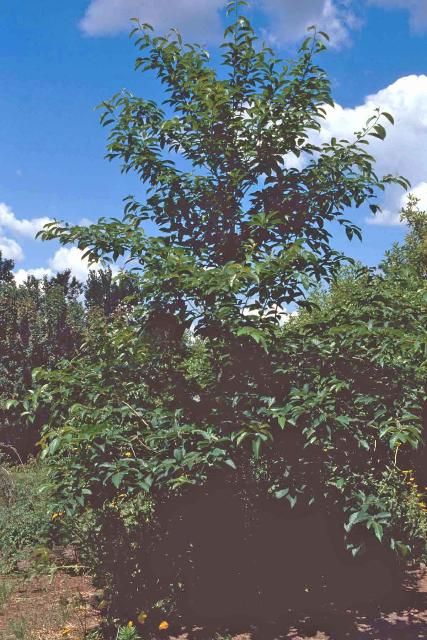
Credit: Ed Gilman, UF/IFAS
General Information
Scientific name: Nyssa sinensis
Pronunciation: NISS-uh sigh-NEN-sis
Common name(s): Chinese tupelo
Family: Nyssaceae
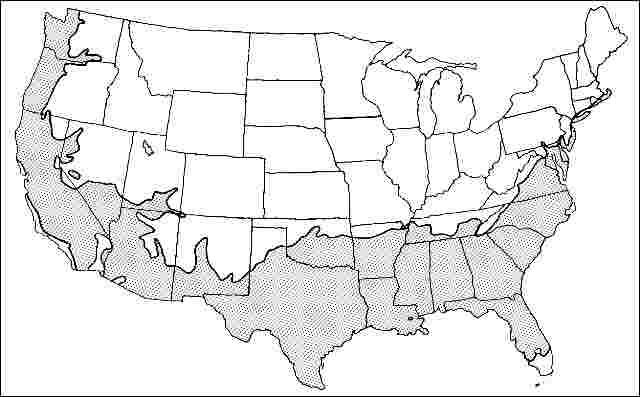
USDA hardiness zones: 7A through 9B (Fig. 2)
Origin: not native to North America
Invasive potential: little invasive potential
Uses: tree lawn 4-6 feet wide; tree lawn > 6 ft wide; street without sidewalk; parking lot island 100-200 sq ft; parking lot island > 200 sq ft; reclamation; specimen; shade; highway median
Availability: not native to North America
Description
Height: 35 to 50 feet
Spread: 25 to 35 feet
Crown uniformity: symmetrical
Crown shape: round, oval
Crown density: moderate
Growth rate: fast
Texture: medium
Foliage
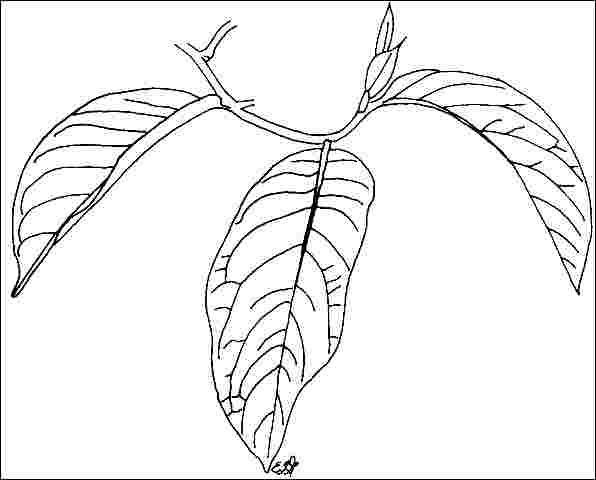
Leaf arrangement: alternate (Fig. 3)
Leaf type: simple
Leaf margin: entire, serrate
Leaf shape: elliptic (oval)
Leaf venation: pinnate, brachidodrome
Leaf type and persistence: deciduous
Leaf blade length: 2 to 4 inches, 4 to 8 inches
Leaf color: green
Fall color: yellow, red
Fall characteristic: showy
Flower
Flower color: unknown
Flower characteristics: not showy
Fruit
Fruit shape: round
Fruit length: less than .5 inch
Fruit covering: fleshy
Fruit color: unknown
Fruit characteristics: does not attract wildlife; not showy; fruit/leaves not a litter problem
Trunk and Branches
Trunk/bark/branches: branches droop; not showy; typically one trunk; thorns
Pruning requirement: little required
Breakage: resistant
Current year twig color: green
Current year twig thickness: medium
Wood specific gravity: unknown
Culture
Light requirement: full sun, partial sun, or partial shade
Soil tolerances: clay; sand; loam; acidic; occasionally wet; well-drained
Drought tolerance: high
Aerosol salt tolerance: unknown
Other
Roots: not a problem
Winter interest: no
Outstanding tree: no
Ozone sensitivity: unknown
Verticillium wilt susceptibility: unknown
Pest resistance: unknown
Use and Management
Chinese tupelo should be grown in full sun on moist, well-drained soil. The tree has not been grown in many places in this country and little else is known about the tree.
Pests and Diseases
Little is known about the susceptibility of this tree to pests and diseases.

