


Quercus acuta: Japanese Evergreen Oak1
Introduction
Japanese evergreen oak reaches 20 to 30 feet in height with a 15 to 20-foot-spread and has an oval to rounded silhouette with dense, low branching and smooth, grey bark on the often multiple trunks. The dark green, glossy leaves, 2.5 to 5 inches long, have wavy-margins and a paler underside. New growth is purplish-brown. The inconspicuous flowers are followed by brown, cupped acorns. The dense growth and small size make Japanese evergreen oak ideal for use as a specimen, screen, or small shade tree. Unfortunately, it is not available in nurseries.
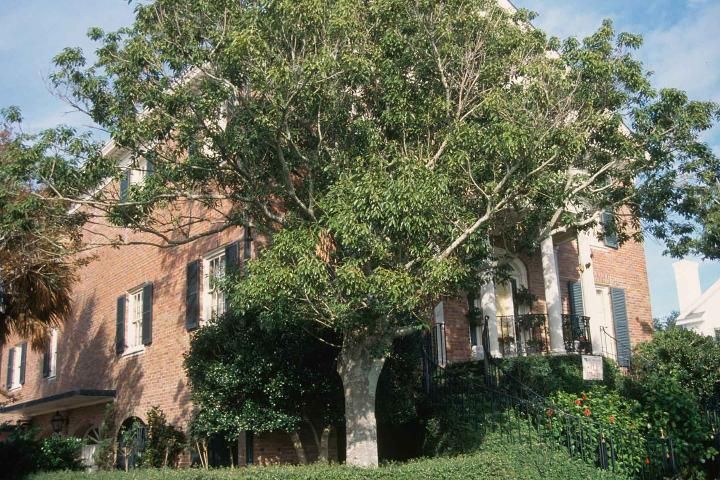
Credit: Ed Gilman, UF/IFAS
General Information
Scientific name: Quercus acuta
Pronunciation: KWERK-us ack-YOO-tuh
Common name(s): Japanese evergreen oak
Family: Fagaceae
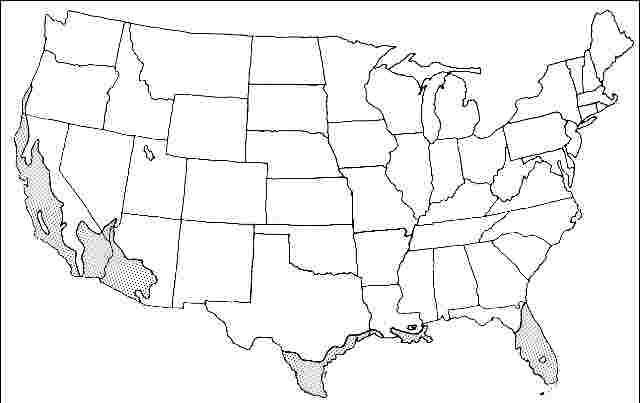
USDA hardiness zones: 9A through 11 (Fig. 2)
Origin: not native to North America
Invasive potential: little invasive potential
Uses: specimen; shade; tree lawn 4-6 feet wide; tree lawn > 6 ft wide; parking lot island 100-200 sq ft; parking lot island > 200 sq ft; street without sidewalk; highway median; tree lawn 3-4 feet wide
Availability: not native to North America
Description
Height: 20 to 30 feet
Spread: 15 to 20 feet
Crown uniformity: symmetrical
Crown shape: oval, round
Crown density: dense
Growth rate: moderate
Texture: medium
Foliage
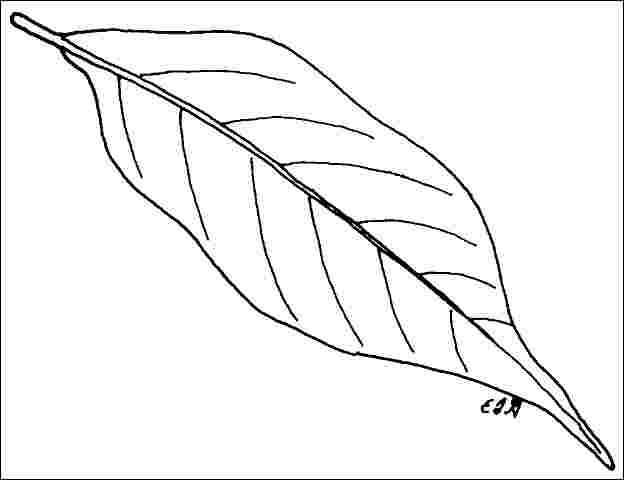
Leaf arrangement: alternate (Fig. 3)
Leaf type: simple
Leaf margin: entire, undulate
Leaf shape: ovate, elliptic (oval)
Leaf venation: pinnate
Leaf type and persistence: broadleaf evergreen, evergreen
Leaf blade length: 2 to 4 inches, 4 to 8 inches
Leaf color: green
Fall color: no color change
Fall characteristic: not showy
Flower
Flower color: brown
Flower characteristics: not showy
Fruit
Fruit shape: elongated
Fruit length: .5 to 1 inch
Fruit covering: dry or hard
Fruit color: brown
Fruit characteristics: attracts squirrels/mammals; not showy; fruit/leaves a litter problem
Trunk and Branches
Trunk/bark/branches: branches droop; not showy; typically multi-trunked; thorns
Pruning requirement: needed for strong structure
Breakage: resistant
Current year twig color: brown
Current year twig thickness: thick
Wood specific gravity: unknown
Culture
Light requirement: full sun
Soil tolerances: clay; sand; loam; acidic; well-drained
Drought tolerance: moderate
Aerosol salt tolerance: unknown
Other
Roots: not a problem
Winter interest: no
Outstanding tree: no
Ozone sensitivity: unknown
Verticillium wilt susceptibility: resistant
Pest resistance: unknown
Use and Management
Japanese evergreen oak should be grown in full sun or partial shade on well-drained, fertile, acid soil.
Pests
The tree has not been extensively tested.
Diseases
The tree has not been extensively tested.

