


Quercus nuttallii: Nuttall Oak1
Introduction
This native North American deciduous tree is capable of reaching 100 to 120 feet in height but is more often seen at 60 to 80 feet. The dull, dark green, lobed leaves are 4 to 8 inches long and 2 to 5 inches wide. The small, reddish-brown acorns are 0.75 to 1.25 inches long. The bark is dark, grey/brown, and divided into broad, flat plates.
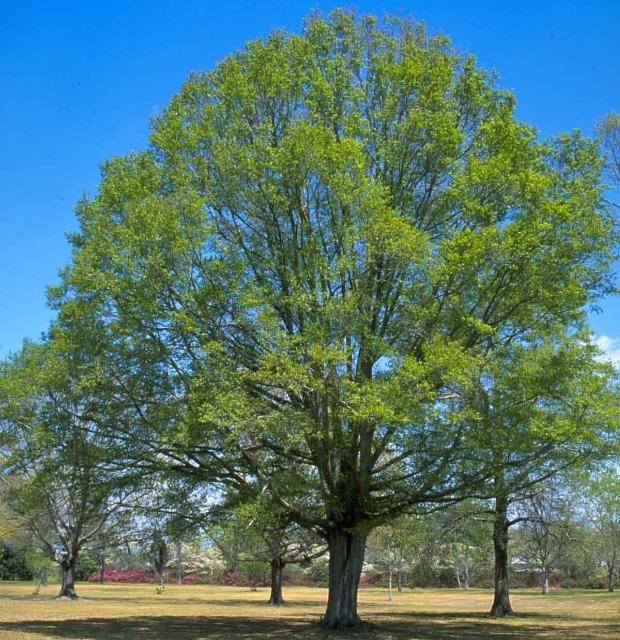
Credit: Ed Gilman, UF/IFAS
General Information
Scientific name: Quercus nuttallii
Pronunciation: KWERK-us nuh-TALL-ee-eye
Common name(s): Nuttall oak
Family: Fagaceae
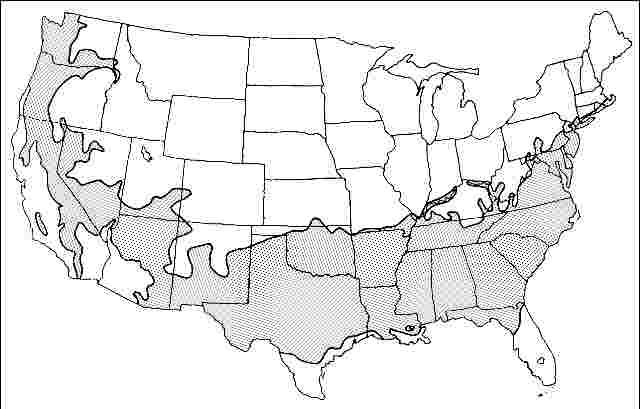
USDA hardiness zones: 6B through 8B (Fig. 2)
Origin: native to North America
Invasive potential: little invasive potential
Uses: highway median; street without sidewalk; specimen; shade; parking lot island > 200 sq ft; tree lawn > 6 ft wide
Availability: somewhat available, may have to go out of the region to find the tree
Description
Height: 60 to 80 feet
Spread: 35 to 50 feet
Crown uniformity: symmetrical
Crown shape: round
Crown density: moderate
Growth rate: moderate
Texture: medium
Foliage
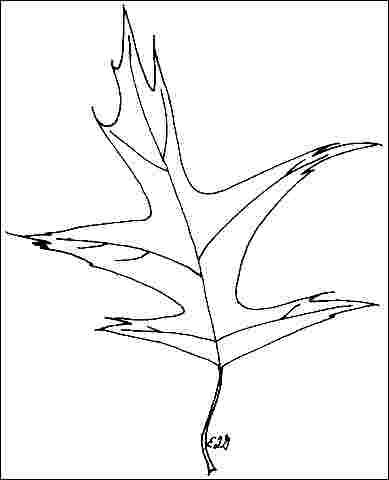
Leaf arrangement: alternate (Fig. 3)
Leaf type: simple
Leaf margin: lobed, parted
Leaf shape: ovate
Leaf venation: pinnate
Leaf type and persistence: deciduous
Leaf blade length: 4 to 8 inches
Leaf color: green
Fall color: red
Fall characteristic: showy
Flower
Flower color: brown
Flower characteristics: not showy
Fruit
Fruit shape: oval, round
Fruit length: .5 to 1 inch, 1 to 3 inches
Fruit covering: dry or hard
Fruit color: brown
Fruit characteristics: attracts squirrels/mammals; not showy; fruit/leaves a litter problem
Trunk and Branches
Trunk/bark/branches: branches droop; not showy; typically one trunk; thorns
Pruning requirement: little required
Breakage: resistant
Current year twig color: green, brown
Current year twig thickness: thin, medium
Wood specific gravity: unknown
Culture
Light requirement: full sun
Soil tolerances: clay; sand; loam; acidic; extended flooding; well-drained
Drought tolerance: moderate
Aerosol salt tolerance: unknown
Other
Roots: not a problem
Winter interest: no
Outstanding tree: yes
Ozone sensitivity: unknown
Verticillium wilt susceptibility: resistant
Pest resistance: unknown
Use and Management
Nuttall oak should be grown in full sun on any soil and is very tolerant of poorly-drained, wet sites. This should make it well suited for the soil conditions found at many urban sites. If landscape nurseries grew this tree more often, it would be specified for poorly-drained urban and suburban landscape sites.
Propagation is by seed.
Pests and Diseases
No pests or diseases of major concern.

