
Ascosphaera apis (Maassen et Claussen) Olive et Spiltoir, commonly known as chalkbrood, is considered a relatively minor brood disease of honey bees. This pathogenic fungus exclusively affects honey bee larvae and does not usually destroy an entire colony. However, high levels of chalkbrood disease can significantly reduce a honey bee colony's population and productivity. Florida's subtropical climate may contribute to a greater incidence of the disease. It is common throughout the state.
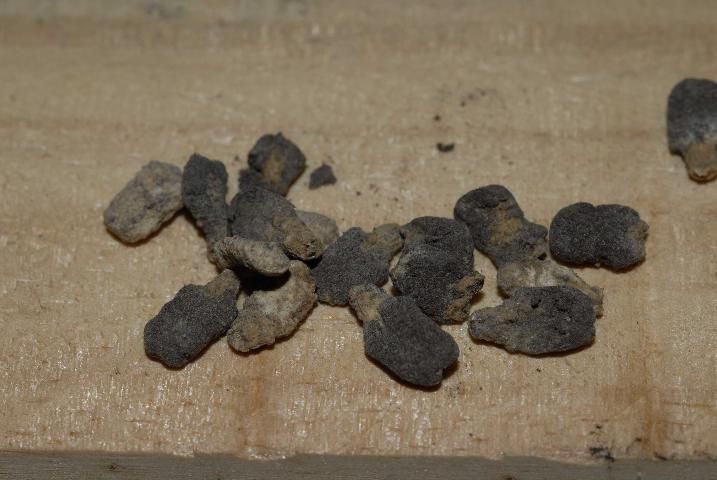
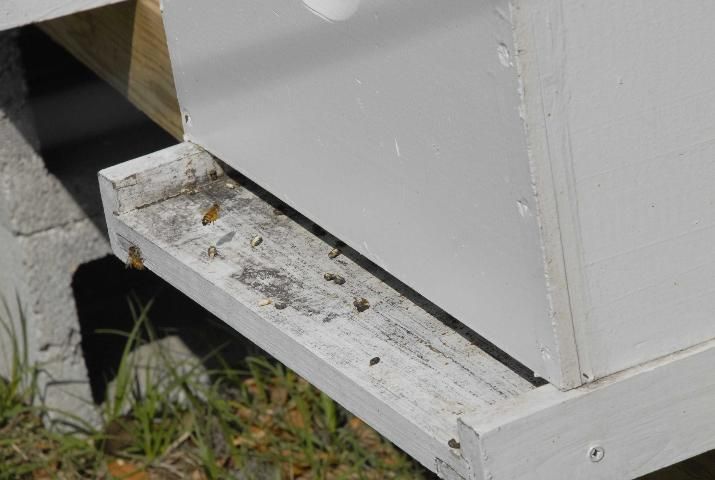
The disease is characterized by infected brood, called "mummies," which, when removed from the comb, appear to be solid clumps reminiscent of chalk pieces (Figure 1). The mummies can vary in color from white with yellow-orange "head" areas (early stage) to dark gray or black (late stage). The latter color means fungal fruiting bodies have formed and reproduction is underway. Beekeepers can easily diagnose chalkbrood infection, because mummies can be seen in the combs, on the bottom board, or at the hive entrance (Figure 2). Some beekeepers shake combs to listen for the "rattle" sound of loose chalk brood mummies clattering in their cells.
Credit: UF/IFAS Honey Bee Research and Extension Lab
Credit: UF/IFAS Honey Bee Research and Extension Lab
The growth of chalkbrood in the honey bee nest appears to be enhanced by a number of factors, including high moisture (colonies not well ventilated in high humidity situations), cool temperatures, and colony stress.
There is no recommended chemical treatment for chalkbrood; often symptoms seem to clear up by themselves. There are, however, a few management strategies that have demonstrated some control of chalkbrood.
- Good hygienic behavior by a colony, that is, the quick removal of the mummies by adult worker bees, appears to help clear up the symptoms. Replacing the colony's queen with a queen bred from a resistant bee stock is a common and effective practice to deal with chalkbrood.
- Because beekeepers can spread the disease, never transfer combs from infected colonies to other colonies. Older brood combs may also be a reservoir for the fungus. Routinely replacing brood comb with foundation is recommended.
- Chalkbrood is promoted by certain in-hive conditions such as low ventilation and high humidity. Keeping colonies tilted slightly forward so that rain water does not collect inside as well as ensuring that the colonies receive adequate sunlight may reduce the excess moisture in the colony. Also, colonies should not be sited in low, damp, cool areas. Colonies can be ventilated by placing a small block of wood underneath the edge of the outer cover to encourage air flow.
- Improving the nutritional health status of the colony through supplemental feeding can help the colony fend off infection.