
Alyceclover [Alysicarpus vaginalis (L.) DC.] is a late-growing summer annual legume native to the tropics in Asia. This warm-season legume grows erect with spreading branches and may reach a height of 60" if not harvested. Although an annual, it can reestablish each year by natural reseeding if the crop is allowed to make seed in the fall. This may be difficult to accomplish since the crop is usually cut for hay or grazed closely, which eliminates seed production. Only seed of common alyceclover is available for planting. Common alyceclover has been grown in Florida for many years for either pasture or hay.
Site Selection
Alyceclover is adapted to well-drained soils with good fertility. These areas can be either upland sands or flatwoods with good drainage. Alyceclover has low salinity tolerance and does not perform well on soils that flood. Avoid sites with high levels of rootknot nematodes as they are prevalent in light sandy soils. These pests will attack common alyceclover and may severely damage the crop. Sites where alyceclover or other crops susceptible to rootknot nematodes have been grown in the previous season may have high levels of nematodes.
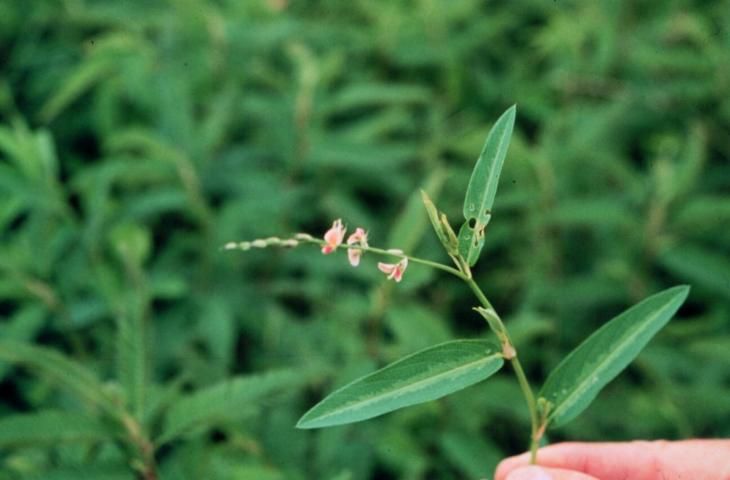
Credit: C. G. Chambliss, UF/IFAS
Seedbed Preparation
Alyceclover may be overseeded into a grass sod. The sod should be grazed or mowed closely to remove excess forage and cut with a medium-to-lightweight disk or chopper before seeding. The purpose of this cultivation is not to destroy the sod but to expose some soil so that seed can come in direct contact with it when planted. If a pasture drill is used, disking may be eliminated, but the sod must be closely grazed before planting.
Alyceclover is often planted following a spring vegetable or watermelon crop. In such a case, it is important to prepare a firm, moist, weed-free seedbed before planting.
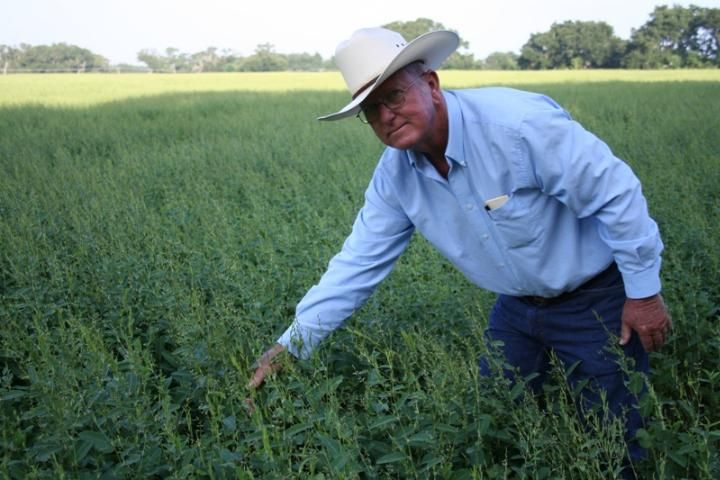
Credit: Yoana Newman, UF/IFAS
Planting
Alyceclover should be planted between mid-April to late June. If winter rains have been below normal and soil moisture is low in April and May, then overseeding of a grass sod should be delayed until the summer rains begin in June. Use 15–20 lb/A of seed. Use the high rate when the seedbed and soil condition are less favorable. The seed may be inoculated just prior to planting with N-fixing bacteria. Use the cowpea-type inoculant.
When planting into a grass sod that has been disked or chopped, the seed can be broadcast, followed by a harrow or drag of some type that will mix the seed with the soil, and then a cultipacker or roller may be useful to firm the soil. A good rain after broadcasting the seed will move the seed down and firm the soil, thus eliminating the need for harrowing and packing, but rainfall is unpredictable. When using a pasture drill, make sure the grass is cut or grazed short. When planting on a prepared seedbed, the seed are usually broadcast and covered with a cultipacker or planted with a grain drill. With either method, seed should be covered to a depth of 1/4 to 1/2". A well-prepared, level seedbed allows for planting at the right depth.
Liming and Fertilization
This crop requires a soil pH of 5.5–6.0. A soil test can be used to determine the need for lime, phosphorous, and potassium. If alyceclover is planted immediately following a highly fertilized crop, such as watermelons, it may not be necessary to add additional lime or fertilizer. If soils are very acidic or have low fertility, alyceclover will not produce satisfactory growth.
Management and Utilization
Alyceclover is tolerant of heavy grazing and regular mowing. This legume makes good quality hay if the crop is harvested before it is overly mature and if it is dried and baled without significant leaf loss. Hay should be cut when plants are 18–24" tall, and a 3–4" stubble height should be left. If cut too short, where no growing points are left, the plant will take longer to recover. A second cutting of hay is possible under favorable growing conditions. In many cases, alyceclover is planted late and only one hay cutting is made. This harvest should be made when the crop begins to flower. The crop may vary in height from 10" to 3 ft.
When planted early (April or May), alyceclover will likely be tall enough for hay in mid- to late August, but frequent rainfall may prevent harvesting at this time. Harvest can be delayed from 4 to 6 weeks without a severe loss in nutritive value.
Alyceclover can be grazed after the plants are about 12" tall. The animals should be removed after the plants are grazed down in order to permit regrowth. Overgrazing could allow weeds to invade the stand. The first growth may be grazed down and animals removed and regrowth used for hay or seed production. Alyceclover can be used in a creep graze system for calves. Four-month-old calves have gained an additional 0.3–0.5 lb/day until they were weaned when alyceclover was available in a creep pasture. Seed yields of up to 600 lb/A may be obtained.
Alyceclover can also be used in pastures for lactating dairy cows. Dairy producers who need to complement grass production in late summer and early fall may benefit from planting alyceclover.
Seed may be harvested directly or, alternatively, the plants may be mowed, cured in the swath, and then threshed. The latter method will usually result in a larger amount of seed being saved. Harvest of seed should begin when about 1/2 of the seed pods are brown. This will usually occur about mid-October.
For additional information on other forage legumes, forages species, or forage related topics, please visit the Forages of Florida website at: https://sfyl.ifas.ufl.edu/agriculture/forages/