
Introduction
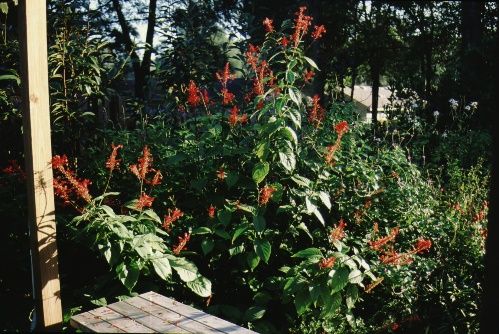
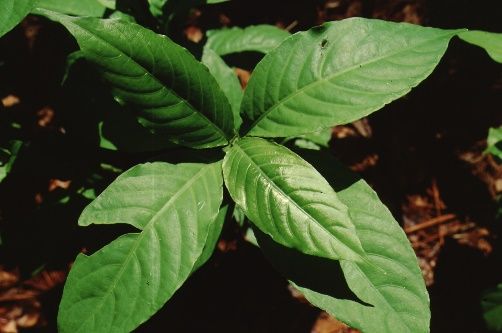
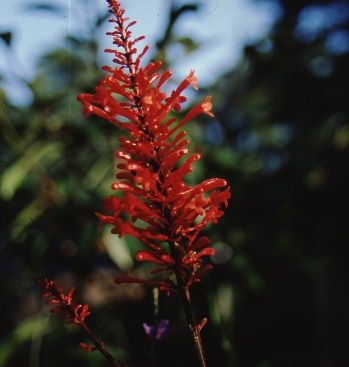
Firespike is an herbaceous perennial growing to about 4 feet tall with an upright habit which has naturalized in Florida. The shiny, dark green leaves of this plant have entire to undulate margins and reach a length of 7 to 8 inches. Beautiful terminal or axillary spikes of tubular red flowers appear on firespike in the fall and winter. These showy flowers attract hummingbirds and several species of butterflies. In some ways the plant remains me of an overgrown and much nicer red salvia.
Credit: Edward F. Gilman, UF/IFAS
Credit: Edward F. Gilman, UF/IFAS
Credit: Edward F. Gilman, UF/IFAS
General Information
Scientific name: Odontonema strictum
Pronunciation: oh-dawn-toe-NEEM-muh STRICK-tum
Common name(s): firespike
Family: Acanthaceae
Plant type: herbaceous
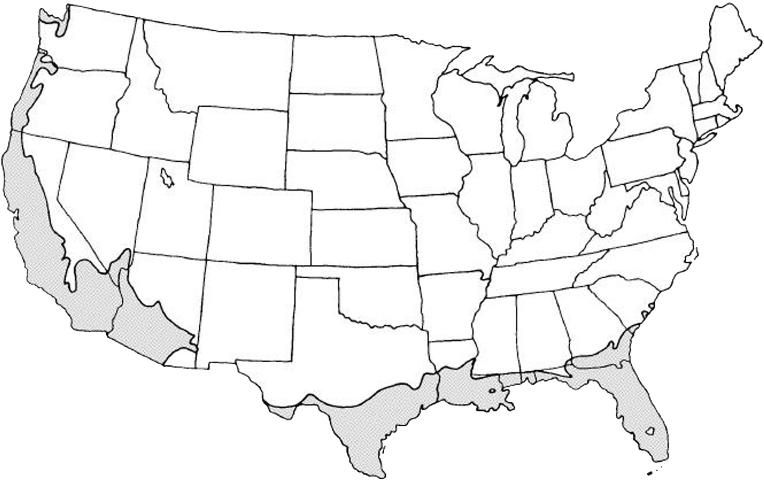
USDA hardiness zones: 8B through 11 (Figure 4)
Planting month for zone 8: year round
Planting month for zone 9: year round
Planting month for zone 10 and 11: year round
Origin: not native to North America
Invasive potential: may self-seed each year
Uses: cut flowers; mass planting; attracts butterflies; attracts hummingbirds
Availability: grown in small quantities by a small number of nurseries
Credit:
Description
Height: 2 to 6 feet
Spread: 2 to 3 feet
Plant habit: upright
Plant density: moderate
Growth rate: moderate
Texture: coarse
Foliage
Leaf arrangement: opposite/subopposite
Leaf type: simple
Leaf margin: undulate
Leaf shape: ovate
Leaf venation: pinnate
Leaf type and persistence: deciduous
Leaf blade length: 4 to 8 inches
Leaf color: green
Fall color: no fall color change
Fall characteristic: not showy
Flower
Flower color: red
Flower characteristic: fall flowering, winter flowering
Fruit
Fruit shape: unknown
Fruit length: unknown
Fruit cover: unknown
Fruit color: unknown
Fruit characteristic: inconspicuous and not showy
Trunk and Branches
Trunk/bark/branches: typically multi-trunked or clumping stems
Current year stem/twig color: reddish
Current year stem/twig thickness: medium
Culture
Light requirement: plant grows in part shade/part sun
Soil tolerances: acidic; slightly alkaline; sand; loam
Drought tolerance: moderate
Soil salt tolerances: poor
Plant spacing: 24 to 36 inches
Other
Roots: not applicable
Winter interest: no special winter interest
Outstanding plant: plant has outstanding ornamental features and could be planted more
Pest resistance: no serious pests are normally seen on the plant
Use and Management
Firespike may be best utilized in the landscape in a mass planting. Plants can be spaced about 2 feet apart to fill in the area quickly. It is one of only a few flowering plants that give good, red color in a partially shaded site. The lovely flowers also make firespike an excellent candidate for the cutting garden.
Place firespike in full sun for best habit and heavy blooming. This perennial may be grown on a wide range of moderately fertile, sandy soils and is quite drought tolerant. Firespike is tender to cold, but winter freezes help to control its size. Prune this plant to the ground in the winter to clean it up.
Propagate firespike by division or cuttings.
Pests and Diseases
No pests or diseases are of major concern.