Mowing is one of the most important cultural practices for maintenance of a healthy lawn. Proper mowing height increases turfgrass density and promotes deep root growth, both of which lead to a stronger lawn that is more competitive against weeds and better able to persist under environmental stresses such as drought. Proper mowing practices, along with fertilization and irrigation, can largely determine the success or failure of a lawn.
The two main components of mowing are cutting height and frequency. Both of these factors depend on the turfgrass species, cultivar, and the level of lawn quality desired.
Mowing Height
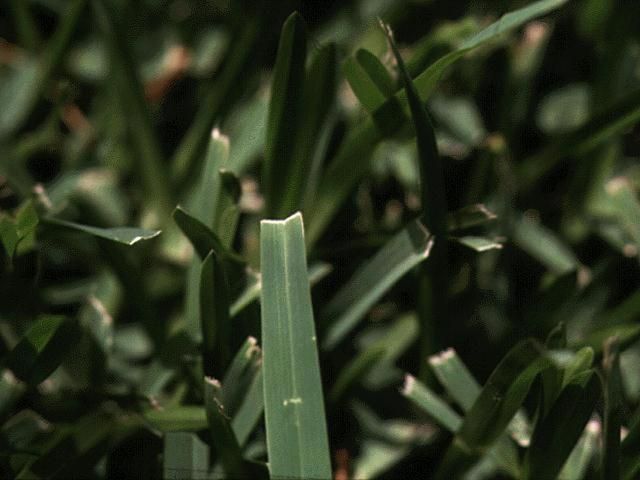
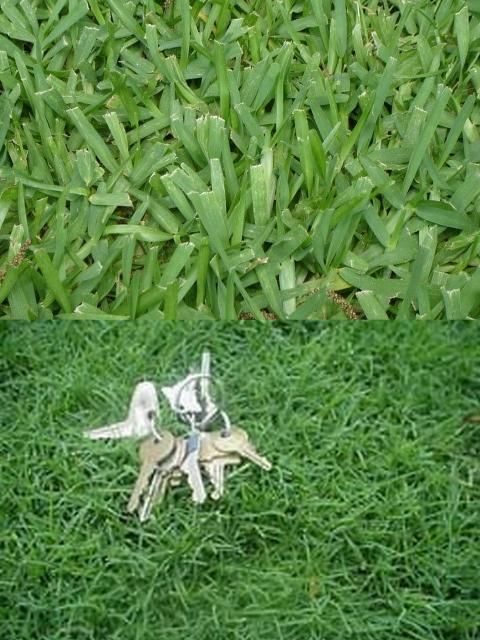
The optimum cutting height is determined by the growth habit and leaf width of the turfgrass species. Grass species that have fine textured (narrow) leaf blades and that grow horizontally are usually mowed shorter than an upright-growing grass with coarser (wider) leaf blades. For example, bermudagrass is mowed at low heights because of its numerous narrow leaf blades and low growth habit (Figure 1). In contrast, St. Augustinegrass is mowed at higher heights because it has coarse-textured leaf blades.
Credit: L. Trenholm
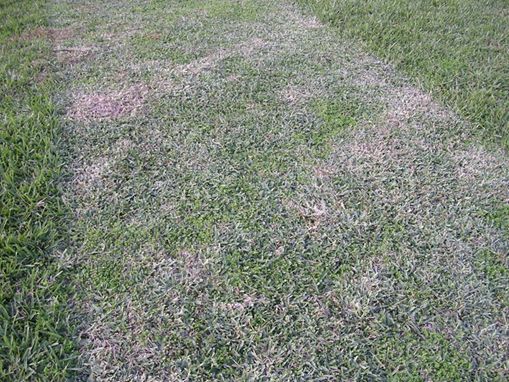
Turfgrass undergoes physiological stress with each mowing event, particularly if too much leaf tissue is removed (Figure 2). Effects of "scalping," or removal of too much shoot tissue at one time, can produce long-term damage to the turf. This can leave turf susceptible to other stresses such as insects, disease, drought, and sunscald. Mowing also influences rooting depth, with development of a deeper root system in response to higher mowing heights. Advantages of the deeper root system are greater tolerances to drought, insects, disease, nematodes, temperature stress, poor soil conditions, nutrient deficiencies, and traffic. Repeated mowing below the recommended heights for each species is a primary cause of turf injury and should be avoided.
Mowing Frequency
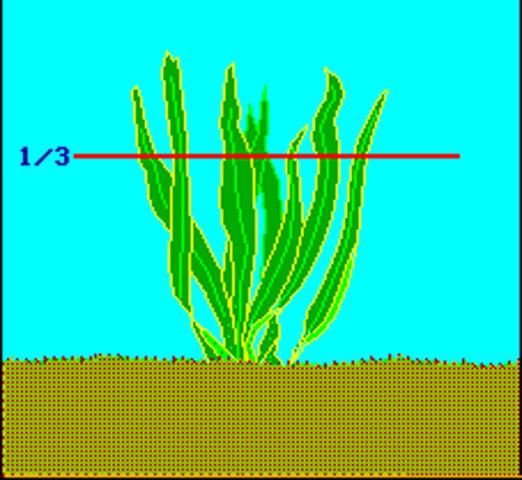
The growth rate of the lawn determines how frequently to mow. The growth rate is influenced by grass species, time of year, weather conditions, and level of management. In north Florida, grass may not need to be mowed during the winter months, depending on climatic conditions and grass species. Low-maintenance grasses like bahiagrass are frequently mowed just to remove seedheads, rather than to cut leaf blades. Mow often enough so that no more than 1/3 of the blade height is removed per mowing. For example, if your St. Augustinegrass lawn is mowed at a height of 4 inches, it should be mowed before it grows to a height above 6 inches. It is important to always leave as much leaf surface as possible so that photosynthesis can occur, particularly in a grass that is subject to environmental or site stresses.
Clipping Removal
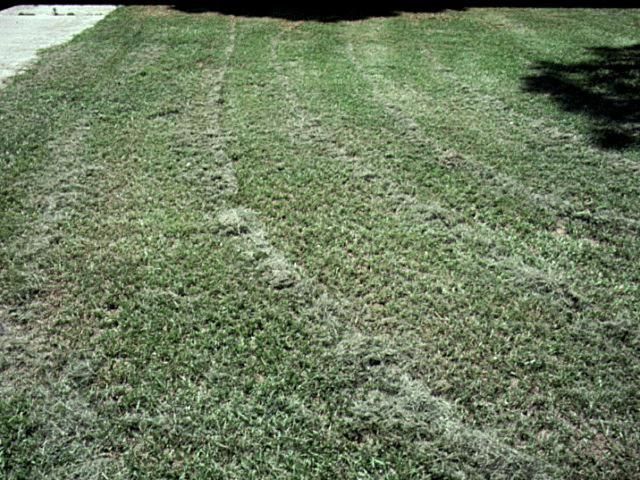
On most lawns, grass clippings should be left on the ground to help recycle nutrients and organic matter to the soil and to reduce yard waste in landfills. If the lawn is mowed frequently enough, clippings cause few problems. Clippings are readily decomposed by microbes in the soil and provide organic matter and nutrients back into the soil. Clippings do not contribute to thatch under most conditions. Problems may also arise when turf is mowed infrequently and excess clippings result in clumping (Figure 4).
The tougher shoot components such as stems, stolons and seedhead culms are not easily degraded and may contribute to thatch. When this happens, clippings can be raked to distribute them more evenly. Excessive thatch can cause many problems for lawns, including poor water infiltration, increased insect and disease infestation, and poor turf quality.
Due to environmental concerns, it is extremely important to sweep up any grass clippings left on sidewalks, driveways, or other hard surfaces. These clippings contain nutrients that could contribute to water pollution if they go down a storm drain or blow into a water body, so be sure to sweep them back onto the lawn where the nutrients can be used to help feed the grass.
Mowing Equipment
Lawn mowers are available in a wide variety of sizes and styles with many features. The two basic types are reel and rotary mowers, with variations of these available for specialized or utility uses. The majority of lawns are mowed with rotary mowers (Figure 5). Most mowers can be obtained as push or self-propelled models. Front, side, and rear-clipping discharge models are also available. Points to consider when purchasing a mower are lawn size, turfgrass species, and level of lawn maintenance. Rotary mowers are best suited for most lawngrass species and are easy to maintain and operate. A gasoline or electric engine is used to turn the horizontally-mounted mower blade. The grass blade is cut on impact with the mower blade. Most rotary mowers cannot mow lower than 1 inch and are best used for mowing heights above 2 inches. The blade needs to be sharpened and balanced regularly for the best possible cut.
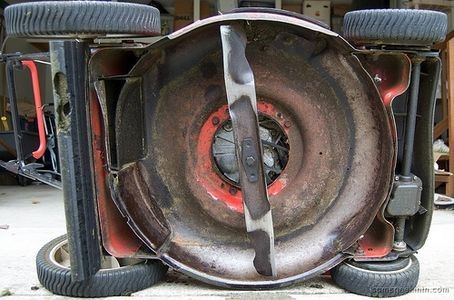
Mulching mowers are modifications of rotary mowers (Figure 6). These are designed to cut leaf blades into very small pieces that decompose more quickly than leaf blades cut by conventional mowers, providing nutrition and organic matter to the soil environment. The mower blades are designed to create a mild vacuum under the mower deck until the leaf blades are cut into small pieces. Mulching mowers do not have the traditional discharge chute like most rotary mowers.
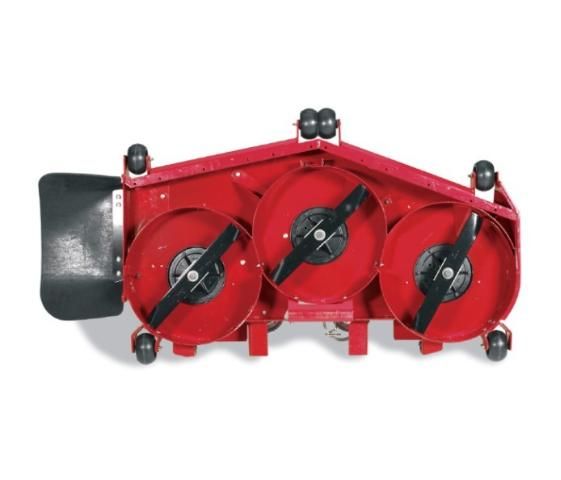
Electric mowers are another option that some prefer for reduction of noise and CO2 losses. Improvements in recent years in these mowers have increased their power and durability. They come in cordless and with cord models.
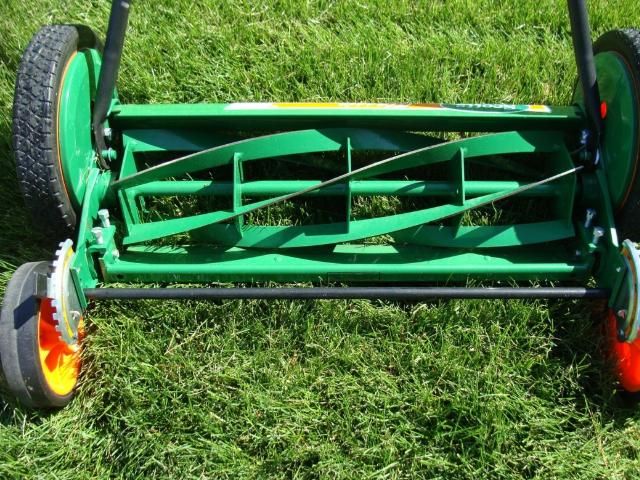
Reel mowers use a scissors-like action to cut the leaf blades and are used on grasses that require a low height of cut. They are suited for use on high maintenance, fine-bladed grasses such as those found on golf courses and athletic fields. Commercial models are much more complex to maintain than a rotary mower. It is possible to find reel push mowers with no engine for use on home lawns that have fine bladed grasses.
Good Mowing Practices
Follow these procedures and precautions for safe, good mowing:
- Pick up all stones, sticks and other debris before mowing to avoid damaging the mower or injuring someone with flying objects.
- Never mow wet turf with a rotary mower because clippings can clog the machine. Mow only when the turf is dry.
- Sharpen the mower blade frequently enough to prevent tearing of leaf blades (Figure 8).
- Mow in a different direction every time the lawn is cut. This helps prevent wear patterns, reduces the grain (grass lying over in the same direction), and reduces the possibility of scalping.
- Leave clippings on the ground. If clumping occurs, rake or use a leaf blower to distribute them.
- Check your mower every time it is used. Follow manufacturer's recommendations for service and adjustments.
- Adjust cutting height by setting the mower on a driveway or sidewalk and using a ruler to measure the distance between the ground and the blade.
- Never fill a mower engine with gasoline when the engine is hot.
- Always wear heavy leather shoes when mowing the lawn and never operate a mower with open toed footwear or barefoot.
- Sweep up any clippings left on paved surfaces to avoid potential water pollution.