

Credit:
This publication is updated quarterly. For the most current version of this document, refer to the version posted on the Imported Fire Ants site, https://ant-pests.extension.org/managing-imported-fire-ants-in-urban-areas/.
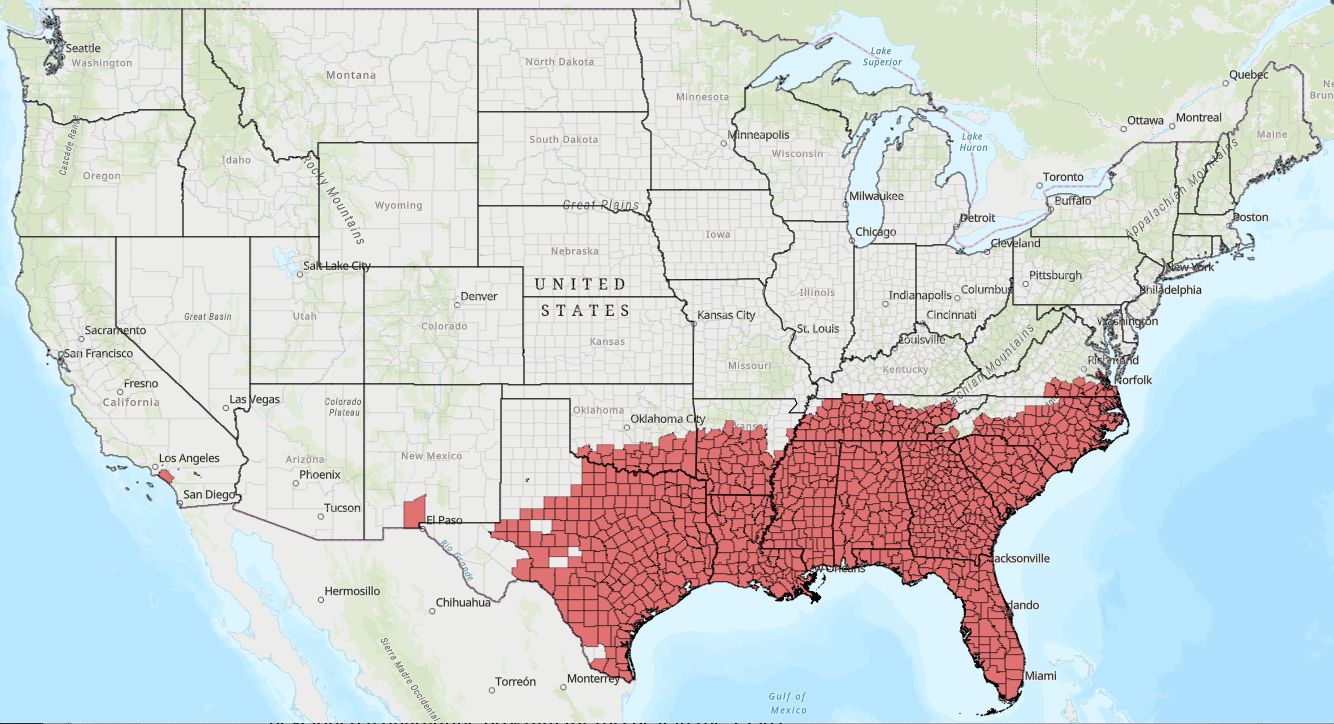
The two species of imported fire ants (red imported fire ant, Solenopsis invicta Buren, and black imported fire ant, Solenopsis richteri Forel) and their sexually reproducing hybrid are invasive insects whose stings can cause serious medical problems. Imported fire ants interfere with outdoor activities and harm wildlife throughout the southern United States and elsewhere (see map and History of Control Efforts). Ant mounds are unsightly and may reduce land values. Although fire ants do prey on flea larvae, chinch bugs, cockroach eggs, ticks and other pests, the problems they cause usually outweigh any benefits in urban areas. While it may not be possible to eradicate fire ants, we can make them easier to live with. The best management programs use a combination of non-chemical and chemical methods that are effective, economical, and least harmful to the environment.
Credit: B. Drees
Integrated Pest Management (IPM)
Integrated Pest Management, or IPM, is a systems approach to managing insect, mite, disease and weed pests. It uses a combination of the most compatible and ecologically sound pest suppression tactics to keep pest populations below levels that cause problems. IPM uses cultural, biological, and chemical methods. This bulletin describes site-specific, goal-oriented management programs for urban areas where fire ants are a problem. The goal of IPM strategies for fire ants is to prevent or eliminate problems caused by unacceptably high numbers of fire ants, rather than eliminating all ants from the ecosystem.
USDA Quarantine Program
Because fire ants are easily transported in nursery stock and soil, the United States Department of Agriculture's Animal and Plant Health Inspection Service (USDA-APHIS) developed a quarantine program for this pest in the 1950s.
Fire ants must be eliminated from regulated articles that will be transported, which requires treatments different from the management type treatments described in this publication. These regulations are administered by state regulatory agencies (including the Alabama Department of Agriculture and Industries, Arkansas State Plant Board, California Department of Food and Agriculture, Florida Department of Agriculture and Consumer Services, Georgia Department of Agriculture, Louisiana Department of Agriculture and Forestry, Mississippi Department of Agriculture and Commerce, New Mexico Department of Agriculture, North Carolina Department of Agriculture and Consumer Services, Oklahoma State Department of Food and Forestry, Puerto Rico Department of Agriculture, Tennessee Department of Agriculture, Clemson University Department of Plant Industry (S.C), Texas Department of Agriculture and Virginia Department of Agriculture). The purpose of the quarantine program is to minimize the spread of imported fire ants by requiring proper inspection and treatment of all nursery stock, turfgrass, hay and other articles shipped out of quarantined areas (see map). Inspectors also survey non-quarantined counties for fire ants and occasionally treat small, isolated infestations. The public should do its part to avoid spreading the ants by not transporting or purchasing items infested with fire ants. The PPQ Treatment Manual contains all Plant Protection and Quarantine approved treatments for both import and domestic programs. To find approved treatments for regulated items moving outside the IFA quarantine: Go to www.aphis.usda.gov/import_export/plants/manuals/online_manuals.shtml; scroll to bottom of page to find Treatment Manual, open a pdf (large pdf); go to "Domestic Treatments" and then "Imported Fire Ant." Also see "Fire Ant Quarantines and Regulations".
Credit: USDA (http://www.aphis.usda.gov/plant_health/plant_pest_info/fireants/downloads/fireant.pdf) Update on Jan 2024
Management Options
Properly identifying an ant species is the first step in determining whether the ants should be managed and how to do so (see the section on Fire Ant Biology and Identification). Doing nothing is an option that should be considered in areas where imported fire ants are not present or are present in very low numbers and do not pose a problem. Most management options require repeated treatments to maintain suppression, which requires a commitment to continued labor and expense. In the following sections are options for managing various kinds of imported fire ant problems. There may be other effective methods not mentioned, and there is rarely a single best method of control.
Credit: C. Barr
Note: See the section on Fire Ant Treatment Methods, for information about biological control, home remedies, and insecticide products and their proper use. Use only pesticides labeled for the location or "site" you want to treat. For instance, DO NOT use a product in your vegetable garden unless that site is listed on the label.
Home Lawns and Other Ornamental Turf
Fire ants commonly infest lawns, schoolyards, athletic fields, golf courses and parks, where they pose a medical threat to people and animals. Their mounds also detract from the appearance of the landscape and can damage lawn care equipment.
Program 1. The "Two-Step Method"
This program suppresses ants in ornamental turf and non-agricultural lands, including roadsides. It is also suitable for pasture and rangeland if the products selected are specifically registered for use in these sites. Similarly, an "organic two-step" program can be implemented using a bait and a mound treatment combination considered "organic" or using products certified by the Organic Materials Review Institute (OMRI). This approach is best suited to medium-sized or large areas, and the cost is moderate. It is not suggested for use in previously untreated areas with few fire ant mounds (20 per acre or fewer, or 0.46 or fewer per 1,000 square feet). Some bait products may affect native ants that compete with imported fire ants. The goal of this program is to reduce fire ant problems while minimizing the need to treat individual mounds.
This program suppresses ants in ornamental turf and non-agricultural lands, including roadsides. It is also suitable for pasture and rangeland if the products selected are specifically registered for use in these sites. Similarly, an "organic two-step" program can be implemented using a bait and a mound treatment combination considered "organic" or using products certified by the Organic Materials Review Institute (OMRI). This approach is best suited to medium-sized or large areas, and the cost is moderate. It is not suggested for use in previously untreated areas with few fire ant mounds [20 or fewer per acre (20 or fewer per 4000 m2)]. Some bait products may affect native ants that compete with imported fire ants. The goal of this program is to reduce fire ant problems while minimizing the need to treat individual mounds.
The two steps involve: 1) broadcasting a bait product (see the section on Baits in Fire Ant Treatment Methods), followed by 2) treating nuisance mounds with a faster acting individual mound treatment or with a mound re-treatment of the bait.
Once or twice per year, usually in spring and fall, broadcast a bait-formulated insecticide or use an outdoor bait station product as directed on the label. Most conventional baits are applied at a rate of 1 to 1 1/2 pounds (454 to 680 g) of product per acre (or 4000 m2), although some products are applied at higher rates. Periodic broadcast applications of fire ant baits will provide about 90% control when properly applied. A bait can be broadcast with hand-held, vehicle-mounted, or aerial applicators. The speed and duration of ant suppression differs with the product used. Hydramethylnon, fipronil, indoxacarb, metaflumizone and spinosad baits (see the section on Fire Ant Insecticides) provide maximum control 1 to 4 weeks after application, while insect growth regulator (IGR) bait products (i.e., those containing methoprene or pyriproxyfen) provide maximum suppression 2 to 6 months after treatment depending on environmental conditions. Abamectin baits act more slowly than hydramethylnon, fipronil, indoxacarb, metaflumizone and spinosad but more quickly than IGR products. A late summer IGR application provides maximum suppression the following spring. Using higher rates of an IGR bait does not eliminate colonies more quickly. The blending of half rates of a faster acting bait plus an IGR (such as hydramethylnon plus methoprene as in the product Extinguish® Plus and Amdro® Yard Treatment Fire Ant Bait, or as directed on® and Extinguish® product labels) can provide faster and longer lasting suppression. Where there are many mounds per area (200 or more/acre, or 200 or more/4000 m2), a second application may be needed after the maximum effects of the first treatment have occurred, because not all mounds are affected by a single bait application. Follow label instructions on any time interval requirements between applications and limits on number of applications per year.
Preferably, wait several days or more after broadcasting the bait, and then treat nuisance ant colonies (such as those in sensitive or high-traffic areas) using an individual mound treatment method (see Program 2, Step 1, below). Otherwise, be patient and wait for the bait treatment to work. Any nuisance mounds that escaped the effects of bait treatment, and any colonies migrating into treated areas, should be treated as needed. In large areas, individual mound treatment may not be feasible and routine broadcast bait treatments alone may provide sufficient control.
Repeat the bait application when ants re-invade the area and mound numbers reach about 20 per acre (20 per 4000 m2) or exceed the tolerance level for a situation. Bait products do not protect against reinvasion by ant colonies from surrounding land or by newly mated queens. Ant populations can fully recover within 12 to 18 months of the last bait treatment. Low-lying, moist, and flood-prone areas are more prone to re-infestation.
Program 2. Individual Mound Treatments
This approach is best used in small areas of ornamental turf (usually 1 acre or less) where there are fewer than 20 to 30 mounds per acre (20 to 30 mounds per 4000 m2) or where preservation of native ants is desired. This program selectively controls fire ants, but rapid re-invasion should be anticipated. It generally requires more labor and monitoring than other programs and is not suggested for large or heavily infested areas.
Credit: B. Drees
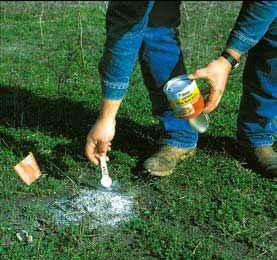
Treat undesirable fire ant mounds using an individual mound treatment (see the section on Individual Mound Treatments with Contact Insecticides under Fire Ant Treatment Methods). Products are applied as dusts, dry granules, granules drenched with water after application, liquid drenches, or baits. Non-chemical treatment methods such as drenching mounds with very hot water also may be used. Mound treatments may need to be repeated to eliminate the colony if queen ants are not all killed with the initial treatment. When treating an ant mound with a liquid product or watering a product into a mound, begin on the outside of the mound and circle into the center of the mound. Application of faster-acting granular ant bait formulations are made around the mound as directed.
Continue treating undesirable mounds that appear, as needed.
Program 3. The Long-Residual Contact Insecticide Treatment Method
This program eliminates many ant species in treated areas, and it reduces re-invasion of treated areas as long as the contact insecticide remains effective. However, these products are more expensive, use more insecticide, and have greater environmental impact than other methods. This approach is frequently used by commercial applicators for treating ornamental turf. Long-residual products that contain a pyrethroid usually work most rapidly. Fipronil granular products eliminate ant colonies more slowly but have longer residual effects.
Broadcast a bait-formulated insecticide in areas where there are many mounds (more than 20 per acre, or >20 per 4000 m2), or individually treat fire ant mounds. Wait 2 to 3 days after applying a bait before conducting the next step.
Apply a contact insecticide with long residual activity (i.e., fipronil or a pyrethroid such as bifenthrin, deltamethrin, gamma-cyhalothrin or lambda-cyhalothrin) to turfgrass as directed (generally every 4 to 8 weeks for most products, or once per year using a granular fipronil product). Liquid or granular products (which are usually watered in after application) that can be evenly applied to an area are appropriate for this use. With most products, the initial surface treatment may not eliminate ants located deep in mounds, but routine re-application will eventually eliminate most colonies. Fipronil, a non-repellent contact insecticide that can be used with bait products, will eliminate ant colonies within 4 to 10 weeks of treatment, even those nesting well beneath the surface. However, ants migrating into treated areas may take more than a week to be eliminated.
Program Combinations
Any of the three programs can be mixed and matched within a managed area where different levels of fire ant control are desired. On golf courses, for instance, Program 3 might be suitable for high-use areas such as putting greens and tee boxes. In fairways and rough areas, Program 1 might be sufficient. On athletic fields, whereas many ants as possible must be eliminated, Program 3 should be used, and the program should begin early enough to attain maximum suppression by the time the field is in full use. People with severe allergies to fire ant stings should follow Program 3 for their lawns or use a bait on a calendar schedule. For grounds around schools, day care centers, mental health facilities, and other sensitive sites, broadcast application of a fire ant bait product twice per year is one of the least-toxic methods of control. Control should be monitored with routine surveillance for re-invading ant mounds that need to be treated.
In some states, special regulations may govern the selection and use of fire ant products on school grounds. In Texas, for example, all pesticide applications must be made by licensed applicators. Schools in Texas are encouraged to use botanical, microbial, or insect growth regulator insecticides because of their extra high margin of safety. Appropriate bait treatments for Texas schools include formulations containing abamectin, spinosad, pyriproxifen or methoprene, but the products containing hydramethylnon, indoxacarb, or metaflumizone should also be considered. Good first choices for mound treatments around schools and other sensitive areas include botanical insecticides containing pyrethrins, d-limonene or other natural compounds such as spinosad. For the greatest degree of safety, use only formulations that are washed immediately into the mound and leave minimal surface residue. Laws governing pesticide use in and around schools are subject to change each year. If in doubt about laws governing pesticide use around schools in your state, contact your state's lead agency for pesticide regulation.
Homes and Buildings
Fire ants from colonies close to homes and other buildings sometimes forage indoors for food and moisture, particularly during the hot, dry, summer months. Entire colonies occasionally nest in wall voids or rafters, or behind large appliances, sometimes moving into buildings during floods or drought. They are a nuisance and can threaten sleeping or invalid people and pets.
Treatment Options
- It is best to control imported fire ants in the landscape, using one of the programs described for Home Lawns and Other Ornamental Turf Areas, before they move into structures. If ants are entering the home from outdoor colonies, locate and treat mounds near the building. A contact insecticide with a long residual effect, such as fipronil or a pyrethroid, also can be applied as directed around the base of the structure as a barrier, but this treatment alone may not be effective at keeping ants out of the structure, particularly if overhanging vegetation or electrical wires allow ants to enter above the barrier treatment. It is important to caulk cracks and crevices, and screen weep holes to prevent ants from entering.
- If ants are foraging indoors, remove any food items on which the ants are feeding. Then use an insecticide bait product labeled specifically for fire ant control indoors. Examples are products containing abamectin or hydramethylnon or bait stations containing indoxacarb or other ingredients. Bait products not specifically registered for fire ant control may not be effective. Bait treatment alone may not control fire ants.
- Follow trails of foraging ants to colonies located indoors and treat them with contact insecticide dusts or sprays injected into the nest. Treating ant trails rarely eliminates an ant problem, and sometimes interferes with use of toxic baits. Some insecticides, such as chlorfenapyr (Phantom®) and imidacloprid (Premise®), which are available to professional applicators, are non-repellent to many ants and are compatible with the use of bait products. Most over-the-counter insect sprays, however, are repellent to ants and should not be used indoors when also using bait products.
- Vacuum indoor ant trails and dispose of the vacuum bag immediately. A knee-hi stocking can be placed over the end of the vacuum hose prior to attachment placement to prevent ants from clinging to the hose or other vacuum parts. Tie off the stocking and place in soapy water or use another method to kill the ants prior to disposal. Treat the source colony or the point at which ants are seen entering a room using options described above.
Electrical Equipment and Utility Housings
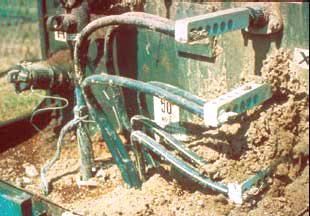
Fire ants frequently infest electrical equipment. They chew on insulation, can cause short circuits, and can interfere with switching mechanisms. Air conditioners, traffic signal boxes, and other devices all can be damaged. Fire ants also nest in the metal housings that surround electrical and utility equipment. They frequently move soil into these units, which can cause corrosion, electrical short circuits, and other mechanical problems.
Note: For safety reasons, only electricians or licensed pest control operators should treat electrical equipment. Specialized products and training are necessary to treat these sites safely and effectively.
Treatment Program
Before treating any equipment, unplug the unit or turn off all electrical service. Use an individual mound treatment method with a faster-acting contact insecticide to eliminate colonies around electrical and plumbing casings and housings. Injectable aerosol products containing pyrethrins, or similar products, give rapid control. Hydramethylnon, abamectin, indoxacarb or spinosad baits applied near or on fire ant mounds provide control after about 1 week, even if the colony is located within the structure. Do not use liquid drenches, sprays, or products that may damage insulation around electrical fixtures. Treating a larger area around the electrical structure is optional but will provide longer-term protection. Mound and area treatments are described in the section on Home Lawns and Other Ornamental Turf. Be extremely careful when applying pesticide around water systems and well heads to prevent contamination of wells and ground water. Once ants are eliminated, remove debris and soil from the equipment housings to reduce the possibility of short circuits.
Credit: S. B. Vinson
Maintenance
After ants are removed from electrical equipment, prevent re-infestation and damage by sealing all sensitive electrical components, particularly those that are not insulated. Examples are plastic housings containing contact points of switches, relays, and circuit breakers. Apply a long-residual contact insecticide around housings, making sure to avoid the electrical circuitry or components. Apply specifically labeled products to the housing itself or to the mounting pad (see Step 2 in the treatment program above).
Home gardens
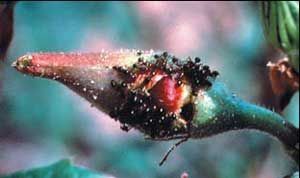
Ants occasionally feed on vegetable plants in home gardens. They tunnel into potatoes underground and feed on okra buds and developing pods. The worst damage usually occurs during hot, dry weather. Ants may be a nuisance to gardeners during weeding and harvesting. Ants prey on some garden pests such as caterpillars, but protect or "tend" others, such as aphids, by keeping their natural enemies away.
Credit: Bart Drees
Treatment Options
- Ant mounds can be shoveled out of the garden or treated with very hot water, taking care not to disturb plants or allow hot water to contact them. If you choose to use hot water, be extremely careful not to burn yourself.
- Only a few bait products are specifically registered for treating imported fire ants in home gardens, including Ferti-lome Come and Get It! and Payback Fire Ant Bait (both contain spinosad). The bait product Extinguish® Professional Fire Ant Bait, which contains methoprene, is registered for use in "cropland." Esteem® (pyriproxyfen) is another bait that is registered for use near 400+ edible food crops. Currently Extinguish Professional Fire Ant Bait and Esteem Ant Bait are sold in 25-pound (11.3 kg) bags, enough to treat 17–25 acres (7–10 ha), which will be too large for most home gardeners unless they can use the bait on other labeled sites. Other bait products are not specifically registered for use inside home vegetable gardens, although they can be applied outside the garden's perimeter. Foraging ants from colonies both inside and outside the garden will collect the bait and take it to their colonies.
- A number of contact insecticides are registered to treat general insect problems in home vegetable gardens. Those labeled for control of "ants" include products containing deltamethrin, es-fenvalerate, pyrethrins, pyrethrins plus diatomaceous earth, and spinosad (such as Entrust® SC, Green Light® Lawn & Garden Spray, Ferti-lome® Borer, Bagworm,Tent Caterpillar and Leafminer Spray, Monterey Garden Insect Spray or Conserve® Naturalyte Insect Control). The Entrust, Green Light, Monterey and Conserve products containing spinosad are OMRI certified for use in organic gardens. Some granular products contain carbaryl, or pyrethroid insecticides, including deltamethrin, bifenthrin or es-fenvalerate. These are available for treating other "soil insects" and may provide some control of fire ant foragers. Other products may be labeled for "fire ant control" but not specify home gardens as the use site. Products containing the active ingredient, d-limonene (Orange Guard, also OMRI certified), for treating ant mounds are available. D-limonene is the major ingredient in orange oil which is sold as a soil amendment for use in the garden. Contact the manufacturer if there is a question about site use of any insecticide product. Follow directions and pre-harvest intervals indicated on the product label when using a pesticide on and around food plants. GreenLight Many Purpose Dust containing deltamethrin can be used in vegetable gardens for fire ants and other insects.
- To keep ants from entering a garden, manage them properly in the surrounding landscape. Products registered for controlling ants in turf areas can be applied outside the perimeter of the garden as a barrier or used to treat individual mounds near the garden.
Compost Piles, Mulched Flower Beds, Pavement Cracks, etc.
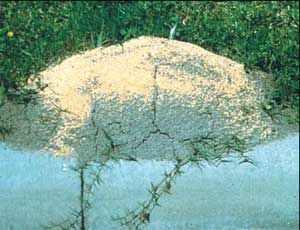
Fire ants invade compost piles and mulched flower beds seeking warmth and moisture. They also nest under cracked pavement, removing dirt from underneath sidewalks and roadways and aggravating structural problems. Grounds around these areas can be treated as described for Home Lawns and Other Ornamental Turf. However, colonies nesting in these sites may be difficult to locate precisely. When the exact location of a fire ant colony is unknown, treat the area of greatest ant activity with a fast-acting bait product containing hydramethylnon, abamectin, indoxacarb, metaflumizone or spinosad.
Around Bodies of Water
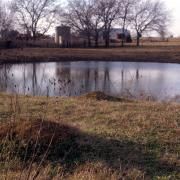
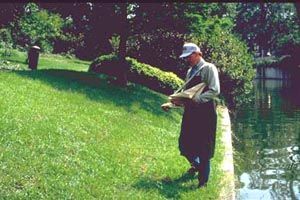
Fire ants require water to survive and are often found near creeks, run-off ditches, streams, rivers, ponds, lakes, and other bodies of water. If surface water is unavailable, they tunnel down to the water table many feet below the ground. Every effort must be made to avoid contaminating water with pesticides. Some ant control products, such as those containing fipronil and methoprene, have specific restrictions on the label regarding their use near bodies of water. Fire ant bait products contain very small amounts of active ingredients and can be applied up to the water's edge, but not directly to the water. A formulation of methoprene, the ingredient in Extinguish® bait, is registered for control of mosquito larvae in ponds and other bodies of water but Extinguish® should not be applied to bodies of water.
Credit: B. Drees
Credit: Bart Drees
To decrease the risk of pesticide runoff into waterways, apply baits when ants are actively foraging. Read the label carefully and do not apply closer to the edge of the body of water than allowed on the label. When treating individual mounds near the water's edge or in drainage or flood-prone areas, exercise special care and use products such as acephate (Orthene®) that have relatively low toxicity to fish and apply the product according to label directions. Pyrethrins, pyrethroids and rotenone products should be avoided because of their high toxicity to fish. Do not apply surface, bait or individual mound treatments if rains are likely to occur soon after treatment. Nearly all insecticides can be toxic to aquatic organisms if applied improperly.
Organizing a Community-Wide Fire Ant Suppression Program
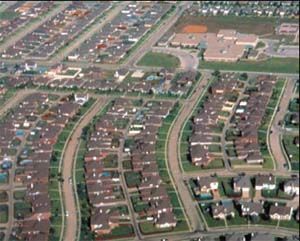
Fire ant management programs can be successful, but because they are usually implemented by individuals on their own properties, re-infestation from nearby untreated areas can quickly occur. Some baits on the market, such as those containing hydramethylnon, were originally developed for area-wide treatment programs and are best suited for large-scale use.
Credit: B. Drees
In Texas, four homeowner associations in San Antonio (Jade Oaks and Countryside) and Austin (Mt. Bonnell and Apache Oaks) conducted pilot projects from 1998 through 1999 and had participation rates of 89 to 98 percent. Fire ants were treated periodically by volunteers or professionals. Populations of imported fire ants were reduced by an average of 91 percent, while the numbers of native and competitor ants increased from an average of 6.3 to an average of 9.5 species.
Homeowners who participated spent 84 percent less on treatments (costs decreased from $35.82 to $5.86 per property per year) and used less insecticide. Surveys documented both a reduction in fire ant problems and an increase in residents' knowledge about fire ants. Baton Rouge, Louisiana has also had a number of community-wide programs. The "Fire Ant Funeral" held at Magnolia Woods, a 300-acre subdivision, reduced fire ants 90 percent after the first two seasons of broadcasting bait products (methoprene and pyriproxyfen). This program was a massive organizational effort, but all it took was a leader, dedicated volunteers, and a little hard work.
Despite great public concern, neither the federal government nor state governments in the southeastern United States are currently planning or funding any large-scale fire ant treatment programs. It is up to local organizations to implement the best IPM strategy for a particular situation. With the help of experts in the field—including Extension agents, Master Gardeners and farm advisors—any group can organize an effective fire ant suppression program with or without the help of a governmental agency. In some California counties efforts to treat infestations are ongoing, and in other parts of the world eradication attempts are being implemented (see History and Control Efforts).
The "Two-Step Method" (Program 1) for Home Lawns and Other Ornamental Turf Areas is often the method best suited for community-wide treatment. Homeowners and land managers may still need to treat a few mounds (Step 2) between large-scale broadcast bait treatments, but far fewer than if no bait had been applied. In other areas, where ant surveys have documented that there are few imported fire ants and many competitor ant species, Program 2, or program combinations, may be more suitable.
Matching the Program to Your Resources and Needs
Basic education is critical. If you treat and your neighbor does not, you will find your yard is quickly re-infested. If you educate your neighbors, you can coordinate your battle against the imported fire ant more effectively and efficiently. Developing leadership in some neighborhoods may be difficult but is not an insurmountable problem. Many states have agencies that can help in organizing communities–be it a neighborhood watch program or a fire ant management program. There are many ways people can work together to conduct community-wide fire ant suppression programs.
Coordinating Neighborhood Treatment
Homeowners can coordinate treatment of their entire neighborhood each year, usually once in the fall and once in the spring. Each homeowner should receive instructions on: 1) appropriate fire ant bait products to purchase; 2) how to properly broadcast a bait; and 3) treatment date(s). Each homeowner is expected to make his own applications or arrange for treatment on the designated treatment date(s). Contingency dates should be scheduled in case rain is forecast or the temperature is lower than 65 or higher than 90 degrees F on the primary treatment date. Volunteers can be enlisted to treat common areas, vacant lots and yards for other participants who are unable to make applications themselves.
Working through Homeowner Associations
Homeowner associations might contract with a commercial applicator to broadcast fire ant bait over the entire subdivision periodically, including common areas, medians, and other community property in the area. The contractor should be asked to monitor the area and re-treat areas as needed.
Working through Local Agencies, City and County Government
Some states have legislation or other laws in place that can aid your community in organizing treatment programs. With enough citizen support, local governments can establish fire ant control programs that treat public areas and perhaps allow homeowners to have their properties treated for an additional fee. In California, Orange County and the Coachella Valley (Riverside Co.) have passed fee assessments that provide funding for local agencies to control imported fire ant infestations within the assigned areas. The municipal or county government may be able to contract with a commercial pest control applicator. Advertising can encourage entire city blocks or neighborhoods to sign up because the larger the area treated, the longer lasting the control. Programs can include annual broadcast applications of a fire ant bait, follow-up checks, and possibly individual mound treatments as needed. Individual landowners may need to pay a fee for the program.
A city government might help coordinate the aerial application of a fire ant bait to an entire town. Areas where baits cannot be applied or sites not listed on the product's label, such as bodies of water and vegetable gardens, need to be covered or avoided during application. Widespread citizen support is essential. The aerial applicators contracted by the city must agree to modify equipment to apply the recommended amount of bait per acre, heed the FAA flying height over-populated areas, and avoid bodies of water and agricultural land unless the product used is registered for these sites. The product(s) used must be registered for application to the sites treated. Many volunteers would be needed to successfully coordinate and implement this program.
Planning to Ensure Success
Some localized areas, even within heavily infested regions, have little or no imported fire ant infestation or are colonized by desirable ant species. Surveys should be conducted to determine if the number of imported fire ant mounds is high enough to justify treatment and what type of treatment is necessary.
Sensitivity to fire ants and to insecticides varies dramatically from person to person. Some individuals might not want to participate in a control program because they believe fire ants are not a problem and serve useful purposes, or because they are opposed to using insecticides, natural or otherwise, on their property. At the other extreme are individuals who want no fire ants on their property and don't care about the methods used to achieve that goal. Participation in an area-wide program should be voluntary or decided upon through a democratic process.
The strengths and limitations of the program should be acknowledged. For instance, a broadcast bait will eliminate most (usually 80 to 90 percent) of the fire ant mounds in an area temporarily (up to 18 months). It will not eradicate them permanently. The speed at which suppression will occur with most bait products is rather slow. Periodic, coordinated re-application will be necessary to maintain control. Between broadcast treatments, some individual colonies may occur that require individual mound treatment. Properties that border untreated areas such as agricultural lands, water edges, flood plains and wilderness will likely have a continuous reinfestation of ant colonies unless the borders of these areas are treated to form an extended barrier or buffer zone.
In each state there is an agency that regulates the commercial application of pesticides (e.g., Texas Department of Agriculture, Louisiana Department of Agriculture and Forestry, Alabama Department of Agriculture and Industries). Although you can apply insecticides on your own property, you cannot treat other yards in the neighborhood for a fee without a license. State laws mandate that anyone applying insecticides for a fee be licensed and insured. With permission, however, volunteers can treat community lands and other properties. In some states there are special regulations governing the use of pesticides to treat public school grounds.
Those who use insecticides must keep the label with the product. Never purchase a large quantity of insecticide and repackage, divide, or store it in a container without the label. Always follow the directions on the product label.
Before contracting with a commercial applicator company or private pest control operator, get several bids based on the specific services you require. These firms must be licensed by the appropriate state agency.
Fire Ant Treatment Methods
Treatment methods and products vary greatly in effectiveness, speed of activity, practicality (labor requirements), toxicity to the user and the environment, compatibility with other options, and cost. Carefully study available treatment methods and their proper use in order to choose the best one for a particular situation. Many methods and products have been evaluated. Information is available from county Extension agents and Extension entomologists. Individual mound treatment cost ranges from about $0.02 to more than $7.00 per mound, and bait treatments cost $8.00 per acre or more excluding application equipment and labor costs. See "Fire Ant Control Materials for Alabama Homeowners" for current products and treatment cost estimates, keeping in mind that prices will have changed due to cost of living increases through the years.
Natural and Biological Control
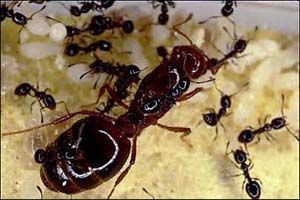
Currently, the best biological control method for fire ants is to preserve other ant species that compete with them for food and nesting sites, attack small fire ant colonies, or kill newly mated queen ants. In some areas outbreaks of other exotic ant species, such as Argentine ants and tawny crazy ants, have displaced imported fire ants. Even imported fire ants from single-queen or polygyne colonies will prey upon newly mated fire ant queens and eliminate small, neighboring colonies. Ants, in general, are considered beneficial insects because they prey upon many other arthropods and collectively till more earth than earthworms, thereby reducing soil compaction. Ways to preserve native ants include preserving their habitat and using insecticides judiciously.
Credit: A. Rao
Introducing or conserving the natural enemies (diseases, parasites and predators) of imported fire ants can help control them. These natural enemies kill fire ants or make them less able to compete with other ant species. The most effective biological control organisms for large-scale programs are those that spread by themselves from mound to mound and persist from year to year. A number of species of parasitic "phorid" flies (Diptera: Phoridae), including Pseudacteon tricuspis, P. curvatus, P. obtusus and P. litoralis, have been released and established in parts of most southeastern states. A disease of fire ants, Kneallhazia (=Thelohania) solenopsae, is also widespread in some states. Although natural enemies will not eliminate fire ants and it may be several years before their effect is known, it is hoped that introducing natural enemies of fire ants in the U.S. will reduce their populations indefinitely. In South America, where imported fire ants and their natural enemies originate, fire ant species are not usually considered pests but rather just another ant species. See Natural Enemies of Fire Ants.
Several other parasites and pathogens have been marketed for fire ant control. The predatory straw-itch mite, Pyemotes tritici (Lagreze-Fossat & Montane), feeds on and paralyzes developing fire ants but has not been effective when applied as directed and is potentially hazardous to the user. Parasitic nematodes such as Steinernema spp. are roundworms that enter insects, paralyzing them and developing in their bodies. Species and strains vary in their effectiveness. Strains tested to date caused ants to temporarily move away from the treated mound, but few colonies were actually eliminated. Parasitic fungi, such as Beauveria bassiana strains and formulations, also have been evaluated as individual mound and broadcast bait treatments. However, these agents have not been shown to persist or spread in the environment.
Newly mated fire ant queens, which can start new colonies, are killed by a number of organisms. These include birds, lizards, spiders, toads, dragonflies, robber flies, other ant species, and ants from surrounding colonies. Animals that eat ants, such as armadillos, may disturb mounds and eat some workers, but they are not really useful in control.
Physical and Mechanical Methods
Pouring very hot or boiling water on a mound is a fairly effective treatment, particularly when ants are close to the mound surface such as on a cool, sunny morning or after heavy rainfall. Approximately 3 gallons (11.4 liters) of very hot (almost boiling) water poured on each mound will eliminate about 60 percent of the mounds treated. Be careful handling large volumes of hot water to prevent serious burns and keep hot water off desired plants and grass. A number of hot water or steam injection devices have been produced for treating individual ant mounds.
Credit: B. Drees
Sometimes it may be sufficient to move colonies away from sensitive areas such as gardens. Disturbing or knocking down mounds frequently will cause colonies to move. Some people believe shoveling one mound on top of another will force ants to kill each other, but this is not true. Individual mounds can be carefully shoveled into a bucket dusted on the inside with baby (talcum) powder and the ants drowned with soapy water, but this rarely eliminates all ant colonies in the area.
Certain barriers can keep ants out of sensitive areas such as duck nesting boxes or greenhouse benches. Talcum powder and Teflon®-like tape or spray products can be used on vertical surfaces, but these treatments lose their effectiveness in humid or damp conditions. Tanglefoot®, a petroleum-based, sticky material available as a gel or aerosol, is effective temporarily until it becomes coated with dust and other debris. Plates or wires heated to about 140 degrees F (60°C) form a hot barrier that ants will not cross. Some plastic repellent barrier products impregnated with permethrin are now available (AntGuard®, Arinix®).
Control Devices
Various mechanical and electrical products have been marketed for fire ant control. One device was designed to electrocute fire ant workers as they climb onto an electric grid inserted into the mound or into a cone. These devices kill many worker ants, but the queens and brood are unaffected. There have been vibrating and sound-producing units designed to repel colonies, and devices that use microwaves or explosive elements to heat mounds or blow them up. Such products are often marketed without scientific evaluation. The fact that a "control" device is on the market does not indicate that it is effective. These products may kill some ants, but rarely eliminate a colony. Deceptive or fraudulent claims concerning fire ant control devices should be reported to the state's attorney general or the Federal Trade Commission. See Museum of Novel Fire Ant Control Methods and Products.
Home Remedies
In addition to very hot or boiling water, other "home remedies" have been tried. While these methods sometimes appear to work, they rarely eliminate colonies. Usually, the ant colony simply moves to a new location because of the disturbance, or the queen and a few workers temporarily remain hidden underground.
Gasoline and other petroleum products do kill some fire ant colonies. However, petroleum products are dangerously flammable or explosive, kill grass and plants around the treated mounds, and can seriously pollute the soil and ground water. All too often they cause the colonies to move instead of killing them. Using petroleum products, solvents, battery acids, bleaches or ammonia products can be dangerous and is strongly discouraged, except when they are ingredients in a registered pesticide product accompanied by usage directions.
Soap solutions, cleaning products or wood ashes soaked into the mound are believed to remove the protective wax coating from the ants or suffocate them. Generally, their use is discouraged because they have not been proven effective or this use is not supported by the product(s) manufacturer. Some solutions containing citrus oil and other ingredients may be effective as mound drench treatments. Citrus oil contains a natural extract of citrus peels (d-limonene, the active ingredient in Victor Safer Brand Fire Ant Killer) that is toxic to fire ants and has been advocated for use in some home recipes as an ant mound drench.
Sprinkling grits or other solid food substances onto fire ant mounds is ineffective. It has been suggested that when the ants eat the grits their stomachs will swell and rupture. In fact, only the last larval stage of the developing fire ant is known to digest solid food. All other life stages feed only on liquids or greasy materials. Likewise, club soda is also not an effective strategy. See Are there any home remedies that will kill fire ants? and Will club soda kill fire ants?
Chemical Control
Pesticides are products designed to kill certain organisms. An insecticide is a pesticide formulated to kill insects. Chemical insecticides (both "organic" and man-made or synthetic products) continue to be the main method of battling fire ants. Insecticides registered by the EPA are considered to pose minimal risk to the user and the environment when used as directed. Insecticide applications can be aimed at the foraging ants and/or at the entire colony. The section on Fire Ant Insecticides (see below) refers to fire ant insecticides by generic names of active ingredients. These active ingredients are sold under various trade names. Carefully follow directions on the product label to understand the proper method of application, what protective clothing must be worn, re-entry intervals to observe, and proper watering practices before and after treatment.
Credit: K. Flanders
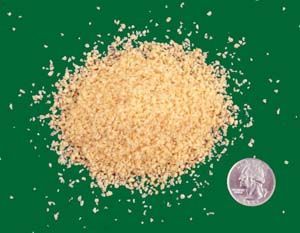
Most conventional bait formulations combine pesticide ingredients with soybean oil, which is absorbed onto processed corn grit. Soybean oil is an attractive food for ants that is important to the success of the bait. Because these baits are granular in texture, be careful not to confuse them with granular products that contain contact insecticides. Fire ant baits should have the word "BAIT" clearly listed on the label. Baits can be applied as spot treatments to individual mounds, in a bait station, or broadcast over large areas (for additional information, see the Southern IPM Center's Broadcast Baits for Fire Ant Control). To achieve satisfactory results:
- Use fresh bait, preferably from a just-opened container or an opened one stored for no more than 2 years. Purchase only enough bait to make one treatment and do not store large quantities once the containers have been opened. Bait is collected by ants only when it is fresh. It is then carried back to the colony and shared with other members of the colony. Rancid or stale bait is ignored by foraging ants. To check the quality of your bait, place a little near an ant mound to see if ants are attracted to it as described below. It is important not to smoke while using the bait or place the bait near gasoline. The ants detect the smell and are repelled.
- Apply when worker ants are actively foraging. This can be determined by leaving a small pile (1 to 2 tablespoons) of bait in the area to be treated. If you see ants actively removing the bait 10 to 45 minutes later, you will know that the bait is attractive and that ants are foraging. You can also use tuna fish, pet food, hot dog slices or potato chips to see if ants are foraging. Foraging activity slows when soil temperature is lower than 65 to 70 degrees F or higher than 90 degrees F. In mid-summer, apply bait in late afternoon or early evening, because foraging ants are less active during the heat of the day. Applying bait in early evening also prevents it from being degraded by sunlight. In the winter, ants may not be foraging or be attracted to bait products.
- Apply baits when the ground and grass are dry, and no rain is expected.
- Do not mix bait with other materials such as fertilizer or seed unless directions are provided for such mixtures.
- Use appropriate application equipment and calibrate it properly. Differences in the oiliness of bait brands and production batches can cause variations in applicator output. Temperature and humidity also affect the rate at which bait flows through the applicator opening. The speed at which the applicator is moving is an important factor, particularly with factory-calibrated settings. Over-application provides little or no increase in control and adds greatly to the cost. Under-application may decrease effectiveness.
- Do not store bait products near gasoline, fertilizer, or odorous pesticides, and do not smoke during bait treatments as these odors may reduce the bait's attractiveness to ants.
The availability of bait products is a problem, especially in areas recently invaded by fire ants. If you cannot find some of the products mentioned in this publication, speak with the store manager, visit your local farmers co-op, or contact your county Extension agent to determine whether the product is available in your area. Some of the bait products listed here are sold only through specialty stores such as lawn and garden supply stores or pesticide wholesalers that sell professional products.
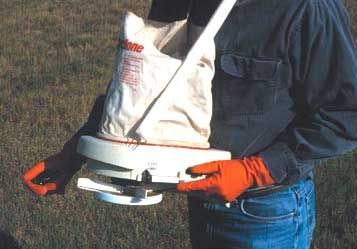
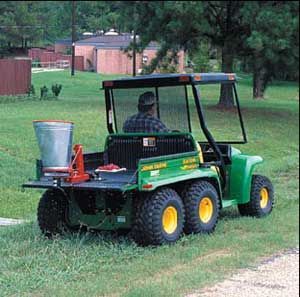
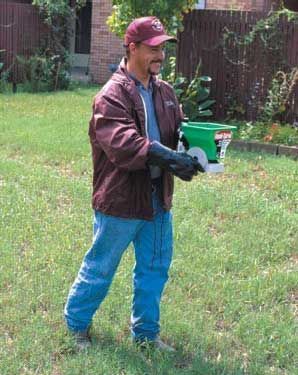
Hand-operated spreaders, such as the Scott's® HandyGreen hand-held spreaders, are the least expensive applicators and are adequate for treating small areas. The operator can walk or ride on the back of a vehicle. Some push-type applicators also may be suitable, but some modification (attaching a fire ant plate) is required to keep from applying too much material. Most rotary and drop-type fertilizer spreaders will not apply fire ant baits at the recommended rate.
Electric spreaders such as the Herd® Model GT-77A or similar applicators are best for treating large areas. These spreaders have vibrating agitators that prevent clogging. Swath width is determined by spreader fan speed and the weight of bait particles and is usually fixed. Applicators can be mounted on any vehicle that will maintain a low speed. Do not use ground-driven or power takeoff-driven equipment, because it can rarely be set to apply such a low rate. Aerial application requires some modifications to the aircraft and application equipment. A description of these relatively simple modifications and calibration methods can be obtained from bait product manufacturers. Herd® spreaders are available for residents to borrow from the county agents offices in each parish in Louisiana and in most county offices in Alabama.
In addition to their use as a broadcast treatment, baits can be used as an individual mound treatment or dispensed in a bait station. Bait products containing hydramethylnon, abamectin, indoxacarb, metaflumizone or spinosad often work faster when used to treat individual mounds than when broadcast. This is not the case with insect growth regulator (IGR) baits containing methoprene or pyriproxyfen.
Related slide presentation, A History of Fire Ant Bait Technology
In addition to baits, mound treatment insecticides are often formulated as dusts, liquids or granules. Their effectiveness depends on proper application. Contact insecticides must contact ants to work and should be applied during times of the year (and times of the day) when ants are close to the mound surface. It is also important not to disturb the mound during treatment if the product label so directs. Individual mound treatments selectively eliminate only the ant colonies treated to help preserve desirable native and competitor ant species. However, repeated treatments may be necessary for persistent mounds or nests that are not initially visible.
Credit: J. Summerlin
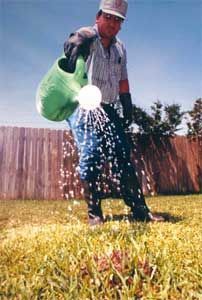
Although a few are ready-to-use, most fire ant mound drenches are formulated as liquid concentrates that must be diluted with the amount of water specified on the label. Avoid skin contact with the concentrate or mixture. Mix the proper amount in a large container (± 4 liters or 1 gallon), such as a sprinkling can, plainly marked POISON. Do not use the container for any other purpose. Properly store or discard containers after use. Pour the solution on top of and around an undisturbed mound. Most mound drenches require an hour to several days to eliminate the colony, although those containing pyrethrins and d-limonene are effective almost immediately.
Credit: B. Drees
To treat a single mound with a granular product, measure the recommended amount in a measuring cup labeled "POISON" for pesticide use only. Then sprinkle it on top of and around the mound. Do not disturb the mound. If the label says to water in the insecticide, use a sprinkling can and water the mound gently to avoid disturbing the colony. Several days may pass before the entire colony is eliminated.
Some products, such as those containing acephate (Orthene®) or pyrethroids (including beta-cyfluthrin, deltamethrin and permethrin), are specially labeled for dusting individual fire ant mounds. Distribute the recommended amount of the powder evenly over the mound. Treatments work best when ants are near the top of the undisturbed mound. Treated colonies are usually eliminated in several days.
Devices used to inject or "rod" insecticides into mounds are also sold as application equipment and are occasionally used by commercial applicators.
Products used to treat ant trails and colonies located in wall voids are usually dusts or sprays, although some surface treatments are mixtures of insecticide and latex paint. Unless the colony itself is treated, these products only reduce the number of foraging worker ants. Surface treatments are also used to create barriers to protect items or areas from foraging worker ants.
Granular insecticides are applied with fertilizer spreaders. These materials must be thoroughly watered into soil after application as directed. Liquid formulations are applied with a pump-up, high-volume, hydraulic, hose-end or boom sprayer. Some contact insecticides are relatively long-acting (weeks to months), suppress foraging ants quickly, and prevent small mounds from becoming established. Through repeated use, these treatments can eliminate most colonies. When applied as directed, granular products containing fipronil eliminate fire ant colonies slowly, requiring 4 or more weeks. A single treatment will continue to eliminate most ant colonies for about 1 year. However, the treatment is non-repellent to ants and new colonies migrating into treated areas can survive temporarily.
"Organic" Insecticides
Several products said to be "organic" (of natural origin) are currently marketed for fire ant control. These products may or may not be registered as pesticides by the EPA and the appropriate state regulatory agency. In 1996 the EPA established that certain ingredients that pose minimum risk to users no longer require EPA approval to be marketed as insecticides. These products are called "25 b" products, referring to that clause in FIFRA, the Federal Insecticide, Fungicide and Rodenticide Act). Some of the "organic" products fall into the minimal risk category. Therefore, not every product sold for fire ant control is supported by research-based evidence that it is effective against fire ants.
Credit: B. Drees
Note that not all products that contain naturally occurring active ingredients are completely organic; some contain non-organic inert ingredients. Products approved as organic are certified by the Organic Materials Review Institute (OMRI). OMRI provides an independent review of products intended for use in certified organic production, handling, and processing. Acceptable products are OMRI Listed® and appear on the OMRI Products List. State and federal organic certification programs are limited to food crop and livestock production systems where only approved organic products are allowed for use. In other use sites such as landscapes including turfgrass and ornamental plant maintenance, "organic" products are defined by the user and may include home remedies and physical and mechanical methods. In this section, we will discuss the use of organic insecticides and not consider these other methods that some may consider "organic". Please remember, some "organic" treatments are not necessarily safer or less toxic than conventional insecticides and should always be used as directed and with care.
Payback® Fire Ant Bait (spinosad) is currently an OMRI Listed® organic fire ant bait product.
OMRI Listed® fire ant products for individual mound treatments contain either spinosad or d-limonene (a component of citrus or orange oil). Apply mound drenches by mixing the specified amount of insecticide per gallon of water and pouring onto the fire ant mound. The ants are killed by contact with the insecticide. Therefore, the amount of drench needed to saturate the mound depends on the size of the mound. One gallon is sufficient for small mounds, but two gallons or more may be needed for large mounds. Use a watering can, or similar container, to mix and apply the drench according to label directions. Do not disturb the mound before drenching. Be sure to use enough drench volume to saturate the mound. Not using enough drench to thoroughly soak the mound is the main reason for control failures with mound drenches. D-limonene kills contacted ants within minutes but has little residual effect, so mounds need to be drenched thoroughly and quickly in order for the drench to be effective. Any granular products (other than baits) should be applied to the mound according to label directions. These are usually watered in using one or two gallons of water depending on mound size.
One of the most effective ways to control fire ants with these organic treatments is to use the broadcast applied ant baits as the primary control program. Then, a week or two later use individual mound treatments to spot treat mounds that survive the bait treatments or that 'pop up' between bait treatments. The individual mound treatments can be either mound drenches or individual mound bait applications. This is called the The Two-Step Method.
There are several other products that are OMRI Listed® for general ant control. Some of the active ingredients contained in these certified organic products are spinosad, d-limonene or orange oil, mint oil, clove oil, diatomaceous earth, pyrethrins, pyrethrum, cottonseed oil and canola oil. These products can be used for fire ants if label directions are followed. There are other products on the market that contain naturally occurring active ingredients that are completely organic along with naturally occurring inert ingredients that are not OMRI Listed®. However, some products sold as "organic" or "eco-friendly" with naturally occurring active ingredients may contain non-organic inert ingredients. So, you need to read the label carefully if the product is not OMRI Listed® to make sure you are getting an all-natural, wholly organic product.
Fire Ant Biology and Identification
Properly identifying ant species is the first step in determining the need and approach for control (see Identifying Fire Ants). Accurate identification can be especially important in the southwestern states where native fire ant species are common and red imported fire ants are rare. Although native fire ants are common urban pests, if they are controlled unnecessarily, especially in very dry climates, imported fire ants are more likely to invade these areas.
Credit: B. Drees
Where imported fire ants are common, most homeowners recognize them by the mounds they build or the stings they inflict. However, there are also other characteristics to look for. Their aggressive nature compared to other ant species is one such trait. If a mound is disturbed, usually hundreds of fire ant workers will swarm out and run up vertical surfaces to sting.
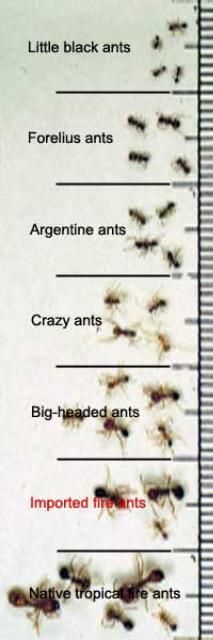
Credit: S. Vinson
If you are unsure of the ant species you have, contact your local UF/IFAS Extension office for help identifying them.
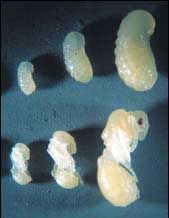
Imported fire ants (red imported fire ant, Solenopsis invicta Buren, and black imported fire ant, Solenopsis richteri Forel and their sexually reproducing hybrid) are social insects. Unlike many insect pests, they are very organized. Colonies consist of the brood and several types (castes) of adults. The whitish objects often found at the top of the mounds are actually the ant's developmental stages or brood—the eggs, larvae and pupae. Types of adults are:
- winged males (distinguished from females by their smaller heads and black bodies except in black or hybrid imported fire ants that may have darker females);
- red-brown winged females;
- one or more queens (wingless, mated females); and
- workers.
Worker ants are wingless, sterile females. They vary in size within a colony from 1/16 to 3/16 inch (1.6 to 5mm) long. They protect the queen by moving her from danger, defend the nest from intruders, and feed the queen only food that the workers or larvae have eaten first. They also forage for food and care for the developing brood.
Winged forms, or reproductives, live in the mound until their mating flight, which usually occurs in the late morning and afternoon soon after a rainy period. Mating flights are most common in spring and fall. Males die soon after mating, while the fertilized queen lands and walks around to find a suitable nesting site, sheds her wings, and begins digging a chamber in which to start a new colony. Sometimes, several queens can be found within a single nesting site.
The newly mated queen is 3/8 inch (10 mm) long, red-brown, and initially lays about a dozen eggs. When they hatch 7 to 10 days later, larvae are fed by the queen. These larvae will develop into small worker ants that will feed the queen and her subsequent offspring. Later on, a queen fed by worker ants can lay from 800 to 1,000 eggs per day. Larvae develop in 6 to 10 days and then pupate. Adults emerge 9 to 15 days later. The average colony contains 100,000 to 500,000 workers and up to several hundred-winged forms and queens. Queen ants can live 7 years or more, while worker ants generally live about 5 weeks in summer and longer in cooler months. Larger workers generally live longer than smaller workers.
In addition to sexually reproductive hybrid imported fire ants, there are two kinds of red imported fire ant colonies—the single-queen and multiple-queen forms. Workers in single-queen colonies are territorial. Workers from multiple-queen colonies move freely from one mound to another. This lack of territorial behavior by the multiple-queen form causes a dramatic increase in the number of mounds per acre. Areas infested with single-queen colonies contain 40 to 150 mounds per acre (99 to 370 mounds per hectare) (rarely more than 7 million ants per acre, or 17 million ants per hectare), whereas areas with multiple-queen colonies may harbor 200 or more mounds and 40 million ants per acre (494 or more mounds and 99 million ants per acre).
Red imported fire ants build mounds in almost any type of soil, but prefer open, sunny areas such as pastures, parks, lawns, meadows and cultivated fields. Mounds can reach 18 to 24 inches (46 to 61 cm) in height, depending on the type of soil. Often mounds are located in rotting logs and around stumps and trees. Colonies also can occur in or under buildings.
Colonies frequently migrate from one site to another. A queen needs only half a dozen workers to start a new colony, and they can build a new mound dozens of feet away from their previous location almost overnight. Fresh water flooding causes colonies to leave their mounds and float until they can reach land to establish a new mound. Colonies also can migrate indoors.
See related slide presentation, Imported Fire Ants, Competitor Ants and Impact of Bait Products
History of Control Efforts
Around the 1930's, the red imported fire ant, Solenopsis invicta Buren, was accidentally brought into Mobile, Alabama from South America. It now infests more than 325 million acres, comprising most of twelve southern states and Puerto Rico, with infestations also in New Mexico and California. It has recently been reported in northern Mexico, Australia, Taiwan and China. Another species—the black imported fire ant, Solenopsis richteri Forel—also was introduced, but this species is limited to northeastern Mississippi, northwestern Alabama and southern Tennessee. A large population of hybrids between S. richteri and S. invicta occurs in northern Mississippi, Alabama and Georgia and southern Tennessee (see map). Fire ants can travel long distances when newly mated queens land on cars, trucks, trains or aircraft cargo containers, or when winged forms are carried by the wind. Shipments of nursery stock or soil from an infested area may relocate entire colonies.
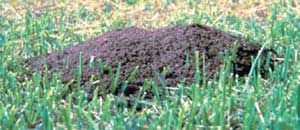
Credit: B. Drees
Why Early Eradication Programs Failed
Attempts in the late 1960's and early 1970's to eradicate the red imported fire ant were not successful. The pesticides used, although effective, were no match against a species capable of re-invading treated areas. The reasons for failure are debatable, but it is now known that eradication is hindered by the ant's biology and by problems with treatment methods. Recent attempts to eradicate S. invicta from parts of California and Australia using new products and treatment methods have shown very promising results. Successful eradication of the imported fire ant in large areas has yet to be documented.
Technological Obstacles to Eradication
Pesticide treatments are expensive and time-consuming, and there are only three basic approaches. The first is surface treatment using a residual contact poison. This approach is the least environmentally sound because the treated surface remains toxic for a long time. The ants may survive by foraging underground. The second is individual mound treatment, which involves applying a large volume of pesticide to reach the queen. However, it is nearly impossible to locate all of the colonies in an area and difficult to manipulate large volumes of liquid. Also, mound treatment is more expensive and time-consuming than broadcast treatments. Colonies not eliminated may move or split into several colonies. The third method is bait treatment, which uses some sort of attractive substance the ants like to eat. Unfortunately, baits are not always consumed, and the bait's attractiveness is short-lived. The bait must be slow-acting and effective over a range of doses, since the dose the ants get cannot be controlled. Baits may also be attractive to and kill some native ant species that compete with fire ants.
Economic, Regulatory and Environmental Obstacles to Eradication
The best way to treat large areas (hundreds of acres) is by an aerial application of bait. However, not all areas can be treated because of label restrictions and application limitations. Even with a bait product, it is not feasible to treat the entire infested area or even a large part of a single state, and untreated areas are sources for reinfestation. The larger the treatment area the more slowly reinfestation occurs. If periodic treatments are discontinued, the area may become more infested than it originally was within a year or two because treatments may have eliminated competing ant species.
Biological Obstacles to Eradication
In the southeastern United States, S. invicta infests such an extensive area that it would take years and massive resources to apply a single treatment to the entire infested area. Fire ants have a high reproductive rate, disperse easily and easily reinvade treated areas. Thousands of reproductive females are produced per colony, and mated females begin a colony wherever they land. Queens can fly up to a mile on their own or even farther when assisted by the wind. Once colonies are established, the ants eliminate competing insects and then rapidly overwhelm an area. Whole colonies can move, and in the multiple-queen form, the colonies can split into many new colonies. If a poison works too rapidly, the worker is killed before the poison is passed to the queen. Finally, worker ants from well-fed colonies may not forage on a bait product, or a bait may not be as attractive as some abundant natural food.
Colonies move vertically and horizontally in the soil profile to escape floods, droughts and extreme temperatures. When worker ants from new colonies are not actively foraging, they may be unaffected by baits or other pesticides applied to the soil surface. Such undetected ant mounds could escape eradication efforts.
Medical Problems
Fire ants are aggressive and will defensively attack anything that disturbs them. Fire ants can sting repeatedly. Symptoms of a fire ant sting include burning, itching and a white, fluid-filled pustule that forms a day or two afterward. Often people note a circular pattern of pustules, which may be caused by one ant stinging several times. Although the stings are not usually life threatening, they can be easily infected if the skin is broken and may leave permanent scars.
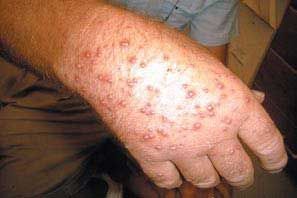
Credit: USDA-ARS
If the only symptoms are pain and the development of pustules, stings can be treated with over-the-counter products that relieve insect bites and stings (see Fire Ant Stings for more information). If a sting leads to severe chest pain, nausea, sweating, difficulty breathing, serious swelling or slurred speech, the person should be taken to an emergency medical facility immediately. Some allergic people may lapse into a coma from just one sting. Compared to deaths from bee and wasp stings, relatively few deaths from fire ant stings have been documented. People sensitive to fire ant stings should seek the advice of an allergist. Once a person has discovered that he/she is allergic to the fire ant venom, extra care must be taken to avoid stings. Often individuals allergic to the venom will carry epinephrin ("Epi pens") or undergo treatment in an attempt to desensitize their reaction to the venom.
Tips for avoiding medical emergencies and for treating ant stings:
- Teach children and visitors about the hazard of fire ants and to be aware of ant mounds.
- Wear protective clothing during outdoor activities. Wear shoes or boots and/or tuck pant legs into socks.
- Treat stings with an insect bite remedy that deadens pain and protects against infection.
- Control fire ants in areas used most frequently by people and pets.
Use insect repellents on clothing and footwear. These treatments can temporarily discourage foraging ants but will not deter the defensive reaction of ants emerging from a disturbed mound.
Flooded fire ants float on water. These ants should be especially avoided as they carry more venom, inject more venom per sting and are very aggressive.
Fire Ant Insecticides, Modes of Action and Formulations with Generic Names of Active Ingredients and Examples of Product Names
For more information and specific products and costs, visit the Products section at http://fireant.tamu.edu.
Baits
Hydramethylnon
These ingredients kill ants by preventing them from converting food into energy. These baits eliminate fire ant colonies within a week when applied to individual mounds but take several weeks when broadcast. They are also formulated in bait granules and stations.
(Amdro® Fire Ant Bait, Amdro®Pro Fire Ant Bait, MaxForce® Complete, Probait® and others)
Avermectins (abamectin)
This bait product is derived from a soil fungus and inhibits nerve transmission. As a mound treatment it kills worker ants and colonies quickly, but as a broadcast treatment it acts more like an insect growth regulator, preventing the production of viable eggs. Formulations include bait granules and stations.
(Ascend™, Award® II, Optigard™ Fire Ant Bait)
Oxadiazine (indoxacarb)
This class of insecticides has a unique mode of action. Indoxacarb undergoes bio-conversion in the insect to a more toxic form. When ingested it irreversibly blocks sodium channels in nerve cells, resulting in paralysis and death. The compound is quick-acting and controls ants in 3 to 14 days even when broadcast.
(Advion® Fire Ant Bait)
Semicarbazone (metaflumizone)
Metaflumizone blocks the sodium channel of the nervous system causing "relaxed" paralysis of insect. No known cross-tolerance by insect strains resistant to carbamates, OPs, pyrethroids, or benzoylureas. No metabolism of insecticide required for toxicity to target insects. This compound has the ability to eliminate fire ant activity in as few as seven days.
(Altrevin™, Siesta™)
Spinosyns (spinosad)
Spinosad, which includes spinosyn A and spinosyn D, is derived through the fermentation of a naturally occurring organism. These insecticides have a unique mode of action that is different from all other known insect control products. Spinosad causes excitation of the insect nervous system, leading to involuntary muscle contractions, prostration with tremors, and finally paralysis. These nerve toxin effects are consistent with the activation of nicotinic acetylcholine receptors by a mechanism that is novel and unique among known insecticidal compounds.
(Ferti-lome® Come and Get It, Pay Back Fire Ant Bait)
Phenyl pyrazole (fipronil)
As a nervous system toxicant, it blocks the passage of chlorine ions by interacting with gamma-aminobuteric acid (GABA)-gated chloride channels on nerve cell membranes. A bait formulation is available for broadcast or individual mound treatment. Broadcast application provides maximum control 6 to 12 weeks after treatment. Formulations include bait granules and stations.
(MaxForce® FC)
Insect Growth Regulators (methoprene, pyriproxyfen)
These materials mimic the effects of the insect's own juvenile hormone, reducing the production of viable eggs and preventing the development of worker ants for up to a year after application. They do not kill adult ants but render winged female reproductives developing after treatment sterile. Treated ant colonies persist for several months after treatment, until worker ants present at the time of treatment die naturally. Ants do not die faster when more product is applied than directed. These products are formulated as baits to be applied to individual mounds or broadcast.
(Extinguish® Professional Fire Ant Bait, Distance® Fire Ant Bait, Esteem® Ant Bait)
Product Mixtures: Hydramethylnon Plus Methoprene
The "hopper blend," directions for which are on the Amdro® Pro and Extinguish® labels, is both fast acting like hydramethylnon and long lasting like methoprene. It is available as pre-blended products, Extinguish® Plus Fire Ant Bait and Amdro® Kills Fire Ants Yard Treatment Bait.
Contact Insecticides
Botanicals (d-limonene, pyrethrins, rotenone, pine oil, cedar oil, turpentine)
The citrus or orange oil component, d-limonene, is a cytotoxin that kills cells after entering the insect body through direct contact. Other essential oils or components of essential oils have come on the market in the last few years in a variety of pesticides. Essential oils are volatile, highly concentrated substances extracted from plant parts, including the oils of cedar, cinnamon, citronella, citrus, clove, eugenol (a component of clove oil), garlic, mints, rosemary, and several others. As insecticides, they vary in their modes of action, but most work as contact killing agents only, so re-treatment may be needed. Some are promoted as repellents. Some essential oils used as pesticides may work by disrupting an insect neurotransmitter that is reported to be not present in people, pets, or other vertebrates. Most of these ingredients are generally regarded as safe for mammals by the United States Food and Drug Administration when used as directed. Many are even used extensively as flavorings and scents in foods, cosmetics, soaps, and perfumes. Pyrethrum is the source of natural insecticides made from the ground dried flowers of certain species of a chrysanthemum plant. The ground flowers contain a mixture of several different compounds called pyrethrins and cinerins. Pyrethrins are natural insecticidal compounds that are extracts of the chrysanthemum plant. Pyrethroid insecticides, such as permethrin, bifenthrin, cypermethrin and others, are synthetic versions of this naturally occurring insecticide. Pyrethrins, like pyrethroid insecticides, bind to sodium channels that occur along the length of nerve cells. Sodium channels are responsible for nerve signal transmission along the length of the nerve cell by permitting the flux of sodium ions. When pyrethrins bind to sodium channels, normal function of the channels is obstructed thereby resulting in overexitation of the nerve cell and, consequently, a loss of function of the nerve cell. Pyrethrins are often combined with diatomaceous earth (see inorganic compounds below). Rotenone acts on respiratory tissues, nerves and muscles. Pyrethrins and rotenone products break down rapidly in the environment. Rotenone, cedar oil and pine oil (turpentine) products are relatively slow-acting (days to weeks) and are applied as mound drenches.
Derivatives of Pyrethrins (allethrin, resmethrin, sumithrin, tetramethrin)
Like pyrethrins, these products destabilize nerve cell membranes and kill quickly, but are quickly deactivated and have little residual activity. They are contact insecticides applied as aerosol injections, mound drenches or surface sprays.
Pyrethroids (bifenthrin, cyfluthrin, cypermethrin, deltamethrin, fenvalerate, fluvalinate, lambda-cyhalothrin, permethrin, s-bioallethrin, es-fenvalerate, tefluthrin, tralomethrin)
These products also destabilize nerve cell membranes. They can persist in the environment longer than pyrethrins and their derivatives. They kill ants relatively quickly and are applied as mound drenches, dusts, surface sprays or granules.
Carbamates (carbaryl)
These materials disrupt nerve transmission (cholinesterase inhibitor). They are relatively quick-killing contact insecticides used as mound drenches, soil treatments and surface sprays.
Organophosphates (acephate)
These products also interfere with nerve cell transmission (cholinesterase inhibitor). They are relatively quick-killing and are formulated as aerosols, liquids, dusts or granules. They can be applied as mound treatments.
Note: Diazinon and Dursban® (chlorpyrifos) products have been phased out for many uses, particularly homeowner uses, and are no longer being sold. Dursban® (chlorpyrifos) is still available for imported fire ant quarantine uses. Use any remaining stored product as directed on the label for homeowner uses or contact local or state hazardous waste disposal programs for disposal instructions.
Spinosyns (spinosad)
Spinosad, which includes spinosyn A and spinosyn D, is derived through the fermentation of a naturally occurring organism. These insecticides have a unique mode of action that is different from all other known insect control products. Spinosad causes excitation of the insect nervous system, leading to involuntary muscle contractions, prostration with tremors, and finally paralysis. These nerve toxin effects are consistent with the activation of nicotinic acetylcholine receptors by a mechanism that is novel and unique among known insecticidal compounds. Several of the spinosad liquid products have fire ant mound drench instructions on label.
Phenyl Pyrazole (fipronil)
As a nervous system toxicant, fipronil blocks the passage of chlorine ions by interacting with gamma-aminobuteric acid (GABA)-gated chloride channels on nerve cell membranes. Granular formulations are broadcast on turfgrass areas and control ants about 4 to 8 weeks after application. Control continues for up to a year.
(Topchoice® Insecticide, Taurus®G Insecticide Granules, both RESTRICTED USE products for purchase and use only by licensed pesticide personnel)
Inorganic Compounds
Boric acid is a slow-acting stomach poison. It is commonly formulated as a dust or liquid bait for control of ants. Diatomaceous earth (DE) acts as a desiccant by scratching and absorbing the waxy layer that makes up part of the insect's exoskeleton. DE is most commonly applied as a dust to ant foraging trails to kill foraging ants; however, this use will have little or no effect on the ant colony or nest. Insecticide grade DE products are available, but when applied as a dry dust to the top of an ant mound or as a drench, fail to contact ants. Also, high humidity in ant mounds prevents desiccation. Thus, this ingredient acts more as a carrier in fire ant products that list DE as an active ingredient. When DE is used as a carrier in formulations of pyrethrins, it may enhance the penetration of this botanical insecticide into the body of an insect.
Policy Statement for Making Chemical Control Suggestions
Suggested pesticides must be registered and labeled for use by the Environmental Protection Agency and the appropriate state Department of Agriculture or regulatory agency. The status of pesticide label clearances is subject to change and may have changed since this publication was printed. County Extension agents and appropriate specialists are advised of changes as they occur.
The USER is always responsible for the effects of pesticide residues, as well as for problems that could arise from drift or movement of the pesticides from his property to that of others. Always read and carefully follow the instructions on the product label.
The information given herein is for educational purposes only. Reference to commercial products or trade names is made with the understanding that no discrimination is intended and no endorsement by the participating states' Cooperative Extension Service, Agricultural Experiment Station, U. S. Department of Agriculture, Agricultural Research Service, or Animal and Plant Health Inspection Service is implied.
Additional Resources
Texas Imported Fire Ant Research and Management Project
Fire Ant Help from Alabama Cooperative Extension System
Alabama Fire Ant Management Program
University of Tennessee (fireants.utk.edu)
Acknowledgments
The authors are grateful for reviews of earlier drafts of this publication by John A. Jackman, Homer Collins, Jerry Cook and Jim Reinert. We also appreciate contributions made by Charles L. Barr. Recent revisions included those submitted by:
- Carol Russell, State Operations Support Officer, USDA APHIS PPQ;
- Danny L. McDonald, Research Scientist, Institute for the Study of Invasive Species, Department of Biological Sciences, Sam Houston State University.
Authors
Bastiaan "Bart" M. Drees, professor and Extension entomologist, and Texas Agricultural Experiment Station, The Texas A&M University System
S. Bradleigh Vinson, professor, Department of Entomology, Texas Agricultural Experiment Station, The Texas A&M University System
Roger E. Gold, professor, Department of Entomology, Texas Agricultural Experiment Station and Texas Cooperative Extension, The Texas A&M University System
Michael E. Merchant, professor and Extension urban entomologist, The Texas A&M University System
Elizabeth "Wizzie" Brown, Kim Engler, Molly Keck and Paul Nester, Extension program specialists – IPM, Texas A&M AgriLife Extension Service
David Kostroun, assistant commissioner for regulatory programs, Texas Department of Agriculture
Kathy Flanders, Extension entomologist, Alabama Cooperative Extension System and professor, Auburn University, and Fudd Graham, research fellow IV, Auburn University
Dale Pollet, Extension entomologist, Linda Hooper-Bui, associate professor, and Patricia Beckley, instructor, Louisiana State University AgCenter
Tim Davis, Extension area-wide imported fire ant specialist, Clemson University, and Paul M. "Mac" Horton, professor of entomology and assistant director, Clemson University Cooperative Extension Service
Wayne Gardner, professor and unit coordinator, Department of Entomology, University of Georgia
Kelly Loftin and John Hopkins, assistant professors and Extension entomologists, University of Arkansas
Karen Vail, professor and Extension entomologist, the University of Tennessee Extension
Russell Wright and Wayne Smith, fire ant research and education specialists, Oklahoma Cooperative Extension Service, Oklahoma State University
David C. Thompson, professor of entomology, Plant Pathology and Weed Sciences, New Mexico State University
John Kabashima, Orange County director/environmental horticulture advisor, University of California Cooperative Extension
Blake Layton, Extension entomologist, Mississippi State University Extension Service
Phil Koehler, Margie and Dempsey Sapp endowed professor of structural pest control and urban entomology, University of Florida
Peter B. Schultz, professor of entomology and director, Hampton Roads AREC, Virginia Cooperative Extension, Virginia Tech
David Oi, research entomologist—Center for Medical, Agricultural and Veterinary Entomology, USDA-ARS
Anne-Marie Callcott, entomologist, CPHST Biloxi Station, USDA-APHIS, PPQ