
History of Fig Cultivation
The fig (Ficus carica L; family Moracea) originated in the Old World Tropics—Asia Minor and the Mediterranean region (Figure 1). In the Mediterranean, the fig has been cultivated since as early as 5,000 BCE.
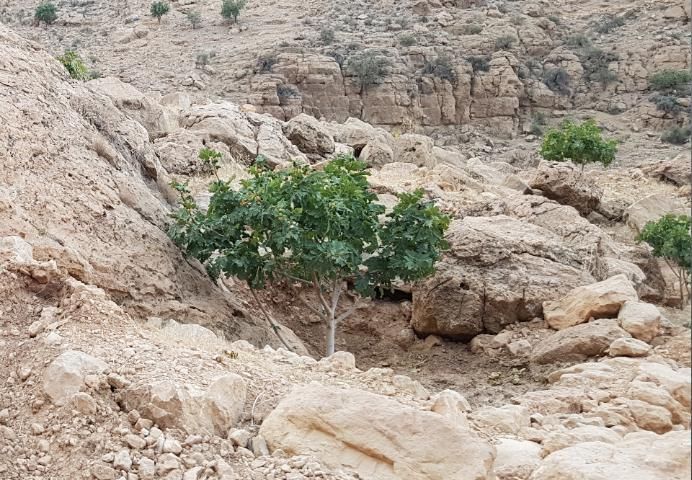
Credit: Ali Sarkhosh, UF/IFAS
The fig tree was first introduced to the Americas in 1575 by Spanish explorers in Florida. On the West Coast, in the area that eventually became the state of California, Spanish Franciscan missionaries introduced the cultivar 'Mission' to the area that in 1769 became the mission San Diego. Additional fig cultivars were also imported to the California area from Mediterranean countries, including Turkey.
Because some of the imported figs required pollination by the fig wasp (Blastophaga psenes), the absence of this wasp led to an initial failure of fig cultivation on the West Coast. This impediment to cultivation was remedied by the importation of the fig wasp.
The fruit of these fig cultivars had open "eyes" or ostioles (opening at the fruit apex) and were often attacked by insects and diseases. Scientists including Ira J. Condit, William B. Storey, and others working on genetic improvement of figs released new cultivars with closed eyes, cultivars that did not require pollination. Additionally, many fig cultivars were imported from the Old World within the last 50 years. Currently, however, no fig-breeding programs remain in the United States, and among at least 60–100 named cultivars of figs, relatively few are commonly grown in the southeastern United States.
Adaptation
The fig is adapted to dry, Mediterranean-type climates (Figure 2), such as California. The humid growing season in Florida is associated with enhanced insect and disease pressure, and rain can cause fruit to split. Fig cultivars do not require more than 100 hours of temperature of 45°F or less during the dormant season to promote normal vegetative and reproductive bud development. As a result, figs receive sufficient winter chilling in all areas of Florida except the south. Fully dormant trees are hardy to about 15°F–20°F (Figure 3). Exposure of trees to low-temperature preconditions can increase cold hardiness.
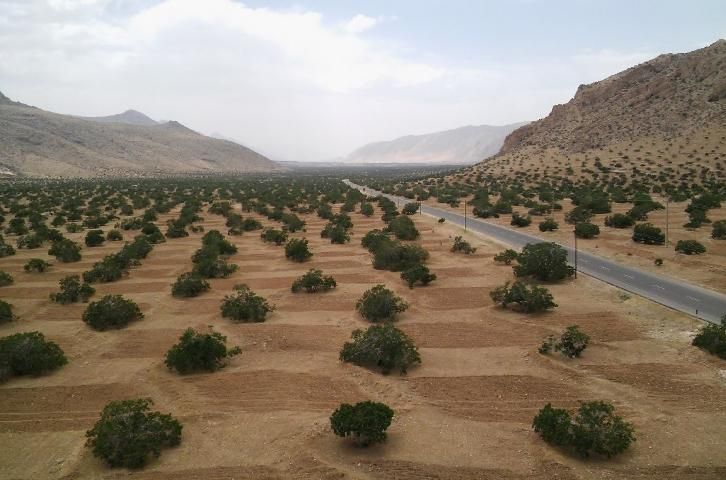
Credit: Ali Sarkhosh, UF/IFAS
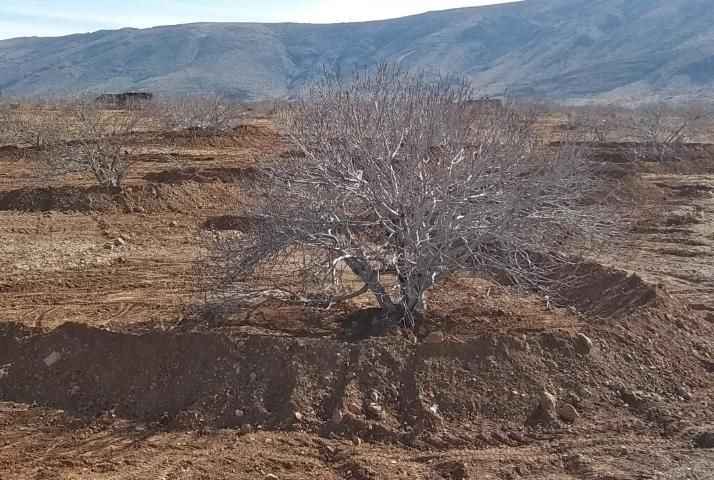
Credit: Ali Sarkhosh, UF/IFAS
Description of Tree
Growth Habit
The fig is a deciduous tree that can reach 50 feet in height (Figure 4). However, in the southeastern United States, this tree is seldom taller than 25 feet due to periodic cold injury to the trunk and limbs. Most fig trees in the southeastern United States are multiple-branched shrubs. Fig wood is weak and decays rapidly. Small branches tend to be more pithy than woody. When branches are cut or damaged, they produce copious quantities of a milky latex that can be a skin irritant. This latex contains a protein-degrading enzyme called ficin, which is similar to another enzyme found in papaya. Fig trees produce roots that can be very deep in well-drained soils. The lateral spread of roots can be substantial.
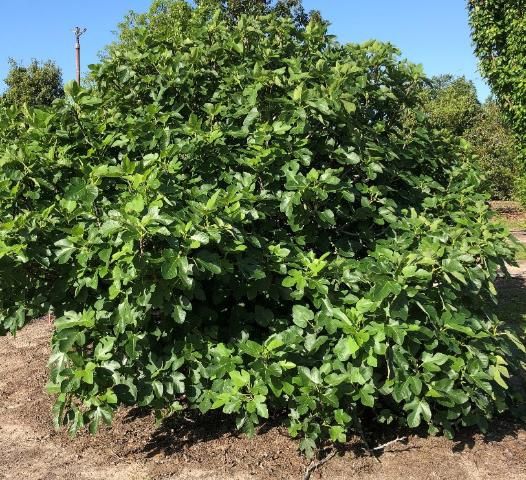
Credit: Ali Sarkhosh, UF/IFAS
Leaf Morphology
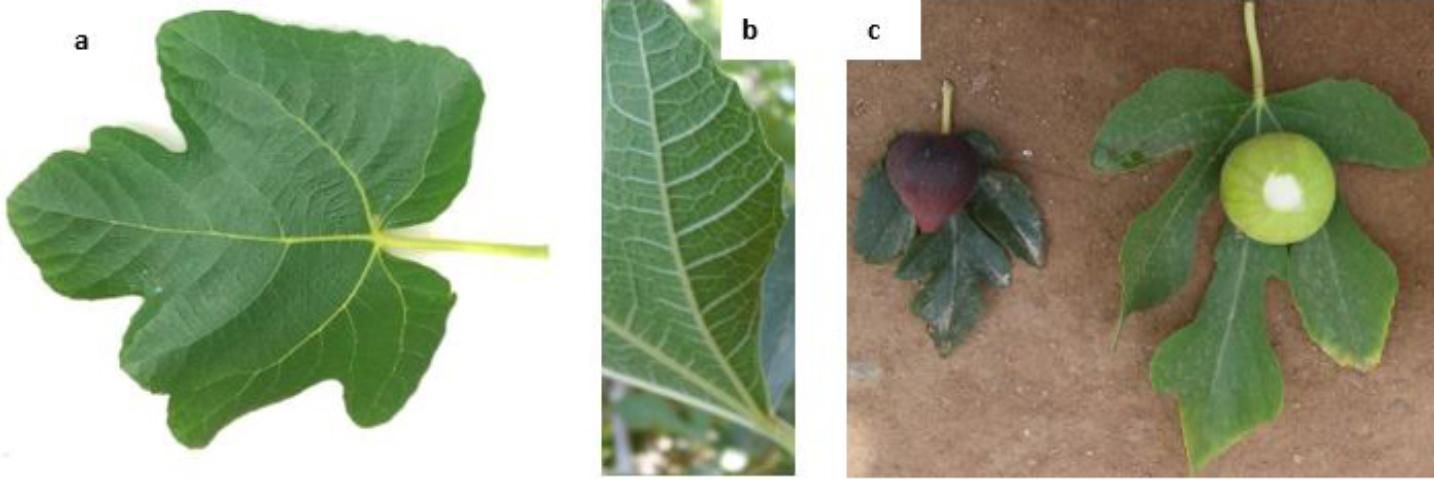
Fig leaves are large (up to 1 foot long), thick, colored a bright dark green, single, and alternate (Figure 5). These leaves are deeply lobed with usually three to five sinuses. Leaves contain trichomes (pubescence), which is particularly rough on the adaxial (upper) leaf surface. Leaf pubescence can also be an irritant to the skin. Leaf morphology is different among varieties.
Flower Morphology
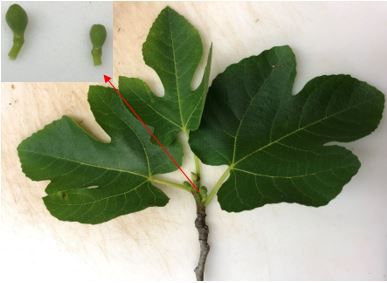
Flowers are minute and unisexual, bearing either stamens or pistils depending upon the type of fig (Figure 6). Flowers are borne in leaf axils. Common fig cultivars have only female flowers and do not require pollination (discussed below).
Credit: Ali Sarkhosh, UF/IFAS
Fruit Morphology
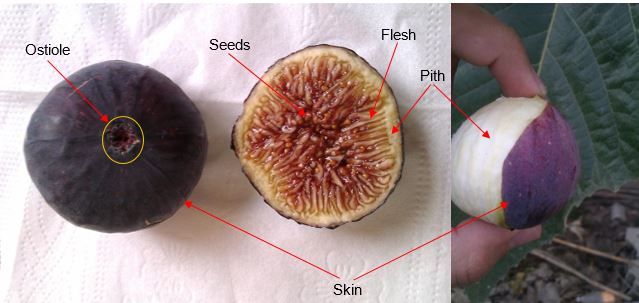
The fruit of a fig is unique and is derived from a hollow peduncle that becomes fleshy and forms a structure called a synconium. The unfertilized ovaries provide the resin-like flavor associated with fruit of fig. Fruit can contain a closed or an open ostiole, or eye, located at the fruit apex (Figure 7).
Credit: Ali Sarkhosh, UF/IFAS
Fruit Types
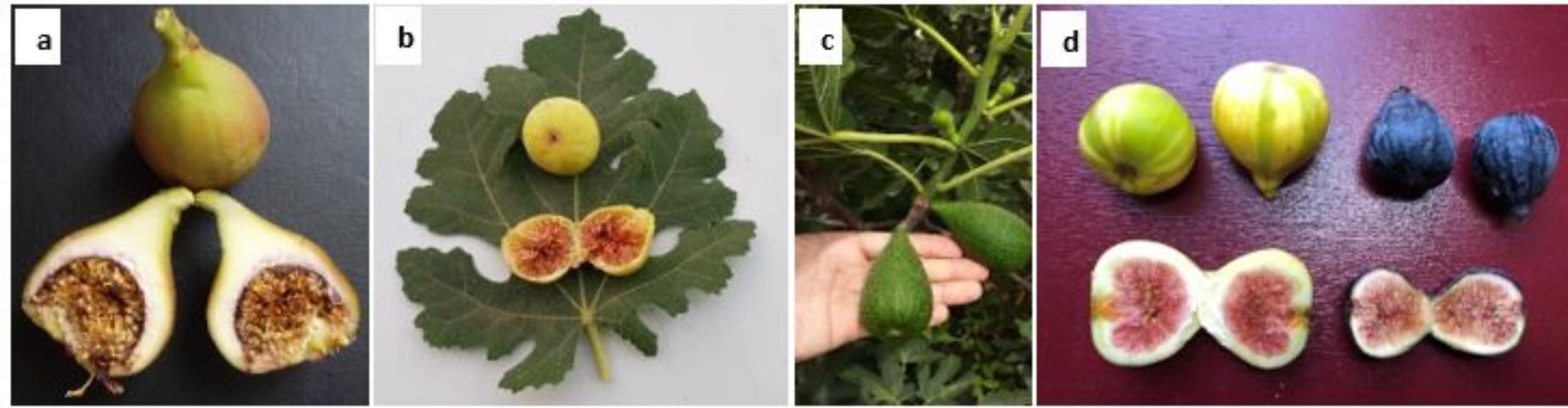
There are four types of figs: Caprifigs, Smyrna, San Pedro, and common types, which are recommended for Florida (Figure 8). Caprifigs produce staminate (male) flowers and are useful only as a source of pollen. Smyrna types bear only pistillate (female) flowers and require a caprifig for pollination. San Pedro types have pistillate flowers and bear two crops, one borne on leafless wood requiring no pollination and the other borne on new wood that requires pollination. Fig cultivars recommended for Florida belong to the common types and are parthenocarpic, meaning the fruit develop without pollination. Smyrna and San Pedro types will not bear fruit in Florida because of the absence of Caprifigs and a wasp pollinizer (Blastophaga psenes). Because the common types of fig do not require a wasp pollinizer, the best cultivars have a closed ostiole to minimize rotting by preventing the occurrence of insects or rain water inside the fruit.
Credit: Ali Sarkhosh, UF/IFAS
Fig Cultivars
Cultivar Selection
There are many fig cultivars that grow well in Florida, each with different fruit characteristics. Fig cultivars can have different skin color, including black, purple, pink, yellow, green, or yellow/green (Figure 9).
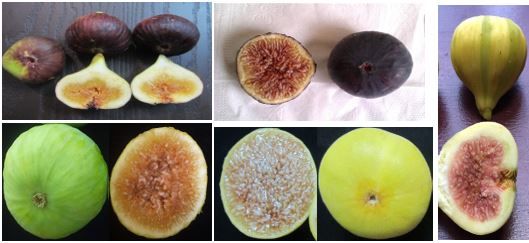
Credit: Ali Sarkhosh, UF/IFAS
Characteristics that should be considered in the selection of fig cultivars include the following:
- Cold hardiness;
- The ability to set fruit without pollination (parthenocarpy);
- The fruit having a closed eye, or ostiole;
- A long peduncle that allows the fruit to droop and shed moisture; and
- A green skin on the fruit to minimize bird herbivory.
Characteristics of Common Fig Cultivars
A summary of the characteristics of the fig cultivars follows below. Alternate names of cultivars appear in parentheses:
Alma: This cultivar is reported to produce high yields. Alma is moderately cold tolerant and produces a medium-sized fruit with brown skin and a light tan pulp. The eye is medium open, and the fruit has few seeds and is very sweet. Fruit ripens from late July through August and is good fresh or processed.
Black Spanish (California Brown Turkey, San Pedro): This cultivar yields medium-sized, purplish-brown fruit with a red center. Black Spanish has an eye open. Fruit ripen in June and in August.
Brown Turkey (Brunswick, Eastern Brown Turkey, Harrison, Lees Perpetual, Ramsey, Texas Everbearing): This cultivar is probably the most popular fig in the southeastern United States. A small crop of fruit in the spring (called breba fruit) ripens in July followed by the main crop one month later. The fruit is medium-large in size and has bronze skin and amber pulp. The fruit has a small-to-medium closed eye and is good fresh or processed.
Celeste (Blue Celeste, Celestial, and Little Brown Sugar): This cultivar is probably the second most common fig in the southeastern United States. Celeste is fairly cold hardy, and the fruit is small to medium in size and purplish bronze to light brown in color. Celeste has a closed eye and begins ripening in early July. Celeste is good fresh or processed.
Champagne (Golden Celeste): This newly released cultivar from Louisiana State University produces a medium-sized fruit with yellow skin, tan-colored pulp, and a closed ostiole. Fruit ripening is early July.
Conadria (Genoa): This cultivar is a vigorous tree that produces fruit that are green to yellow in color. Flesh of the fruit is pink to red with a good flavor. The eye is small and tight. Fruit ripening is in June and again in August. Conadria fruit are good fresh and excellent dried.
Green Ischia (Ischia Green, Ischia Verte, and White Ischia): This cultivar produces a green small to medium-sized fruit with a strawberry center and a closed eye. Fruit of Green Ischia ripens in late July to early August.
Hunt: This cultivar is very cold hardy and produces a small pear-shaped, violet-brown fruit with a long neck. Hunt has a closed eye, amber-colored flesh and few seeds; fruit ripen in July.
Jelly (Mary Lane Seedless): This cultivar produces a long-necked, yellow fig that is medium in size with clear amber flesh and very few seeds. Fruit of Jelly is good for eating fresh and preserving, although the skin is soft. Jelly ripens in late July to August.
Kadota (Florentine): This cultivar produces a medium-large, yellow fruit with an open ostiole that is partially sealed with a honey-like substance. Fruit quality declines with extremely wet weather. Although Kadota figs can be eaten fresh, they are better suited for canning and preserves. Fruit ripen in July.
LSU Gold: This cultivar is a Louisiana State University release that produces a large, yellow fig with pink-to-red pulp. Fruit of LSU Gold should be picked as soon as it is mature because this fruit has an open eye and fruit spoilage may occur. Fruit ripen in July through August. Fruit is of good quality for eating fresh and for preserving.
LSU Purple: This cultivar is a Louisiana State University release that produces a medium-small, glossy purple fig that has amber-to-pink flesh with a closed eye. The main crop ripens in August, but some fruit can ripen well into the fall. Fruit is of good quality for eating fresh and for preserving.
Magnolia (Brunswick, Madonna): This cultivar is common in some parts of the southeastern United States, but not in Florida. Magnolia is cold hardy down to 50°F and often produces the largest fig available. Fruit is asymmetric, bronze in color, and has an open ostiole. The flesh is amber to strawberry in color. Ripening is from mid-July through August. Fruit should be picked as early as possible because they may split and turn sour under wet conditions. Magnolia is best suited for preserving.
Mission (Black Mission, Franciscana): A large, black fig with reddish-pink pulp. Mission is an everbearing fig that produces fruit from summer to winter. Not sufficiently cold hardy for the southeastern United States.
O'Rourke (Improved Celeste): This cultivar is a Louisiana State University fig that produces a small to medium-sized fruit, which is brown in color with tan pulp. The eye is partially closed with the aid of a honey-like substance. Fruit ripens in early July. Fruit is of good quality for eating fresh and for preserving.
Osborn Prolific (Arachipel, Hardy Prolific, Neveralla, Osborne, Rust): This cultivar produces a medium-large fruit with reddish-brown skin and light-colored flesh. The fruit is sweet with few seeds. The eye is partially closed. Osborn Prolific is reported to perform better in cooler climates. Fruit ripen in August, and the fruit is best eaten fresh.
Pasquale (Natalino, Vernino): This cultivar produces a sweet, small, purple fig with amber-to-pink pulp. Pasquale ripens late November to December and is often damaged by frost. Pasquale is not cold hardy. Not recommended for the southeastern United States.
Tena: A medium-large fig that is greenish-yellow in color with light strawberry pulp. The fruit has a closed ostiole. Tena thrives in hot, dry weather. The fruit is good for eating fresh or preserving.
Tiger (Giant Celeste): This new cultivar released by Louisiana State University has a large brown fruit, yellow pulp, and a partially closed eye. Fruit of Tiger ripens in early July.
Ventura (Verdal louange): This cultivar produces a large, green fruit with a long neck. The pulp is deep red with excellent flavor. Fruit ripen from August to September. Fruit may be eaten fresh or preserved.
Ten cultivars of figs (Alma, Black Spanish, Brown Turkey, Conadria, Celeste, Jelly, Osborne Prolific, Pasquale, Tena, and Ventura) have been evaluated in a replicated trial at the UF/IFAS North Florida Research and Education Center in Monticello, FL. Other cultivars of figs not tested by the University of Florida include the following: Champagne, Green Ischia, Hunt, Kadota, LSU Gold, LSU Purple, Magnolia, O'Rourke, and Tiger.
Culture and Management
Propagation
Fig trees are usually propagated by using dormant cuttings. Select dormant wood about 6 inches long and less than 1 inch in diameter (Figure 10). The basal end of the cutting should be 2-year-old wood.
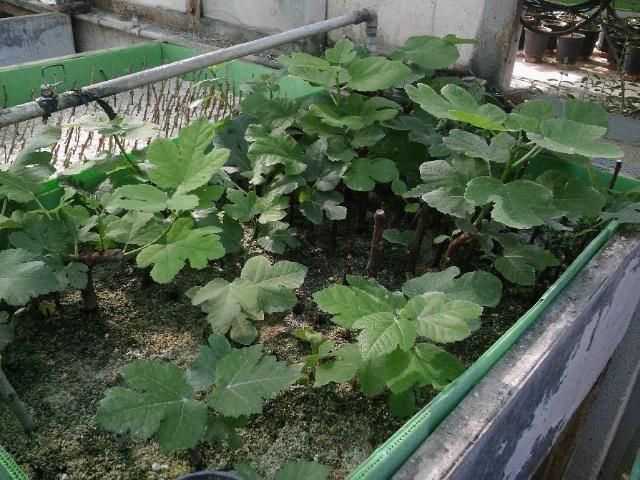
Credit: Ali Sarkhosh, UF/IFAS
Place cuttings in moist, but not wet, Perlite or in another moist porous medium. At least half the length of the cutting should be below the soil level. The basal ends of the cutting should produce callus in two to three weeks at 50°F to 60°F. Rooting efficiency can be enhanced by making basal cuts directly below the nodes and by the use of a rooting hormone. Leafy shoots require frequent irrigation or the use of a mist bed until roots are fully functional. (For more info on the construction of a mist bed, readers are referred to CIR417, Installation of Mist Propagation Equipment, https://ufdc.ufl.edu/IR00005550/00001). Fig trees are rarely propagated by chip or patch budding or by whip, side, inlay or cleft grafting. Rooted cuttings can be transferred to the field after sufficient roots have formed. Newly set trees should receive irrigation every day or every two days.
Location
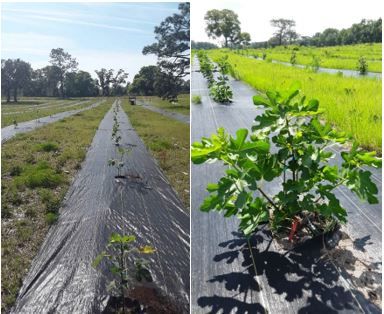
Figs perform best in locations with full sun (Figure 11). Fig trees often shade out competing vegetation below the tree canopy. These trees should not be confined to a small landscape. The trunk and major limbs, if not shaded, can experience sun scald, which can be minimized by applying white latex paint. The root system of fig trees can extend well beyond the tree canopy.
Credit: Ali Sarkhosh, UF/IFAS
Planting
In Florida, bare-rooted fig plants can be planted during the dormant season, from December to late February. Container-grown plants can be planted any time of the year, provided they receive irrigation. The spacing of 10–16 ft (3–5 m) between plants and 13–20 ft (4–6 m) between rows is used for orchards, and similar spacing should be maintained for dooryard trees (Figure 11).
Irrigation
Irrigation is required for fig trees during the establishment year. During that period, a fig tree should receive 10 gallons per application at least three times a week. Irrigation after the establishment year is optional except during a prolonged drought. For mature fig trees, irrigation of 20–50 gallons per tree per week can be applied if there is no significant rain. Drought-stressed trees are more susceptible to nematodes and will not fruit well.
Training and Pruning
Trees tend toward a bushy habit with many suckers arising from the root and crown area. Fig trees do not require pruning to be productive. For commercial production, fig trees are sometimes pruned to a central leader or to a modified central leader, but such pruning is usually futile because these trees often freeze back and regrow in bush form (Figure 12). Freeze-damaged wood should be eliminated after regrowth commences (see next section).
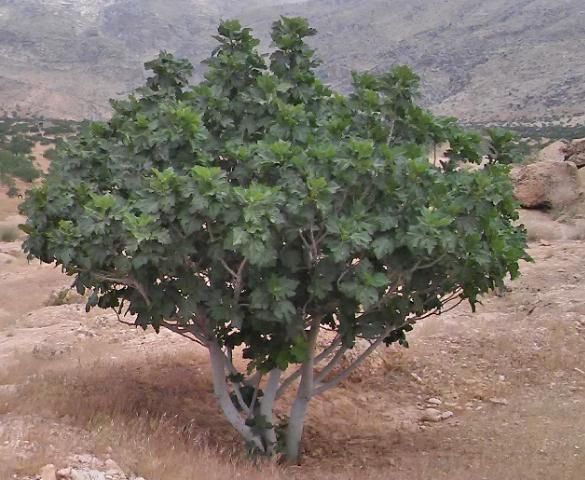
Credit: Ali Sarkhosh, UF/IFAS
If the tree is pruned, the pruning should occur after fruit harvesting (late summer) to allow for flower-bud initiation for next year's crop. For late-maturing cultivars, pruning may result in a significant reduction in yield the next year. Caution: heavy winter pruning can eliminate the entire crop the following year.
Cold Injury
Fig trees often sustain cold injury in the southeastern United States. Brown Turkey and Celeste are common cultivars that are reported to be more cold hardy than many other fig cultivars. Cultural practices that promote a growth flush in late summer (the application of fertilizer and irrigation) should be discouraged because this tender tissue will be frozen and killed by temperatures just below freezing.
Fig trees in Florida often are not cold-conditioned in the fall prior to the onset of winter cold. If properly cold-conditioned, however, fully dormant trees can withstand temperatures from 15°F to 20°F without severe damage. Dormant buds are more susceptible than wood to subfreezing temperatures. As mentioned earlier, most fig trees in the southeastern United States assume a bush-like rather than tree-like growth habit due to cold injury of the trunk and major scaffold limbs.
Fertilization
Little information is available concerning fertility requirements of fig trees. However, the general consensus is that fig trees typically require light fertilization. Excess fertilization can promote excessive vegetative growth and low yield. If the total amount of vegetative growth is less than one foot in length, then it is appropriate to apply fertilizer. For young trees, ½ pound of 10-10-10 with micronutrients can be applied three to five times during the growing season, starting in late winter (February to March) and ending by the beginning of August. For large trees, apply 2 to 4 pounds of 10-10-10 with micronutrients three to five times during the growing season (February to August).
Pests
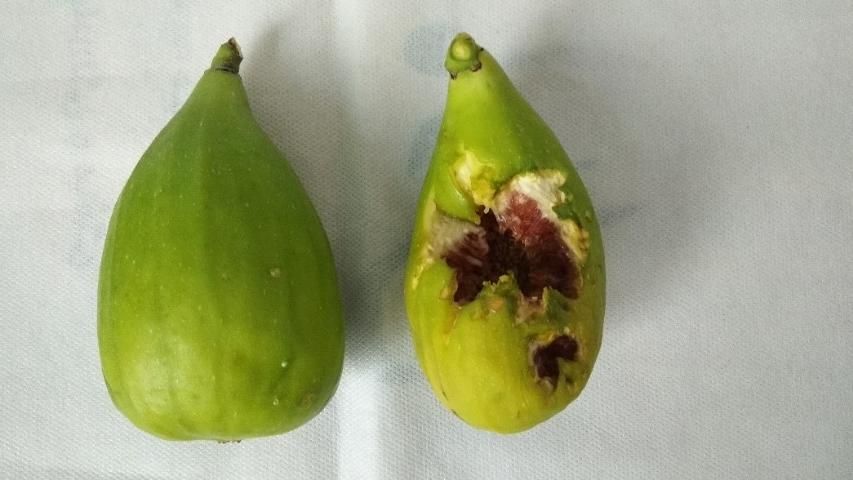
Fig trees are a moderately sustainable crop but suffer from a number of animal and disease pests (Figure 13). Fig tree roots and fruit are a favorite food of birds, gophers, rabbits, and squirrels. Root knot nematodes can also be a limitation for fig trees planted in sandy soils but are not usually a problem in fertile or loamy soils. Organic amendments or mulches reduce nematode damage. A number of insects and diseases can attack fig fruit cultivars with an open eye.
Credit: Ali Sarkhosh, UF/IFAS
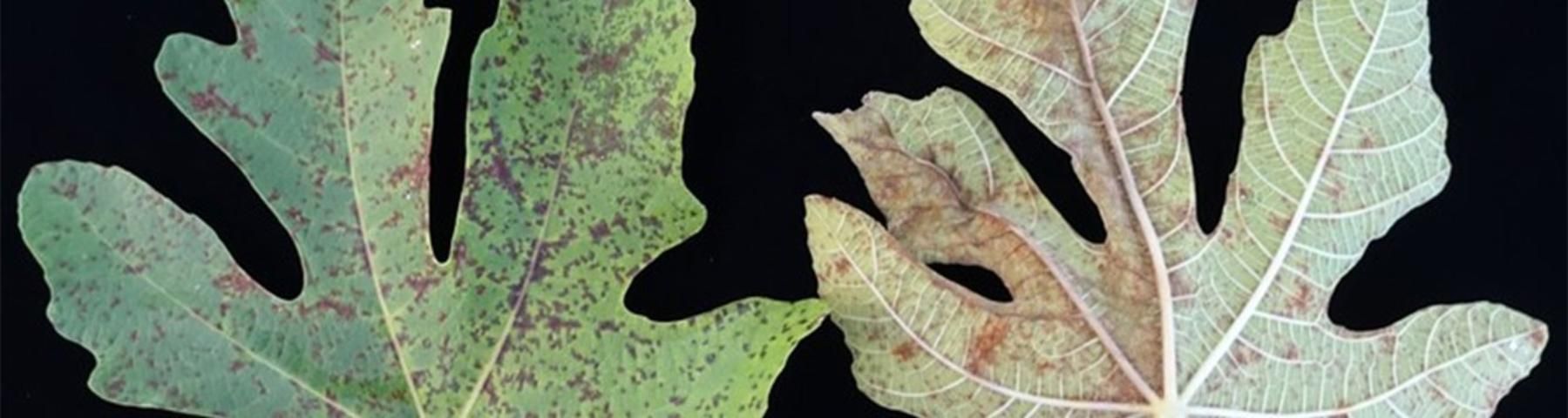
The most common disease of fig in the southeastern United States is fig rust (Cerotelium fici) (Figure 14). Fig rust turns leaves brown, can cause defoliation and premature ripening of the fruit, and decreases cold tolerance. This disease can be controlled by a 5-5-50 Bordeaux spray (copper sulfate, lime, and water) applied every two to three weeks during the growing season, from April to November.
Credit: UF/IFAS
Other fig diseases include Botrytis cinerea (fungus) and Cercospora leaf spot fungus (Cercospora fici), which causes branch terminals to turn black and die. Thread blight (Pellicularia koleroga) results in necrosis of stems and matted foliage. Botryosphaeria dothidea (fungus) causes necrosis of leaves and stems. Rhyzopus stolonifer (smut) causes fruit drop of cultivars with an open eye. Fusarium spp. and Aspergillus niger are fungi that attack ripe fruit.
Although many diseases attack figs, most figs are grown in homeowner settings and do not receive pesticide sprays. The most common insect pests are mealy bug, three-lined fig borer, and ants. The application of insecticide is seldom warranted. Please contact your local UF/IFAS Extension agent for spray recommendations.
References
Duyar, E. 1998. "Impact of Ecological Changes on Fig Plantations in Big Menderes (Meander) Basin." Acta Hort. 480: 311–315.
Eisen, G. 1901. The Fig: Its History, Culture, and Curing. Bulletin No. 9, U.S. Department of Agriculture, Division of Pomology, Washington, USA.
Erez, A., and Y. Shulman. 1982. "Growing Breva Figs in a Meadow Orchard; a Possibility for Commercial Fig Growing." Hassadeh 63: 969–971.
Erez, A., and Y. Yablowitz. 2000. "Técnicas de producción de brevas en Israel." In Cultivos frutales para zonas aridas, edited by C. Botti. 1–13. Escuela de Agronomla, Facultad de Ciencias Agronómicas, Univ. Chile.
Ernst, M. 2018. "Figs." CCD-CP-135. Lexington, KY: Center for Crop Diversification, University of Kentucky College of Agriculture, Food and Environment. http://www.uky.edu/ccd/sites/www.uky.edu.ccd/files/figs.pdf
Faghih, H., and J. Sabet Sarvestani. 2001. Fig, Planting, Cultivation and Harvesting. Shiraz: Rahgosha Press.
Ferguson, L., T. J. Michalides, and H. H. Shorey. 1990. "The California Fig Industry." Horticultural Review 12: 409–490.
Flaishman, M. A., and F. A. Al Hadi. 2002. "Fig Growth in Israel." (in Hebrew). Alon Hanotea 56: 56–57.
Flaishman, M. A., V. Rodov, and E. Stover. 2008. "The Fig: Botany, Horticulture, and Breeding." Hort Rev 34: 113–97.