
This publication details the appropriate ways to dispose of pesticide waste in Florida, including those pesticides identified as hazardous waste. Persons in other states should check with their state or local authorities for the appropriate ways to dispose of pesticide waste in their state.
Background
Proper pesticide waste disposal is an important part of responsible pesticide use. Improper disposal can lead to contamination of soil, groundwater, and surface water, causing serious liability problems for the pesticide user, as well as a poor public image. Several federal and state laws, including the Federal Insecticide, Fungicide, and Rodenticide Act (FIFRA) and the Florida Pesticide Law (Ch. 487 F.S.), regulate the disposal of pesticide waste. Improper disposal can result in fines for the pesticide applicator. Everyone who handles pesticides must know how to dispose of pesticides properly. It is possible to dispose of these wastes legally, responsibly, and economically.
There are five types of pesticide wastes:
- Empty containers (Figure 1)
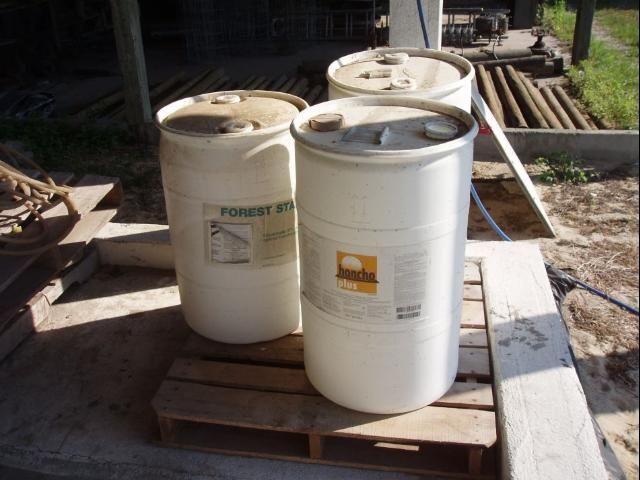
Credit: UF/IFAS Pesticide Information Office
2. Excess mixture (Figure 2)
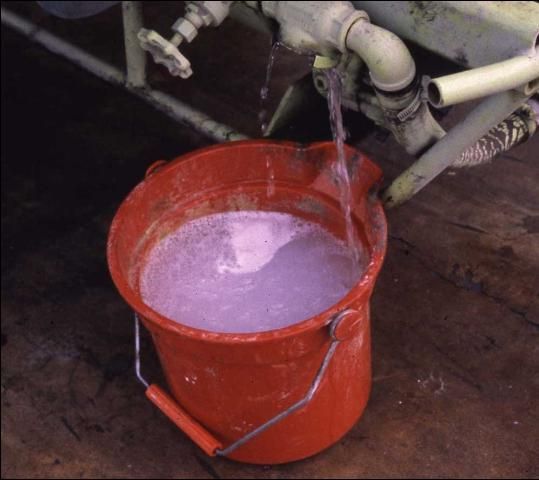
Credit: O. Norman Nesheim, UF/IFAS
3. Excess product (Figure 3)
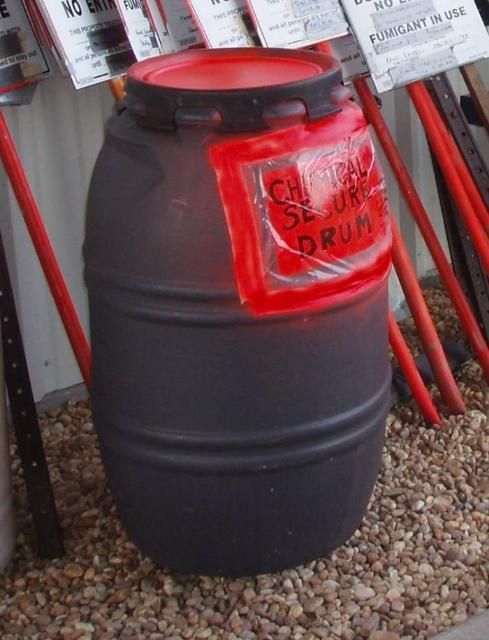
Credit: UF/IFAS Pesticide Information Office
4. Rinse water from containers and application equipment (Figure 4)
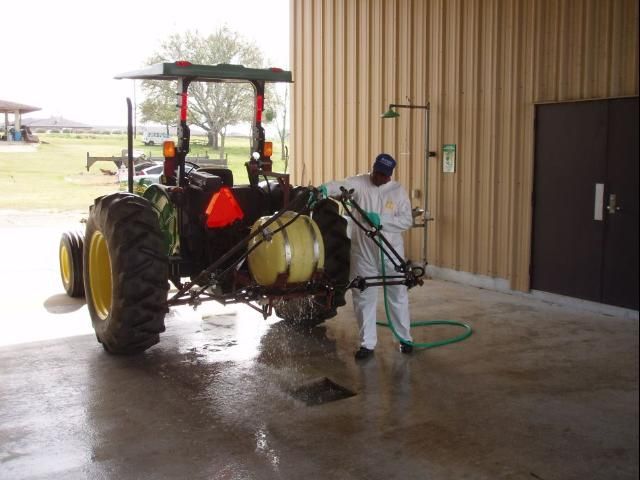
Credit: UF/IFAS Pesticide Information Office
5. Material generated from cleanup of spills and leaks (Figure 5)
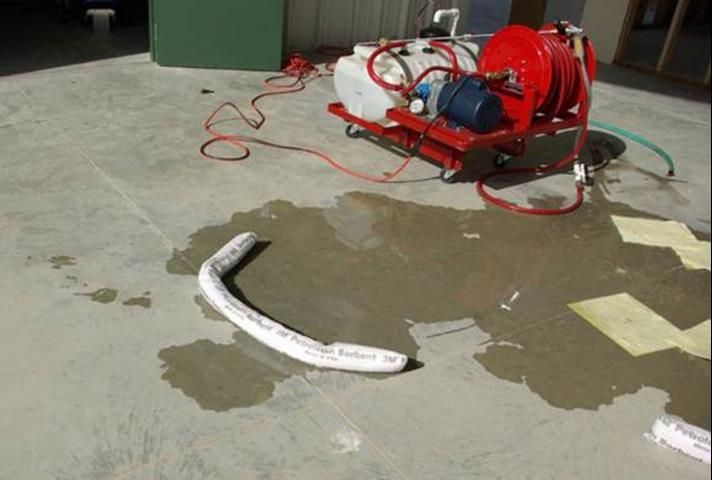
Credit: courtesy of Florida Department of Agriculture & Consumer Services
There are two classifications for wastes that affect the disposal of these types of pesticide wastes. They are:
- Hazardous waste
- Solid waste
Hazardous Wastes
Pesticides classified as hazardous wastes
- are regulated by the Federal Resource Conservation and Recovery Act (RCRA);
- are listed in a section of federal regulations; and
- must be disposed of properly, usually by a licensed hazardous waste contractor.
What is a hazardous waste?
A waste is hazardous if it has these types of characteristics:
- Ignitable: wastes that are flammable or spontaneously combustible. If they have a flashpoint of less than 140°F or an alcohol content of 24% or more, they are hazardous wastes.
- Corrosive: wastes that can burn the skin or corrode metal. Liquids with a pH of 2 or lower or 12.5 or higher are corrosive.
- Reactive: wastes that are unstable and may explode or react violently with water or other materials.
- Toxic: wastes that contain certain heavy metals above specific concentrations, such as chromium, lead, or cadmium, or toxic organic chemicals.
How to Identify Hazardous Wastes
There are several ways to identify hazardous wastes:
- Ask for the Safety Data Sheet (SDS) before ordering new pesticides. Detailed information on interpreting the language of the SDS may be found in UF/IFAS EDIS Document PI-35, Understanding Safety Data Sheet Language (https://edis.ifas.ufl.edu/PI072).
- Talk to product suppliers and manufacturers.
- Read product labels. This should be done before purchasing any pesticide product.
How to Manage Hazardous Wastes
Determine how much waste your facility generates per month. The rules depend on how much is generated, how much is stored, and how long it is stored.
- Less than 220 pounds (Figure 6). This is about half a drum. A facility that generates this amount is referred to as a "Conditionally Exempt Small Quantity Generator" (CESQG).
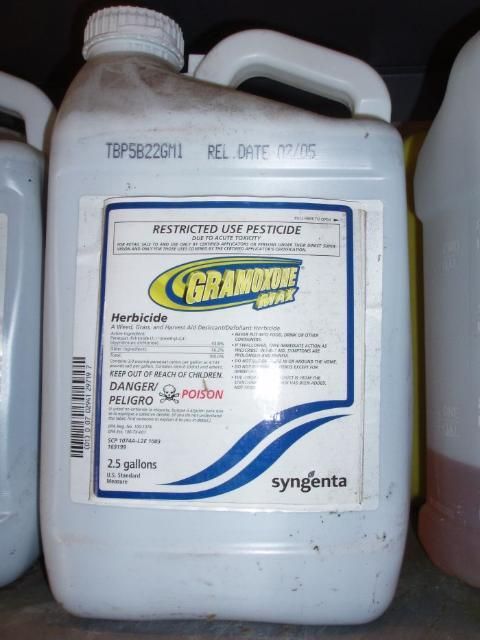
Credit: UF/IFAS Pesticide Information Office
- 220 to 2,200 pounds (Figure 7). This is approximately half a drum to 5 drums. A facility that generates this amount is referred to as a "Small Quantity Generator" (SQG).
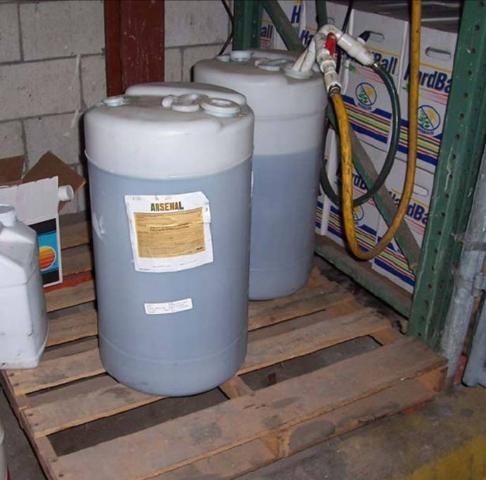
Credit: UF/IFAS Pesticide Information Office
- More than 2,200 pounds (Figure 8). These are amounts greater than 5 drums. A facility that generates this amount is referred to as a "Large Quantity Generator" (LQG).
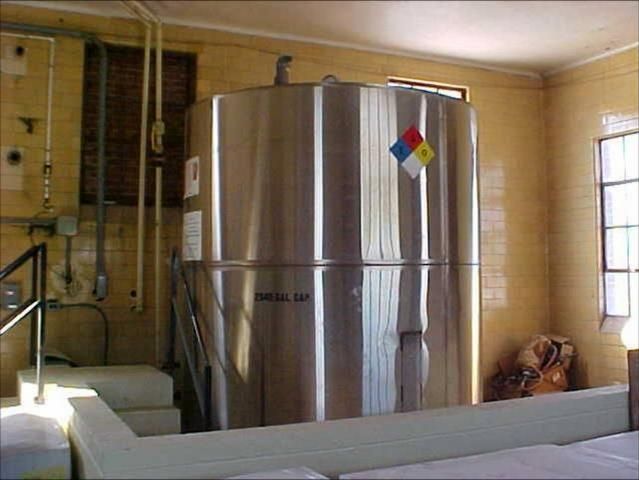
Credit: courtesy of Florida Department of Environmental Protection
The following practices may be required for your facility. Even if they are not, they are good waste-management practices.
Containers
- Maintain containers in good condition. Prevent leaks, ruptures, and accumulation of rainwater on tops of drums.
- If a container leaks, transfer waste to a new container.
- Keep containers closed. Use self-closing funnels when adding waste. Do not allow wastes to evaporate; this is a serious offense.
- Wastes must be compatible with the container. For example, high-density plastics should be used with corrosive materials.
- Never place wastes which are reactive in the same container, such as acids and bases.
Storage
- Maintain adequate aisle space between container rows to allow inspection for leaks, breaks, or other damage.
- Store ignitable and reactive wastes at least 50 feet from property boundaries.
- Store containers with incompatible wastes in separate areas.
- There are time limits. SQGs have 180 days and LQGs have 90 days before they must dispose of the waste.
Labels
- The waste container should be clearly labeled as:
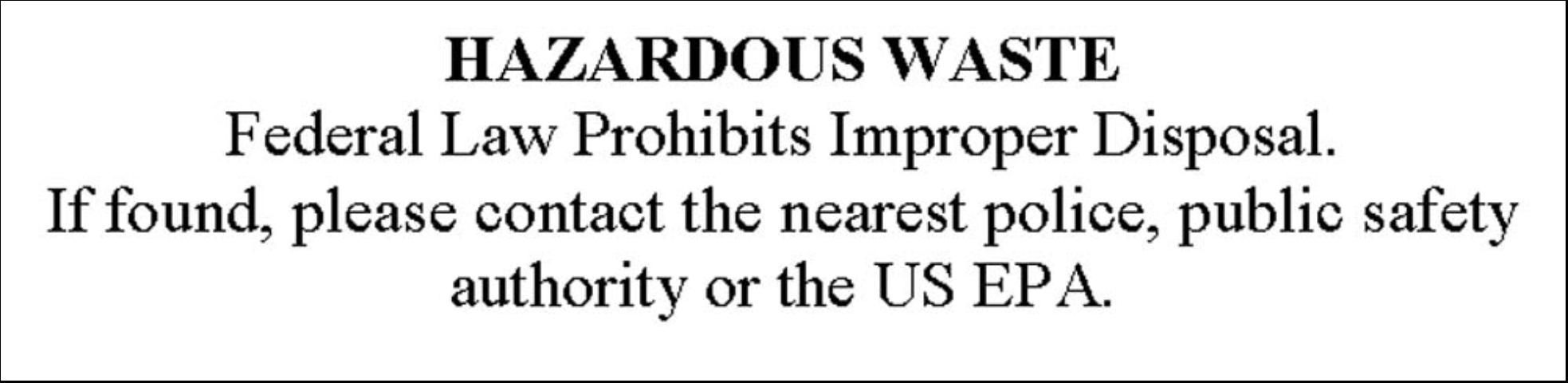
Credit:
- Include the date on which waste was first put into the container.
- Include federal waste code numbers.
- Label the container even if the waste inside it is not hazardous. All containers of waste, regardless of whether the waste inside is hazardous or nonhazardous, must state what type of waste is in the container.
Who needs to know if your business is generating hazardous wastes?
- Post emergency information (near every telephone):
- Fire department phone number.
- Emergency coordinator's name and phone number.
- Locations of fire alarms and extinguishers.
- Locations of spill control materials.
- Notify the Florida Department of Environmental Protection (FDEP):
- If your business is a SQG or LQG, notify FDEP to obtain a US EPA identification number. There are six regional FDEP offices in Florida. The regional office in your area should also be notified. FDEP contact information is listed at the conclusion of this section.
- Notify local authorities:
- Police and fire departments and local hospitals that would respond to an emergency need to know that there are hazardous wastes on your property. Extinguishing a hazardous waste fire with water can create serious environmental consequences and subsequent decontamination costs.
- Designate an emergency coordinator:
- This person must know what to do in case of fire, spill, or other emergency and must be able to be reached 24 hours a day.
- Develop a contingency plan:
- LQGs must have a written plan that includes:
- Emergency response arrangements with police and fire departments, hospitals, and emergency response contractors.
- Emergency coordinator's address and phone number.
- On-site emergency equipment descriptions and locations.
- Evacuation plan and routes, including a site diagram.
- Spill reporting procedures.
- SQGs and CESQGs should also have a contingency plan; it makes good business sense.
- LQGs must have a written plan that includes:
- FDEP Contacts
- Hazardous Waste Regulation Section, Tallahassee: (800) 741-4DEP.
- Regional offices:
- Northwest District, Pensacola: (850) 595-8300.
- Northeast District, Jacksonville: (904) 807-3300.
- Southwest District, Tampa: (813) 744-6100.
- Central District, Orlando: (407) 894-7555.
- South District, Fort Myers: (239) 332-6975.
- Southeast District, West Palm Beach: (561) 681-6600.
Important Note
In addition to the pesticides listed in Tables 1 and 2, wastes from pesticides containing arsenic, chromium, or cadmium are hazardous waste under federal law if they contain any of the following concentrations:
- Arsenic 5 ppm
- Chromium 5 ppm
- Cadmium 1 ppm
Example: The herbicide MSMA is not a listed waste, but 5 parts per million (ppm) arsenic in rinsate or wash pad sludge resulting from its use makes MSMA a hazardous waste under federal law.
Regulations on disposal of Toxic Hazardous Wastes (Table 1) differ from those for Acutely Toxic Hazardous Wastes (Table 2). Contact FDEP at (850) 488-0300 for further information.
Pesticides Not Classified as Hazardous Wastes
Pesticides not classified as hazardous wastes
- may be disposed of as regular solid waste or trash;
- are regulated under state law;
- must be disposed of according to label instructions; and
- must be disposed of in a careful manner.
The label will not tell you if the product is classified as a hazardous waste. Consult the lists in Table 1 and Table 2 in this publication before you dispose of any pesticide waste.
Farmer's Exemption
Farmers are exempt from complying with most of RCRA; commercial applicators are not. Under state law, a farmer may dispose of waste and triple-rinsed or pressure-rinsed containers on the farmer's property if
- the waste was generated on that farmer's property;
- the disposal does not cause ground- or surface-water contamination; and
- the disposal is consistent with label instructions.
County or local regulations may affect disposal. You must check with these officials when considering a disposal option.
Groundwater
Sometimes the label will be in direct conflict with current regulations, especially here in Florida. Some of the older labels might instruct you to bury waste. That is not a good idea in Florida: Never dispose of a pesticide in a way that might cause groundwater contamination. If you have a question about possible groundwater contamination, call your agricultural agencies. They can tell you what kind of soil is in the area and the likely depth to groundwater.
Proper Disposal
Keeping this in mind, let's discuss each of the five types of wastes—and how to properly dispose of them.
Empty Containers
Empty bags should be shaken clean. They may be buried in a sanitary landfill if the operator allows.
Empty drums, bottles, or cans must be triple- or pressure-rinsed. To triple-rinse, empty the pesticide concentrate into your spray tank and drain the container in a vertical position for 30 seconds. Refill the container about 1/4–1/5 full with water and rinse thoroughly. Add this rinse water to your tank, unless the product is to be applied without dilution. Be sure to let the pesticide container drain for a few seconds. Repeat rinsing and draining two more times. Now add water to your tank to bring it up to the needed level.
Containers can also be cleaned using pressure rinsing. This is done using a special pressure-rinsing device, which is inserted into the container. Water under pressure is used to rinse the inside of the container. The rinse water is added to the application equipment tank. (Figure 10 and Figure 11)
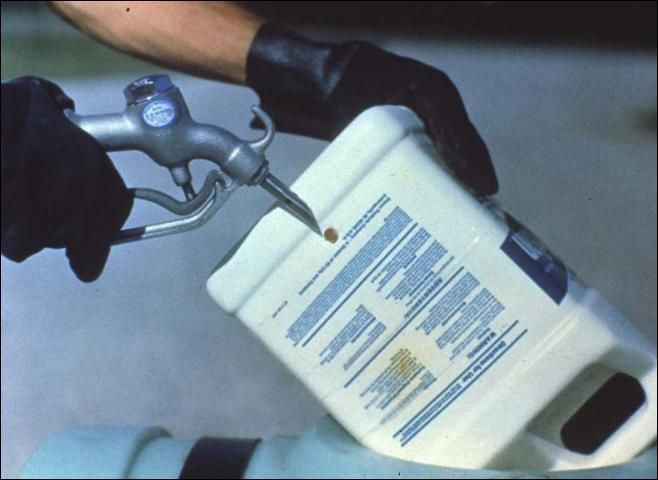
Credit: O. Norman Nesheim, UF/IFAS
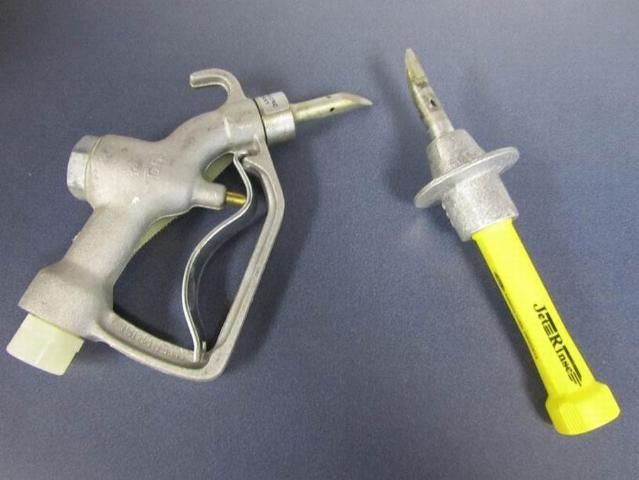
Credit: UF/IFAS Pesticide Information Office
After triple-rinsing, punch holes in the containers to prevent re-use. (The pressure-rinse procedure punctures the container.) Properly rinsed containers may then be buried in a sanitary landfill, if the operator and local regulations allow.
Florida regulations allow open burning of rinsed containers and bags that have been shaken clean. The open burning is allowed in open fields if:
- you are the owner of the crop, the owner's authorized employee or caretaker, or a commercial pesticide applicator hired by the owner or caretaker;
- the label allows burning of the empty container;
- the containers are from spray operations on that property; and
- local regulations allow open burning (Figure 12).
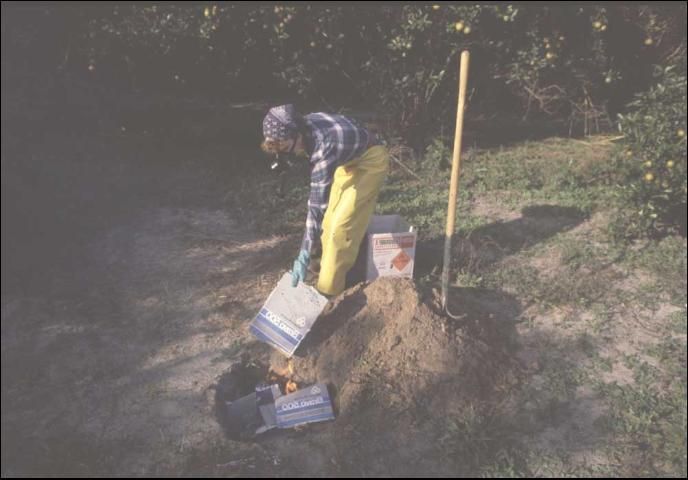
Credit: O. Norman Nesheim, UF/IFAS
When burning containers you must
- burn only one day's accumulation at a time (500 lb. maximum);
- burn in the open air, 200 feet or more from occupied buildings or farm workers and 100 feet or more from any public road;
- burn containers between 9 a.m. and one hour before sunset;
- have the person responsible for burning in attendance until all flame and smoke have dissipated;
- make sure open burning does not produce smoke, soot, odors, visible emission, heat, or flame to such a degree as to create a nuisance; and
- place the containers in a noncombustible container or ground excavation covered by a metal grille.
Properly cleaned plastic containers can also be recycled. Recycling is the best management option for containers. The energy value of the plastic is conserved and the containers are removed from the pesticide user's property—preventing them from becoming a potential liability. Contact your county solid-waste management agency or the county extension office for information on pesticide container recycling opportunities in your area (Figure 13).
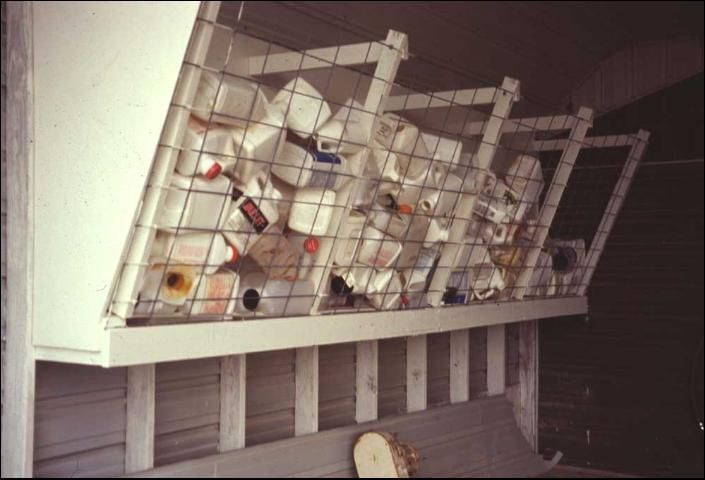
Credit: UF/IFAS Pesticide Information Office
Excess Mixture
Excess mixture is diluted pesticide that is left over in your spray tank after a pesticide application. Avoid the problem of excess mixture; measure and calibrate carefully. Fill your spray tank with only the amount required to do the job. Do not generate excess mixture. If you do, the way to dispose of excess mixture is to use it on a labeled site. It usually cannot be stored.
Excess Product
Excess product is unused pesticide that you no longer need or that is no longer legal. To avoid the problem of excess product, buy only what you can use in one season. The best way to dispose of excess product is to find someone who can use it—if the product is still legal to use. Check with the supplier or manufacturer to determine if they will take it back. You may be able to dispose of small quantities of excess product during hazardous waste collection programs sponsored by local solid-waste management agencies. Check with your local solid-waste management agency to determine if they sponsor a collection program and, if so, when the next one will be.
If you cannot use it, give it away, or dispose of it through a local hazardous waste collection program, you must arrange for a licensed hazardous waste contractor to dispose of it. Call the FDEP for a list of licensed contractors.
Rinse Water
Improperly disposed rinse water from application equipment has great potential for causing ground- and surface-water contamination.
- Do not discharge rinse water to the ground.
- Do not discharge rinse water to septic systems—you are increasing the chance that it will get into the groundwater.
- Do not discharge rinse water to ditches or streams—that is illegal and may cause damage to neighbors' crops or trees or be a serious hazard to fish and other wildlife.
- Do not bury rinse water—it may contaminate groundwater.
- Do minimize rinse water—wash out equipment only when necessary.
- Do re-apply rinse water to a labeled site—this is allowed under federal law and will not result in an applied concentration above the label recommendation.
- Do re-use rinse water to dilute the next batch of formulation, as long as the site to which the rinse water is applied is a labeled site. Up to five percent of the water for dilution may be rinse water (Figure 14).
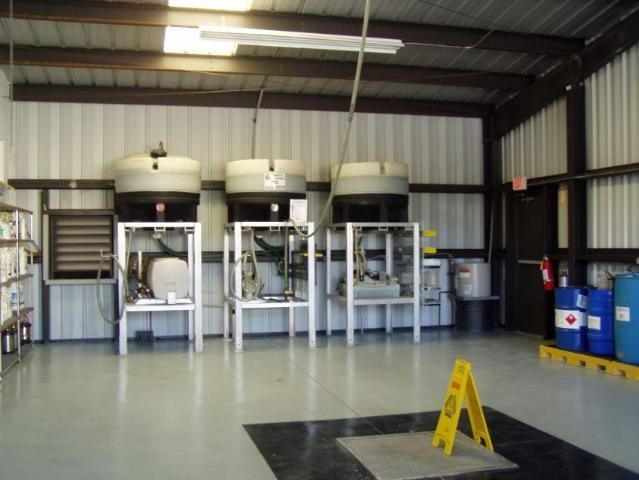
Credit: UF/IFAS Pesticide Information Office
Spill Clean-up Material
Material used to collect and clean up spills and leaks of pesticides must be properly managed to prevent environmental contamination. This material can usually be used as a pesticide, if the spill or leak is from a currently registered pesticide and the clean-up is immediate. Materials such as cat litter, soil, sawdust, or other absorbent material should be used to absorb liquid pesticides and water/detergent mixtures used to clean pesticide stained surfaces (Figure 15). These materials, and soil contaminated in a spill, can be collected and placed in a suitable container (such as a plastic or metal bucket) and then applied as a pesticide to a site upon which that pesticide can be applied as directed on the pesticide label. Do not use this method to dispose of soil that has been contaminated over a long period by pesticide discharges, since some of this soil may be classified as a hazardous waste.
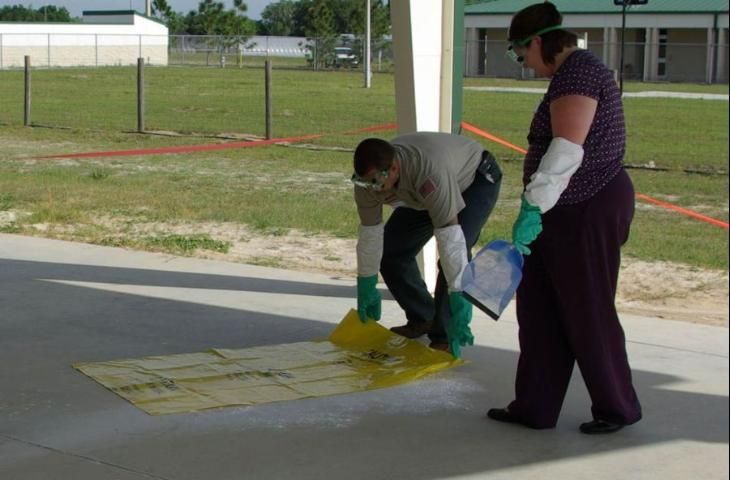
Credit: courtesy of Florida Department of Agriculture & Consumer Services
Pesticide-Contaminated Clothing
Clothing contaminated by pesticides regulated as solid waste (most pesticides) can be disposed of as solid waste (trash). Clothing contaminated by pesticides regulated as hazardous waste must be disposed of as hazardous waste, if it is contaminated as a result of a spill or leak. If the clothing is contaminated as a result of a normal, legal application of the pesticide, then the clothing can be handled as normal solid waste.
Other Solutions and Options
Some new technologies have been and are being developed that may provide other means of pesticide waste disposal.
Spray systems that keep the pesticide product and water separate until they meet at the nozzle are new developments. Injection of the pesticide at the nozzle eliminates the need to rinse the spray tank, because the pesticide is never inside the tank.
Publicly owned waste water treatment works (POTW) can accept rinse water and treat it. If you have the permission of a POTW, you may be able to dispose of rinse water to the sewer system. Make sure you have permission or you may be liable for a sewer system cleanup.
What Inspectors Look For
- Mystery drums. All drums must be labeled and have a "birth date" on them (Figure 16).
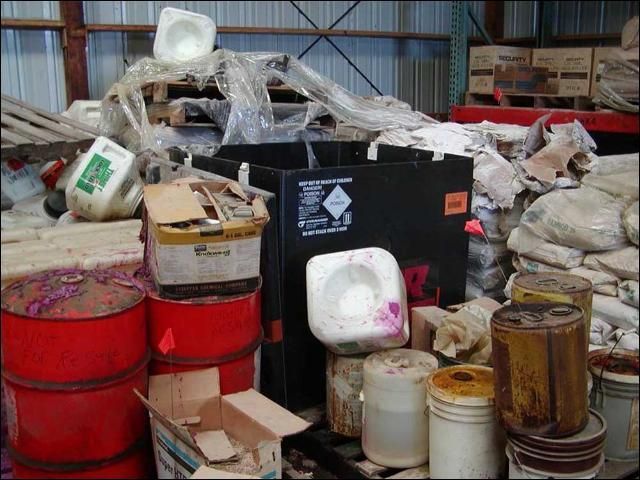
Credit: UF/IFAS Pesticide Information Office
- Drums that are left open. Evaporation of wastes can create a hazard. If you are not in the process of adding wastes to a drum, keep it closed.
- Old drums left outside. If they get stormwater inside them, you will be responsible for sampling the stormwater to determine whether the water is hazardous. Ensure that the person who sold you the drum and its contents will take the drum back when you are done with it (Figure 17).
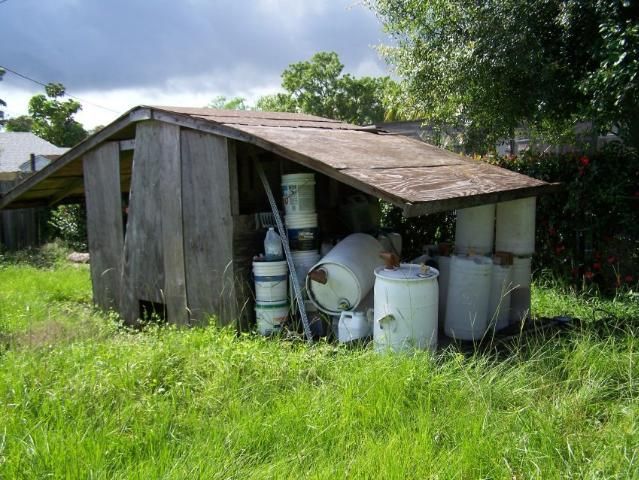
Credit: courtesy of Florida Department of Environmental Protection
- Dumpsters. Inspectors will look into them.
- Spills. These should be cleaned up immediately after they occur.
- The inspector will walk the entire property and property's perimeter looking for orphan drums and signs of distressed/dead vegetation.
- The most common violation is the non-determination of whether something is a waste.
Additional Information
Table 1. Common Pesticides Regulated as Toxic Hazardous Wastes.
Table 2. Common Pesticides Regulated as Acutely Toxic Hazardous Wastes.