|
Actigard®
|
Acibenzolar-S-methyl
|
Store in a cool, dry place.
|
|
Abound®, Amistar®, Dynasty®, Heritage®, Heritage TL®, Quadris, Flowable®
|
Azoxystrobin
|
No storage limitations specified.
|
|
Heritage G®
|
Store in a cool, dry place.
|
|
Basic Copper 53®, Basic Copper Sulfate®, Cuprofix Ultra 40®
|
Basic copper sulfate
|
Store in a cool, dry, well-ventilated place (Basic Copper 53®).
Store product in a secure, dry place and keep product dry (Basic Copper Sulfate®).
Store in a cool, dry place (Cuprofix Ultra 40®).
|
|
Captan 400®
|
Captan
|
Store in a cool, dry location. Do not store in direct hot sunlight. After prolonged storage in intense cold, allow product to return to 25°F before using.
|
|
Captan 4L®
|
Store in a cool, dry area away from any heat or ignition source. Avoid storage at high temperatures.
|
|
Captan 50WP®, Captan 80WP®, Captan 80WDG®
|
Protect from excessive heat. Store in a cool, dry place.
|
|
Captan 4000®
|
Store in a cool, dry place.
|
|
Bravo Ultrex®, Daconil Ultrex®, Daconil Weather Stik®, Chlorothalonil 82.5®
|
Chlorothalonil
|
Store in a dry place.
|
|
Bravo Weather Stik®, Bravo Zn®, Daconil Zn®, Chlorothalonil 720®
|
Store in a cool place. Protect from excessive heat.
|
|
Ranman®, Segway®
|
Cyazofamid
|
Store in original container in a secure, dry place, and separate from fertilizer, food, and feed.
|
|
Curzate®
|
Cymoxanil
|
No storage limitations specified.
|
|
Alto®
|
Cyproconazole
|
No storage limitations specified.
|
|
Vangard®
|
Cyprodinil
|
Store in a cool, dry, secure place.
|
|
Botran®
|
Dicloran
|
Store in a cool, dry place.
|
|
Inspire®
|
Difenoconazole
|
Store in cool place.
|
|
Dodine 65W®
|
Dodine
|
Store in a cool, dry area away from any heat or ignition source. Do not allow storage in a damp or humid area.
|
|
Elast 400®, Syllit FL®
|
Do not use or store near heat, open flame or hot surfaces.
|
|
Terrazole 35WP®
|
Etridiazole
|
Store in a dry location.
|
|
Terramaster 4 EC®
|
Store the product in cool, dry place. Protect from temperatures below 20°F.
Do not store near heat sources or open flame.
|
|
Rubigan®
|
Fenarimol
|
Avoid freezing. Do not store near heat or open flame.
|
|
Enable®
|
Fenbuconazole
|
Store in a cool, dry, well-ventilated area, but not below 32°F.
|
|
Elevate®
|
Fenhexamid
|
Store in a dry place away from excessive heat.
|
|
Super-Tin 4L®
|
Fentin hydroxide
|
Store above 32°F.
|
|
Super-Tin 80WP®
|
Store above 32°F and below 95°F.
|
|
Ferbam Granuflo®
|
Ferbam
|
Keep away from fire and sparks. Store in a cool, dry place and avoid excess heat.
|
|
Graduate®
|
Fludioxonil
|
Store in a cool, dry place. Do not store this product under wet conditions.
|
|
Maxim 4 FS®, Maxim Potato Seed Protectant®
|
Store in a cool, dry place.
|
|
Medallion®
|
Store in a cool, dry, secure place. Do not store this product under wet conditions.
|
|
Scholar®
|
Store in a cool, dry place. Do not store this product under wet conditions.
|
|
Scholar SC®
|
Do not store near heat or open flame.
|
|
Presidio®
|
Fluopicolide
|
Store in a cool, dry place. Do not store at temperatures below 32°F. If the product is exposed to temperatures below 32°F, thaw at 50°F or higher and shake gently to unify the product.
|
|
Aftershock®, Disarm®, Evito 480®
|
Fluoxastrobin
|
Store in a cool, dry place.
|
|
Convoy®, Moncut®, ProStar®
|
Flutolanil
|
Store in a cool, dry place.
|
|
Topguard®
|
Flutriafol
|
Store unused product in original container in a cool, dry, secure area.
|
|
Aliette®, Avalon®
|
Fosetyl-Al
|
Store in a cool, dry place.
|
|
Magnate®
|
Imazalil
|
No storage limitations specified.
|
|
Acceleron DC-509®, Rancona 3.8FS®, Vortex®
|
Ipconazole
|
Store in a cool, dry location. Do not store in direct hot sunlight (Acceleron DC-509®, Vortex®).
Store in a secure place that is temperate, dry and out of direct sunlight. Avoid excess heat. Do not freeze. ALWAYS SHAKE OR STIR WELL BEFORE USE (Rancona 3.8FS®).
|
|
26 GT®
Iprodione 4L AG®
Iprodione E Pro®
Iprodione Pro 2SE®
Rovral®
|
Iprodione
|
No storage limitations specified.
|
|
Sovran®
|
Kresoxim-methyl
|
No storage limitations specified.
|
|
Dithane 75DF®M-45®
Fore 80WP®
|
Mancozeb
|
Keep away from fire and sparks. Store in a cool, dry well-ventilated area. Do not allow stored product to become wet or overheated in storage; decomposition, impaired activity, or fire may result.
|
|
Dithane F-45®
Penncozeb 4FL®
|
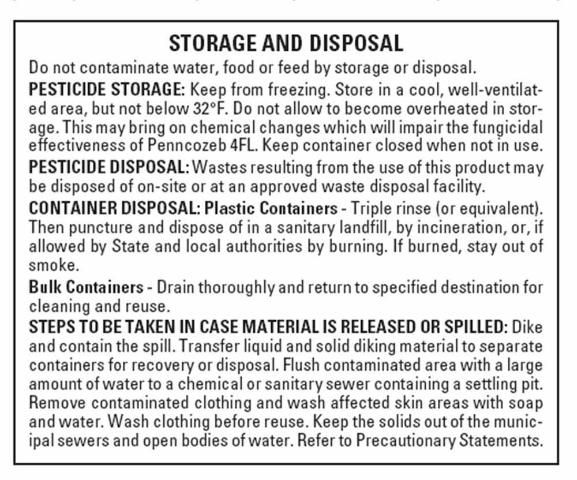
Keep from freezing. Store in a cool, well-ventilated area, but not below 32°F. Do not allow to become overheated in storage. This may bring on chemical changes that will impair the fungicidal effectiveness.
|
|
Penncozeb
75DF®
80WP®
Protect DF®
|
If allowed to become wet the product will deteriorate and represent a fire hazard. Keep away from sources of ignition (e.g., sparks and open flame).
|
|
Manzate®
|
Keep in a cool place but not below 32°F. Temperature extremes will affect quality.
|
|
Manzate Pro-Stick®
Potato Seed Treater 6%
|
Never allow to become wet during storage. This may lead to certain chemical changes that will reduce the effectiveness as a fungicide and create vapors that may be flammable.
|
|
Nubark®
|
Store in a cool, dry place. Avoid contact with the floor and with moisture.
|
|
Revus®
|
Mandipropamid
|
Store in a cool, dry place.
|
|
Maneb®
|
Maneb
|
If allowed to become wet, the product will deteriorate and represent a fire hazard. Keep away from sources of ignition.
|
|
Manex®
|
Store in a cool, dry place.
|
|
Ridomil Gold GR®
Ridomil
|
Mefenoxam
|
Store in a dry place.
|
|
Gold/Copper®
|
Store in a cool, dry place. Do not store this product under wet conditions.
|
|
Acquire®, Allegiance Dry®, Allegiance-FL®, Allegiance-LS®, Dyna-Shield®, MetaStar®, Sebring®
|
Metalaxyl
|
Store at temperatures above 40°F. Crystals may form at lower storage temperatures. If this occurs, place the product in a warm room (68°F or above) and roll or shake the container at frequent intervals until all crystals are dissolved (Acquire®, MetaStar®, Sebring®).
Store in a cool dry location. Do not store in hot direct sunlight (Allegiance Dry®, Allegiance-LS®).
Store in a cool dry location. Do not store in direct hot sunlight. Do not store above 90°F for prolonged periods of time. After prolonged storage in intense cold, allow product to return to approximately 75°F before using (Allegiance-FL®, Dyna-Shield®).
|
|
Metam CLR 42%®
Metam KLR 54%®
Metam Sodium®
|
Metam-sodium
|
Do not store below 0°F. Product crystallizes at lower temperatures. If exposed, warm or store at higher temperatures and mix to re-dissolve crystals and assure uniformity before use.
|
|
Vapam HL®
|
Do not store below 32°F. Product crystallizes at lower temperatures. Warm or store at higher temperatures and mix to re-dissolve crystals and assure uniformity before use.
|
|
Caramba®
|
Metaconazole
|
Do not store below 10°F.
|
|
Quash®
|
Store in a cool, dry place.
|
|
Tourney®
|
Store in a cool, dry place. Do not store at temperatures below 32°F. If the product is exposed to temperatures below 32°F, thaw at 50°F or higher and shake gently to unify the product.
|
|
Polyram®
|
Metiram
|
Store in a cool, dry place and avoid excess heat.
|
|
Eagle 20EW®
|
Myclobutanil
|
Store in a cool, dry area above freezing.
|
|
Eagle 40WP®
Nova 40W®
Systhane WSP®
|
Store in a cool, dry area above freezing. The water-soluble pouch may become brittle at storage temperatures below 32°F, but the fungicide is not affected.
|
|
Terraclor 15G® Terraclor 75WP®
|
Pentachloronitrobenzene
|
Store in a dry location.
|
|
Terraclor 2E®
|
Protect from temperatures below 20°F.
|
|
Endorse®
Ph-D®
|
Polyoxin
|
Store in a dry place.
|
|
Banol®
Previcur Flex®
|
Propamocarb
|
Store in a cool, dry place.
|
|
Promess®
|
Store in a cool, dry, secure place.
|
|
Banner GL®
|
Propiconazole
|
Store in a cool, dry place. Do not store below 40°F. Do not store this product under wet conditions.
|
|
EchoPropiMax®
|
Store in a cool place. Protect from excessive heat.
|
|
Tilt®
|
Store in a cool place.
|
|
Tilt/Bravo®
|
Store in a cool place. Protect from excessive heat. Keep from freezing.
|
|
Proline®
|
Prothioconazole
|
Store in a cool, dry place and in such a manner as to prevent cross-contamination with other pesticides, fertilizers, food, and feed.
|
|
Cabrio®
Headline®
Stamina®
|
Pyraclostrobin
|
No storage limitations specified.
|
|
Quintec®
|
Quinoxyfen
|
Avoid freezing.
|
|
Terraclor 15G®
Terraclor 75WP®
|
Quintozene (PCNB)
|
Store in a dry location.
|
|
Terraclor 2E®
|
Protect from temperatures below 20°F.
|
|
Sulfur 6L®
|
Sulfur
|
Do not allow product to freeze.
|
|
Sulfur 90W®
|
Store in a cool, dry area away from any heat or ignition source.
|
|
Elite DF®
|
Tebuconazole
|
Store in a cool, dry place.
|
|
Elite WP®
|
Store in a cool, dry place. Do not store below freezing. Exposure to moisture or excessive handling of water-soluble packets may cause breakage.
|
|
Folicur 3.6F®
|
Store in a cool, dry place.
|
|
Domark®
|
Tetraconazole
|
Store in a dry, temperature-controlled, secure place.
|
|
Mertect 340-F®
|
Thiabendazole
|
Store in a cool, dry place. Do not store below 32°F.
|
|
Thiophanate Methyl 85 WDG®
|
Thiophanate-methyl
|
Store in a dry area.
|
|
Thiram 42-S®
Thiram 50WP®
|
Thiram
|
Do not subject to temperatures below 32°F.
|
|
Raxil®
|
Store in a cool, dry place.
|
|
Thiram
Granuflo®
Thiram 65WSB®
|
Protect from excessive heat.
|
|
Bayleton 50WSP®
|
Triadimefon
|
Store in a cool, dry place. Do not store below freezing (32°F).
|
|
Bayleton 50WDG®
Bayleton 50DF®
Strike 50WDG®
|
Store in a cool, dry place.
|
|
Compass®
Flint®
Gem®
|
Trifloxystrobin
|
Store in a cool, dry place.
|
|
Procure®
|
Triflumizole
|
Store in a cool, dry, secure location.
|
|
Terraguard 50W®
|
Do not use or store near heat or open flame. Store in a cool, dry location.
|
|
Terraguard SC®
|
Store in a cool, dry location.
|
|
Charter®
|
Triticonazole
|
Protect from frost and freezing.
|
|
Curalan EG®
Touché® EG
|
Vinclozolin
|
Do not store below 32°F or above 100°F.
Store in a place away from heat or open flame.
|
|
Ziram 76DF®
|
Ziram
|
Keep away from sources of ignition (e.g., sparks and open flame).
|
|
Ziram Granuflo®
|
Keep away from fire and sparks. Store in a cool, dry place and avoid excess heat.
|
|
Gavel®
|
Zoxamide
|
Keep away from fire and sparks. Store in a cool, dry, well-ventilated area. Do not allow to become wet or overheated in storage; decomposition, impaired activity, or fire may result. Decomposition produces a foul odor; if noted, check for hot containers and immediately remove to open areas for disposal.
|
|
*Does not include pre-packaged fungicide mixtures.
|