A.W. Meerow, T.K. Broschat and H.M. Donselman2
In recent years, the subject of native plants has taken on new significance in Florida horticulture. Reasons for this include the loss of natural areas to development, coastal deterioration due to disturbance of native vegetation, and the naturalization of exotic plants that in some cases, may out-compete native species. Fortunately, relatively few of the hundreds of exotic ornamentals that have been introduced into the state fall into the latter category. Two in particular, Brazilian pepper (Schinus terebinthifolious) and punk tree (Melaleuca quinquenervia) have become noxious weeds in central and south Florida.
Many counties are considering landscape ordinances that require that a percentage of native plant materials be used in all future developments. Several have already implemented such ordinances. This will result in a need for wider availability of native plant materials. Woody landscape plant producers, landscape architects, and home gardeners in Florida need to become informed about and prepared for the production and cultural needs of native plants.
In actuality, native plants are not really new to our nursery industry. Many native trees are already well-represented in the inventories of south Florida nurseries. Such "staples" of Florida horticulture as sea grape (Coccoloba uvifera), cabbage palm (Sabal palmetto), mahogany (Swietenia mahagoni), bald cypress (Taxodium distichum), southern red cedar (Juniperus silicicola), live oak (Quercusvirginiana), southern magnolia (Magnolia grandiflora), gumbo limbo (Bursera simaruba), and silver buttonwood (Conocarpus erectus) are all native to the state.
A number of claims both for and against the use of native plants have been proposed. Some claims made in favor of native plants are:
Energy efficiency: Because native plants are adapted to our soils, temperatures and rainfall patterns, they are believed to require less irrigation and fertilization than exotics. However, recent research does not support this contention. Just because a tree is native to south Florida does not mean that it is native or adapted to all soil types and hydrological conditions found in south Florida. For example, a wetland species like pond apple, Annonaglabra, is not going to prosper if planted on dry, limestone fill. All too often, native topsoils have been removed and water flow patterns changed during development. If such is the case, an attempt to recreate the original composition of trees and shrubs may fail.
Low maintenance: Native plants are considered to be resistant to pests and diseases in Florida because they have evolved under constant exposure to these organisms. While this is generally true for native pests, exotic pests, to which native plants have no evolved resistance, are regularly introduced, often with catastrophic outcomes. Thus plant diversity in the landscape is an important means of minimizing the risks from such pest or disease outbreaks. Of course, any newly planted tree, whether native or exotic, will require regular irrigation until it becomes established.
Ecological-educational factor: The use of native trees in landscapes preserves the state's natural resources. This argument is perhaps the best one for wider use of native plants. Florida's continued increase in population places enormous pressures on our native vegetation. The educational benefits of native plant landscapes are of great value, particularly in teaching new residents about our state's natural bounty.
Claims made against the landscape use of native plants include:
They are slow-growing. Plants differ in their growth rates as much as in any other characteristic. Native plants range as widely in this category as exotics. In many cases, slow growth rates can be improved with regulated nutritional levels during production. Cultivar selection and evaluation programs also can improve slow growth rates. In some situations, slow growth rates may be advantageous; for example, slower growing trees will require less pruning to control size or prevent interference with power lines.
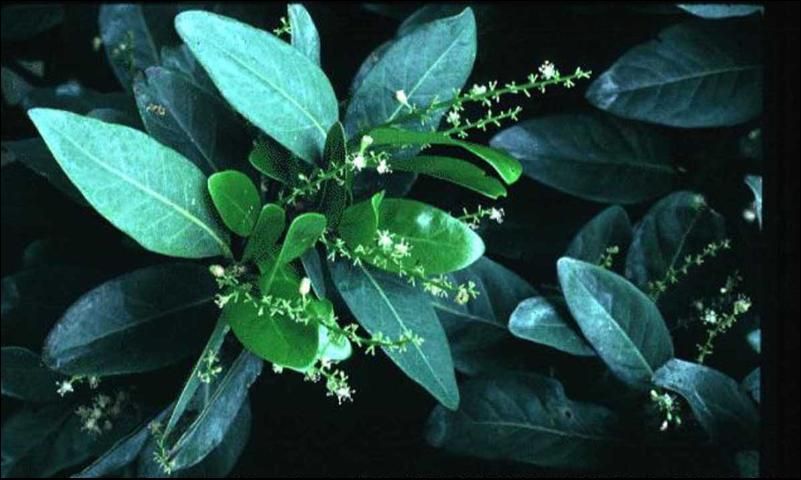
They are unattractive. Native plants include attractive trees like satin leaf (Chrysophyllum oliviforme) and more homely species such as wax myrtle (Myricacerifera). Both have a niche in landscape situations.
Their propagation is difficult, therefore native plants are expensive. Certain plants become widely available in the trade in part because they are easy to produce. This knowledge comes about through research, in both the private and public sectors. It is true that many choice native species are tricky to propagate successfully, but on the whole, this is due to the fact that few research efforts have been applied in that direction. This is now beginning to change.
They are generally unavailable. Even with the limited amount of in-depth knowledge on native plant propagation, there are currently more than 50 nurseries within the state listed by the Association of Florida Native Nurseries, with a combined plant inventory of more than 500 species. A substantial number of native species are already represented in the inventories of "traditional" nurseries.
In certain landscape situations, native plants are particularly desirable. These include:
New development with pre-existing vegetation in which a tree canopy has been retained. Some showy exotics can look out of place in landscapes in which a great deal of pre-existing native vegetation has been spared the bulldozer's blade. In such developments, the use of additional native materials may create a more harmonious and aesthetic effect.
Environmentally sensitive areas such as the coastal strand, barrier islands, and wetlands. These areas have suffered a great deal of mismanagement and shortsighted development. Many of the plants native to these environmentally sensitive areas are particularly adapted to the specialized conditions found there. The use of these native plants may actually help to slow further deterioration of some of these environments.
Public areas (parks, beaches, nature centers). Native plants should be a priority in public areas for their environmental and educational value and are required for restoration of disturbed areas within nature preserves.
The characteristics of the planting site must be carefully considered when choosing native plant materials for landscaping. First, some concerns relating to the past history of the site must be addressed.
What was the original vegetation of the area? This knowledge will indicate which native plants will perform best on the site. Assuming the native soil and hydrology have not been modified, native species that once grew in a given location are likely to do better when re-planted than species from very different types of native habitat.
Have the native soil and/or hydrology been modified? During development, topsoil is often removed and original drainage patterns disturbed. Fill soil of very different quality may have been brought in to replace the topsoil removed. If such is the case, it may be impossible to re-establish the same species that once grew on the site, or it may require a great deal of maintenance to do so.
Additional consideration must be given to the present condition of the site. Does the site accumulate standing water? What is the soil type: muck? white sand? coral rock? Is there salt spray exposure on the site? Will the landscape plants have to be integrated with turf, and possibly be subjected to turf-oriented irrigation and fertilization practices? All of these factors will influence the degree of success with which particular native species will perform in a landscape. The size of the lot also may restrict the use of some species whose mature dimensions require a lot of space.
Finally, certain aesthetic factors come into play when choosing natives, just as they do with exotic plant materials. What landscape functions need to be fulfilled? Should the trees primarily provide shade, barrier effects, beauty in the form of flowers or fruit, or is low maintenance the main criterion for plant selection?
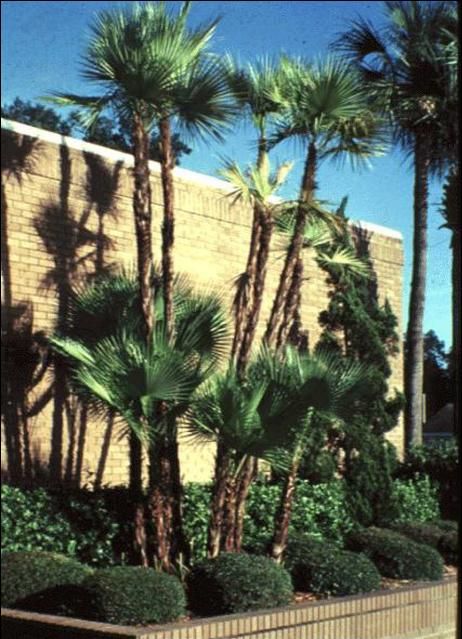
The paurotis palm (Acoelorraphe wrightii) is a native, clumping palm that makes an attractive vertical accent in close spaces.
Pigeon plum (Coccoloba diversifola), a hardwood hammock-dwelling relative of the sea grape, makes a fine, slow-growing urban tree.
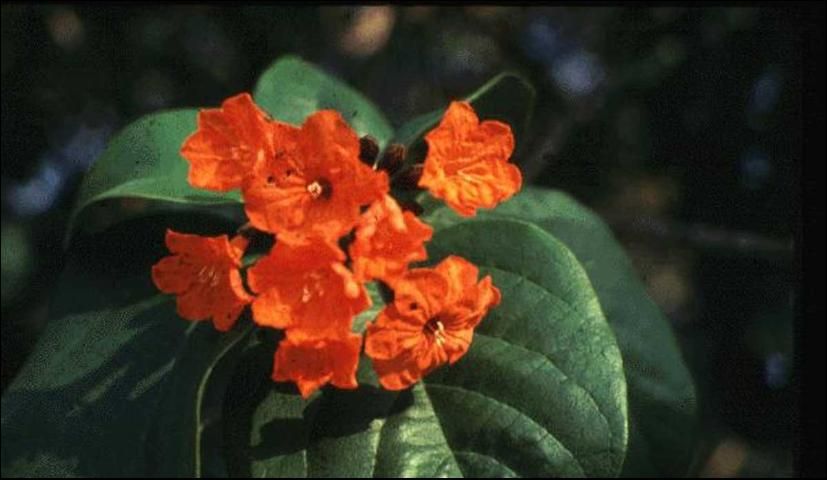
The geiger tree (Cordia sebestena) has spectacular orange flowers and a high salt tolerance.
Planting native tree species is no different from planting exotics. Amending the backfill soil (the soil originally excavated from and then returned to the planting hole) is not recommended. The top of the root ball of nursery stock should be placed in the soil at the same depth at which it grew in the field or the container. Large masses of circling roots in container stock should be slit vertically to stimulate lateral root production. It may be necessary or desirable to reduce top growth; this should be accomplished by thinning out (the well-distributed removal of one or several branches at their point of origin), rather than heading back (cutting all top growth back to approximately the same level). Thinning cuts will preserve the natural shape of the tree.
The trees should be regularly irrigated after planting, and a mulch of organic material is recommended. A top-dressing of a slow-release fertilizer can be applied within the dripline of the tree before the mulch is placed down. If rainfall is received on a regular basis in the first few months after planting, this may be sufficient for establishment of small container stock (1 gallon size). If not, periodic irrigation will be necessary. Larger plants may require a year or more to properly establish in the landscape. The frequency of irrigation (weekly, to several times per week during the first few months) will depend on temperature, rainfall, and the water-holding capacity of the soil. Irrigation frequency can be reduced in successive months. Generally, the production of new growth is the best indication that a tree is becoming established. Supplementary fertilization 1 to 2 times per year may be desirable, at least during the first year after planting. Some native plant producers recommend using fertilizer formulations with good trace mineral analyses traditionally designed for palms, particularly if the native trees are being planted on fill soils.
Table 1 and Table 2 of native tree species suitable for use in south Florida will help in making the right choices for various landscape situations. The list is by no means a complete inventory of the subtropical or tropical tree species that are native to the state. However, the list is representative of those native trees that have proven themselves in the landscape, are available from nurseries, or are judged worthy of wider use and availability. The trees in the tables are arranged alphabetically by scientific name, accompanied by one or more common names (same list of trees in both tables).
Special attention should be paid to environmental factors such as soil pH, light requirements, and drought and salt tolerances (Table 1). Table 2 offers information on plant type, shape, flower color, flower characteristics, flowering season, and uses for the native trees listed. In Table 1, drought tolerance refers only to Florida conditions and should be interpreted as follows:
High: will not require supplemental irrigation after establishment; Medium: may require occasional irrigation during periods of unusual water stress; and Low: will require supplemental irrigation during periods of drought.
Nutritional requirements (Table 1) should be interpreted as: High: the species will typically suffer from moderate to severe deficiencies of one or more elements and plant growth and quality will be strongly affected. Regular fertilization may be required to keep these plants alive. Medium: Most plants will show mild to moderate deficiency symptoms of one or more elements. Regular fertilization will be required to completely eliminate deficiency symptoms. Low: Nutrient deficiencies are rarely encountered and fertilization is unnecessary.
Salt tolerance (Table 1) should be interpreted as follows: High: will withstand direct salt spray and soil salinity; Medium: should be protected from direct salt spray but will withstand moderately saline conditions; and Low: sensitive to salt.
Under the category of Hardiness Zone, subtropical refers to the transitional area between central and tropical Florida where an occasional winter frost will occur. Tropical refers to southernmost mainland Florida and the Keys where winter frosts are rare to nonexistent. To illustrate, silver buttonwood is categorized in Table 1 as a subtropical/tropical tree with a high tolerance for salt and drought. Before installing a large-scale landscape using native trees listed as tropical only, it is best to confer with your county cooperative Extension service agent about minimum winter temperatures expected in your area. If a particular species can be used in central and north Florida as well, this has been indicated (Table 1).
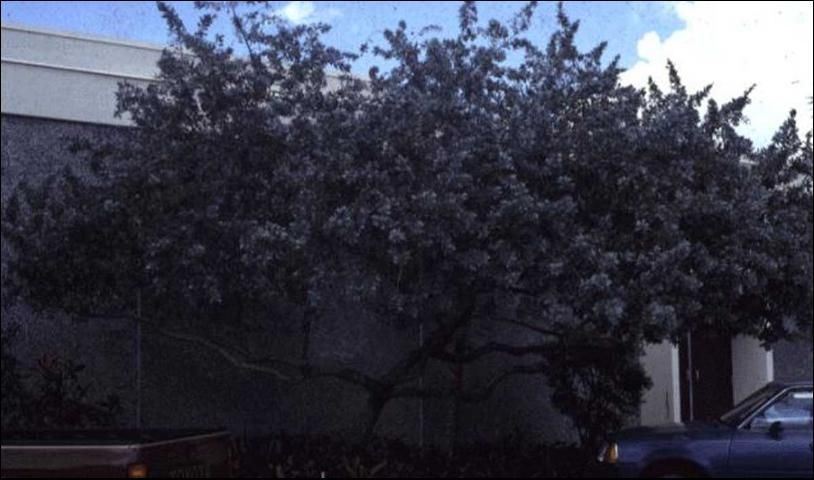
The silver buttonwood (Conocarpus erectus var. sericeus) is a very salt- and drought-tolerant species.
Native plants should not be transplanted from the wild without the permission of the landowner, and never from public lands. In general, it is best to leave wild populations intact, unless the plants face destruction from development. Superior clones in native populations should be identified where possible, and nursery stock propagated vegetatively or from seed. The advantages of seed vs. clonal propagation is that a degree of the genetic diversity of the species is maintained in cultivation.
There is a place in Florida horticulture for both superior exotic and native ornamentals. The "native plant movement" should not be looked upon as a threat, but as an impetus to add to the diversity of landscape materials at our disposal in Florida.
Height, growth rate, soil pH, hardiness zone, salt tolerance, drought tolerance, light requirements, and nutritional requirements of native trees for south Florida.
Scientific Name |
Common Name |
Natural Height (in feet) |
Growth Rate |
Soil pH |
Hardiness Zone* |
Salt Tolerance |
Light Requirement |
Drought Tolerance |
Nutritional Require- ment |
Acacia farnesiana |
Sweet acacia |
10-12 |
Medium |
Wide |
C,ST,T |
Medium |
High |
High |
Medium |
Acer rubrum |
Red maple | 35-50 |
Fast |
Wide |
C,N,ST |
Low |
High |
Low |
Low |
Acoelorrhaphe wrightii |
Paurotis palm, everglades palm | 15-25 |
Slow |
Wide |
C,ST,T |
Medium |
Medium, high |
Medium |
Medium |
Amphitecna (Enallagma) latifolia |
Black calabash | 20-30 |
Medium |
Wide |
ST,T |
High |
High |
High |
Low |
Annona glabra |
Pond apple, alligator apple | 25-40 |
Medium |
Wide |
C,ST,T |
Medium |
High |
Low |
Low |
Ardisia escallonioides |
Marlberry, marbleberry | 15-25 |
Medium |
Wide |
ST,T |
High |
Medium, high, low |
Medium |
Low |
Avicennia germinans |
Black mangrove | 20-30 |
Medium |
Wide |
T |
High |
High |
Low |
Low |
Bourreria suculenta var. revoluta |
Strongbark | 20 |
Medium |
Wide |
ST, T |
Medium |
High |
High |
Low |
Bumelia spp. |
Buckthorn, saffron plum, bumelia | 20-40 |
Medium |
Wide |
C,N,ST,T |
Medium, low |
Medium |
Medium, high |
Medium |
Bursera simaruba |
Gumbo limbo, tourist tree | 40-60 |
Medium |
Wide |
ST,T |
Medium |
High |
High |
Low |
Canella alba |
Wild cinnamon | 20-35 |
Slow |
Wide |
ST,T |
Medium |
High |
High |
Low |
Chyrsophyllum oliviforme |
Satin leaf | 30-40 |
Slow |
Wide |
ST,T |
Medium |
High |
High |
Low |
Citharexylum fruticosum |
Fiddlewood | 25-30 |
Slow |
Wide |
C,ST,T |
Medium |
High |
High |
Low |
Clusia rosea |
Pitch apple, autograph tree | 25-30 |
Slow |
Wide |
T |
High |
High |
High |
Low |
Coccoloba diversifolia |
Pigeon plum | 25-30 |
Slow |
Wide |
ST,T |
High |
High |
High |
Low |
Coccoloba uvifera |
Sea grape | 15-30 |
Medium |
Wide |
ST,T |
High |
High |
High |
Low |
Coccothrinax argentata |
Silver palm | 10-20 |
Slow |
Wide |
ST,T |
High |
Medium, high |
High |
Low |
Conocarpus erectus |
Buttonwood | 30-50 |
Medium |
Wide |
ST,T |
High |
High |
High |
Low |
Cordia sebestena |
Geiger tree | 20-25 |
Medium |
Wide |
T |
High |
High |
High |
Low |
Dipholis salicifolia |
Willow-leaved bustic | 30-50 |
Medium |
Wide |
ST,T |
Low |
High |
Medium |
Low |
Eugenia spp. |
Stoppers | 15-20 |
Slow |
Wide |
ST,T |
High |
Medium, high |
High |
Low |
Exostema caribaeum |
Princewood | 20-25 |
Slow |
Wide |
ST,T |
Low |
High |
Medium |
Medium |
Ficus aurea |
Strangler fig | 40-50 |
Fast |
Wide |
ST,T |
Medium |
High |
High |
Low |
Ficus citrifolia |
Shortleaf fig | 40-50 |
Fast |
Wide |
ST,T |
Medium |
High |
High |
Low |
Gordonia lasianthus |
Loblolly bay | 30-40 |
Medium |
Wide | C,N,ST |
Low |
High |
Low |
Medium |
Guaiacum sanctum |
Lignum vitae | 10-20 |
Slow |
Wide |
ST,T |
Medium |
High |
High |
Low |
Guapira discolor |
Blolly | 35-50 |
Medium |
Wide |
ST,T |
Medium |
High |
High |
Low |
Guettarda elliptica |
Everglades velvetseed | 10-20 |
Medium |
Alkaline |
T |
Low |
Medium |
Low |
Medium |
Guettarda scabra |
Rough velvetseed |
15-30 |
Medium |
Alkaline |
T |
High |
High |
High |
Low |
Gymnanthes lucida |
Crabwood | 15-30 |
Slow |
Wide |
ST,T |
Medium |
High |
High |
Low |
Hibiscus tiliaceus |
Mahoe, sea hibiscus | 30-45 |
Fast |
Wide |
ST,T |
High |
High |
High |
Low |
Hypelate trifoliata |
White ironwood | 30-40 |
Slow |
Wide |
ST,T |
High |
High |
High |
Low |
Ilex cassine |
Dahoon holly | 25-40 |
Medium |
Acid |
C,N,ST |
Medium |
High |
Medium |
Low |
Ilex krugiana |
Tawnyberry holly | 25-40 |
Medium |
Wide |
T |
High |
Medium |
Medium |
Medium |
Ilex vomitoria |
Yaupon holly | 20-25 |
Medium |
Wide |
C,N,ST |
High |
Medium, high |
High |
Low |
Juniperus silicicola |
Southern juniper | 25-30 |
Medium |
Wide |
C,N,ST |
High |
High |
High |
Low |
Krugiodendron ferreum |
Black ironwood | 20-30 |
Slow |
Wide |
ST,T |
Medium |
High |
High |
Low |
Languncularia racemosa |
White mangrove, white buttonwood | 40-60 |
Medium |
Wide |
ST,T |
High |
High |
Low |
Low |
Leucothrinax morrisii |
Key thatch palm |
15-30 |
Slow |
Wide |
ST,T |
High |
Medium, High |
High |
Low |
Lysiloma latisiliqua |
Wild tamarind | 40-50 |
Fast |
Wide |
ST,T |
High |
High |
High |
Low |
Magnolia grandiflora |
Southern magnolia | 60-100 |
Medium |
Acid |
C,N,ST |
High |
High |
High |
Medium |
Magnolia virginiana |
Sweetbay | 40-60 |
Medium |
Acid |
C,N,ST,T |
Low |
High |
Low |
Medium |
Mastichodendron foetidissimum |
False Mastic |
45-70 |
Slow |
Wide |
ST,T |
High |
High |
High |
Low |
Myrcianthes fragrans |
Simpson's stopper, Twinberry |
20-30 |
Medium |
Wide |
ST,T |
High |
Medium, high |
High |
Low |
Myrica cerifera |
Wax myrtle | 15-25 |
Medium |
Wide |
C,N,ST |
High |
High |
High |
Low |
Nectandra coriacea |
Lancewood | 30-40 |
Medium |
Wide |
C,ST,T |
Low |
High |
Medium |
Medium |
Persea borbonia |
Red bay | 50-60 |
Medium |
Wide |
C,N,ST,T |
Medium |
High |
High |
Low |
Pinus clausa |
Sand pine | 60-80 |
Slow |
Wide |
C,N,ST |
High |
High |
High |
Low |
Pinus elliottii var. densa |
South Florida slash | 80-100 |
Fast |
Wide |
C,ST,T |
Medium |
High |
High |
Low |
Piscidia piscipula |
Jamaican dogwood, fish-poison tree | 35-50 |
Fast |
Wide |
T |
High |
High |
High |
Low |
Plantanus occidentalis |
Sycamore | 70-110 |
Fast |
Wide |
C,N,ST |
Low |
High |
Low |
Medium |
Prunus myrtifolia |
West Indian cherry | 15-40 |
Medium |
Wide |
T |
Low |
High |
Medium |
Medium |
Psuedophoenix sargentii |
Buccaneer palm, cherry palm | 10-15 |
Slow |
Wide |
ST,T |
High |
Medium, high |
High |
Medium |
Quercus laurifolia |
Laurel oak | 60-100 |
Fast |
Wide |
C,N,ST |
Low |
High |
High |
Low |
Quercus virginiana |
Live oak | 50-80 |
Medium |
Wide |
C,N,ST |
High |
High |
High |
Low |
Reynosia septentrionalis |
Darling plum | 20-30 |
Slow |
Wide |
ST,T |
High |
High |
High |
Low |
Rhizophora mangle |
Red mangrove | 30-80 |
Medium |
Wide |
ST,T |
High |
High |
Low |
Low |
Roystonea elata |
Florida royal palm | 60-125 |
Medium |
Wide |
ST,T |
Medium |
High |
Medium |
Medium |
Sabal palmetto |
Cabbage palmetto, sabal palm | 45-70 |
Slow |
Wide |
C,N,ST,T |
High |
High |
High |
Medium |
Salix caroliniana |
Coastal plain willow | 20-30 |
Fast |
Wide |
C,N,ST |
Low |
High |
Low |
Low |
Sapindus saponaria |
Soapberry | 35-45 |
Medium |
Wide |
C,ST,T |
High |
High |
High |
Low |
Schaefferia frutescens |
Florida boxwood | 20-40 |
Slow |
Alkaline |
T |
Medium |
Medium |
Medium |
Medium |
Simarouba glauca |
Paradise tree | 35-50 |
Slow |
Wide |
T |
Medium |
High |
High |
Medium |
Swietenia mahogani |
Mahogany | 35-60 |
Fast |
Wide |
ST,T |
High |
High |
High |
Low |
Taxodium ascendens |
Pond cypress |
60 |
Medium |
Wide |
C,N,ST |
Medium |
High |
High |
Low |
Taxodium distichum |
Bald cypress | 60-100 |
Medium |
Wide |
C,N,ST |
Medium |
High |
High |
Low |
Tecoma stans |
Yellow elder | 10-20 |
Fast |
Wide |
ST,T |
Medium |
High |
High |
Medium |
Thrinax morrisii |
Key thatch palm | 15-30 |
Slow |
Wide |
ST,T |
High |
Medium, high |
High |
Low |
Thrinax parviflora |
Florida thatch palm | 20-25 |
Slow |
Wide |
ST,T |
High |
High |
High |
Low |
Thrinax radiata |
Thatch palm | 15-25 |
Slow |
Wide |
ST,T |
High |
Medium, high |
High |
Low |
Tilia floridana |
Florida basswood | 30-60 |
Fast |
Acid |
C,N,ST, |
Low |
Medium |
Low |
High |
Ximenia americana |
Tallowwood plum | 20-25 |
Medium |
Wide |
ST,T |
High |
High |
High |
Low |
Zanthoxylum clava-herculis |
Hercules club, toothache tree | 25-50 |
Medium |
Wide |
C,N,ST |
Medium |
Medium |
High |
Medium |
Zanthoxylum fagara |
Wild lime | 20-30 |
Medium |
Wide |
ST,T |
High |
High |
High |
Low |
*C=Central; ST=Subtropical; T=Tropical; N=North |
|||||||||
Plant type, foliage and flower color, flower characteristics, flowering season, uses and notes for native trees for south Florida.
Scientific Name |
Common Name |
Plant Type |
Shape |
Flower Color |
Flower Charac- teristics |
Flowering Season |
Uses |
Notes |
Acacia farnesiana |
Sweet acacia | Evergreen |
Oval, round |
Yellow |
Showy, fragrant |
Year-round |
Parks; medians |
Small, thorny, bushy tree. Flowers used for perfume. |
Acer rubrum |
Red maple | Deciduous |
Oval |
Red |
Showy |
Winter, spring |
Shade; perimeters; parking lots; medians; boulevards; residences; buffers |
Excellent red fall color. Good for wet sites. |
Acoelorrhaphe wrightii |
Paurotis palm, everglades palm | Palm |
Upright, clumping |
White |
Insignificant |
Spring |
Medians; residences; buffers |
Susceptible to potassium and manganese deficiencies. |
Amphitecna (Enallagma) latifolia |
Black calabash | Evergreen |
Round |
Yellow |
Insignificant |
Spring |
Parks; residences |
Not particularly wind resistant. |
Annona glabra |
Pond apple, alligator apple | Evergreen |
Oval |
Whitish-yellow |
Insignificant |
Year-round |
Buffers |
Good for swampy sites. |
Ardisia escallonioides |
Marlberry, marbleberry | Evergreen |
Oval |
White |
Insignificant, fragrant |
Fall |
Residences; buffers |
Often shrubby. Attracts wildlife. |
Avicennia germinans |
Black mangrove | Evergreen |
Oval |
White |
Insignificant, fragrant |
Spring |
Parks; residences (along estuaries); perimeters |
Grows in brackish water sites. |
Bourreria suculenta var. revoluta |
Strongbark | Evergreen |
Oval |
White |
Insignificant |
Year-round |
Residences |
Can be a large shrub. Native to the Keys. |
Bumelia spp. |
Buckthorn, saffron plum, bumelia | Deciduous, evergreen |
Round |
White |
Insignificant |
Fall |
Perimeters; parks; parking lots |
Several native spp. reach tree size; not all are cold hardy; thorny. |
Bursera simaruba |
Gumbo limbo, tourist tree | Deciduous |
Round |
Green |
Insignificant |
Winter, spring |
Shade; perimeters; parking lots; boulevards; residences |
Large branches will root directly in the ground. Attractive reddish bark. |
Canella alba |
Wild cinnamon | Evergreen |
Oval |
White |
Insignificant |
Spring, summer |
Residences |
An attractive native flowering tree. Not readily available. |
Chrysophyllum oliviforme |
Satin leaf | Evergreen |
Oval |
White |
Insignificant |
Fall |
Shade; parking lots; medians; boulevards; residences; parks |
Leaves glossy on top and bronzy satin below. |
Citharexylum fruticosum |
Fiddlewood | Evergreen |
Round |
White |
Insignificant, fragrant |
Year-round |
Parks; boulevards; residences |
Forms with hairy leaves also occur. |
Clusia rosea |
Pitch apple, autograph tree | Evergreen |
Round |
Pink and white |
Showy |
Summer |
Parks; residences |
Has stilt roots. Leaves very tough and leathery. |
Coccoloba diversifolia |
Pigeon plum | Evergreen |
Oval |
White |
Insignificant |
Spring |
Residences; parks; parking lots; medians; boulevards |
Attractive bark. Variable leaf shape and size. Good small native tree. |
Coccoloba uvifera |
Sea grape | Evergreen |
Round, spreading |
White |
Insignificant |
Summer |
Edible fruit; buffers; parks |
Edible fruit used for jelly. Good seaside plant. Broad spreading. |
Coccothrinax argentata |
Silver palm | Palm |
Single- trunked | White |
Showy |
Summer |
Residences; medians; parks; parking lots |
Excellent slow-growing native palm. |
Conocarpus erectus |
Buttonwood | Evergreen |
Round |
Orange, purplish-green |
Insignificant |
Summer |
Residences; parks; boulevards; medians; parking lots |
Good seaside plant. A silver-leafed variety is widely grown. |
Cordia sebestena |
Geiger tree | Evergreen |
Oval |
Orange |
Showy |
Year-round |
Residences; parks; boulevards |
Frequently defoliated by geiger beetles. |
Dipholis salicifolia |
Willow-leaved bustic | Evergreen |
Round |
White |
Insignificant |
Year-round |
Residences; parks |
|
Eugenia spp. |
Stoppers | Evergreen |
Oval |
White |
Insignificant |
Spring, summer |
Residences; parks |
Many species, some with edible fruits. |
Exostema caribaeum |
Princewood | Evergreen |
Oval |
White |
Showy, fragrant |
Spring, summer |
Parks; residences |
Hard wood used for cabinetwork. |
Ficus aurea |
Strangler fig | Evergreen |
Spreading |
Orange |
Insignificant |
Summer |
Parks; shade |
This native ficus often begins its life as an epiphyte. |
Ficus citrifolia |
Shortleaf fig | Evergreen |
Round |
Yellow |
Insignificant |
Year-round |
Residences; parks; boulevards |
A native fig without aerial roots. Well-adapted for south Florida. |
Gordonia lasianthus |
Loblolly bay | Evergreen |
Oval |
White |
Showy, fragrant |
Summer |
Residences; shade; parks; boulevards |
A good native for wet areas. Only for northern part of south Florida. |
Guaiacum sanctum |
Lignum vitae | Evergreen |
Round |
Blue |
Showy |
Year-round |
Residences; parks |
A small, slow-growing tree. |
Guapira discolor |
Blolly | Evergreen |
Round |
Greenish-yellow |
Insignificant |
Spring, summer |
Residences; shade; boulevards; parks |
A drought-tolerant native tree. |
Guettarda elliptica |
Everglades velvetseed | Evergreen |
Oval |
Yellow |
Showy |
Spring |
Parks; residences; shade |
A small, tropical hammock tree with some shade tolerance. |
Guettarda scabra |
Rough velvetseed | Evergreen |
Oval |
White |
Showy |
Winter, spring |
Parks; parking lots; residences |
An attractive, salt-tolerant coastal native for south Florida. |
Gymnanthes lucida |
Crabwood | Evergreen |
Oval |
Red |
Insignificant |
N/A |
Residences; parks |
A small native tree that is not readily available. |
Hibiscus tiliaceus |
Mahoe, sea hibiscus | Evergreen |
Round, spreading |
Yellow, red |
Showy |
Year-round |
Parks; buffers; problem tree |
Wood can be weak. Requires shaping to be tree-like; weedy. |
Hypelate trifoliata |
White ironwood | Evergreen |
Round |
White |
Insignificant |
Spring, summer |
Residences; parks |
A small native tree. May not be readily available. |
Ilex cassine |
Dahoon holly | Evergreen |
Oval |
White |
Insignificant |
Spring |
Parks; perimeters; residences |
Red-berried native holly. Grows in boggy sites. |
Ilex krugiana |
Tawnyberry holly | Evergreen |
Oval |
White |
Insignificant |
Spring |
Parks; residences; shade |
A native, tropical holly. |
Ilex vomitoria |
Yaupon holly | Evergreen |
Oval |
White |
Insignificant |
Spring, summer |
Residences; parks; buffers |
Selected varieties available. |
Juniperus silicicola |
Southern juniper | Evergreen |
Pyramidal |
Brown |
Cone |
Spring |
Perimeters; parks; residences; buffers |
A tough pyramidal-shaped tree. |
Krugiodendron ferreum |
Black ironwood | Evergreen |
Round |
Greenish-yellow, green, yellow |
Insignificant |
Spring |
Residences; parks; boulevards |
Slow-growing; dense-wooded. |
Laguncularia racemosa |
White mangrove, white buttonwood | Evergreen |
Oval |
Green |
Insignificant, fragrant |
Spring |
Shade; parks; perimeters; residences; buffers |
Grows best in warm coastal areas. |
Leucothrinax morrisii |
Key thatch palm |
Palm |
Single-trunked |
White |
Showy |
Spring |
Residences; parks; medians |
Slow-growing fan palm. |
Lysiloma latisiliqua |
Wild tamarind | Deciduous |
Weeping, spreading |
White |
Insignificant |
Spring, summer |
Residences; shade; boulevards; parks; parking lots; medians |
This tree has a weeping form. |
Magnolia grandiflora |
Southern magnolia | Evergreen |
Oval |
White |
Showy, fragrant |
Spring |
Residences; parks; shade; perimeters; buffers; medians |
This hardy tree has large, leathery leaves and showy flowers. |
Magnolia virginiana |
Sweetbay | Deciduous |
Oval |
White |
Showy, fragrant |
Summer |
Residences; shade; parks; medians; boulevards |
Good for wet sites. Attractive silvery leaves. |
Mastichodendron foetidissimum |
False Mastic |
Evergreen |
Round |
Greenish-yellow |
Insignificant |
Spring, summer, fall |
Shade; perimeters; parking lots; medians; residences |
Female trees have messy fruit. |
Myrcianthes fragrans |
Simpson's stopper, Twinberry |
Evergreen |
Round |
White |
Insignificant, fragrant |
Year-round |
Residences; parks; medians; boulevards |
A native shrub that can be pruned into a small tree. |
Myrica cerifera |
Wax myrtle | Evergreen |
Oval |
White |
Insignificant |
Summer, spring |
Residences; parks; buffers; problem tree |
Can be weedy. Root suckers profusely and stains masonry. |
Nectandra coriacea |
Lancewood | Evergreen |
Oval, round |
White |
Insignificant |
Year-round |
Shade; perimeters; residences; buffers |
A small native tree for the Keys. |
Persea borbonia |
Red bay | Evergreen |
Oval, round |
Green |
Insignifcant |
Spring |
Residences; parks; shade; boulevards |
Good for wet sites. Susceptible to laurel wilt disease. |
Pinus clausa |
Sand pine | Evergreen |
Oval |
Brown |
Cone |
Spring |
Parks; shade; residences |
Very tolerant of dry, sandy soils. |
Pinus elliotti var. densa |
South Florida slash | Evergreen |
Oval |
Brown |
Cone |
Spring |
Parks; residences; buffers; boulevards |
Intolerant of grade changes, irrigation, and traffic above the root system. |
Piscidia piscipula |
Jamaican dogwood, fish-poison tree | Evergreen |
Spreading |
Whitish-lavender, white, lavender |
Showy |
Spring |
Parks; residences; medians |
Bark and other tree parts have been used to stun fish. Native to the Keys. |
Plantanus occidentalis |
Sycamore | Deciduous |
Oval, round |
Green |
Insignificant |
Spring |
Parks; residences; shade; boulevards |
Large deciduous tree for moist sites. Exfoliating bark. |
Prunus myrtifolia |
West Indian cherry | Evergreen |
Round |
White |
Insignificant |
Spring |
Parks; residences; shade |
A tropical substitute for cherry laurel (P. caroliniana) |
Pseudophoenix sargentii |
Buccaneer palm, cherry palm | Palm |
Single- trunked | Yellow |
Insignificant |
Summer |
Residences; parks |
A very slow-growing, small native palm. |
Quercus laurifolia |
Laurel oak | Evergreen |
Oval |
Green |
Insignificant |
Spring |
Shade; residences; parks; boulevards |
A fast-growing, but comparatively short-lived tree. |
Quercus Virginiana |
Live oak | Evergreen |
Spreading |
Green |
Insignificant |
Spring |
Shade; boulevards; residences; parks |
A wind-resistant, long-lived oak. |
Reynosia septentrionalis |
Darling plum | Evergreen |
Round |
Greenish-yellow |
Insignificant |
Spring, summer |
Residences; parks; boulevards |
Fruits are edible. |
Rhizophora mangle |
Red mangrove | Evergreen |
Round, pyramidal |
Yellow |
Insignificant |
Year-round |
Parks |
A native stilt-rooted tree or shrub growing in salt or brackish water. |
Roystonea elata |
Florida royal palm | Palm |
Single- trunked, columnar | Yellow |
Insignificant |
Spring |
Parks; residences; boulevards; perimeters |
Trunk diameter more uniform that the Cuban royal palm. |
Sabal palmetto |
Cabbage palmetto, sabal palm | Palm |
Single- trunked | White |
Insignificant |
Spring, summer, fall |
Residences; parks; boulevards; parking lots; medians; perimeters |
Our state tree. Small plants are difficult to transplant. |
Salix caroliniana |
Coastal plain willow | Deciduous |
Round |
Green |
Insignificant |
Spring |
Parks |
Grows in wet areas around lakes and ponds. |
Sapindus saponaria |
Soapberry | Deciduous |
Oval, round |
White |
Insignificant |
Winter, spring |
Parks; residences; boulevards |
Fruit contains a soap-like material used in some tropical countries. |
Schaefferia frutescens |
Florida boxwood | Evergreen |
Oval |
Green |
Insignificant |
Spring |
Perimeters; parks |
Useful as a large, informal hedge. |
Simarouba glauca |
Paradise tree | Evergreen |
Oval |
Yellow |
Insignificant |
Spring |
Residences; parks; boulevards |
Does well in exposed locations. New foliage is red. |
Swietenia mahagoni |
Mahogany | Evergreen |
Round |
Greenish-yellow |
Insignificant |
Spring |
Residences; shade; parks; boulevards; medians; parking lots |
Mahogany webworm often defoliates tree briefly. |
Taxodium ascendens |
Pond cypress |
Deciduous |
Oval, pyramidal |
Green |
Cone |
Spring |
Parks; shade; residences; boulevards |
Pyramidal growth habit when young. Has small, juniper-like leaves |
Taxodium distichum |
Bald cypress | Deciduous |
Oval, pyramidal |
Green |
Cone |
Spring |
Parks; shade; residences; boulevards |
Pyramidal growth habit when young. Has soft, feathery leaves. |
Tecoma stans |
Yellow elder | Evergreen |
Round |
Yellow |
Showy |
Year-round |
Residences; parks; boulevards |
Must be trained and shaped into a tree. |
Thrinax morrisii |
Key thatch palm | Palm |
Single-trunked |
White |
Showy |
Spring |
Residences; parks; medians |
A slow-growing native. Other species of thrinax are cultivated. |
Thrinax parviflora |
Florida thatch palm | Palm |
Single- trunked | White |
Showy |
Spring, summer, fall |
Residences; parks; medians |
A slow-growing native palm. Rarely cultivated. |
Thrinax radiata |
Thatch palm | Palm |
Single- trunked | White |
Showy |
Spring |
Residences; parks; medians |
An excellent slow-growing native palm. Not widely available. |
Tilia floridana |
Florida basswood | Deciduous |
Round |
Yellow |
Insignificant |
Spring, summer |
Buffers; parks; residences; shade |
Sprouts vigorously from base. Good nectar source for bees. |
Ximenia americana |
Tallowwood plum | Evergreen |
Oval |
Yellow |
Insignificant |
Year-round |
Parks; residences |
Spiny stems, edible fruits. |
Zanthoxylum clava-herculis |
Hercules club, toothache tree | Deciduous |
Round |
White |
Insignificant |
Spring |
Buffers; perimeters; parks |
Thorny. |
Zanthoxylum fagara |
Wild lime | Evergreen |
Round, spreading |
Green |
Insignificant |
Year-round |
Parks; residences |
Has recurved prickles. Foliage has lime aroma when bruised. |
This document is EES-57, one of a series of the Florida Energy Extension Service, Florida Cooperative Extension Service, Institute of Food and Agricultural Sciences, University of Florida. Published: August, 1989. Revised: April 1999, October 2003, February 2009 and March 2011. Please visit the EDIS website at http://edis.ifas.ufl.edu.
A. W. Meerow, former associate professor, Environmental Horticulture Department, Ft. Lauderdale-REC; T.K. Broschat, Professor, Environmental Horticulture Department, Ft. Lauderdale-REC, H.M. Donselman, former associate professor , Environmental Horticulture Department, Ft. Lauderdale-REC, Cooperative Extension Service, Institute of Food and Agricultural Sciences, University of Florida, Gainesville FL 32611.The Florida Energy Extension Service receives funding from the Energy Office, Department of Community Affairs, and is operated by the University of Florida's Institute of Food and Agricultural Sciences through the Cooperative Extension Service. The information contained herein is the product of the Florida Energy Extension Service and does not necessarily reflect the view of the Florida Energy office.
The Institute of Food and Agricultural Sciences (IFAS) is an Equal
Opportunity Institution authorized to provide research, educational
information and other services only to individuals and institutions
that function with non-discrimination with respect to race, creed,
color, religion, age, disability, sex, sexual orientation, marital
status, national origin, political opinions or affiliations.
For more information on obtaining other extension publications,
contact your county Cooperative Extension service.
U.S. Department of Agriculture, Cooperative Extension Service,
University of Florida, IFAS, Florida A. & M. University Cooperative
Extension Program, and Boards of County Commissioners Cooperating. Nick T. Place,
Dean.