Sydney Park Brown2
Trees and the shade they cast provide welcome relief from Florida's intense sun and heat, but gardening in shade can be challenging.
Lawn grasses in particular are difficult to grow in moderate to deep shade. They typically need at least 6 hours of sun, although certain species and cultivars can adapt to less. Additionally, most vegetables and fruit crops demand extended periods of full sun to produce well.
Shade shifts daily, seasonally, and over time as trees grow. Carefully analyzing where and when shade occurs is a first step. Also, recognizing types of shade is important as some kinds of shade are suitable for growing plants while other types are very problematic.
For example, many shade-tolerant plants prefer the following conditions:
Four or fewer hours of full sun, preferably morning or evening
Dappled shade all day
High, shifting shade (pine shade)
Examples of difficult shade include the following areas:
Dense and dark (no sun)
In the shadow of buildings
Dominated by tree roots
Very wet or dry
Sometimes difficult shade can be improved by lifting or thinning the tree canopy or large shrubs so more sun or indirect light can penetrate. Keep in mind that there are right and (very) wrong ways to prune trees. Rely on a professional, such as an ISA Certified Arborist, to do the job. See http://www.isa-arbor.com/faca/findArborist.aspx to find an ISA Certified Arborist.
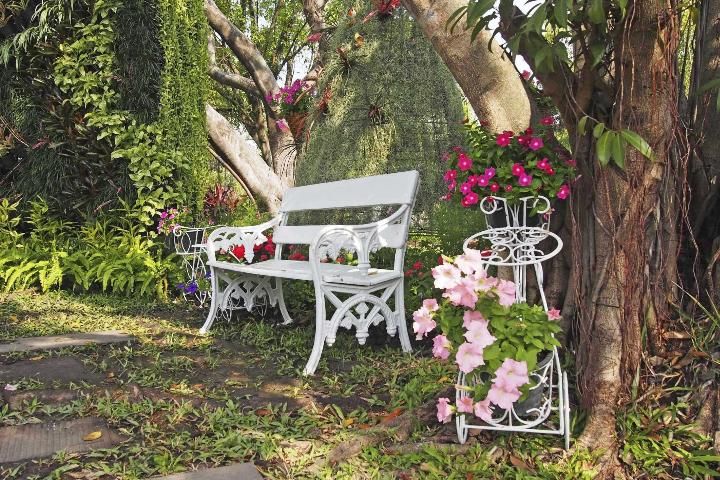
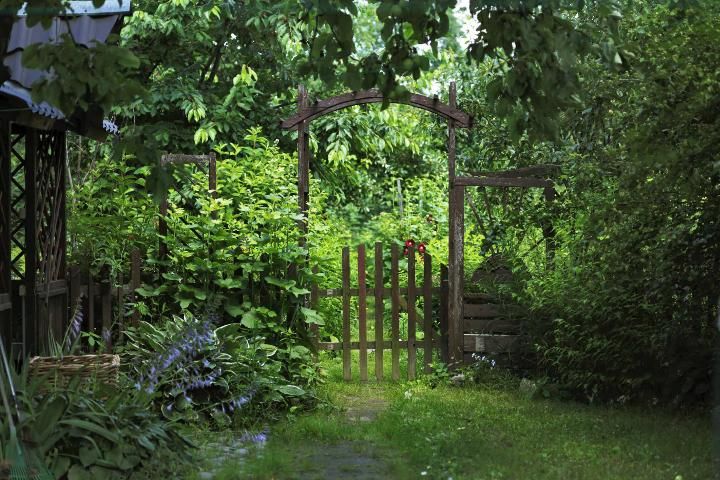
Sometimes the best solution for difficult shade is to convert it to an outdoor garden room enhanced by seating, garden art, mulch, hardscape, colorful containers, a water feature, a birdbath, or other focal points. Leave the leaf litter that falls and allow these areas to be “self-mulching.”
Generally speaking, the following types of plants are potentially good candidates for shade:
Plants with broad leaves
Foliage plants (houseplants) for cold-protected areas of South and Central Florida or for use as cold-tender annuals (Table 3)
Most ferns
Numerous tropical perennials in the Acanthaceae family (Table 2)
Woodland native plants
Tables 1, 2, and 3 list some plants that tolerate reduced sunlight. These lists are not exhaustive.
Every plant has cultural needs besides light. Make sure to select plants that are suited to the site ("right plant, right place").
A few other considerations when growing plants in shade include the following:
Areas under tree canopy tend to be warmer, frost-free spots more amenable to cold-tender plants.
Digging among the roots of trees and shrubs is difficult, so use smaller plants that don’t need a large planting hole.Water them frequently until they’re established.
Fertilizer cannot compensate for inadequate light. It is not a substitute for photosynthesis.
Shaded lawns should be mowed higher and receive less fertilizer, water, and traffic. See Growing Turfgrass in the Shade (http://edis.ifas.ufl.edu/ep072).
For color in shady areas, use plants that produce light-colored flowers. Dark flowers don't show up as well.
The local county Extension office can verify the reliability of a plant in your county (http://solutionsforyourlife.ufl.edu/map).
Chaplin, L. T., and M. M. Brandies. 1998. The Florida Gardener's Book of Lists. Dallas, TX: Taylor Publishing.
Dehgan, B. 1998. Landscape Plants for Subtropical Climates. Gainesville: University Press of Florida.
UF/IFAS. 2010. The Florida-Friendly Landscaping™ Guide to Plant Selection & Landscape Design. http://fyn.ifas.ufl.edu/pdf/FYN_Plant_Selection_Guide_v090110.pdf.
The author wishes to thank Ed Thralls, Orange County Extension horticulture agent, for reviewing this publication and Alachua County Extension horticulture agent, Wendy Wilber, for her contributions.
Selected shade-tolerant plants for North (N), Central (C), and South (S) Florida
Plant |
Region |
Turf |
|
St. Augustinegrass dwarf cultivars ('Sapphire', 'Seville', 'Delmar', and 'Captiva') |
NCS |
Zoysiagrass cultivars (e.g., 'Empire') |
NC |
Centipedegrass |
N |
Small trees (under 30') |
|
Devil's walkingstick (Aralia spinosa)* |
NC |
Dahoon holly (Ilex cassine)* |
NCS |
Dogwood (Cornus florida)* |
NC |
Pond apple (Annona glabra)* |
S |
Red buckeye (Aesculus pavia)* |
NC |
Redbud (Cercis canadensis)* |
NC |
Silverbell (Halesia spp.)* |
N |
Snowbell (Styrax americanus)* |
NCS |
Sparkleberry (Vaccinium arboreum)* |
NC |
Spicewood (Calyptranthes pallens)* |
S |
Swamp dogwood (Cornus foemina)* |
NCS |
Walter's viburnum (Viburnum obovatum)* |
NCS |
Yaupon (Ilex vomitoria)* |
NCS |
Palms/cycads |
|
Bamboo palm (Chamadorea spp.) |
CS |
Blue-stem/dwarf palmetto (Sabal minor)* |
NCS |
Coontie (Zamia floridana)* |
NCS |
Formosa palm (Arenga engleri) |
CS |
Lady palm (Rhapis excelsa) |
CS |
Needle palm (Rhapidophyllum hystrix)* |
NCS |
Saw palmetto (Serenoa repens)* |
NCS |
Shrubs |
|
Arrowwood (Viburnum dentatum)* |
NC |
Azalea (Rhododendron cultivars) |
NC |
Aucuba (Aucuba japonica) |
NC |
Anise - Florida (Illicium floridanum)* |
NCS |
Anise - yellow (Illicium parviflorum)* |
NCS |
Banana shrub (Magnolia figo) |
NC |
Beautyberry (Callicarpa americana)* |
NCS |
Camellia (C. japonica, C. sasanqua) |
NC |
Cleyera (Ternstroemia gymnanthera) |
NC |
Crape jasmine/pinwheel jasmine (Tabernaemontana divaricata) |
CS |
Dwarf schefflera (Schefflera arboricola) |
CS |
Dwarf Walter's viburnum (Viburnum obovatum– dwarf cultivars)* |
NCS |
Fatsia (Fatsia japonica) |
NCS |
Firebush (Hamelia patens)* |
NCS |
Florida azalea (Rhododendron austrinum)* |
N |
Gallberry (Ilex glabra)* |
NCS |
Gardenia (Gardenia augusta) |
NCS |
Hydrangea (Hydrangea macrophylla) |
NC |
Mahonia (Mahonia fortunei) |
NC |
Marlberry (Ardisia escallonioides)* |
CS |
Myrsine (Rapanea punctata)* |
S |
Oakleaf hydrangea (Hydrangea quercifolia)* |
NC |
Fetterbush (Lyonia lucida)* |
NCS |
Pinxter azalea (Rhododendron canescens)* |
NC |
Pipestem (Agarista populifolia)* |
NC |
Sandankwa viburnum (Viburnum suspensum) |
NCS |
Scorpion tail (Heliotropium angiospermum)* |
NCS |
Simpson's stopper (Myrcianthes fragrans)* |
NCS |
Snailseed (Cocculus laurifolius) |
CS |
Summersweet (Clethra alnifolia) |
NC |
Strawberry bush (Euonymus americanus)* |
NC |
String lily (Crinum americanum)* |
NCS |
Sweetshrub (Calycanthus floridus)* |
NC |
Tea olive (Osmanthus fragrans) |
NC |
Umbrella sedge (Cyperus alternifolius) |
NCS |
Virginia willow (Itea virginica)* |
NC |
Walter's viburnum (Viburnum obovatum)* |
NC |
Wax myrtle (Myrica cerifera)* |
NCS |
Wild coffee (Psychotria nervosa)* |
CS |
Witch hazel (Hamamelis virginiana)* |
NC |
Yesterday, today and tomorrow (Brunsfelsia spp.) |
NCS |
Grasses |
|
River oats (Chasmanthium latifolium)* |
NC |
Tiger grass (Thysanoalena latifolia) |
CS |
Ferns |
|
Autumn fern (Dryopteris erythrsora) |
NCS |
Chain ferns (Woodwardia spp.)* |
NCS |
Cinnamon fern (Osmunda cinnamomea)* |
NCS |
Hart's tongue fern (Asplenium scolopendrium) |
NC |
Holly fern (Cyrtomium falcatum) |
NCS |
Japanese painted fern (Athyrium niponicum 'Pictum') |
N |
Leather fern (Acrostichum danaeifolium) |
CS |
Leatherleaf fern (Rumohra adiantiformis) |
CS |
Southern shield fern (Thelypteris kunthii)* |
NCS |
Royal fern (Osmunda regalis)* |
NCS |
Southern woods fern (Dryopteris normalis)* |
NCS |
Sword ferns (Nephrolepis biserrata and N. exaltata)* |
CS |
Swamp fern (Blechnum serrulatum)* |
NCS |
Silver-leaf brake fern (Pteris ensiformia 'Victoriae') |
CS |
Virginia chain fern (Woodwardia virginica)* |
NCS |
Groundcovers |
|
African hosta (Drimiopsis maculata) |
NCS |
Algerian ivy (Hedera canariensis) |
CS |
Artillery fern (Pilea microphylla) |
CS |
Asiatic jasmine (Trachelospermum asiaticum) |
NCS |
Aztec grass (Ophiopogon intermedius) |
NCS |
Lilyturf (Liriope spp.) |
NCS |
Carpet bugleweed (Ajuga reptans) |
N |
Cast iron plant (Aspidistra elatior) |
NCS |
Creeping yew (Cephalotaxus harringtonia ‘Prostrata’) |
CS |
Florida violets (Viola spp.) |
NCS |
Mondo grass (Ophiopogon japonicus) |
NCS |
Periwinkle (Vinca minor) |
CS |
Spider plant (Chlorophytum comosum) |
CS |
Strawberry begonia (Saxifraga stolonifera) |
NCS |
Swedish ivy (Plectranthus verticillatus) |
CS |
Turtle vine/Bolivian Jew (Callisia repens) |
CS |
* Native Florida plant |
|
Colorful annuals and perennials
Common name |
Scientific name |
Begonias |
Begonia spp. |
Bromeliads |
Aechmea, Bilbergia, and Neoregelia spp. |
Blood lily |
Haemanthus multiflorus |
Blue ginger |
Dichorisandra thyrsiflora |
Blue sage |
Eranthemum pulchellum |
Butterfly gingers |
Hedychium spp. |
Caladium |
Caladium x hortulanum |
Charmed wine |
Oxalis 'Charmed Wine' |
Coleus |
Solenostemon scuttellarioides |
Crossandra |
Crossandra infundibuliformis |
Firespike |
Odontonema strictum |
Dancing girl ginger |
Globba bulbifera |
Ground orchid |
Spathoglottis spp. |
Hostas |
Hosta hybrids, such as 'Sunhosta', 'Royal Standard', 'Elegans', 'Patriot', and 'Frances Williams' |
Impatiens |
Impatiens spp. |
Jacobinia |
Justicia carnea |
Jewels of Opar |
Talinum paniculatum 'Variegata' |
Kaffir lily |
Clivia miniata |
Leopard plant |
Farfugium japonicum |
Nun's orchid |
Phaius tankervilliae |
Ornamental sweet potato |
Ipomoea batatas |
Peacock gingers |
Kaempferia spp. |
Persian shield |
Strobilanthes dyerianus |
Polka dot plant |
Hypoestes phyllostachya |
Red flame ivy |
Hemigraphis alternata |
Sanchezia |
Sanchezia nobilis |
Shell ginger |
Alpinia zerumbet |
Toad lilies |
Tricyrtis spp. |
Walking irises |
Neomarica spp. |
Wishbone flower |
Torenia fournieri |
Yellow shrimp plant |
Pachystachys lutea |
Assorted foliage plants (houseplants) for South Florida and cold-protected areas of Central Florida
Common name |
Scientific name |
Chinese evergreen |
Aglaonema spp. |
Amazon lily |
Eucharis amazonica |
Anthurium |
Anthurium spp. |
Aralia |
Polyscias spp. |
Calathea |
Calathea spp. |
Ti plant |
Cordyline spp. |
Dumbcane |
Dieffenbachia spp. |
Dracaena |
Dracaena spp. |
False aralia |
Dizygotheca elegantissima |
Prayer plant |
Maranta spp. |
Peace lily |
Spathiphyllum spp. |
Philodendron |
Philodendron spp. and hybrids |
Snake plant |
Sansevieria |
Triostar |
Stromanthe sanguinea 'Triostar' |
ZZ plant |
Zamioculcas zamiifolia |
This document is ENH1196, one of a series of the Environmental Horticulture Department, Florida Cooperative Extension Service, Institute of Food and Agricultural Sciences, University of Florida. Original publication date February 2012. Visit the EDIS website at http://edis.ifas.ufl.edu.
Sydney Park Brown, associate professor and Consumer Horticulture Extension Specialist. Environmental Horticulture Department, Cooperative Extension Service, Institute of Food and Agricultural Sciences, University of Florida, Gainesville FL 32611.
The Institute of Food and Agricultural Sciences (IFAS) is an Equal
Opportunity Institution authorized to provide research, educational
information and other services only to individuals and institutions
that function with non-discrimination with respect to race, creed,
color, religion, age, disability, sex, sexual orientation, marital
status, national origin, political opinions or affiliations.
For more information on obtaining other extension publications,
contact your county Cooperative Extension service.
U.S. Department of Agriculture, Cooperative Extension Service,
University of Florida, IFAS, Florida A. & M. University Cooperative
Extension Program, and Boards of County Commissioners Cooperating. Nick T. Place,
Dean.