
This is Activity 2 in a series of 24 in the Aquaculture Curriculum.
Abstract
There are numerous fish species cultured in the world. Fish are cultured in ponds, tanks, and cages. Some are fed floating, pelleted food and some consume live algae. The types of diets used in aquaculture have been developed specifically for the feeding strategies of the cultured animal. In this lesson, students will mimic fish with different mouth positions by adopting different feeding behaviors and by trying to capture marshmallows without the use of their hands.
Objectives
Students will be able to:
- Observe external anatomy to determine feeding behaviors of fish.
- Recommend an aquaculture diet (floating, sinking, particle size, etc.) based on external anatomy.
Grade Level
5–12
Subject Area
Biology, Anatomy, Aquaculture
Time
Preparation: 2 minutes
Activity: 30 minutes
Cleanup: 5 minutes
Student Performance Standards (Sunshine State Standards)
10.03 List examples of aquatic crops and animals (LA.910.1.6.1, 2, 3, 4, 5; SC.912.L.17.9).
11.01 List and explain the meaning of morphology, anatomy, and physiology (LA.910.1.6.1, 2, 3, 4, 5; SC.912.L.14.7).
11.02 List and describe the physiology of aquatic animals (LA.910.1.6.1, 2, 3, 4, 5; SC.912.L. 18. 7, 8, 9).
11.05 Identify and describe the external and internal anatomy of fish (LA.910.1.6.1, 2, 3, 4, 5; SC.912.L.14.11, 12, 13, 14, 15, 16, 17, 18, 19, 21, 22, 28, 29, 31, 32, 33, 34, 36, 40, 41, 42, 43, 45, 46, 47, 48, 51).
11.09 Develop an information file in aquaculture species (LA.910.1.6.1, 2, 3, 4, 5)
Interest Approach
This activity works best after you have completed a live or virtual dissection of the fish so that students are familiar with the external anatomy. Watch the Fish Eating Contest presentation at http://irrec.ifas.ufl.edu/teachaquaculture/curriculum/2general_biology.php. Discuss how the culture methods may change based on the way each fish feeds.
Student Materials
- Mouth Types of Fish section
- Fishing line
- Clothespin
- Marshmallows (at least two)
- Scissors
- A partner
Teacher Materials
Student Instructions
- Read the Mouth Types of Fish section for homework in preparation for this laboratory.
- Observe a live fish in an aquarium (if one is available).
- Watch the Fish Eating Contest presentation at http://irrec.ifas.ufl.edu/teachaquaculture/curriculum/2general_biology.php.
- Think of the way different fish (sharks, rays, eels, tuna, clownfish, seahorses) feed and where their mouthparts are located.
- Find a partner.
- Gather one set of materials (fishing line, clothespin, marshmallow, and scissors).
- Tie the fishing line to the clothespin, and clip the marshmallow onto the clothespin.
- Position the marshmallow at various heights off of the ground. Have your partner try to eat the marshmallow from the clothespin without the use of hands.
- Switch roles.
- Think about what kind of feeder you are (terminal, subterminal, uppointing).
- What kind of feed would be best for aquaculture of different fish species (floating or sinking pellet, live feeds [rotifers, Artemia], or microalgae)?
Teacher Instructions
Preparations
- Give students a copy of the Mouth Types of Fish section, and have them read it.
- Download Fish Eating Contest presentation at http://irrec.ifas.ufl.edu/teachaquaculture/curriculum/2general_biology.php.
- Collect supplies.
- Divide students into partner groups.
Activity
- Review the presentation with the students.
- Ask them to actively engage and answer the questions to identify the different kinds of feeding strategies.
- Divide students into partners, and have them create a "fishing line" with the clothespin and their bait (marshmallows).
- Assign one of the types of mouths (terminal, subterminal, or uppointing), and have the students feed on marshmallows the way a fish would with this mouth type.
- Have the students try to "feed" without using their hands while their partner places the marshmallow bait in different positions.
- Once finished, ask the students to list (on the board) which kind of diet would be best suited for fish with the various mouth types (e.g. floating or sinking pellets, live feeds [rotifers, Artemia], or microalgae)?
Postwork/Cleanup
- Have the students "eat" the rest of the bait.
- You can save the fishing line and clothespins for future labs.
Anticipated Results
- Students will identify differences in feeding behaviors for fish based on their mouth type.
- Students will be able to assign different types of aquaculture diets (floating, sinking, etc.) to a particular mouthpart or feeding strategy of a fish.
Support Materials
- Fish Eating Contest presentation http://irrec.ifas.ufl.edu/teachaquaculture/curriculum/2general_biology.php
- Biology of Cultured Fish presentation http://irrec.ifas.ufl.edu/teachaquaculture/curriculum/2general_biology.php
- Aquariums in the Classroom presentation http://irrec.ifas.ufl.edu/teachaquaculture/curriculum/1introduction.php
- Mouth Types of Fish section
Explanation of Concepts
- Relationship of structure and function
- Anatomy and biology of vertebrates
Mouth Types of Fish
Fish have a wide variety of mouth types. Some species have terminal mouths, others have uppointing mouths, some have subterminal mouths, and others have highly specialized mouths. Each of these mouth types have evolved to accommodate efficient feeding on prey items. A terminal mouth is located on the anterior end of the head (See Figure 1). A subterminal mouth is on the ventral or underneath side of the head. These fish usually feed on the bottom (See Figure 2). A fish with an uppointing mouth has a long lower jaw, and the mouth opening is towards the top of the head. These fish usually feed on the surface (See Figure 3). Some fish have specialized mouths to accommodate feeding on various prey items (See Figure 4).
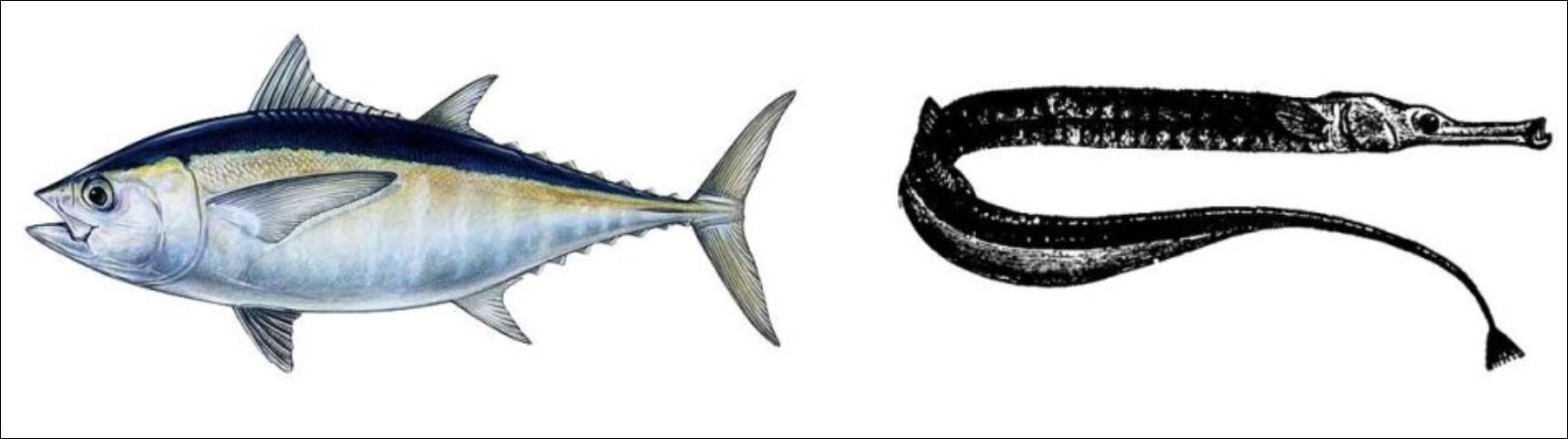
Credit: http://commons.wikimedia.org, permission was granted to Wikimedia for public distribution and use by the copyright holders
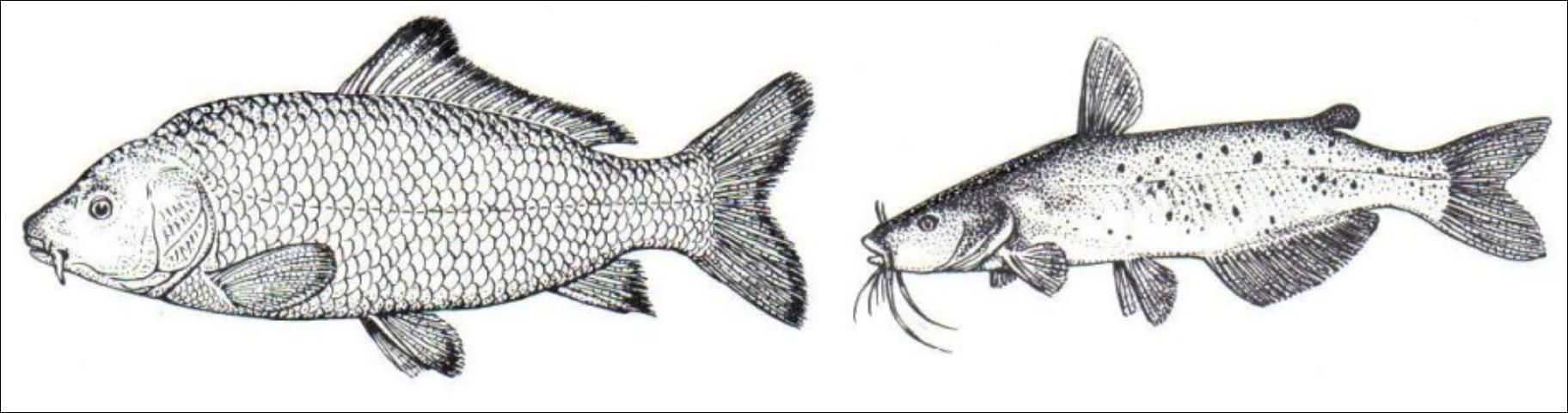
Credit: http://commons.wikimedia.org, permission was granted to Wikimedia for public distribution and use by the copyright holders
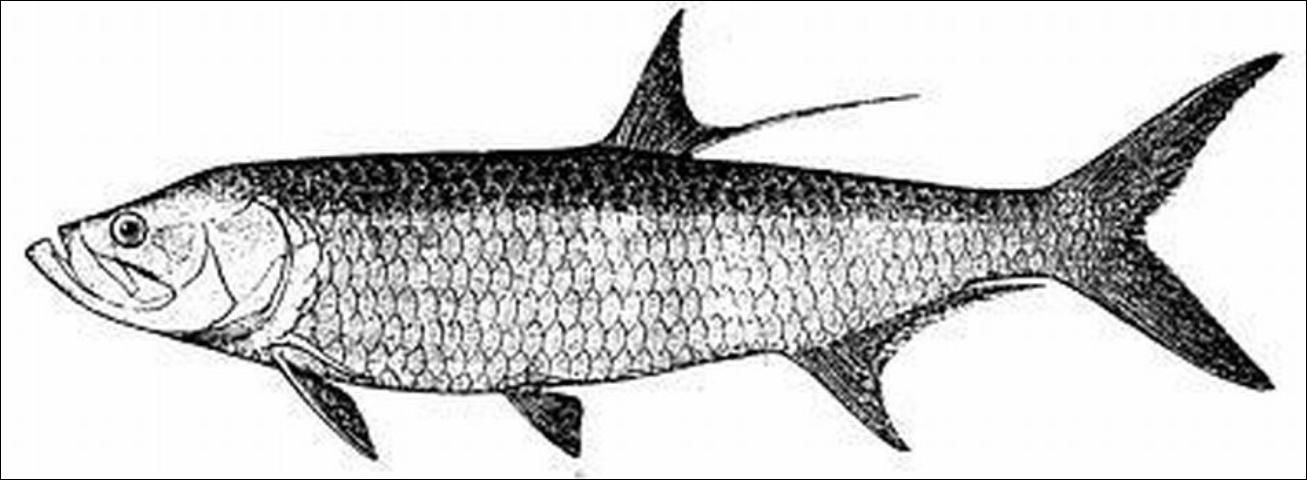
Credit: http://commons.wikimedia.org, permission was granted to Wikimedia for public distribution and use by the copyright holders
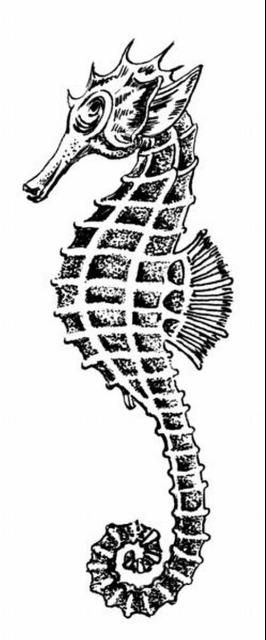
Credit: http://commons.wikimedia.org, permission was granted to Wikimedia for public distribution and use by the copyright holders