
Introduction
Growing best in low-light conditions, Anthurium are handsome exotics with shiny dark green, oblong, heart-shaped leaves. The long-lasting, showy flower bracts come in shades of red, rose, pink, and white with a protruding pale yellow, tail-like flower spadix. The flower bracts have a puckered appearance and shine as though they were lacquered.
Anthurium will bloom more or less continuously, each plant having four to six flowers during the year. Each flower will last about six weeks on the plant or several weeks when cut and placed in a vase of water.
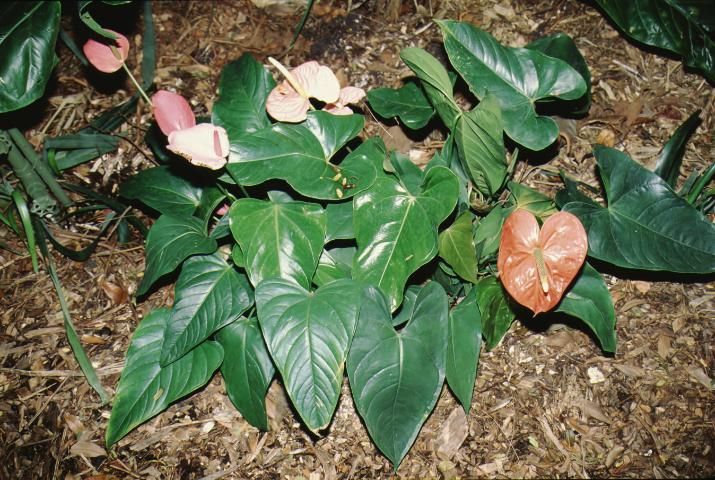
Credit: Edward F. Gilman, UF/IFAS
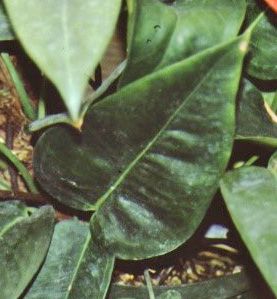
Credit: Edward F. Gilman, UF/IFAS
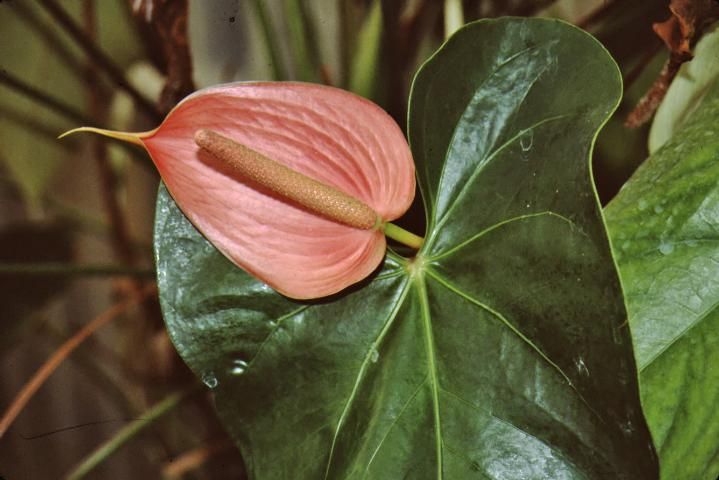
Credit: Edward F. Gilman, UF/IFAS
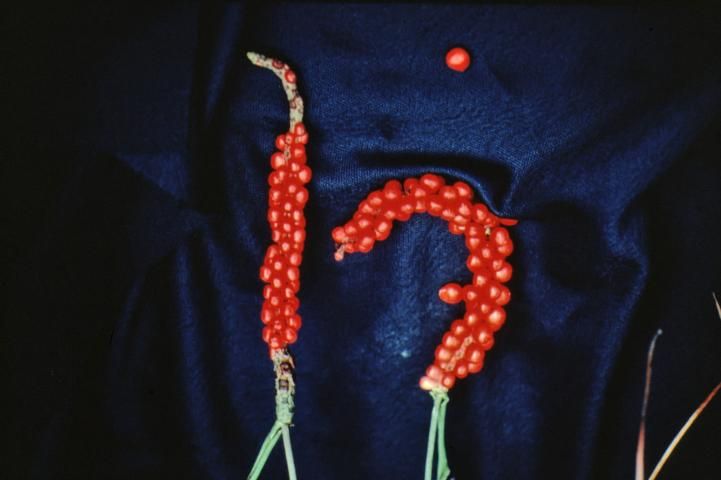
Credit: Edward F. Gilman, UF/IFAS
General Information
Scientific name: Anthurium andraeanum
Pronunciation: an-THUR-ee-um an-dree-AY-num
Common name(s): tailflower, flamingo flower
Family: Araceae
Plant type: perennial; herbaceous
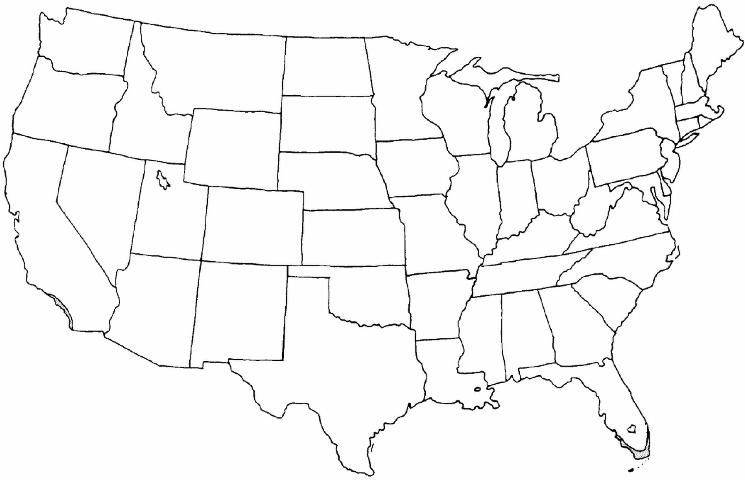
USDA hardiness zones: 10B through 11 (Figure 5)
Planting month for zone 10 and 11: year-round
Origin: not native to North America
Invasive potential: not known to be invasive
Uses: specimen; container or above-ground planter; border; ground cover; cut flowers; accent; edging; suitable for growing indoors
Availability: somewhat available, may have to go out of the region to find the plant
Description
Height: 2 to 3 feet
Spread: 2 to 3 feet
Plant habit: upright
Plant density: open
Growth rate: slow
Texture: coarse
Foliage
Leaf arrangement: alternate
Leaf type: simple
Leaf margin: revolute
Leaf shape: sagittate (arrow)
Leaf venation: brachidodrome; pinnate
Leaf type and persistence: evergreen
Leaf blade length: 8 to 12 inches
Leaf color: green
Fall color: no fall color change
Fall characteristic: not showy
Flower
Flower color: pink; white; salmon
Flower characteristic: year-round flowering
Fruit
Fruit shape: elongated
Fruit length: unknown
Fruit cover: fleshy
Fruit color: red
Fruit characteristic: inconspicuous and not showy
Trunk and Branches
Trunk/bark/branches: usually with one stem/trunk
Current year stem/twig color: not applicable
Current year stem/twig thickness: not applicable
Culture
Light requirement: plant grows in the shade
Soil tolerances: sand; acidic; loam
Drought tolerance: moderate
Soil salt tolerance: poor
Plant spacing: 18 to 24 inches
Other
Roots: usually not a problem
Winter interest: no special winter interest
Outstanding plant: plant has outstanding ornamental features and could be planted more
Pest resistance: long-term health usually not affected by pests
Use and Management
Soils should be moist and high in organic matter, and relative humidity should remain high. Anthurium leaves lose their shiny texture and may die if humidity drops below 50% for more than a few days. For interior use, keep potted plants on trays of moist gravel or spray several times per day with water and protect from drafts. Single plants are best used in small gardens. In larger landscapes, a mass of many plants together looks best.
Plant two to three feet apart to form a dense foliage effect.
Propagation is by division.
Design Considerations
The shiny, deep green leaves and lush leafy form of Anthurium will give the landscape a cool tropical feel. The mass of smooth, heart-shaped leaves highlights the bright, showy flowers. Pair with plants that are softer with small foliage and low-growing mounding or spreading forms, or with other large-leaf tropicals with irregular, coarse texture such as philodendrons. Yellow-green or variegated green foliage in the companion plants will highlight the deep green of the leaves. When pairing with other flowering plants use white and bright yellows to contrast the deep green and highlight the warm reds of the flower bracts and the yellow spadix.
Pest and Diseases
No diseases are of major concern.
Mites, scales, mealy-bugs, and nematodes can be a problem.