
Introduction
Asters produce large clusters of flowers in white, purple, lavender, pink, and red. The plants tolerate poor soil and dryness but bloom poorly in dry soil. They grow two to five feet tall and are spaced 15 inches apart. They multiply rapidly so may need frequent division. Tall varieties need staking or grow the shorter varieties. For best bloom, thin out shoots from large clumps. Asters grow best in full sun or light shade.
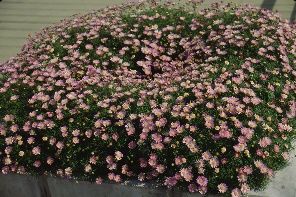
Credit: Edward Gilman, UF/IFAS
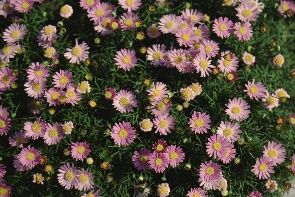
Credit: Edward Gilman, UF/IFAS
General Information
Scientific name: Aster spp.
Pronunciation: ASS-ter species
Common name(s): aster
Family: Asteraceae
Plant type: herbaceous
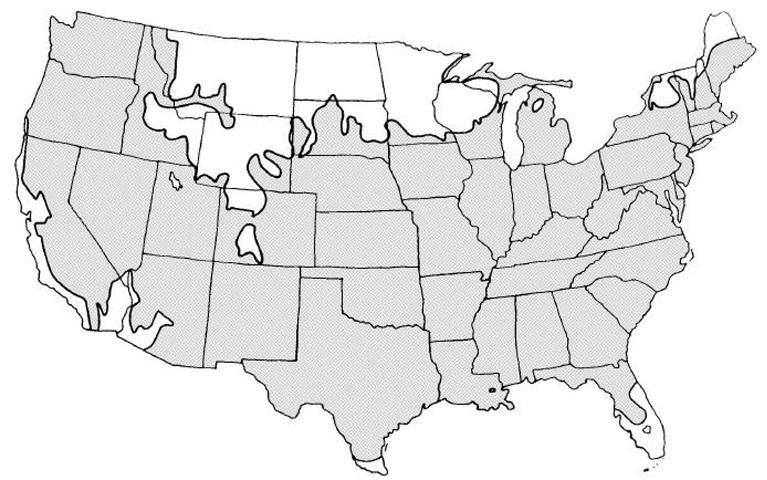
USDA hardiness zones: 4B through 9A (Figure 3)
Planting month for zone 7: year round
Planting month for zone 8: year round
Planting month for zone 9: year round
Planting month for zone 10 and 11: year round
Origin: native to Florida
Invasive potential: not known to be invasive
Uses: mass planting; edging; attracts butterflies; cut flowers
Availability: somewhat available, may have to go out of the region to find the plant
Credit: undefined
Description
Height: 1 to 3 feet
Spread: 2 to 4 feet
Plant habit: upright
Plant density: symmetrical habit with a regular (or smooth) outline and individuals having more or less identical forms
Growth rate: fast
Texture: fine
Foliage
Leaf arrangement: alternate
Leaf type: simple
Leaf margin: entire
Leaf shape: lanceolate
Leaf venation: none, or difficult to see
Leaf type and persistence: deciduous
Leaf blade length: 2 to 4 inches
Leaf color: green
Fall color: no fall color change
Fall characteristic: not showy
Flower
Flower color: lavender; white; pink; red; purple
Flower characteristic: summer flowering; fall flowering
Fruit
Fruit shape: unknown
Fruit length: unknown
Fruit cover: unknown
Fruit color: white
Fruit characteristic: inconspicuous and not showy
Trunk and Branches
Trunk/bark/branches: typically multi-trunked or clumping stems
Current year stem/twig color: green
Current year stem/twig thickness: thin
Culture
Light requirement: plant grows in full sun
Soil tolerances: acidic; slightly alkaline; sand; loam; clay
Drought tolerance: moderate
Soil salt tolerances: unknown
Plant spacing: 18 to 24 inches
Other
Roots: not applicable
Winter interest: no special winter interest
Outstanding plant: not particularly outstanding
Pest resistance: long-term health usually not affected by pests
Use and Management
Aster is grown from seed or division. Division is done in October or early spring when flowering deteriorates. The seed germinates in 15 days indoors or 20 to 30 days outdoors.
Pests and Diseases
Aphids feed on lower leaf surfaces and flower stems.
Japanese beetles feed on aster.
Leaf spot fungi cause spots of various types on the leaves. The spotting may be worse in rainy seasons.
Downy mildew causes a downy mold on the lower leaf surfaces but is not important on aster.
Powdery mildew develops on the lower parts of crowded plants in late season. Symptoms are a whitish coating on the leaves.
Bacterial crown gall causes the formation of rough, rounded galls. Avoid infested soil and destroy infected plants.
Verticillium wilt occasionally kills plants.