
Introduction
This may be one of the most beautiful group of plants grown in Florida landscapes, although many people are not aware of them. They grow to about 8 or 10 feet tall and are most known for their beautiful flower display. Flowers range from white to lavender. B. pauciflora and B. australis flowers emerge lavender or purple and fade to white during the next day or two. B. australis may be the best one adapted to a partially shaded location. Other species have purple flowers with white centers. In south Florida, plants fill with flowers during the warm months of the year. Flowering is restricted to the summer and fall in the northern part of its range.
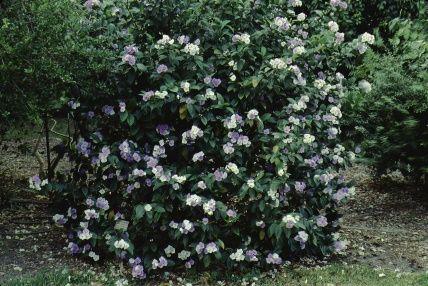
Credit: Edward F. Gilman, UF/IFAS
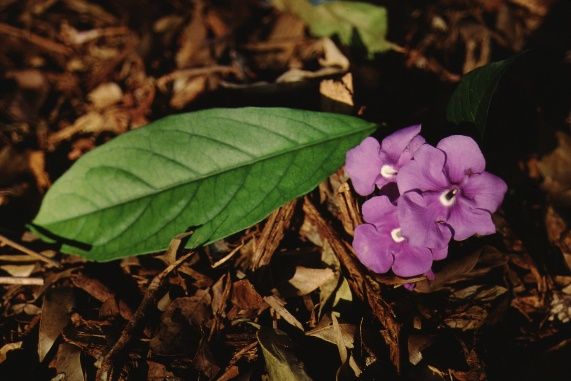
Credit: Edward F. Gilman, UF/IFAS
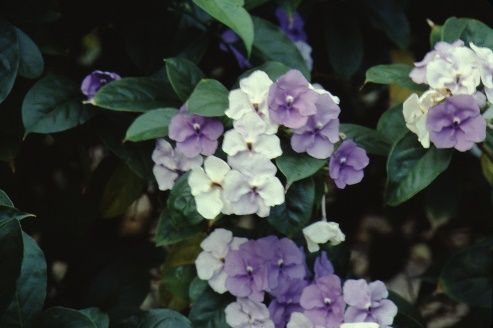
Credit: Edward F. Gilman, UF/IFAS
General Information
Scientific name: Brunfelsia grandiflora
Pronunciation: brun-FELZ-ee-uh gran-dif-FLOR-uh
Common name(s): yesterday, today, and tomorrow
Family: Solanaceae
Plant type: shrub
USDA hardiness zones: 9B through 11 (Figure 4)
Planting month for zone 9: year round
Planting month for zone 10 and 11: year round
Origin: not native to North America
Invasive potential: not known to be invasive
Uses: specimen; accent; border; foundation; mass planting; screen; trained as a standard
Availability: grown in small quantities by a small number of nurseries
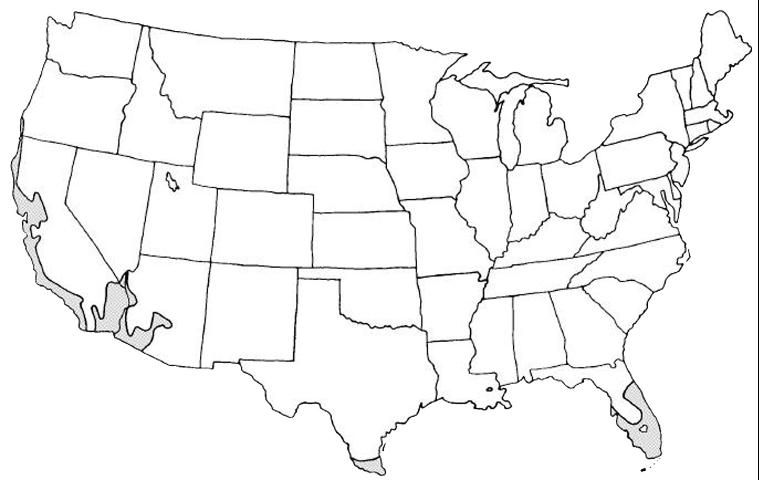
Credit: undefined
Description
Height: 7 to 10 feet
Spread: 5 to 8 feet
Plant habit: upright
Plant density: dense
Growth rate: moderate
Texture: medium
Foliage
Leaf arrangement: alternate
Leaf type: simple
Leaf margin: entire
Leaf shape: oblong
Leaf venation: pinnate
Leaf type and persistence: evergreen
Leaf blade length: 8 to 12 inches
Leaf color: green
Fall color: no fall color change
Fall characteristic: not showy
Flower
Flower color: lavender; purple; white
Flower characteristic: pleasant fragrance; spring flowering; summer flowering; fall flowering
Fruit
Fruit shape: unknown
Fruit length: unknown
Fruit cover: dry or hard
Fruit color: yellow
Fruit characteristic: inconspicuous and not showy
Trunk and Branches
Trunk/bark/branches: not particularly showy; typically multitrunked or clumping stems
Current year stem/twig color: brown
Current year stem/twig thickness: medium
Culture
Light requirement: plant grows in part shade/part sun
Soil tolerances: acidic; slightly alkaline; sand; loam; clay
Drought tolerance: moderate
Soil salt tolerances: moderate
Plant spacing: 36 to 60 inches
Other
Roots: usually not a problem
Winter interest: no special winter interest
Outstanding plant: plant has outstanding ornamental features and could be planted more
Pest resistance: no serious pests are normally seen on the plant
Use and Management
The shrub is nicely suited for displaying by itself as a specimen or can be combined with others in a shrub border. It can be used along the foundation of a large commercial building but grows too large for planting along most house foundations. Surprisingly, flowering is acceptable in the partial shade. Selective pruning can keep the plant at any height from 4 to about 8 feet.
This plant is well adapted to a variety of well drained soils, acid, or alkaline.
Pests and Diseases
Few problems seem to affect this nice shrub.