
Introduction
Amazon lily forms tight, compact rosettes of deep green, glossy leaves up to several inches wide, and tall spikes of fragrant, long-lasting, waxy, white flowers. They make nice container plants for a shaded deck or patio or can be planted among other small plants in a rock garden. They have also been used as a groundcover planted two to three feet apart.
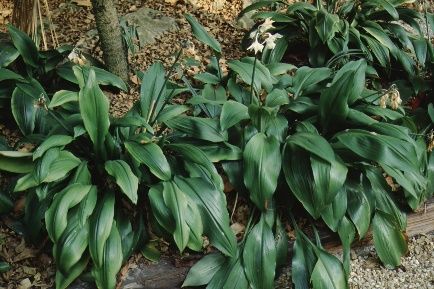
Credit: Edward F. Gilman, UF/IFAS
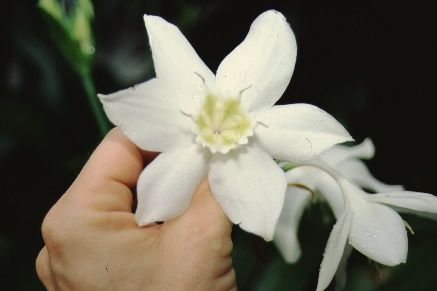
Credit: Edward F. Gilman, UF/IFAS
General Information
Scientific name: Eucharis amazonica
Pronunciation: YOO-kuh-riss am-uh-ZOE-nick-uh
Common name(s): Amazon lily, Eucharist lily
Family: Amaryllidaceae
Plant type: bulb/tuber; perennial; herbaceous
USDA hardiness zones: 10 through 11 (Figure 3)
Planting month for zone 10 and 11: year round
Origin: not native to North America
Invasive potential: not known to be invasive
Uses: ground cover; accent
Availability: somewhat available, may have to go out of the region to find the plant
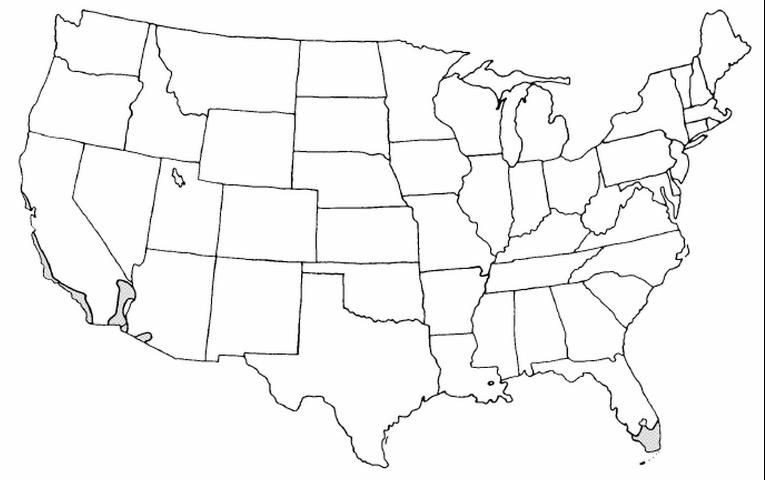
Credit:
Description
Height: 1 to 2 feet
Spread: 1 to 2 feet
Plant habit: spreading; upright
Plant density: moderate
Growth rate: moderate
Texture: coarse
Foliage
Leaf arrangement: most emerge from the soil, usually without a stem
Leaf type: simple
Leaf margin: entire
Leaf shape: ovate
Leaf venation: parallel
Leaf type and persistence: semi-evergreen
Leaf blade length: 8 to 12 inches; 12 to 18 inches; 18 to 36 inches
Leaf color: green
Fall color: no fall color change
Fall characteristic: not showy
Flower
Flower color: white
Flower characteristic: winter flowering; spring flowering; showy; pleasant fragrance
Fruit
Fruit shape: unknown
Fruit length: .5 to 1 inch
Fruit cover: dry or hard
Fruit color: unknown
Fruit characteristic: inconspicuous and not showy
Trunk and Branches
Trunk/bark/branches: not applicable
Current year stem/twig color: not applicable
Current year stem/twig thickness: not applicable
Culture
Light requirement: plant grows in the shade
Soil tolerances: occasionally wet; acidic; sand; loam; clay
Soil salt tolerances: poor
Plant spacing: 18 to 24 inches
Other
Roots: not applicable
Winter interest: plant has winter interest due to unusual form, nice persistent fruits, showy winter trunk, or winter flowers
Outstanding plant: plant has outstanding ornamental features and could be planted more
Pest resistance: long-term health usually not affected by pests
Use and Management
Native to the Andes of Columbia and Peru—not the Amazon—Amazon lily requires shade for its tender leaves and looks best when grown in rich, moist organic matter. Amazon lily should be kept on the dry side during the winter to stimulate flowering. Amazon lily can remain undisturbed for many years, blooming better under crowded conditions, whether in a pot or in large, outdoor clumps.
Propagation is by division.
Pest and Diseases
Problems include caterpillars, spider mites, and bulb mites.
Amazon lily is occasionally bothered by viruses and bulb rot.