
Introduction
Common globe amaranth produces small, globe-shaped flowers in shades of purple, pink, yellow, or white. The purple form is most common in retail nurseries. Most horticulturists utilize common globe amaranth in a mass planting spacing them 12 to 18 inches apart. Others use them as small specimens in rock gardens or plant them in containers. They are also attractive planted in a row along a walk or patio as an edging plant. Flowers can be dried for indoor use if cut just before they are fully opened. The plant grows 18 inches tall and prefers full sun and a moderately dry soil. Common globe amaranth is resistant to heat and should not be over watered. It provides bright color to a garden or landscape where irrigation will be limited.
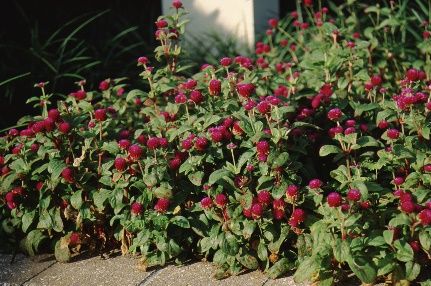
Credit: Edward F. Gilman, UF/IFAS
General Information
Scientific name: Gomphrena globosa
Pronunciation: gom-FREE-nuh gloe-BOE-suh
Common name(s): common globe amaranth
Family: Amaranthaceae
Plant type: annual
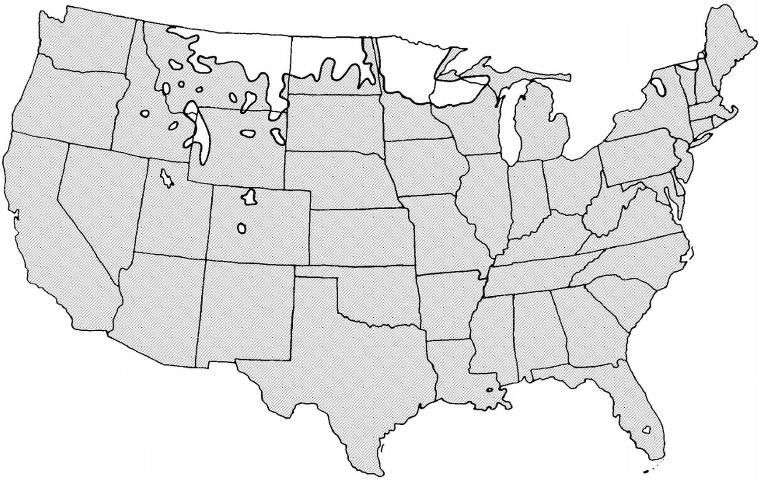
USDA hardiness zones: all zones (Figure 2)
Planting month for zone 7: Jun; Jul; Aug
Planting month for zone 8: May; Jun; Jul; Aug; Sep
Planting month for zone 9: Apr; May; Jun; Jul; Aug; Sep
Origin: native to Africa, Central America, Mexico, North America, Pacific, South America, and temperate and tropical Asia
Invasive potential: not considered a problem species at this time and may be recommended by UF/IFAS faculty (reassess in 10 years)
Uses: border; edging; mass planting
Availability: generally available in many areas within its hardiness range
Credit:
Description
Height: 1 to 2 feet
Spread: 0.5 to 1 feet
Plant habit: round
Plant density: dense
Growth rate: slow
Texture: medium
Foliage
Leaf arrangement: opposite/subopposite
Leaf type: simple
Leaf margin: entire
Leaf shape: oblong
Leaf venation: not applicable
Leaf type and persistence: not applicable
Leaf blade length: 2 to 4 inches
Leaf color: green
Fall color: not applicable
Fall characteristic: not applicable
Flower
Flower color: white; pink; purple; yellow
Flower characteristic: showy
Fruit
Fruit shape: no fruit
Fruit length: no fruit
Fruit cover: no fruit
Fruit color: not applicable
Fruit characteristic: inconspicuous and not showy
Trunk and Branches
Trunk/bark/branches: not applicable
Current year stem/twig color: green
Current year stem/twig thickness: medium
Culture
Light requirement: plant grows in full sun
Soil tolerances: acidic; sand; loam; clay
Drought tolerance: moderate
Soil salt tolerances: unknown
Plant spacing: 12 to 18 inches
Other
Roots: not applicable
Winter interest: not applicable
Outstanding plant: not particularly outstanding
Pest resistance: long-term health usually not affected by pests
Use and Management
Propagation is by seed planted directly into the garden or started early indoors.
Pest and Diseases
Common globe amaranth is free of most pest and disease problems.