
Introduction
Sunflower is a short-lived annual with large, striking flowers. Large types grow to 12 feet tall, but many garden cultivars are 4 to 5 feet tall. The familiar flowers have yellowish petals with a brown central disc and grow to 6 to 12 inches across. Plants are seeded in late winter to early spring in Florida, produce lovely flowers in mid-spring, and decline quickly in the heat by late spring to early summer. Plants in Florida installed in the fall can produce a nice flower display for several weeks in the fall.
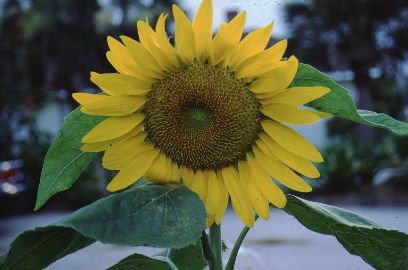
Credit: Edward F. Gilman, UF/IFAS
General Information
Scientific name: Helianthus annuus 'Sonja'
Pronunciation: heel-ee-ANTH-us AN-yoo-us
Common name(s): 'Sonja' sunflower
Family: Asteraceae
Plant type: annual
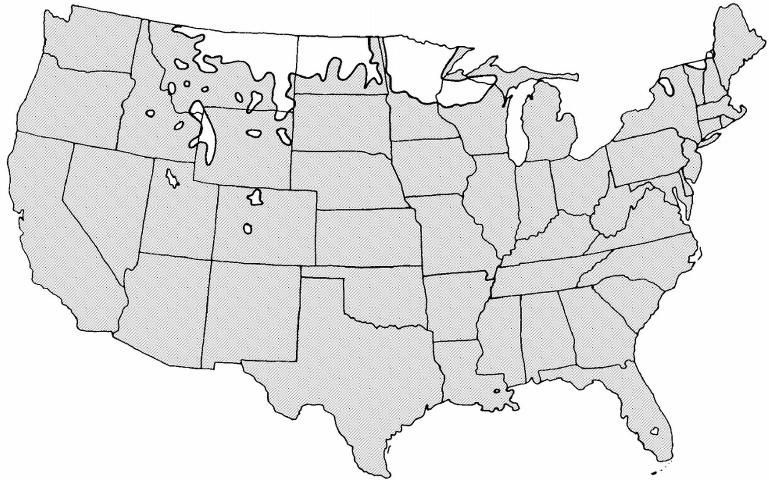
USDA hardiness zones: all zones (Figure 2)
Planting month for zone 7: Apr; May
Planting month for zone 8: Mar; Apr
Planting month for zone 9: Feb; Mar
Planting month for zone 10 and 11: Dec; Jan; Feb
Origin: native to North America
Invasive potential: may self-seed each year
Uses: specimen; accent; mass planting
Availability: somewhat available, may have to go out of the region to find the plant
Credit:
Description
Height: 2 to 6 feet
Spread: 1 to 2 feet
Plant habit: upright
Plant density: open
Growth rate: fast
Texture: coarse
Foliage
Leaf arrangement: alternate
Leaf type: simple
Leaf margin: dentate
Leaf shape: ovate
Leaf venation: pinnate
Leaf type and persistence: not applicable
Leaf blade length: 8 to 12 inches
Leaf color: green
Fall color: not applicable
Fall characteristic: not applicable
Flower
Flower color: yellow
Flower characteristic: showy
Fruit
Fruit shape: oval
Fruit length: less than 0.5 inch
Fruit cover: dry or hard
Fruit color: black
Fruit characteristic: suited for human consumption; attracts birds
Trunk and Branches
Trunk/bark/branches: not applicable
Current year stem/twig color: green
Current year stem/twig thickness: very thick
Culture
Light requirement: plant grows in full sun
Soil tolerances: acidic; slightly alkaline; sand; loam; clay
Drought tolerance: moderate
Soil salt tolerances: unknown
Plant spacing: 18 to 24 inches
Other
Roots: not applicable
Winter interest: not applicable
Outstanding plant: not particularly outstanding
Pest resistance: very sensitive to one or more pests or diseases which can affect plant health or aesthetics
Use and Management
The cultivar 'Valentine' has good uniformity and flowers well in Florida. It has a better overall appearance than either 'Floristan' or 'Hallo'. 'Floristan' has mahogany and light-yellow bicolored flowers; 'Hallo' has bright golden flowers; 'Valentine' has lemon-yellow flowers. 'Sonja' has big, yellow-orange flowers.
Pest and Diseases
'Valentine' is host to heavy infestations of sweet potato whitefly. 'Big Smile' had no infestation in trials conducted in central Florida. Leaf spots can cause severe leaf necrosis.