
Introduction
The symmetrical, dense, rounded form of Schilling's dwarf holly requires infrequent pruning to maintain its 4 to 6 foot height and spread. Ideally suited as a low-growing foundation plant, Schilling's dwarf holly works well as a tall groundcover because it forms a low, dense cover of green foliage when planted in masses. It is often sheared into low hedges in formal gardens, similar to the boxwoods in the early American gardens. The small, dark green leaves have a reddish cast when they are young and no spines. This cultivar of a male plant will produce no berries.
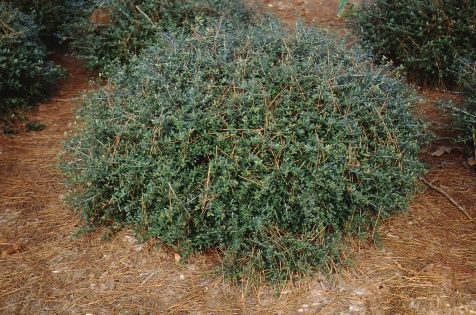
Credit: Edward F. Gilman, UF/IFAS
General Information
Scientific name: Ilex vomitoria 'Schilling's Dwarf'
Pronunciation: EYE-lecks vom-mit-TOR-ee-uh
Common name(s): Schillings dwarf holly
Family: Aquifoliaceae
Plant type: shrub
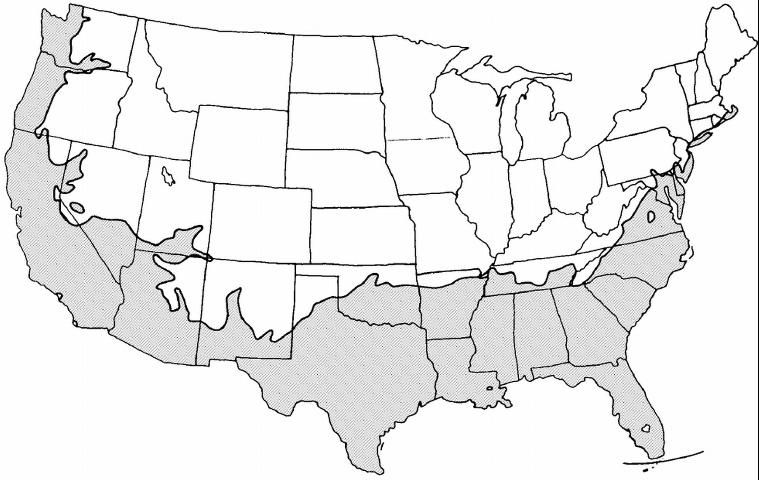
USDA hardiness zones: 7 through 10 (Figure 2)
Planting month for zone 7: year round
Planting month for zone 8: year round
Planting month for zone 9: year round
Planting month for zone 10: year round
Origin: native to Florida
Height: 4 to 7 feet
Invasive potential: not known to be invasive
Uses: bonsai; foundation; mass planting; container or above-ground planter; superior hedge; espalier
Credit:
Description
Height: 4 to 7 feet
Spread: 6 to 10 feet
Plant habit: round
Plant density: dense
Growth rate: slow
Texture: fine
Foliage
Leaf arrangement: alternate
Leaf type: simple
Leaf margin: serrate
Leaf shape: ovate
Leaf venation: pinnate
Leaf type and persistence: evergreen
Leaf blade length: less than 2 inches
Leaf color: green
Fall color: no fall color change
Fall characteristic: not showy
Flower
Flower color: white
Flower characteristic: spring flowering
Fruit
Fruit shape: no fruit
Fruit length: no fruit
Fruit cover: no fruit
Fruit color: no fruit
Fruit characteristic: no fruit
Trunk and Branches
Trunk/bark/branches: not particularly showy; typically multi-trunked or clumping stems
Current year stem/twig color: gray/silver
Current year stem/twig thickness: thin
Culture
Light requirement: plant grows in part shade/part sun
Soil tolerances: extended flooding; acidic; slightly alkaline; sand; loam; clay
Drought tolerance: high
Soil salt tolerances: moderate
Plant spacing: 36 to 60 inches
Other
Roots: sprouts from roots or lower trunk
Winter interest: no special winter interest
Outstanding plant: not particularly outstanding
Pest resistance: long-term health
Use and Management
Growing well in sun or light shade in soils from dry to wet, Schilling's dwarf holly withstands drought when established and is highly salt-tolerant, making it ideally suited to seaside plantings. It is a selection of the native yaupon holly, which grows naturally without irrigation on the dunes along the Atlantic Ocean. Growth rate is slow to moderate. Plant four to five feet apart for mass planting. Be sure to set plants several feet back from a walk, driveway or lawn area, because plants grow wider than tall and often require pruning to control their lateral growth. If you need to prune in this manner, be sure to leave the bottom of the plant much wider than the top so that lower foliage is left on the plant. If you attempt to shear vertically, the lower branches will be shaded and often lose foliage. This will give the shrub an unsightly, dark, leafless bottom.
Propagation is by cuttings.
Pest and Diseases
No pests or diseases are of major concern.