
Introduction
Japanese roof iris has wonderfully textured, light-green foliage emerging directly from the ground in dense clumps. It is closely related to the native crested iris. It grows 12 to 18 inches tall, producing blue flowers in the spring. Flowers are displayed in a showy fashion within the clump of foliage.
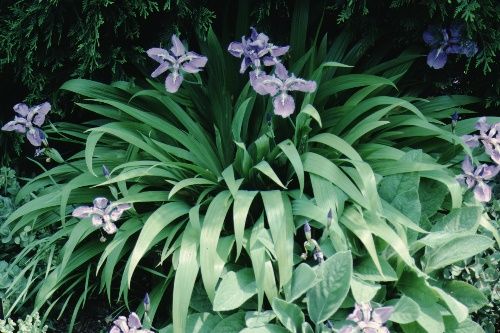
Credit: Edward F. Gilman, UF/IFAS
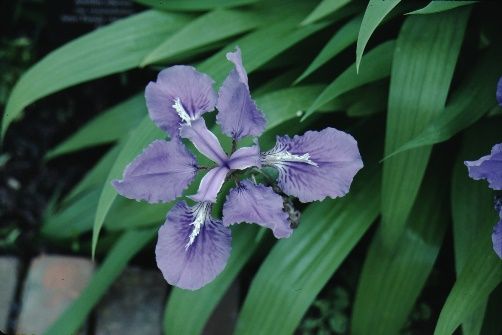
Credit: Edward F. Gilman, UF/IFAS
General Information
Scientific name: Iris tectorum
Pronunciation: EYE-riss teck-TOR-um
Common name(s): Japanese roof iris, wall iris
Family: Iridaceae
Plant type: herbaceous; ground cover
USDA hardiness zones: 6 through 10 (Figure 3)
Planting month for zone 7: year-round
Planting month for zone 8: year-round
Planting month for zone 9: year-round
Planting month for zone 10: year-round
Origin: not native to North America
Invasive potential: not known to be invasive
Uses: border; mass planting; ground cover; edging
Availability: somewhat available, may have to go out of the region to find the plant
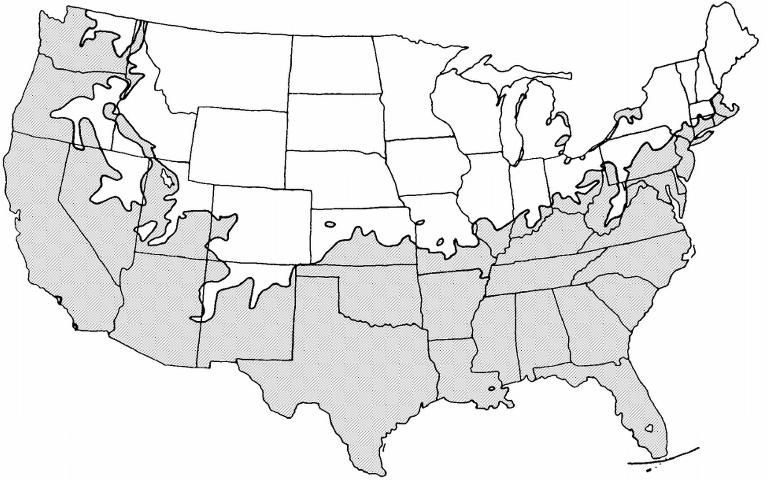
Credit:
Description
Height: 1 to 1.5 feet
Spread: 2 to 3 feet
Plant habit: upright
Plant density: moderate
Growth rate: moderate
Texture: coarse
Foliage
Leaf arrangement: most emerge from the soil, usually without a stem
Leaf type: simple
Leaf margin: entire
Leaf shape: linear
Leaf venation: parallel
Leaf type and persistence: semi-evergreen; evergreen
Leaf blade length: 12 to 18 inches
Leaf color: green
Fall color: no fall color change
Fall characteristic: not showy
Flower
Flower color: white
Flower characteristic: spring flowering
Fruit
Fruit shape: unknown
Fruit length: unknown
Fruit cover: unknown
Fruit color: unknown
Fruit characteristic: inconspicuous and not showy
Trunk and Branches
Trunk/bark/branches: not applicable
Current year stem/twig color: not applicable
Current year stem/twig thickness: not applicable
Culture
Light requirement: plant grows in part shade/part sun
Soil tolerances: acidic; sand; loam; clay
Drought tolerance: high
Soil salt tolerances: unknown
Plant spacing: 24 to 36 inches
Other
Roots: not applicable
Winter interest: no special winter interest
Outstanding plant: plant has outstanding ornamental features and could be planted more
Pest resistance: long-term health usually not affected by pests
Use and Management
The plant is grown and used for its foliage effect as well as the flower display. Many people may not notice the flowers nestled within the foliage clumps, but it is hard to miss the coarse-textured foliage. It is well suited for planting in mass in front of a shrub border, or as a ground cover. On 2-foot centers, a thick ground cover can be formed in about 2 years.
Although full sun is tolerated if soils stay moist, a well-drained, partially shaded location provides the best habitat for Japanese roof iris. Plants can be allowed to dry out in a shaded location with little damage to foliage or flowers. As with other irises, overfertilization will encourage foliage growth at the expense of flowers. A light application once each year should be enough to maintain good growth and a reliable flower display.