
Introduction
This graceful and informal shrub may grow 2 to 6 feet in height and may spread 6 to 10 feet. Its arching stoloniferous stems support large, glossy, evergreen leaves. These dark green leaves turn to a purple-green color in the winter. The April flowers of coastal leucothoe are very small and occur in bell-shaped racemes. These flowers are white or pinkish-white and are borne in the leaf axils. The fruits of this shrub are inconspicuous capsules.
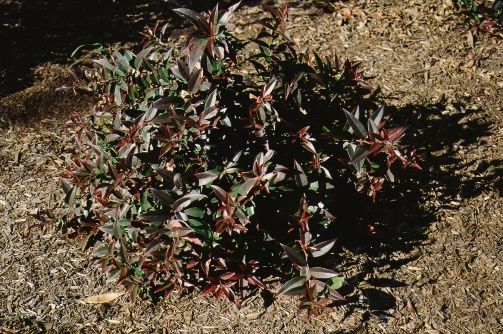
Credit: Edward F. Gilman, UF/IFAS
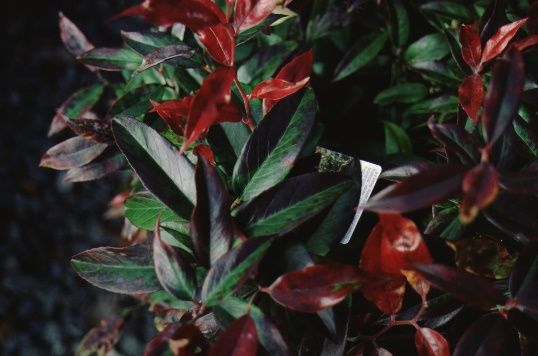
Credit: Edward F. Gilman, UF/IFAS
General Information
Scientific name: Leucothoe axillaris
Pronunciation: loo-KAHTH-oh-ee ack-sil-LAIR-iss
Common name(s): dog hobble, coastal leucothoe, coastal doghobble
Family: Ericaceae
Plant type: shrub
USDA hardiness zones: 5B through 9 (Figure 3)
Planting month for zone 7: year-round
Planting month for zone 8: year-round
Planting month for zone 9: year-round
Origin: native to Florida
Invasive potential: not known to be invasive
Uses: mass planting; ground cover; border
Availability: grown in small quantities by a small number of nurseries
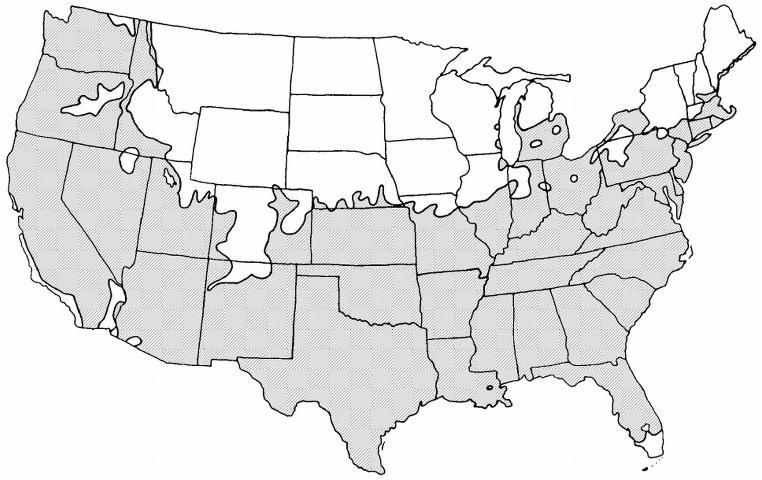
Credit:
Description
Height: 2 to 6 feet
Spread: 6 to 10 feet
Plant habit: spreading
Plant density: dense
Growth rate: moderate
Texture: medium
Foliage
Leaf arrangement: alternate
Leaf type: simple
Leaf margin: serrate; serrulate
Leaf shape: ovate
Leaf venation: pinnate
Leaf type and persistence: evergreen
Leaf blade length: less than 2 inches
Leaf color: green
Fall color: purple
Fall characteristic: showy
Flower
Flower color: white; pinkish white
Flower characteristic: spring flowering; inconspicuous and not showy
Fruit
Fruit shape: oval
Fruit length: less than 0.5 inch
Fruit cover: dry or hard
Fruit color: brown
Fruit characteristic: inconspicuous and not showy
Trunk and Branches
Trunk/bark/branches: typically multi-trunked or clumping stems; not particularly showy
Current year stem/twig color: brown
Current year stem/twig thickness: thin
Culture
Light requirement: plant grows in the shade
Soil tolerances: occasionally wet; acidic; sand; loam; clay
Drought tolerance: moderate
Soil salt tolerances: poor
Plant spacing: 36 to 60 inches
Other
Roots: usually not a problem
Winter interest: plant has winter interest due to unusual form, nice persistent fruits, showy winter trunk, or winter flowers
Outstanding plant: not particularly outstanding
Pest resistance: very sensitive to one or more pests or diseases which can affect plant health or aesthetics
Use and Management
Coastal leucothoe is outstanding in masses and is a good choice for enclosed city gardens. It is commonly used in the landscape as a specimen, ground cover, and border plant. This shrub is also impressive when naturalized along wooded stream banks.
Coastal leucothoe should be grown in a partially or densely shaded site; it grows best in areas that receive morning sunlight. The soil in its natural, bald cypress dome habitat has a high organic matter and silt content and is acidic. This makes dog hobble a good choice for shaded, wet sites. This plant can be rejuvenated into vigorous growth in the center of the plant if the 2- and 3-year-old canes are removed after bloom.
Coastal leucothoe is propagated by seeds and cuttings.
Pests and Diseases
Leaf spots may cause coastal leucothoe to look undesirable; at least 8 species of fungi infect Leucothoe spp. When this plant is grown in conditions that are not ideal, leaf spot will produce ugly lesions that often enlarge and consume the entire leaf. Root rot problems may also occur in wet soil.