
Introduction
Barbados cherry develops into a thick, rounded canopy of fairly delicate foliage. Small pink flowers appear periodically from April to October and are followed about one month later by bright red, tart-tasting, 1inch fruits which are extremely high in vitamin C. It is commonly available in nurseries throughout south Florida.
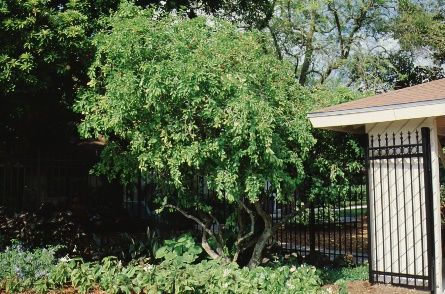
Credit: Edward F. Gilman, UF/IFAS
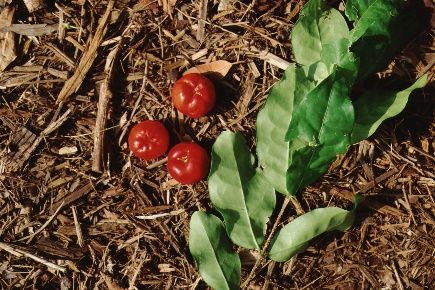
Credit: Edward F. Gilman, UF/IFAS
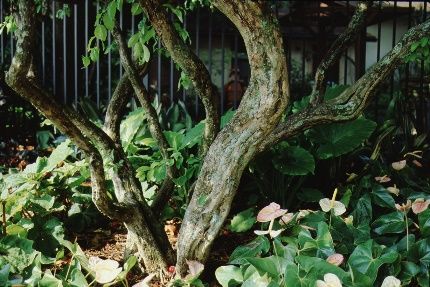
Credit: Edward F. Gilman, UF/IFAS
General Information
Scientific name: Malpighia glabra
Pronunciation: mal-PIG-ee-uh GLAY-bruh
Common name(s): Barbados cherry, wild crapemyrtle
Family: Malpighiaceae
Plant type: tree
USDA hardiness zones: 9B through 11 (Figure 4)
Planting month for zone 9: year round
Planting month for zone 10 and 11: year round
Origin: not native to North America
Invasive potential: not known to be invasive
Uses: specimen; container or above-ground planter; border; hedge; near a deck or patio; screen
Availability: somewhat available, may have to go out of the region to find the plant
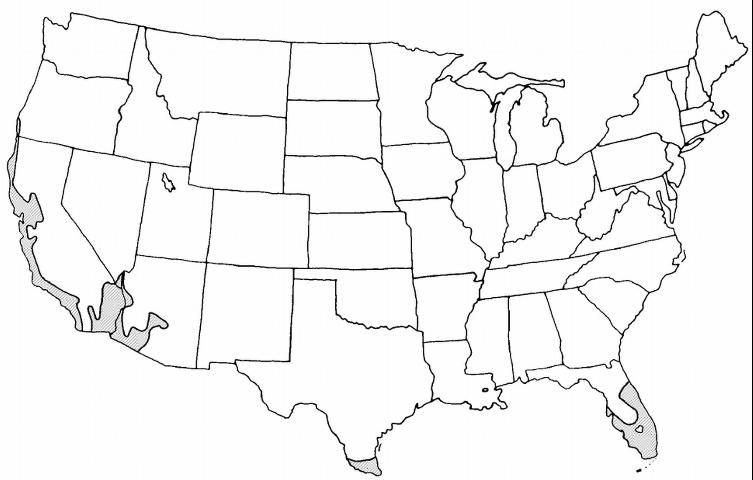
Credit:
Description
Height: 10 to 12 feet
Spread: 10 to 15 feet
Plant habit: round
Plant density: moderate
Growth rate: slow
Texture: medium
Foliage
Leaf arrangement: opposite/subopposite
Leaf type: simple
Leaf margin: entire
Leaf shape: lanceolate
Leaf venation: pinnate
Leaf type and persistence: evergreen
Leaf blade length: 2 to 4 inches
Leaf color: green
Fall color: no fall color change
Fall characteristic: not showy
Flower
Flower color: pink
Flower characteristic: summer flowering
Fruit
Fruit shape: round
Fruit length: 0.5 to 1 inch
Fruit cover: fleshy
Fruit color: red
Fruit characteristic: suited for human consumption; persists on the plant; attracts birds
Trunk and Branches
Trunk/bark/branches: not particularly showy; typically multi-trunked or clumping stems
Current year stem/twig color: brown
Current year stem/twig thickness: thin
Culture
Light requirement: plant grows in part shade/part sun
Soil tolerances: slightly alkaline; clay; sand; acidic; loam
Drought tolerance: high
Soil salt tolerances: unknown
Plant spacing: 36 to 60 inches
Other
Roots: usually not a problem
Winter interest: no special winter interest
Outstanding plant: plant has outstanding ornamental features and could be planted more
Pest resistance: long-term health usually not affected by pests
Use and Management
This open, upright, evergreen shrub grows at a slow pace to 12 feet tall and wide, making it well-suited as a foundation planting for larger buildings or used in the rear of the shrubbery border. Trained to numerous multi-trunks, it can be used as a small accent tree just as Japanese ligustrum is used. The multi-trunks rise sinuously up through the crown creating a sculptured specimen well-suited for placing near a patio, deck or entry way to attract attention. It looks great lighted at night from below the tree.
Growing in full sun or partial shade, Barbados cherry needs fertile, nematode-free soil and is not salt-tolerant.
Plant 5 to 6 feet apart for a mass planting or to develop a tall, thick screen.
Propagation is by layering or cuttings.
Pests and Diseases
Pests include nematodes, whiteflies, scale, and plant bugs, which will attack and deform the fruit.